
All photos © Robin and Arlene Karpan
Europe is famous for ancient monuments, but to really go back in time, head to the Antequera Dolmens Site in southern Spain. This UNESCO World Heritage Site preserves the largest and best-preserved megalithic dolmens (ancient stone burial and ceremonial chambers) in Europe. Some date back 5,000 years, before the Egyptian pyramids, and use colossal stones bigger than those in Stonehenge. Even better, these wonders sit amid some of the most eye-catching natural landscapes in Andalusia.
The setting is the small city of Antequera, north of Malaga and south of Cordoba. With its wealth of historic treasures and pleasant atmosphere, it ranked as one of our favourite places in southern Spain for many reasons. But the UNESCO sites stole the show.
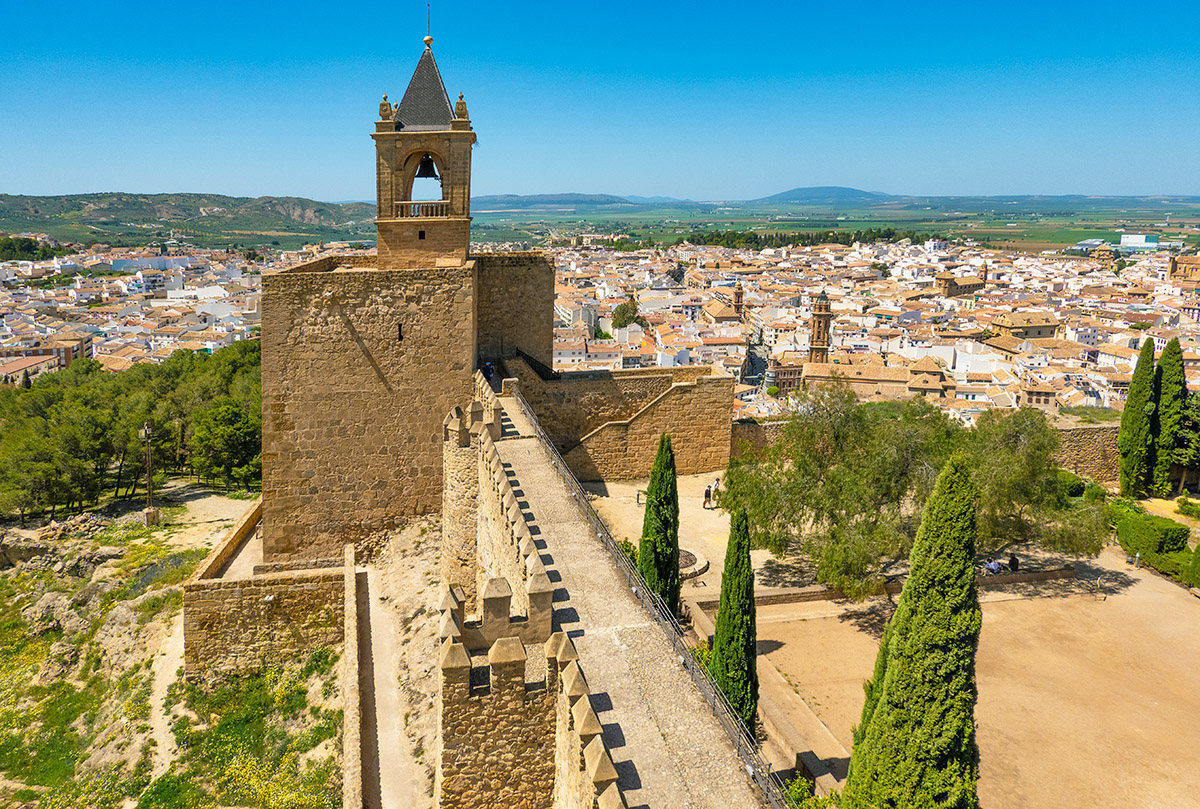
The UNESCO World Heritage designation recognizes five sites – the dolmens of Menga and Viera on the outskirts of Antequera, the Tholos of El Romeral, a few kilometres outside Antequera, and two natural monuments – La Peña de los Enamorado and El Torcal mountainous formations.
Lovers’ Rock – Legend Meets Landscape
La Peña de los Enamorados, resembling a man’s face in profile, dominates the landscape. There were few places in and around Antequera where the 880-metre-high limestone mountain wasn’t visible.
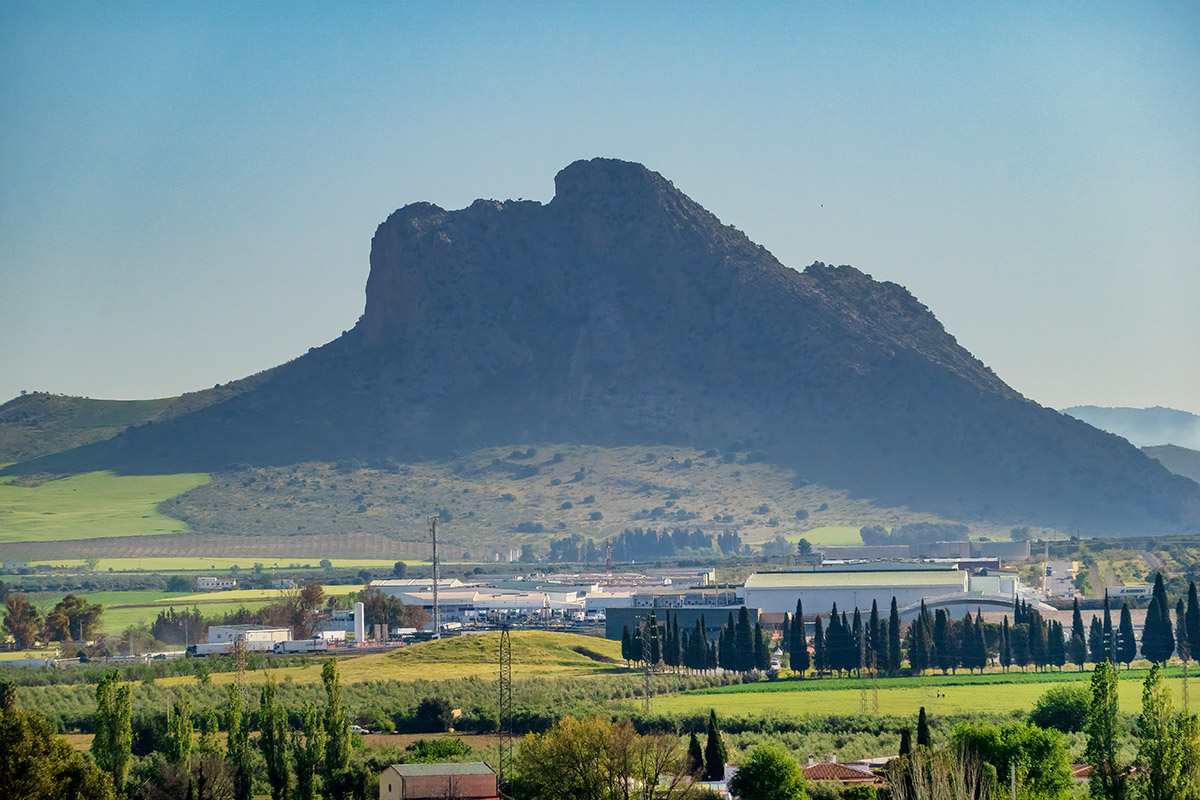
Its name, translated as Lovers’ Rock, comes from a centuries-old legend from the days of Moorish rule. A Muslim ruler had arranged for his daughter to marry another prominent Muslim leader. But she was in love with a young Christian man, and together they ran away, only to be chased by soldiers to the top of this rock. To avoid capture and separation, they clasped their hands together and leapt to their deaths from the top of the mountain.
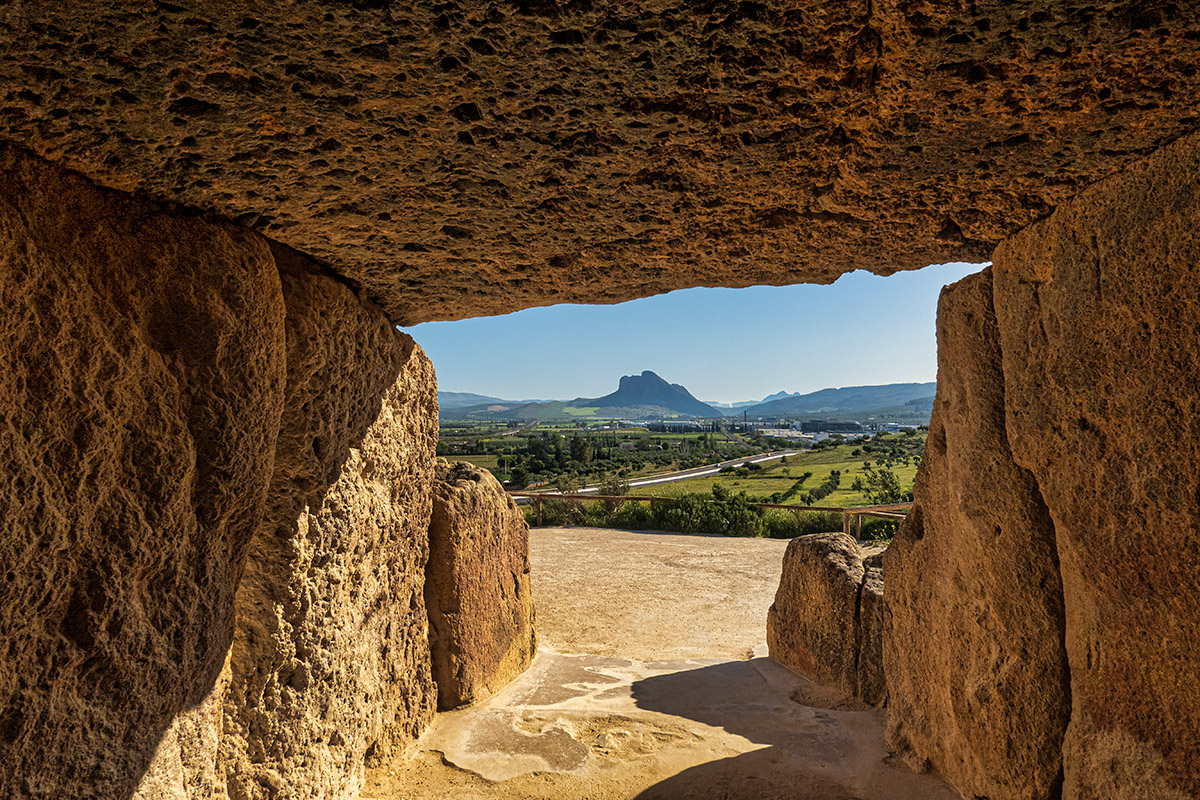
The rock’s significance stretches far deeper into time. Many ancient megaliths were aligned with the sun or stars. The Menga Dolmen is unique since its entrance aligns perfectly with La Peña de los Enamorados, suggesting that it may have had some sacred significance.
Menga and Viera Dolmens
The Menga and Viera Dolmens, only a few metres from each other, are easy and straightforward to visit. If you’re staying in Antequera, the site is a short walk away on the edge of town. To our pleasant surprise, the site was free to visit.
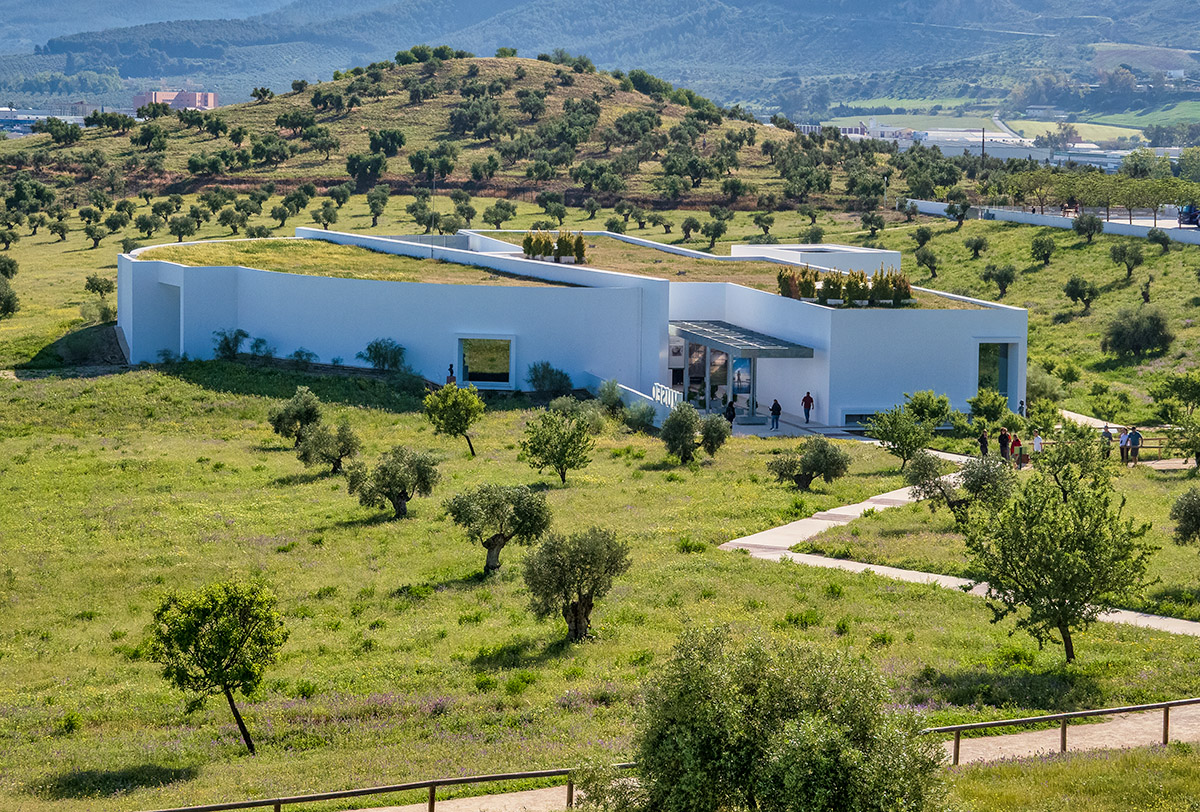
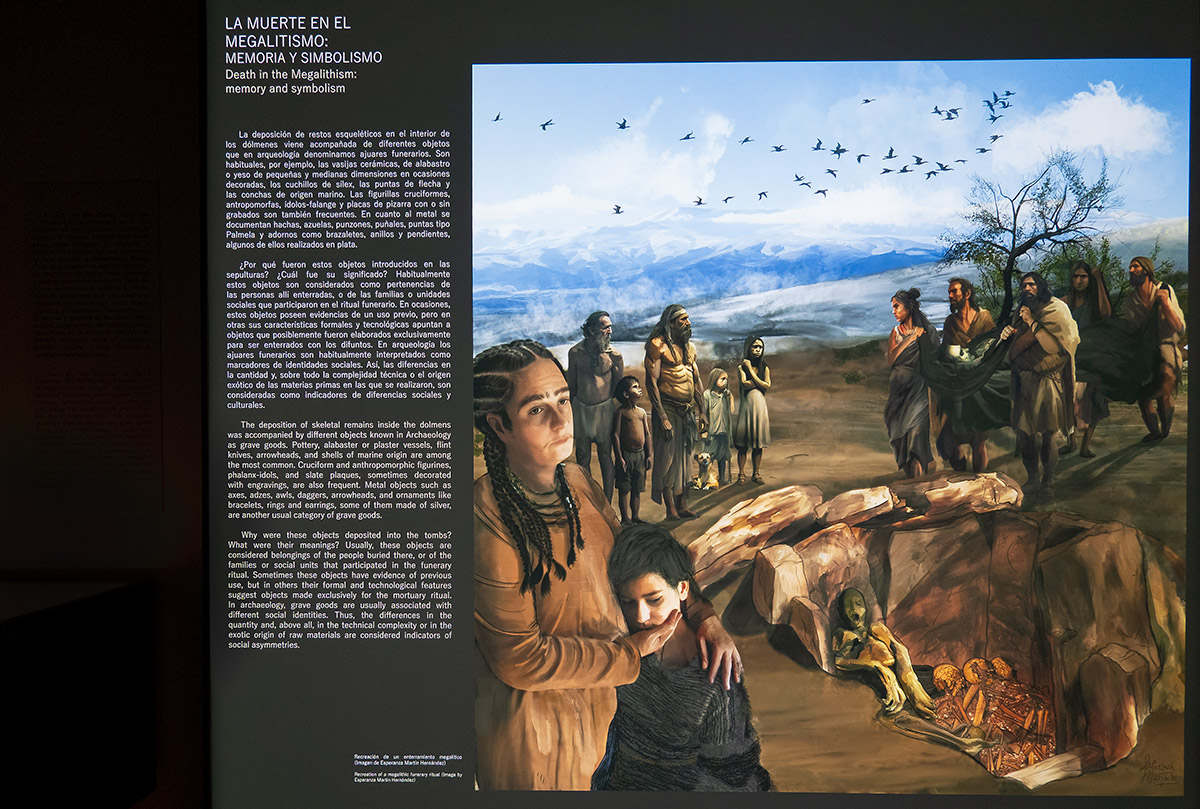
A visitor centre and museum set the stage for a visit. Exhibits, labelled in both Spanish and English, explain what dolmens are and their significance, as well as background on the site.
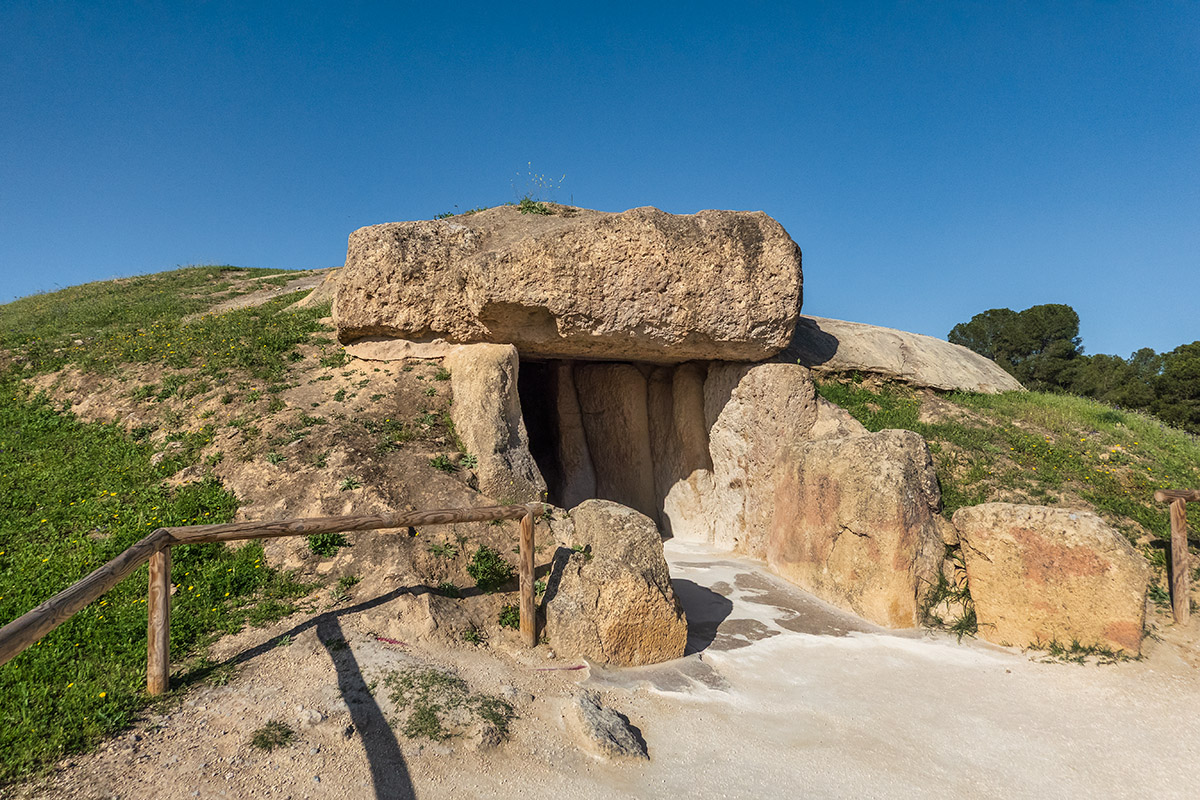
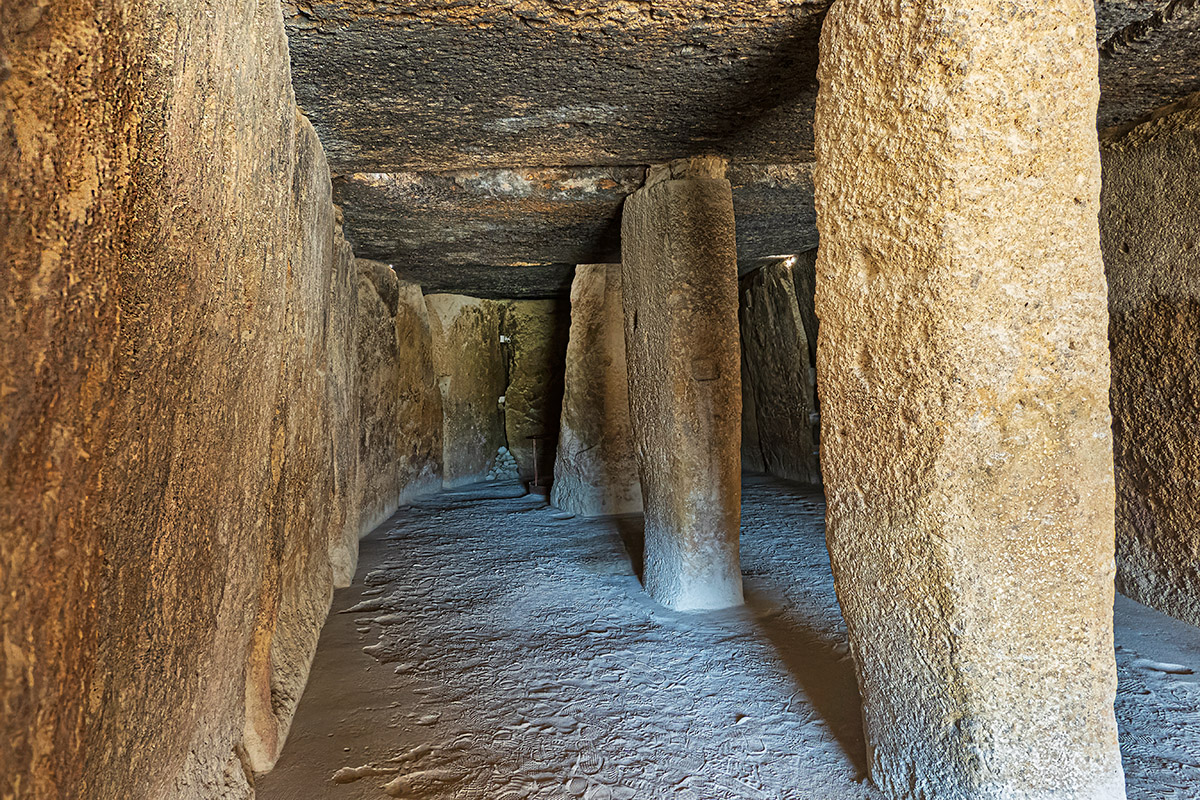
The dolmens served as chambers used for burials and ceremonies, and were built from massive upright stones and capstones. Menga stands out as the most impressive, consisting of a mound 50 metres in diameter, and a chamber 6 metres wide and just over 27 metres long.
The walls and columns are made of 32 massive stone slabs, partially sunk into the ground, with a combined weight of around 1,400 tons. A colossal capstone is thought to be around 150 tons – considerably more than any stone at Stonehenge. Yet this engineering feat was done by Neolithic people around 5,000 years ago.
As we walked inside and turned around, there it was – the clear face of the La Peña de los Enamorados, perfectly framed in the entrance. This is the only ancient megalithic structure in continental Europe oriented towards an anthropomorphic figure.
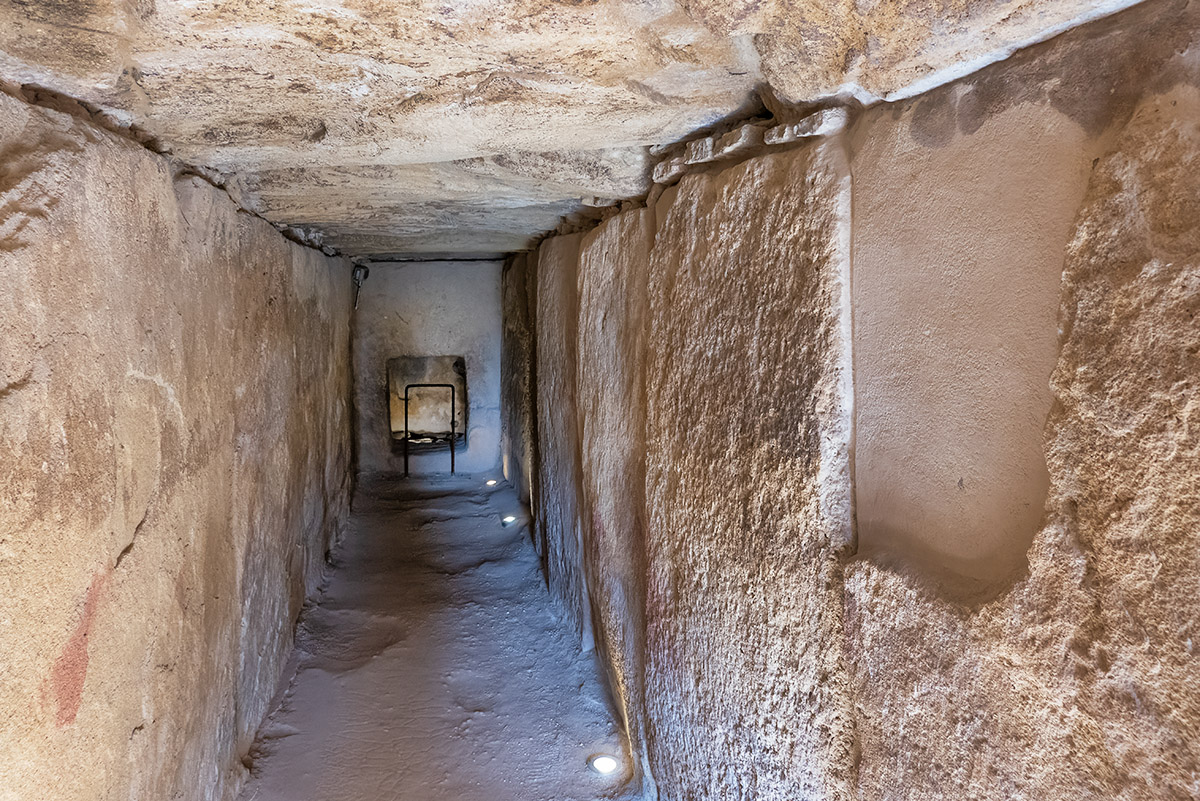
The Viera Dolmen is slightly “newer” – only around 4,500 years old. It is considered a passage tomb, 21 metres long with three components. The 18-metre-long main passageway consists of 27 upright limestone slabs, covered with vertical stone slabs. A funerary chamber at the end is less than 2 metres wide. Its entrance consists of a small doorway cut into the stone, serving both as a physical and symbolic entrance to the burial chamber.
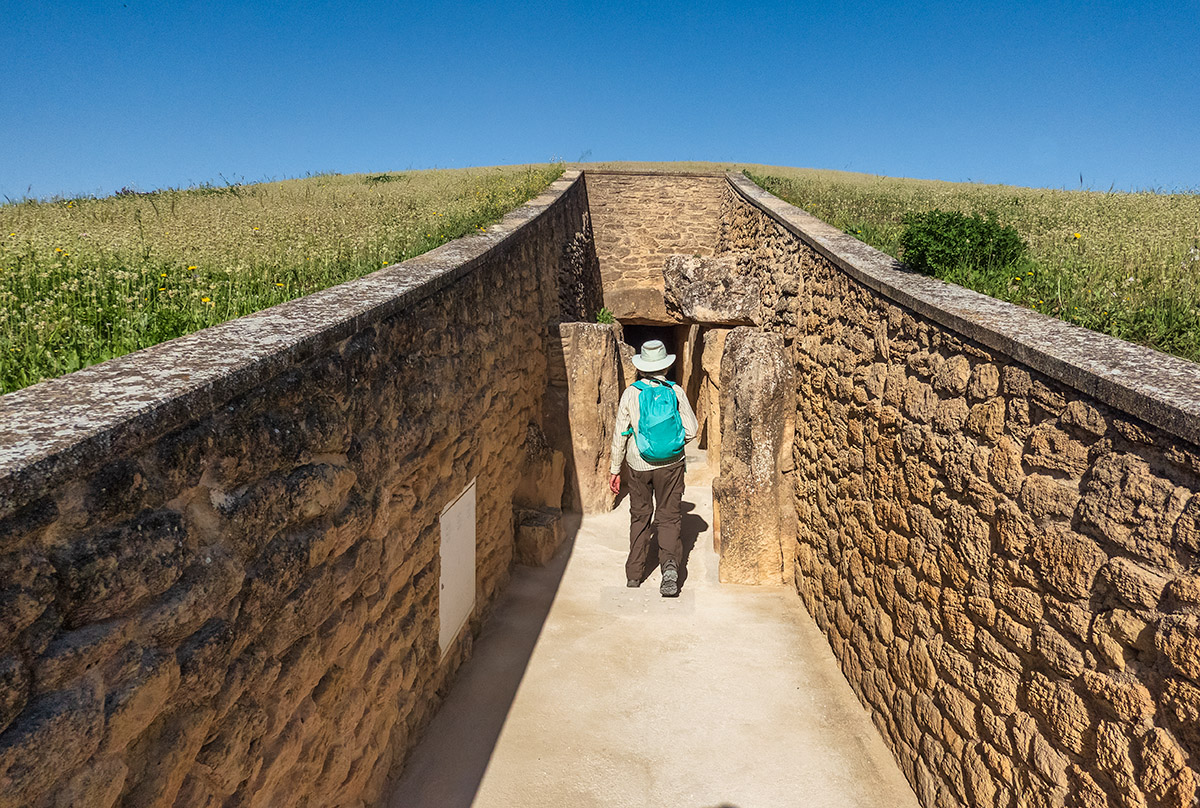
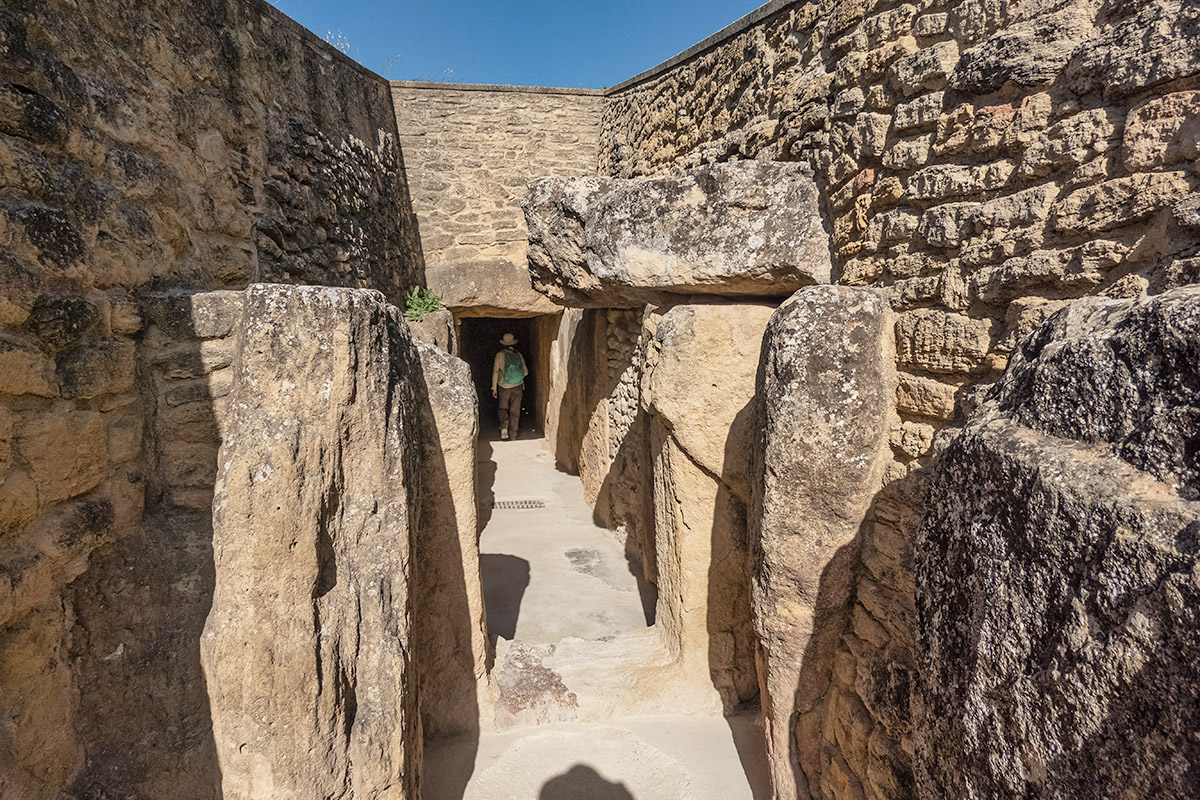
Like the Mengan dolmen, Viera is covered by an earth dome about 50 metres across, which has helped protect it over the centuries. But unlike Menga, it has a precise solar alignment, where the sun reaches the back of the chamber on the mornings of the spring and fall equinoxes.
El Torcal
The third dolmen near Antequera is El Romeral, slightly farther out of the city. Its orientation is different again, facing the highest point in the El Torcal mountain range, considered deliberate because of the mountain’s significance. The mountains house valuable archaeological sites from the Neolithic period. Caves here are thought to be the site of the first food-producing settlements of the area, and provided the origins of the society that would go on to build the megaliths of Antequera.
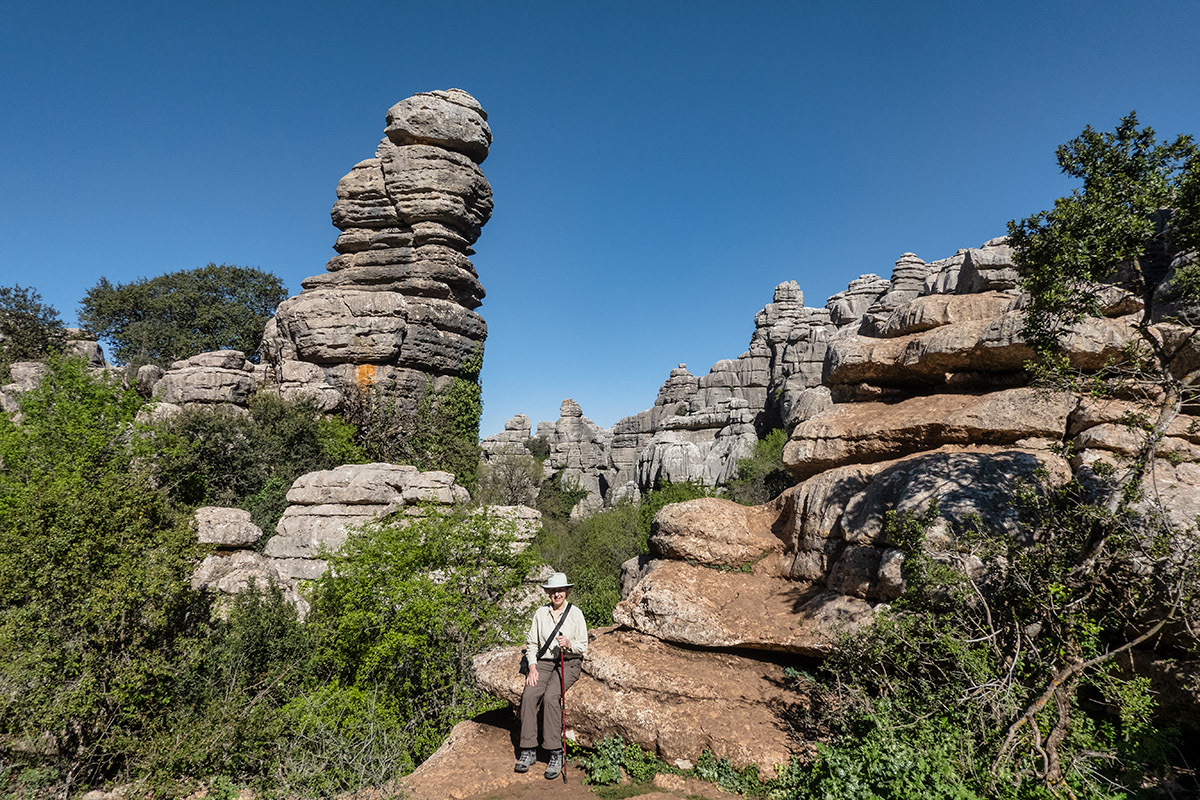
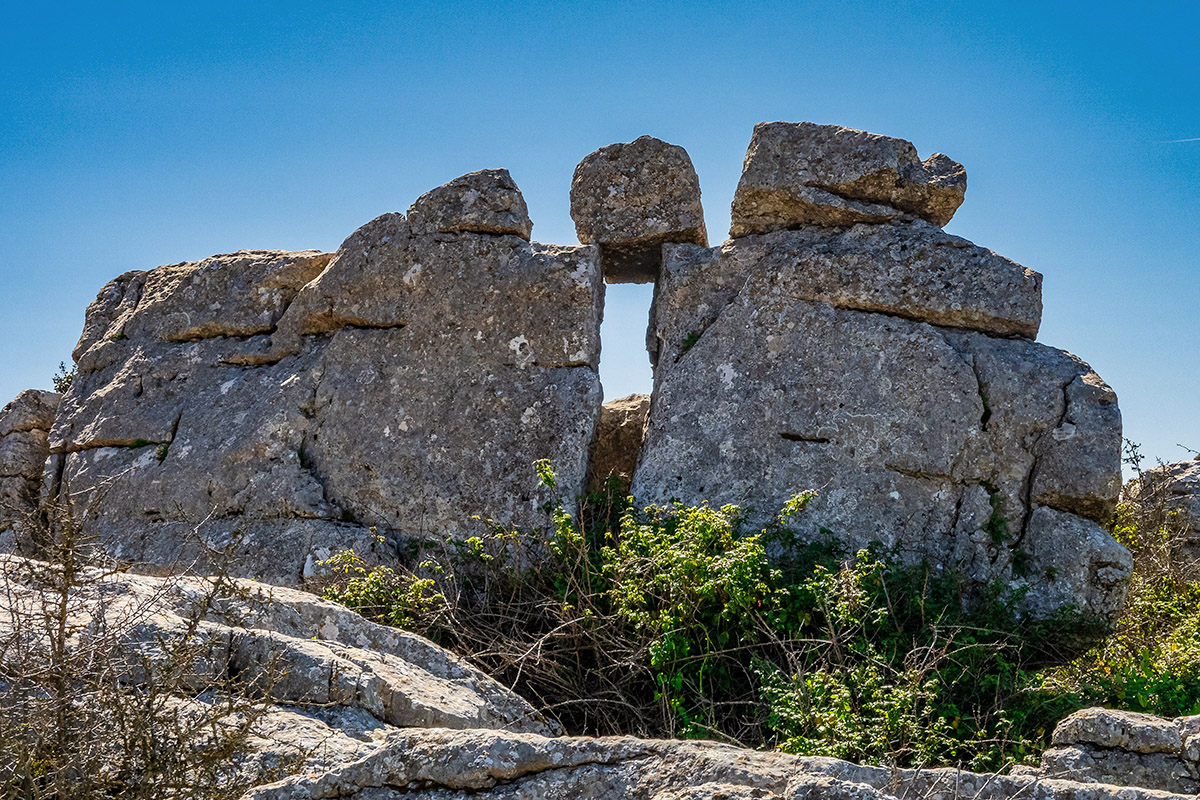
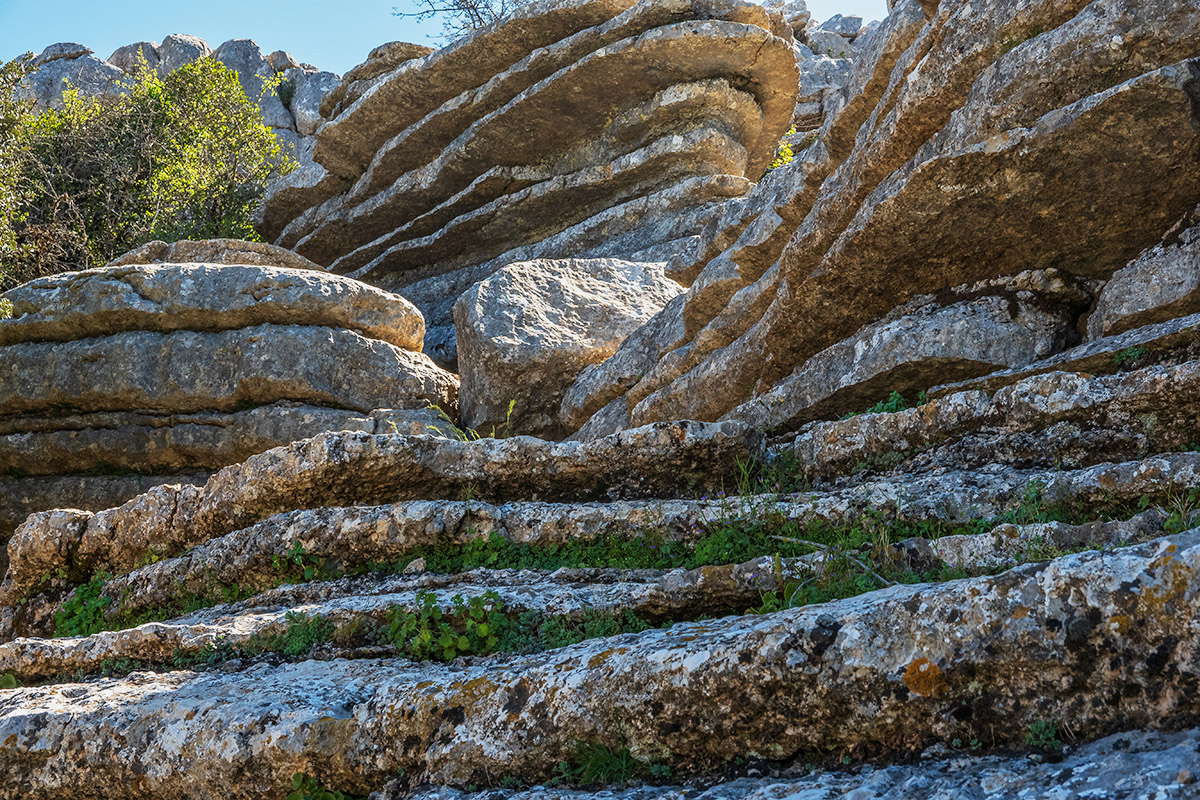
From a visitor’s point of view, it’s the surreal physical beauty of the El Torcal landscape that stands out more than its archaeological significance. Sculpted over millions of years, it is home to some of the most dramatic karst formations in Europe, and is protected in the El Torcal Natural Area.
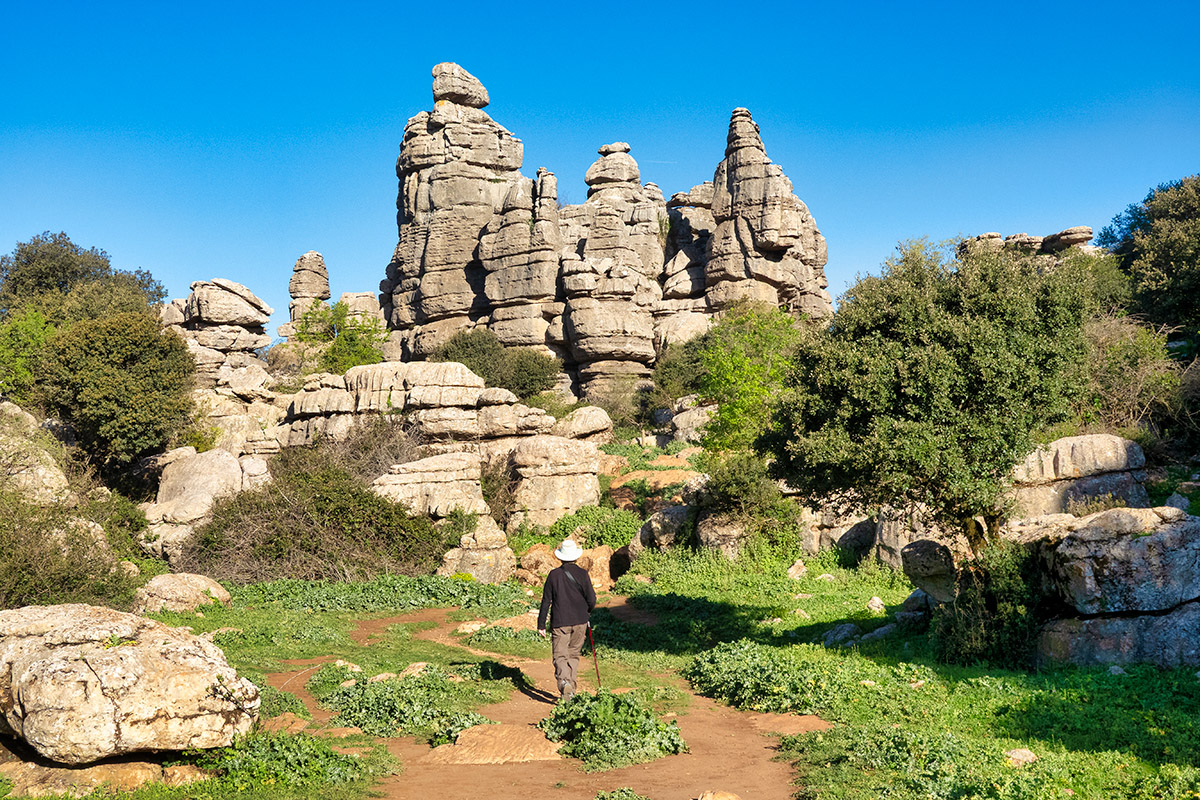
The rocks resemble an enormous jigsaw puzzle in places. In other spots, it’s as if some giant picked up the rocks and tossed them just to see where they would land. Most intriguing are the flat formations looking like immense stacks of pancakes.
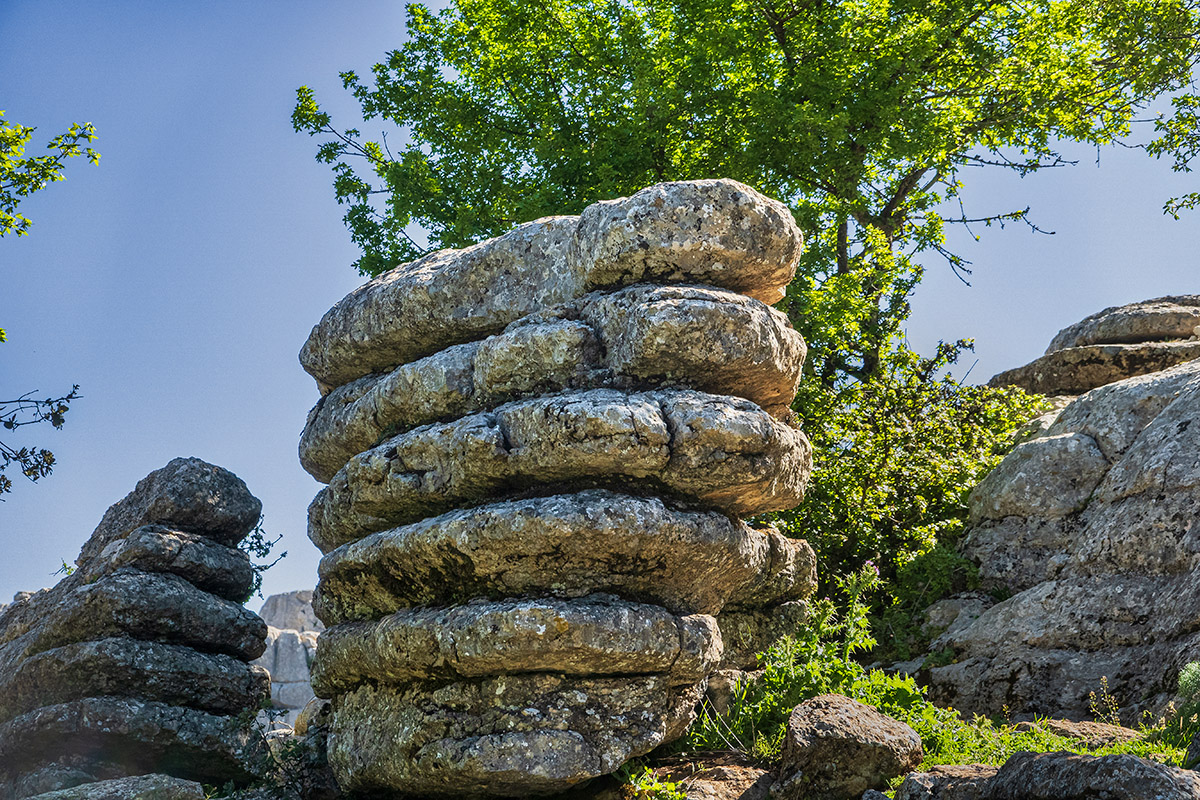
We went through the visitor centre to get oriented to the site. Marked hiking trails range from 1.5 to 4.5 km long, crossing terrain that seems straight out of a fairytale. We opted for a medium-length trail that also seemed to be the most popular. Longer trails have more uneven rocks to scramble over in places, but we didn’t find anything too difficult.
How to Get to El Torcal
It’s about a 30-minute drive to El Torcal, but plan on an early start since the car park frequently fills up. Visitors then have to park further down the mountain and take the shuttle service. When we arrived around 8:30 in the morning, the lot was almost empty, but when we left in early afternoon it was full.
Unfortunately, no public transport runs to El Torcal. Without a car, alternatives are a guided tour or a taxi service. No tours were operating during our visit, so we arranged for a taxi to take us there and then come back a few hours later. It ended up costing about the same as if had we taken a guided tour. The very helpful tourist information office in Antequera is used to making these arrangements for visitors.
And the best part? Admission to El Torcal is free.
SUBSCRIBE to Photojourneys below
Feel free to PIN this article on the Megaliths of Antequera, Spain