All photos © Robin and Arlene Karpan
On our recent trip to Portugal, we were looking forward to photographing the scenic coastline of the Algarve region in the country’s far south. We did end up doing that, which will be the subject of future posts, but as often happens with travel photography, things don’t always go according to plan.
One Storm After Another
Our trip started with relentless stormy weather, including plenty of rain and gale-force winds. From a photography point of view, things quickly changed from capturing scenes of southern Portugal’s normally sunny shores to photographing the effects of the wild weather.
Storms that hit Portugal this winter were nothing short of devastating for parts of the country. There was widespread flooding, with destruction of roads, rail lines, and other infrastructure. Some communities were completely cut off, people were evacuated, and many places had no access to electricity or drinking water.
We planned to fly into Lisbon, and then the next morning take a train to Lagos on the south coast, where we had arranged to rent a car. At the train station, people were saying that all trains had been cancelled because of the storm. The railway office confirmed the widespread cancellation, except for the one heading south that we were booked on. It seemed that the south had fared a lot better than the rest of the country.
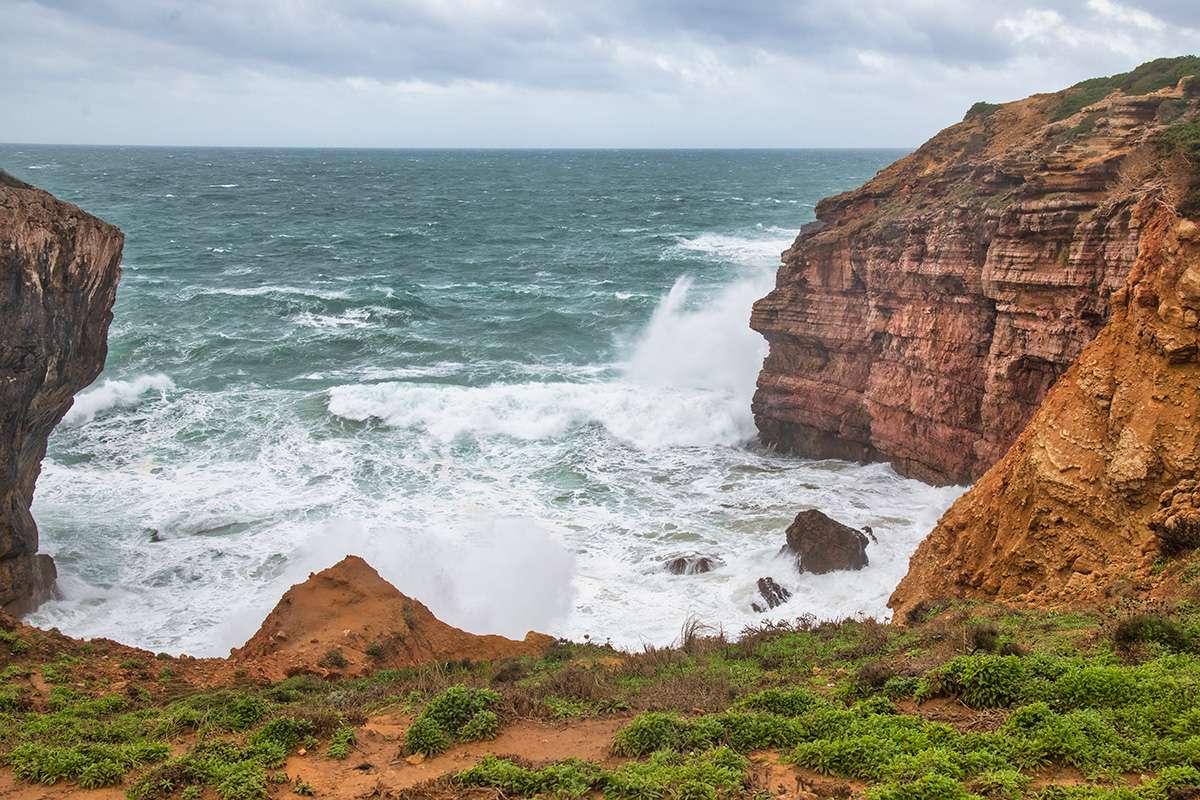
On our trip south, we passed swollen rivers that had flooded their banks and fields that were under water. On the south coast, the land was certainly soggy, but things weren’t as bad. More rain and storms throughout the country came over the next few days, and conditions farther north went from bad to worse. In the south, however, the storms were more of a nuisance rather than being disastrous.
Plan B
We usually like to build some flexibility into our travel plans so that we can change course when appropriate. The Algarve south coast is famous for its magnificent beaches, often framed by imposing and colourful cliffs. Great places for sunrise and sunset are everywhere, but with the rainy, stormy weather and little sun, that would have to wait.
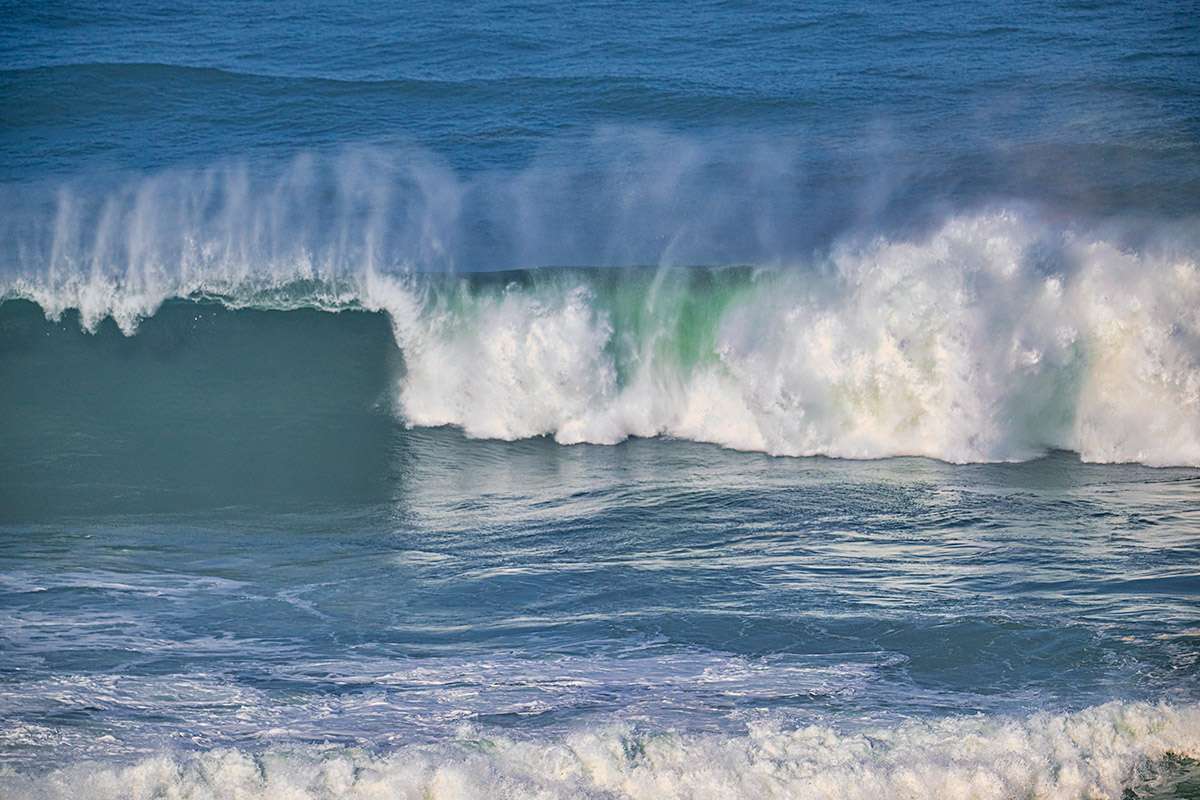
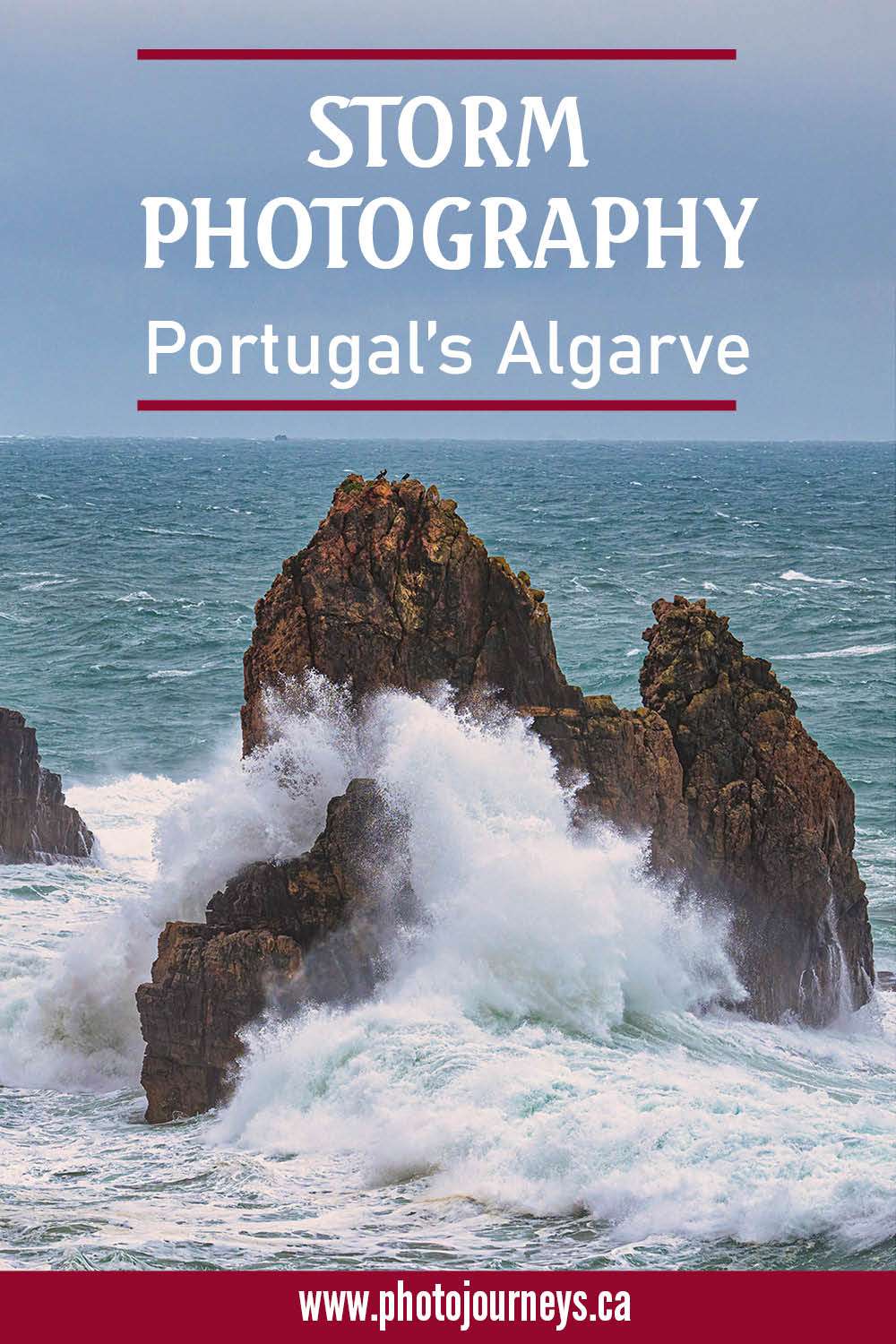
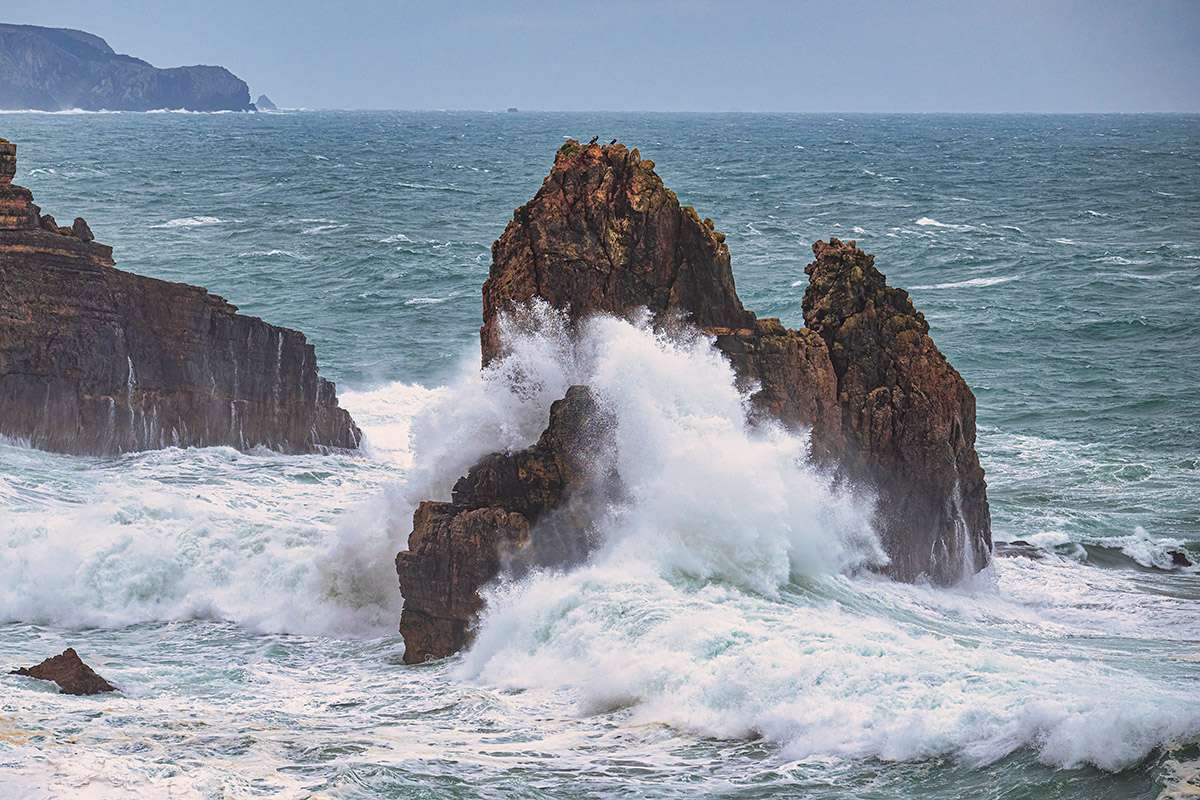
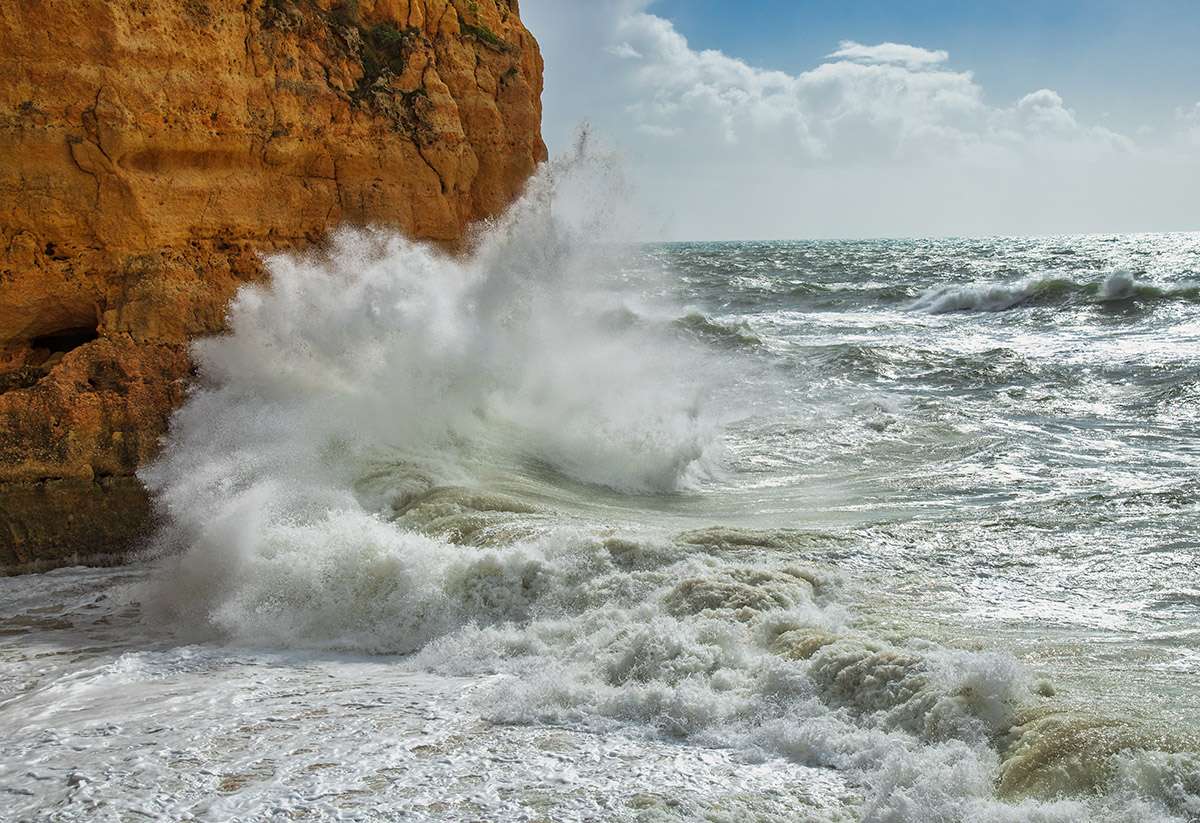
What we were getting was impressive waves, often battering the cliffs with powerful splashes sending water and mist into the air. Weather reports warned of “coastal events” with gale-force winds at times. So for photography, our attention changed to take advantage of what the weather offered.
Algarve’s Wild West
The Algarve has two coasts. The longer south coast, where the vast majority of visitors go, is home to most beaches and a huge number of tourist developments. The shorter western coastline is quite different since most of it is protected in the Southwest Alentejo and Vicentine Coast Natural Park. It also has some great beaches, but attracts fewer visitors because it doesn’t have the mass tourism infrastructure.
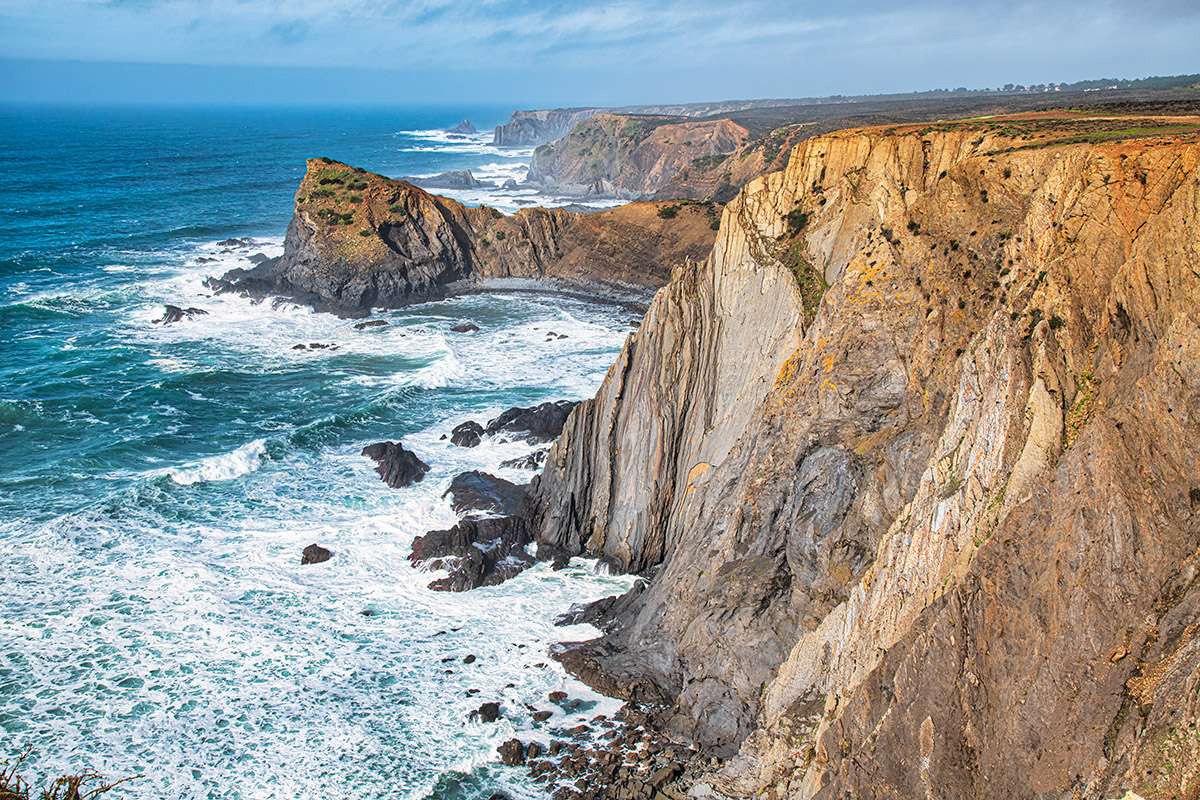
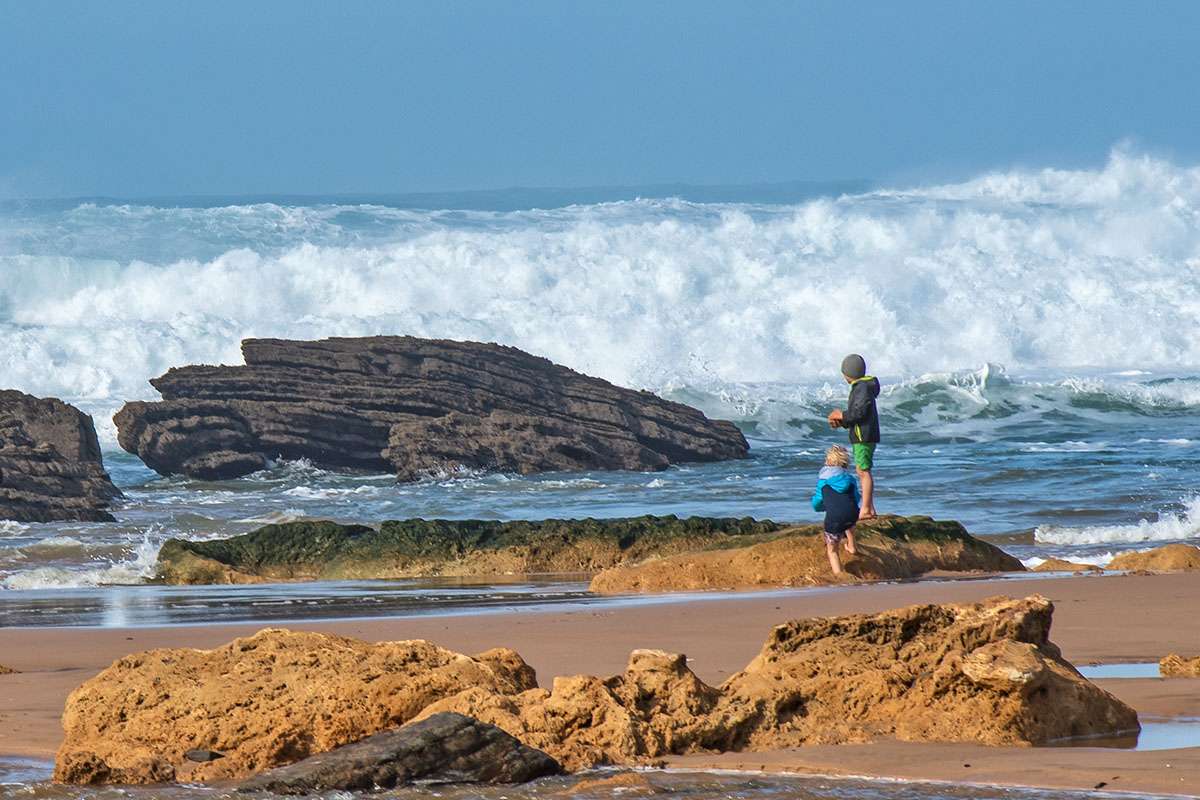
The incredibly rugged west coast has high jagged cliffs often rising straight from the sea in places. Beaches here are a magnet for surfers since the west coast is known for bigger swells. But the powerful waves during this storm, combined with the wind warnings, were even too much for the surfers who were lying low and waiting it out. However, it was tailor-made for photography.
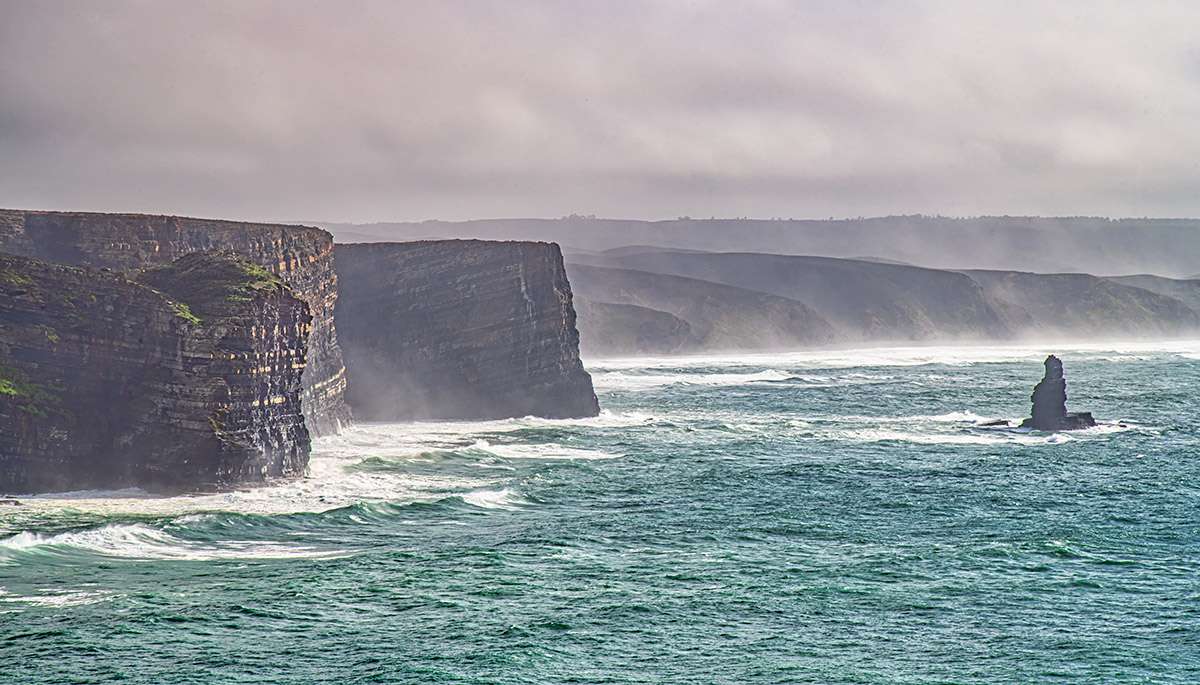
Several spots along the coastline have excellent vantage points. Popular spots include Arrifana, about halfway along the Algarve west coast, along with Monte Clerigo Beach just to the north, and Odeceixe at the north end of the Algarve, where the river divides the Algarve from the Alentejo region just to the north. Odeceixe Beach proved to be a prime spot to get low and photograph building waves, and as the wind sent mist into the air from the curling wave crests.
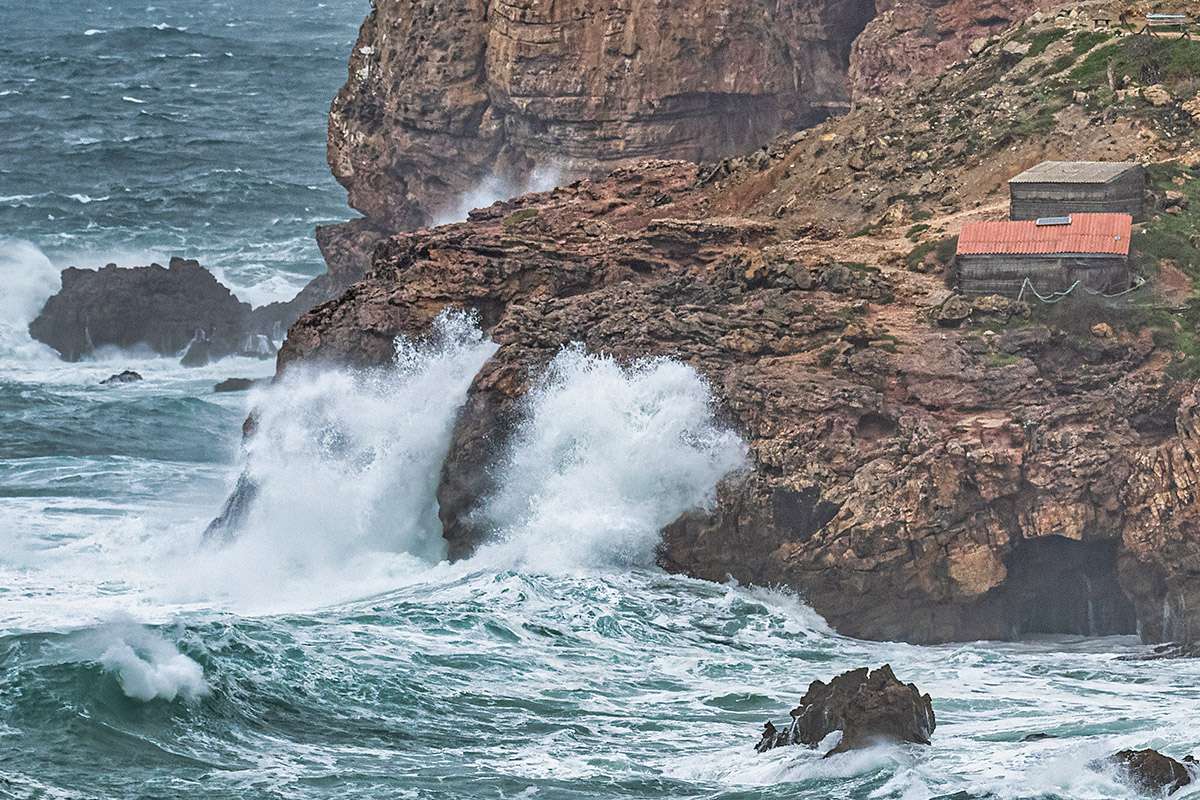
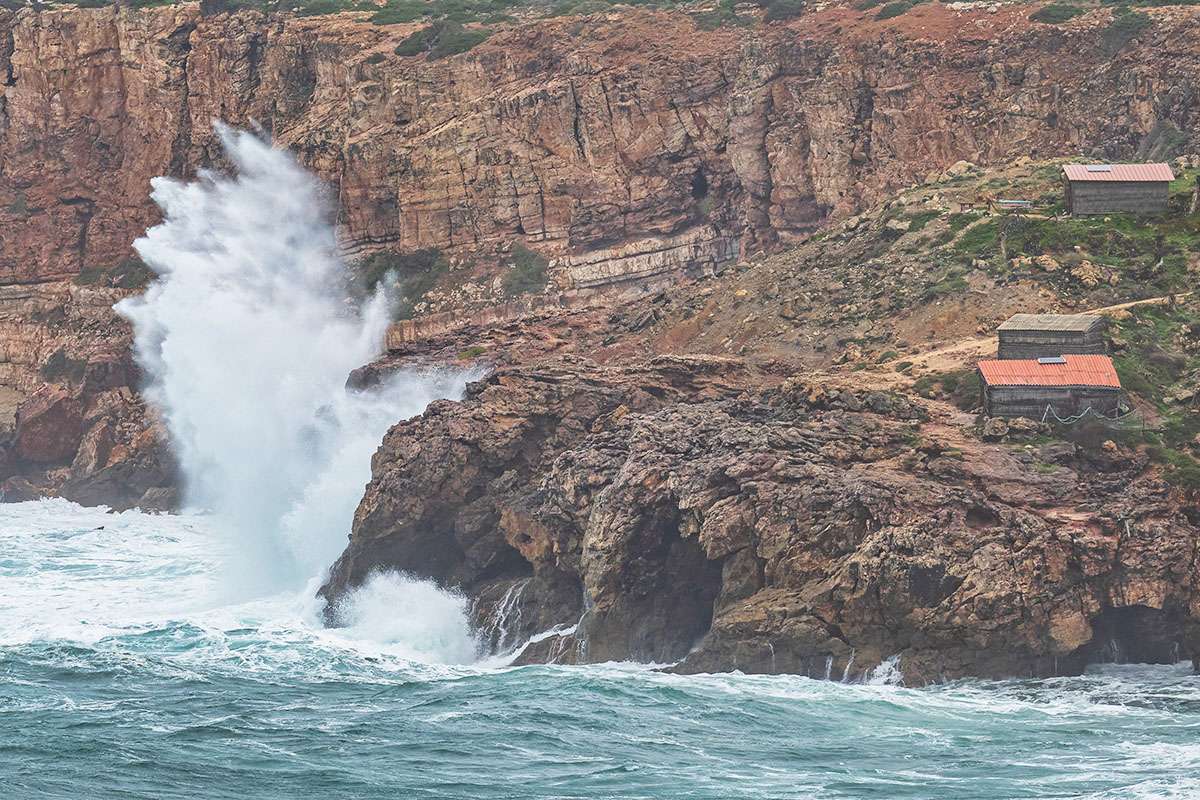
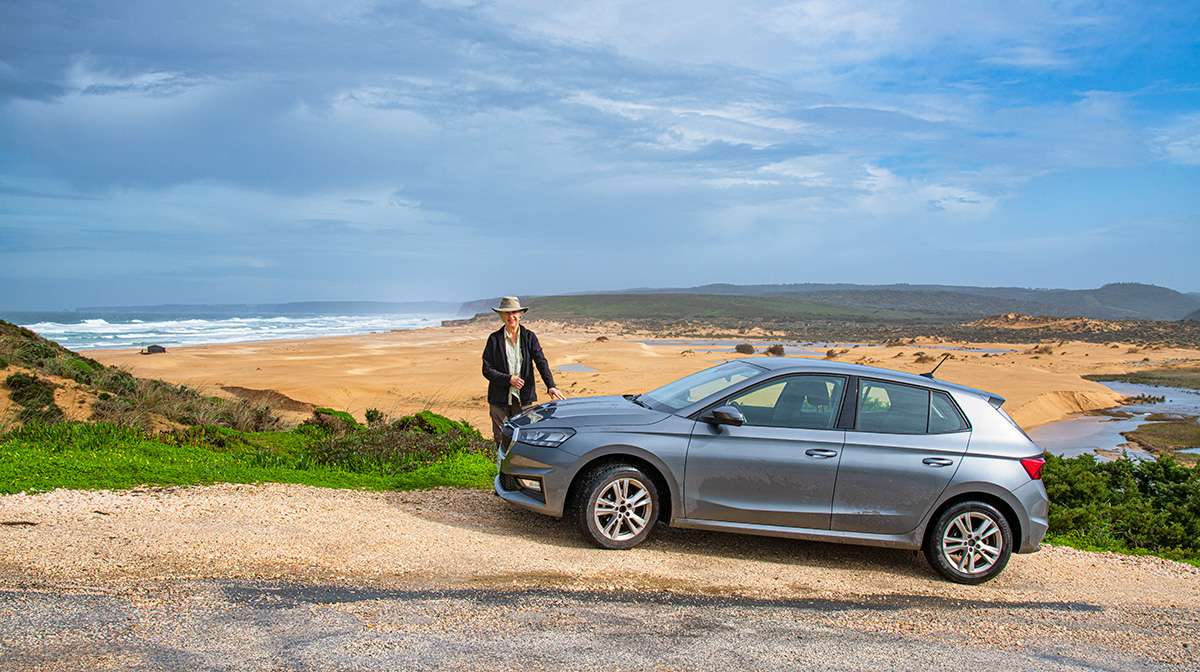
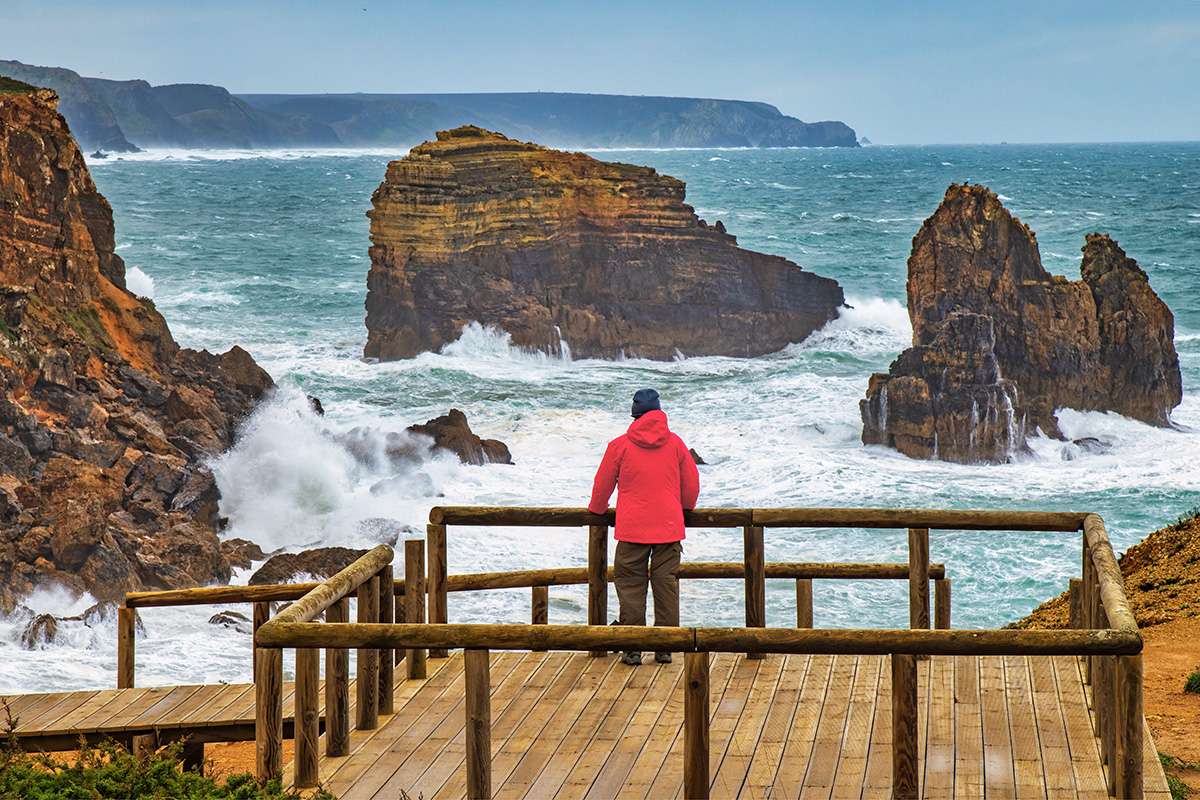
But the most impressive stretch during our visit was around the town of Carrapateira. From here a road heads northwest to expansive Bordeira Beach, which is backed by sand dunes, while another road heads southwest to Amado Beach. Between the two beaches, a very rough though passable road runs along the cliff tops with non-stop views over the wild terrain. In places, we can take boardwalks to vantage points on cliff edges for spectacular views. But on the days we visited, the relentless strong wind gusts made it difficult to stay standing at times.
The Photographic Experience
Watching the waves was mesmerizing as they lashed the high cliffs and sea stacks, often sending splashes halfway up the soaring cliffs. Having a high vantage point helped to keep a safe distance from the dangerous shore. The biggest challenges were trying to keep the camera steady in the wind (it was even difficult to hang onto the tripod at times), and the salty spray in the air that would start coating the lens only after a few minutes.
Catching details in the splashes and waves called for a fast shutter speed. We kept the shutter at 1/000 sec. or faster most of the time. A slower speed provided more of a sense of movement in the water, but at the cost of less detail. As in most cases, it’s best to try a variety of settings to get different effects and then decide which you like best. For the straight-on shots of curling waves, we found that an even faster shutter speed (1/4000 sec. or more) was best to capture the detail, especially the fine spray.
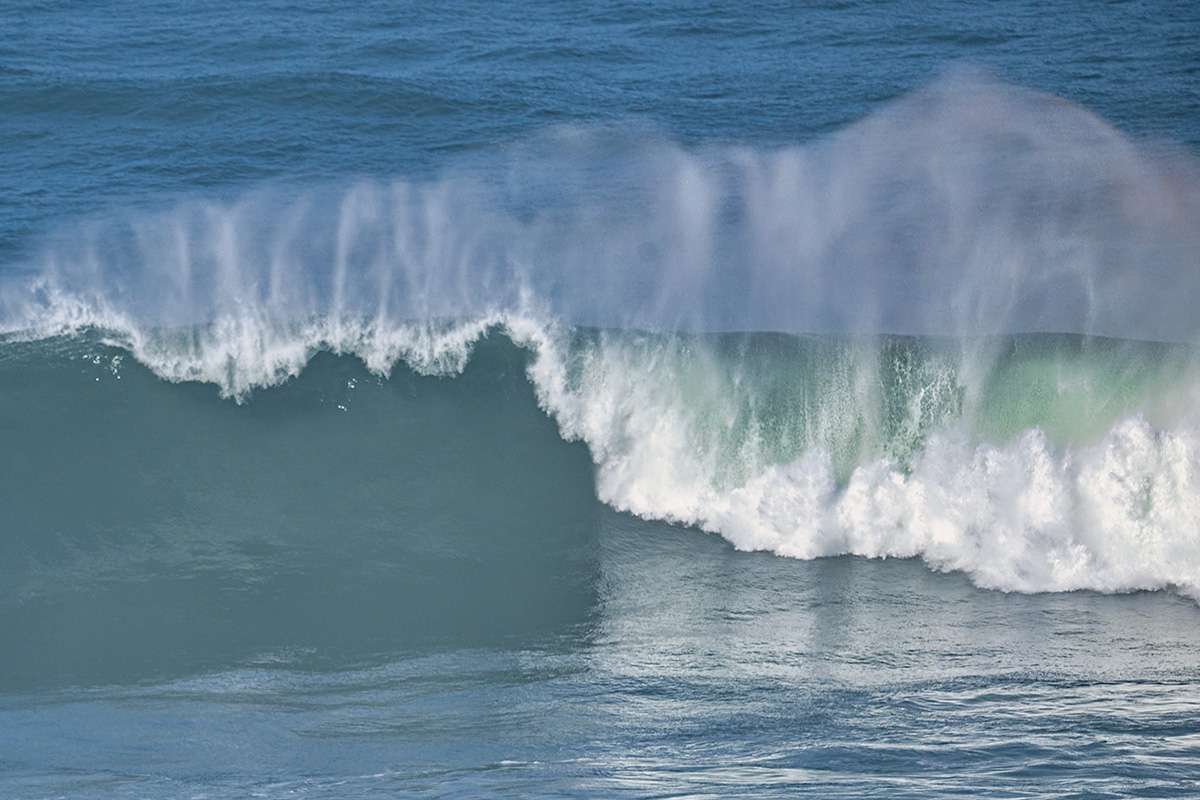
We used two lenses. The 24-120mm was perfect for wider shots of the landscape or where it was appropriate to zoom in slightly. But for a surprising number of images, we used a 180-600mm zoom. We brought this long telephoto to Portugal mainly to photograph birds, but found that it was equally useful for storms, since the long reach helped to photograph dangerous conditions from a safe distance. It was also useful to zoom in to get details of the action, such as curling waves.
SUBSCRIBE to Photojourneys below
Feel free to PIN this article for later