All photos © Robin and Arlene Karpan
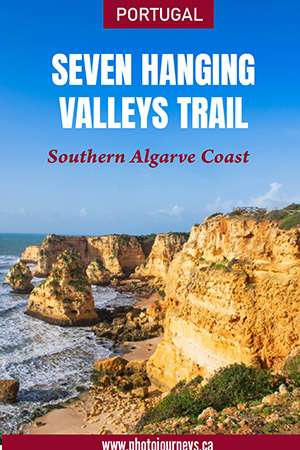
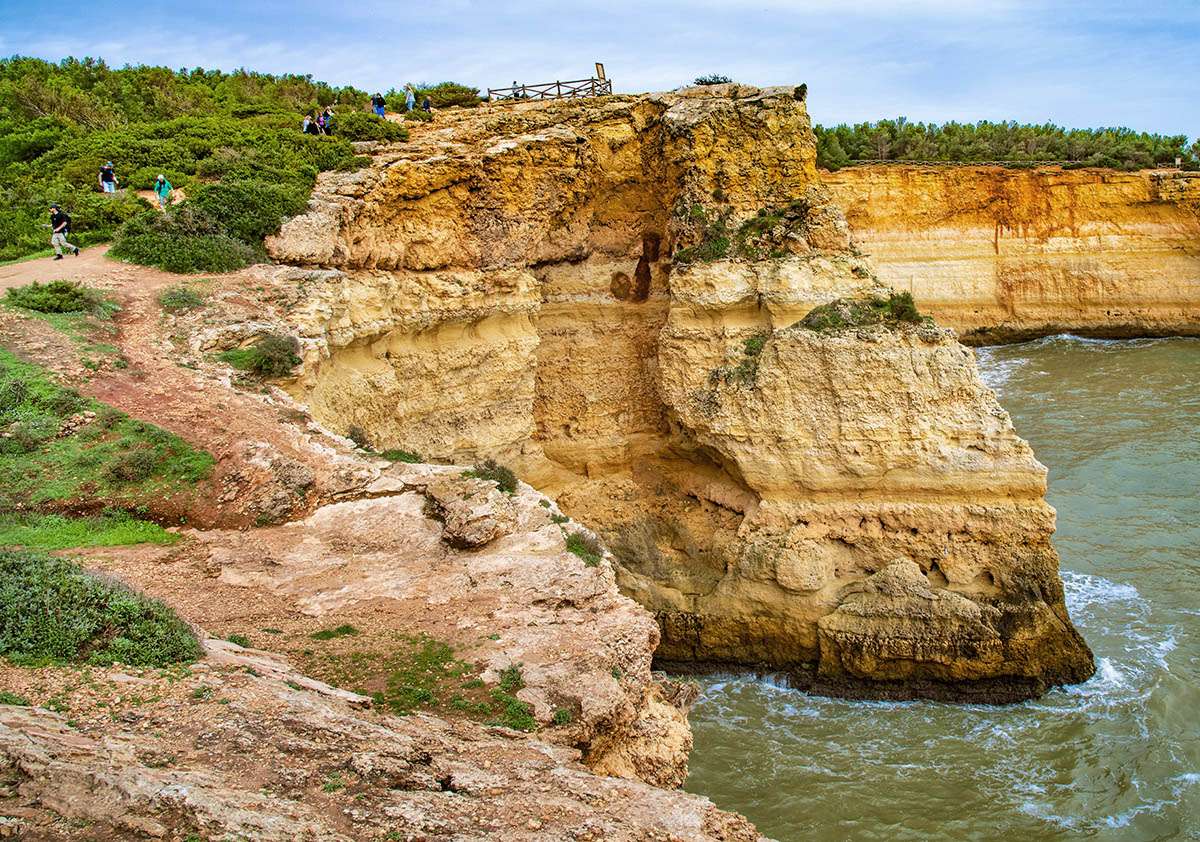
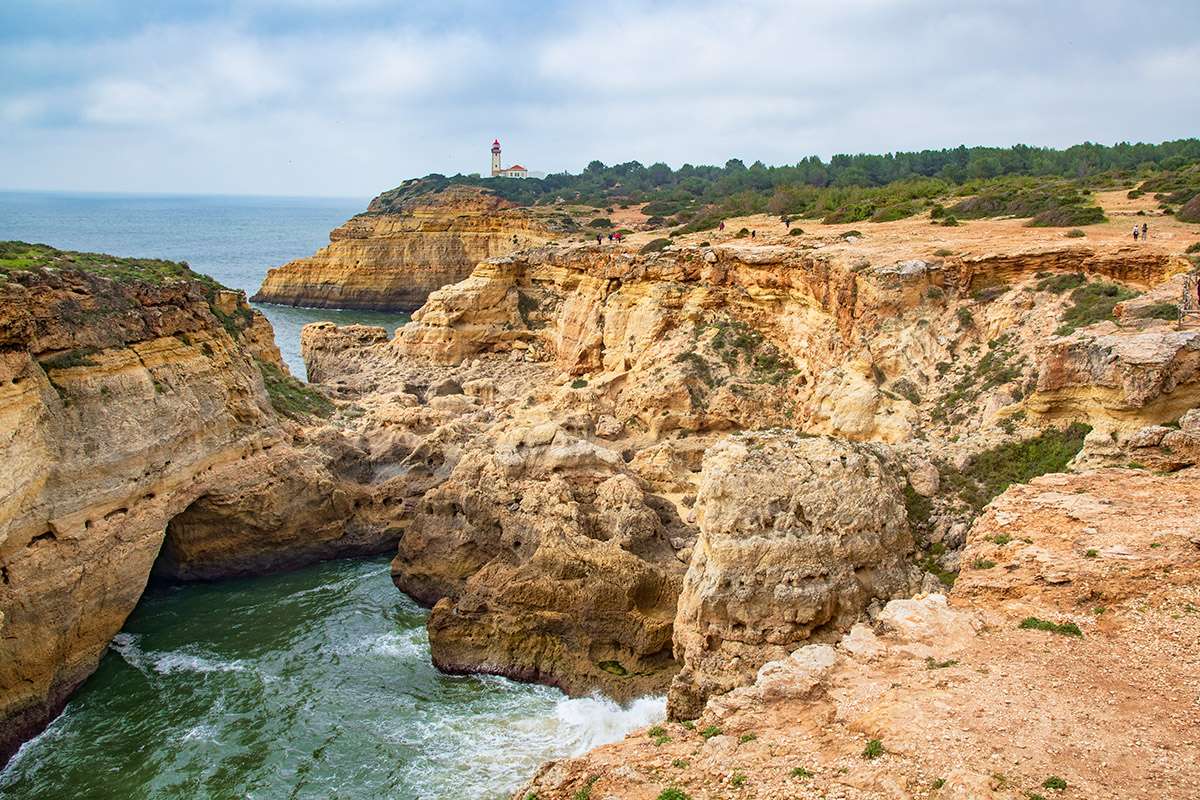
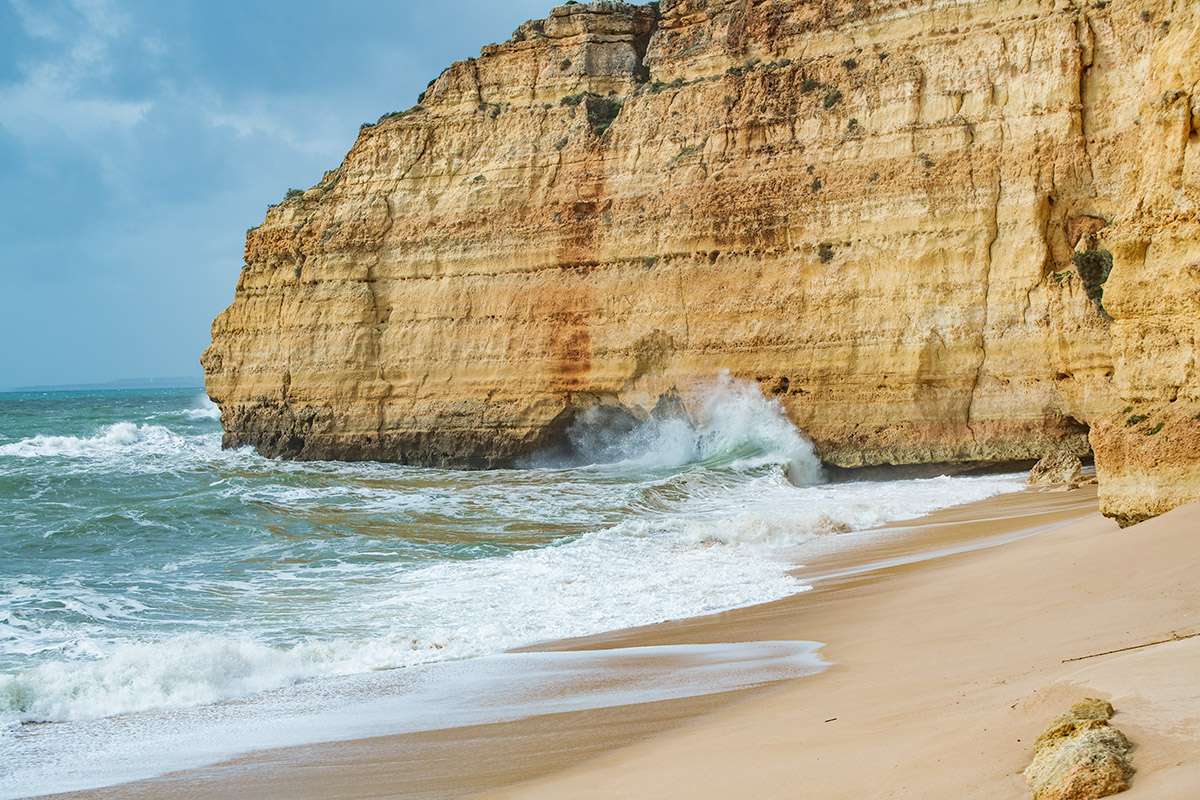
Hiking the Seven Hanging Valleys Trail gets us up close to breathtaking landscapes along Portugal’s southern Algarve coast. We walk by multi-coloured sheer cliffs dropping into the Atlantic, limestone arches, sea stacks, caves and sinkholes, and some of the most picturesque beaches in the country.
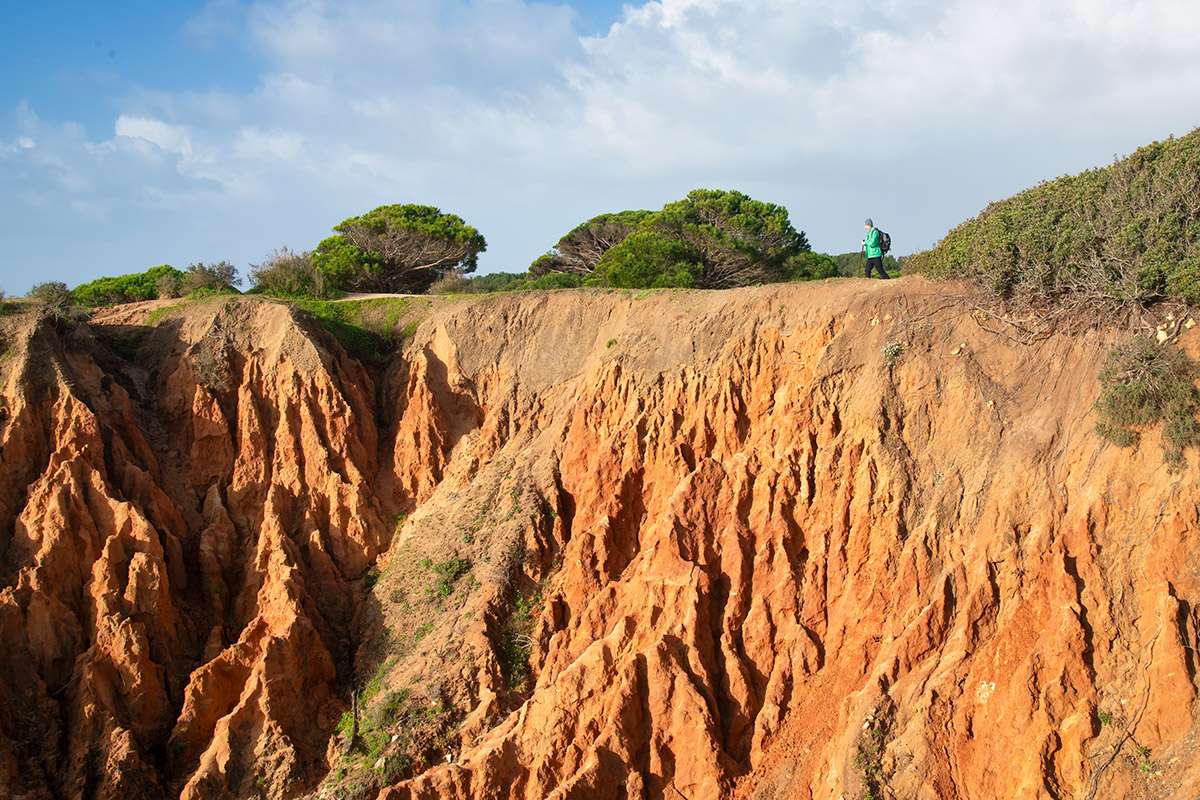
The valleys are called hanging because of a geological phenomenon whereby steep ravines running into the sea were formed over thousands of years by erosion in the soft limestone. The coastline also receded in the distant past, resulting in the mouths of the streams no longer running all the way to the seashore, but rather higher into the cliffs.
Where do we Find the Seven Hanging Valleys Trail?
The closest major town is Lagoa, roughly midway between the cities of Albufeira and Portimao. The approximately six-kilometre-long trail runs from Praia da Marinha, or Marinha Beach, on the east end and Centeanes Beach on the west end.
Is the Trail Easy or Difficult?
While six kilometres doesn’t sound too daunting, there’s plenty of up and down along the way. We walk mostly high on the cliffs, but also descend and then climb out of each valley, sometimes on steep staircases.
The hike is usually rated as “moderate”, which is quite subjective depending on who is doing the rating, but it should be doable for most people with average abilities. Although not technically difficult, the trail has some steep sections and several places where you have to watch your footing on uneven surfaces, loose stones, or limestone that can get slippery.
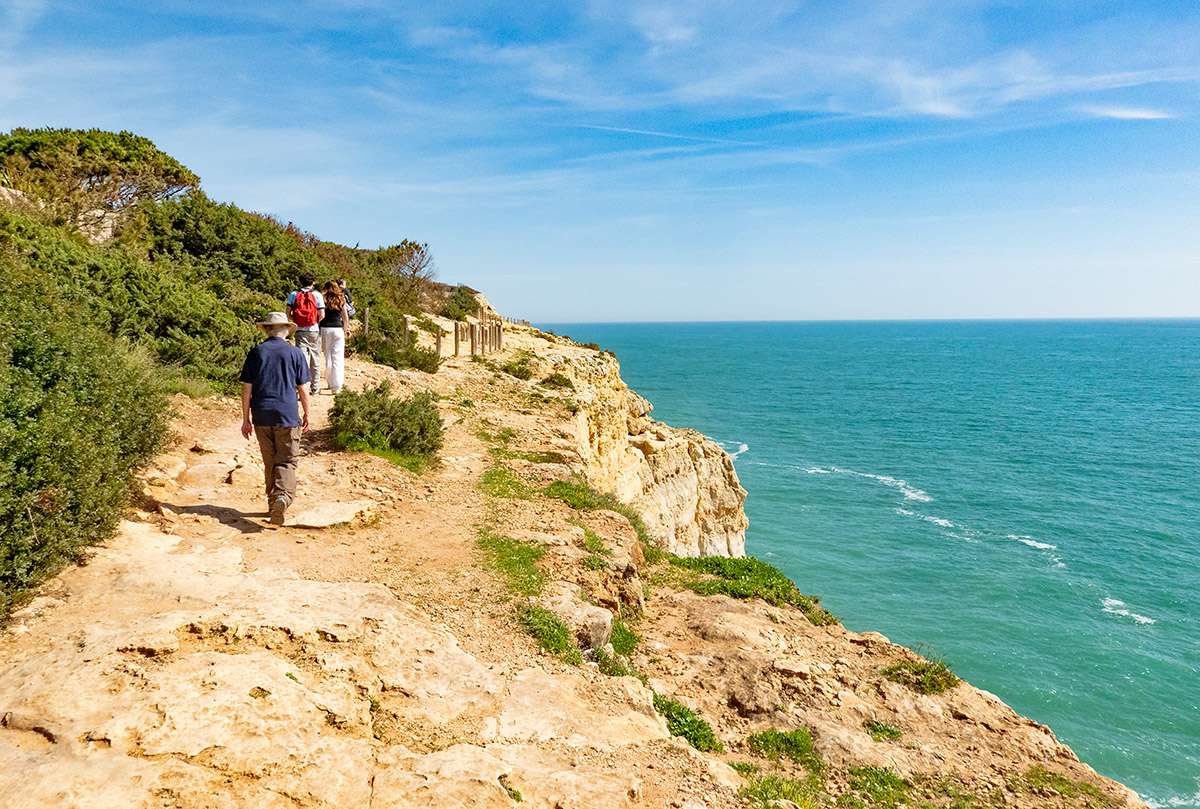
Many guides to the trail suggest that it takes about three hours to walk one way, which is highly variable depending on how fast you go, how many stops you make, if you take time for lunch, or take detours to lookout points or beaches. For avid photographers, we would suggest allowing a lot more than three hours, since it’s so tempting to stop at every turn for yet another must-get shot.
Highlights of the Trail
While you can start the trail at either end, beginning at Marinha Beach is usually preferable for a few reasons. There’s a fairly large free car park which is handy for leaving your vehicle while on the trail. Another advantage is that if you start in the early morning, you walk west so the sun won’t be in your eyes.
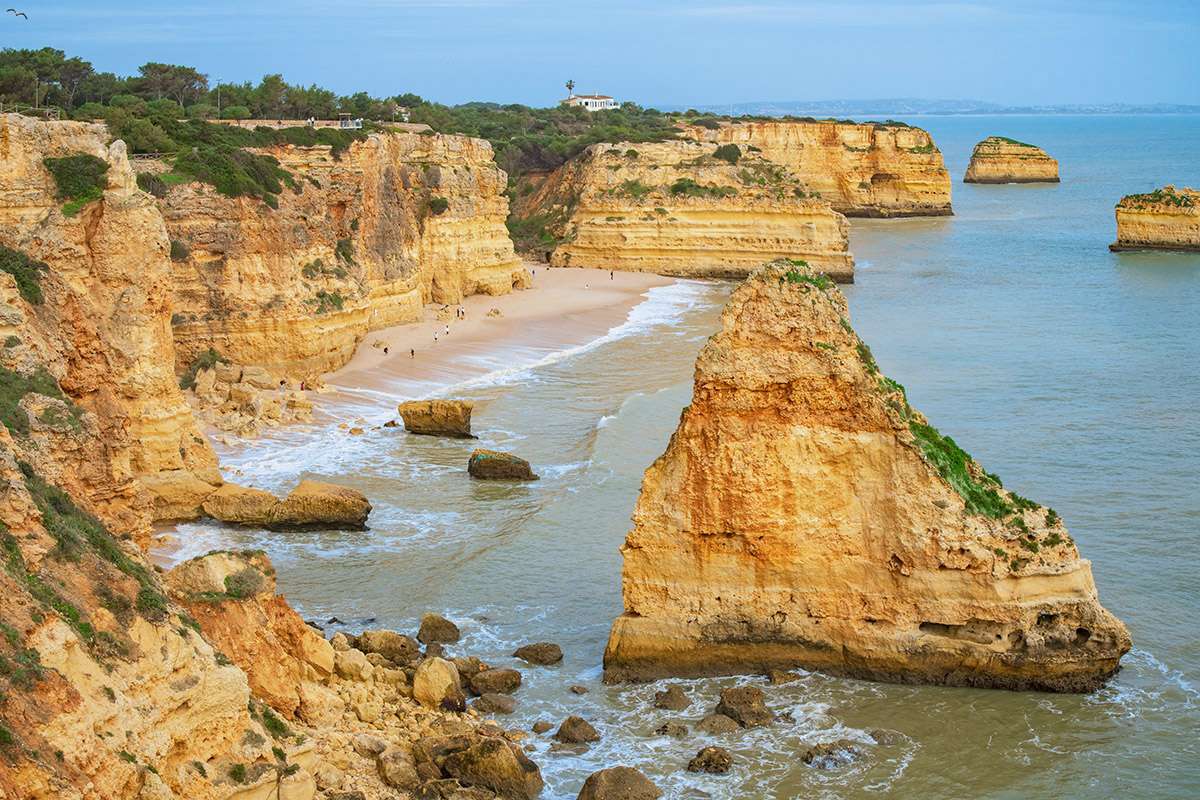
But the top reason is that the area around Marinha Beach has the most stunning scenery, and you can better appreciate it when you’re fresh rather than tired at the end of a hike.
For photographers, this is one of the top places to come for sunrise. You can shoot towards the rising sun from near the beginning of the trail, and if you shoot with the sun, the cliffs and sea stacks take on an intense golden glow. If you come for sunrise, and start the hike immediately after, you’ll beat the heat and the crowds.
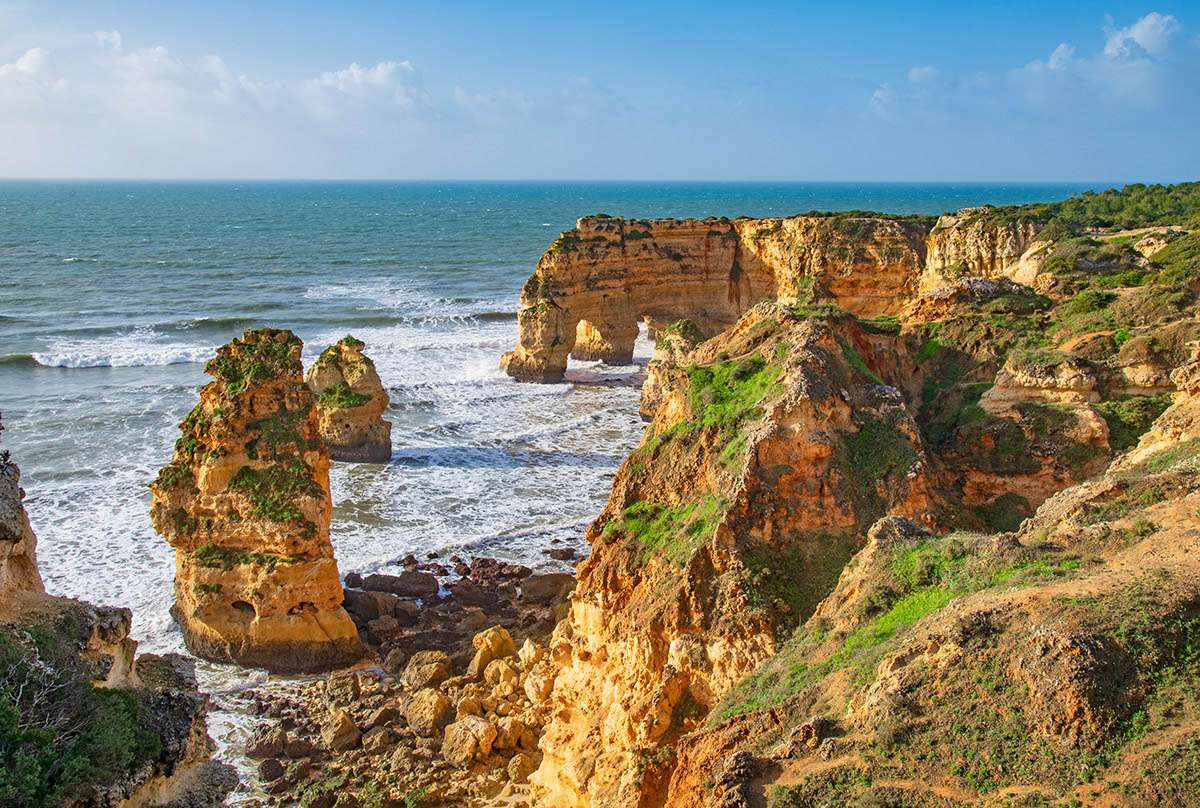
Marinha Beach usually makes the list of the top beaches in Portugal, and indeed in the world. From the beginning of the hike, we look down on the beach from atop the cliffs. To reach the beach, we have to take the stairway that descends the cliffs just east of the lookout point at the trailhead, so this should be done before starting the trail.
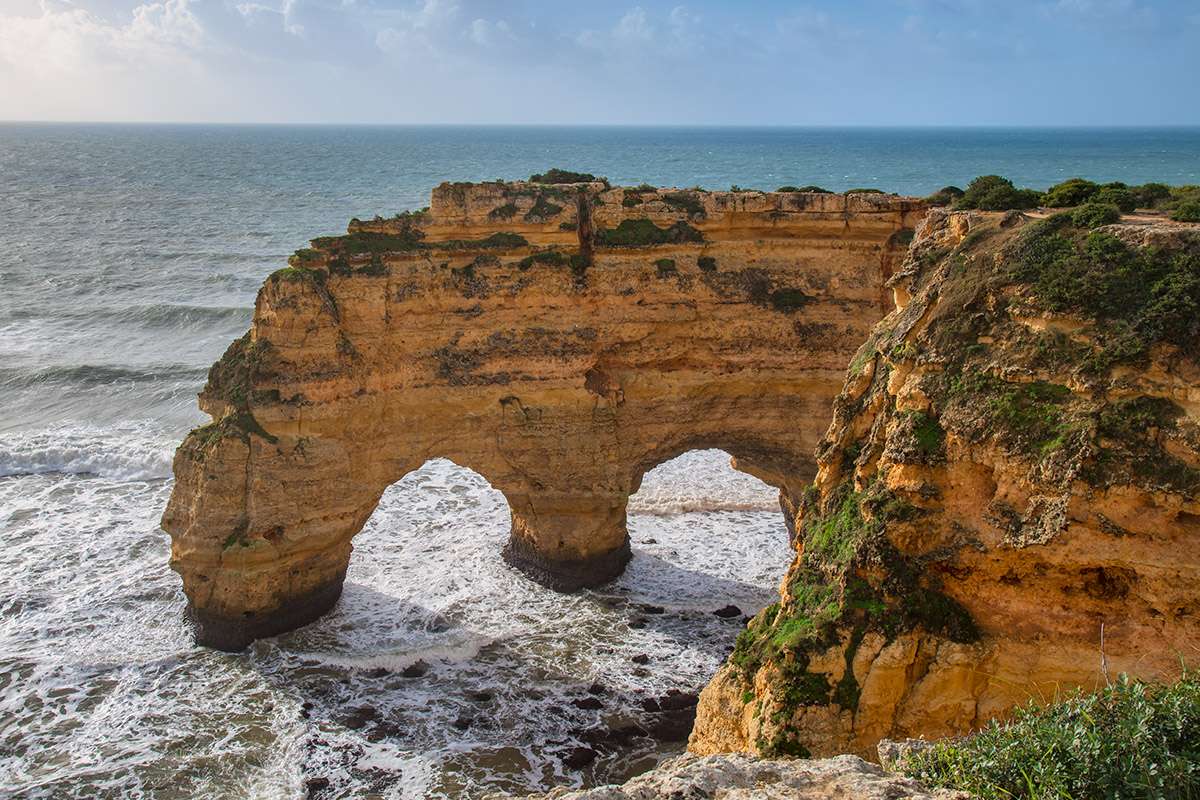
This first stretch has one mesmerizing sight after another. A highlight is the double-arched headland, sometimes referred to as the M-Rock.
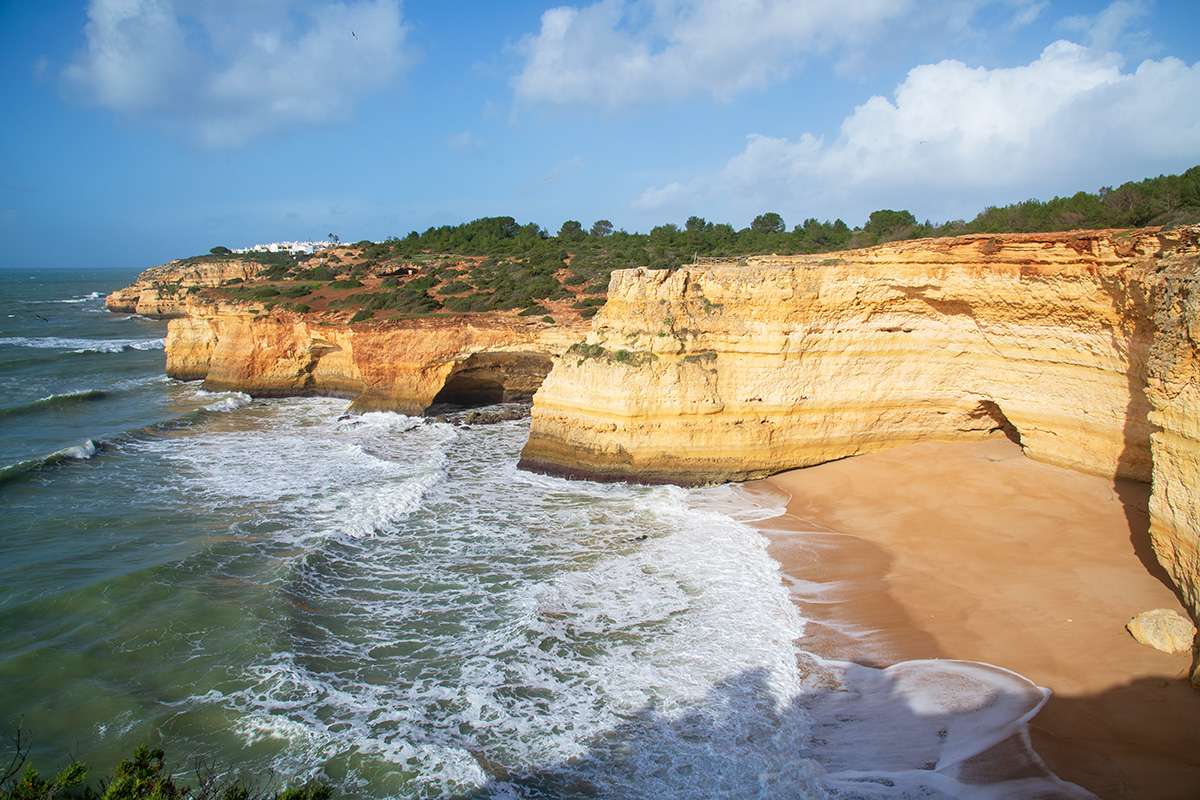
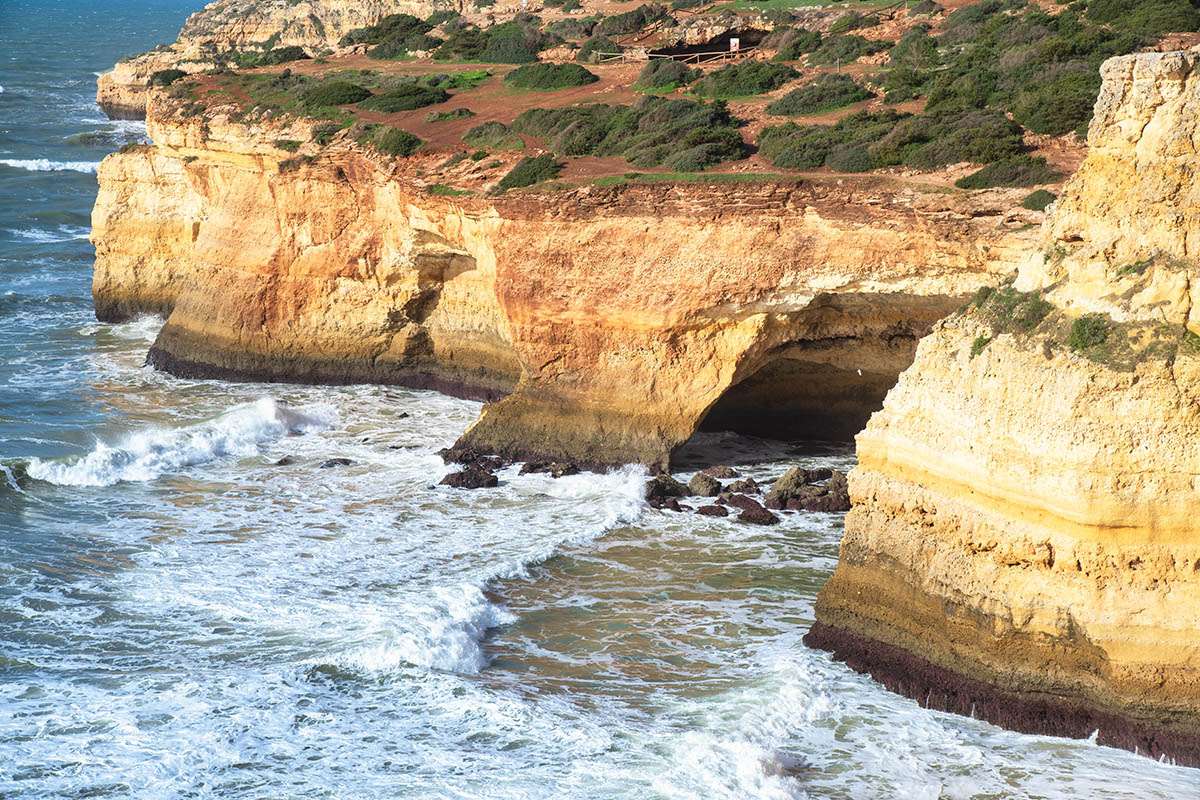
We soon come to Corredoura Beach, and in the short distance between here and Benagil Beach, we look down at many caverns and arches carved into the cliffs. The famous Benagil Cave is best appreciated from the water on a boat trip rather than from above.
The Hidden Beach
A bit west of Benagil, we come to the unusual Carvalho Beach. As we walk down the valley slope, we can see people on the sandy beach, but it isn’t immediately apparent how to get there since it is completely surrounded by high cliffs.
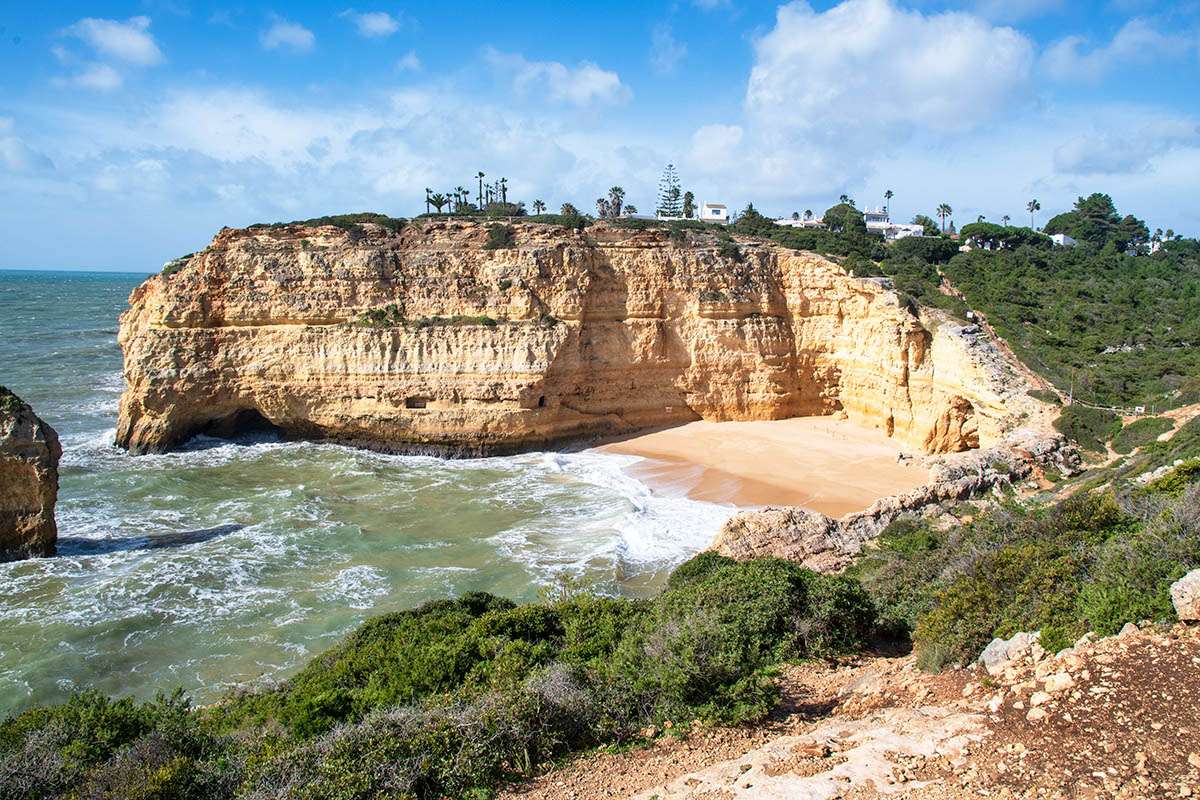
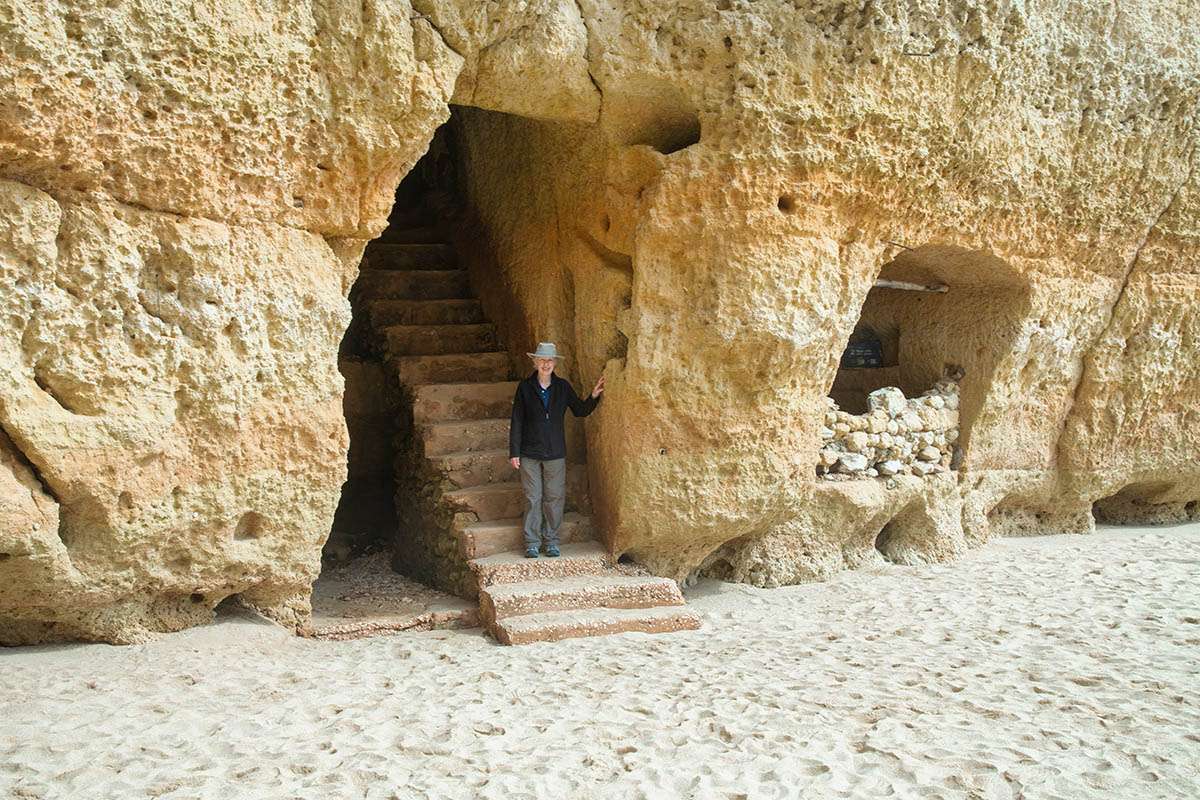
It has a hidden entrance just off the path (some hikers walk right by it without knowing it’s there) leading into a narrow man-made tunnel carved into the rock and leading down a series of steps to the beach. It’s quite a sight once you arrive, standing on the small picture-perfect beach surrounded by vertical walls rising straight up.
The next section takes us along cliff edges with even more amazing views over sea stacks, caverns, and the tiny remote beach at Vale Espinhaço. From there, a short, steep section follows where you can hang onto a rope as you climb up the rocky path.
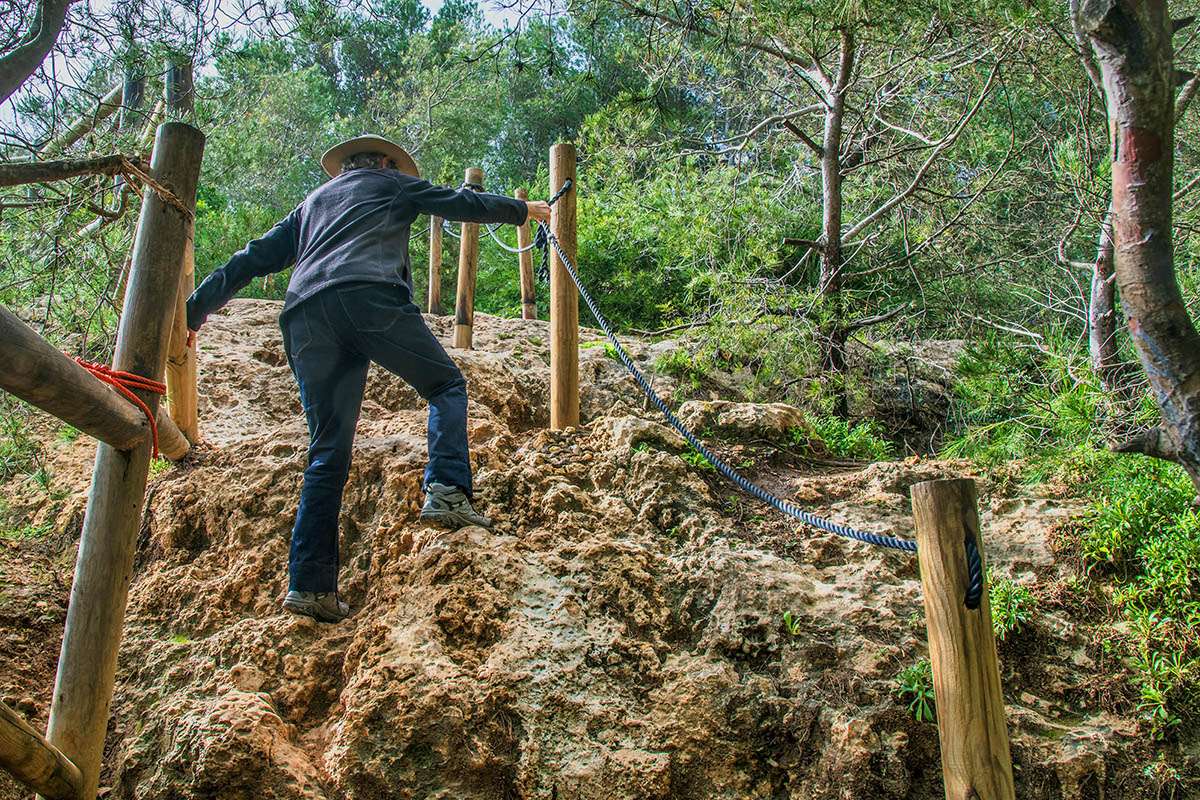
Once on top, we soon arrive at Alfazina lighthouse, and from here it is only 1.3 kilometres along the cliff edge to the end of the trail at Centeanes Beach. Like many stretches along the route, we are quite close to tourist developments near the coast, but the walk still has the feel of a wild natural area.
Things to keep in mind when hiking the trail
Neither of the starting points for the trail is close to a major town. This isn’t an issue if you have a car. There is no public transport to the trailheads, so without a car you may have to take a taxi or Uber from one of the communities in the area.
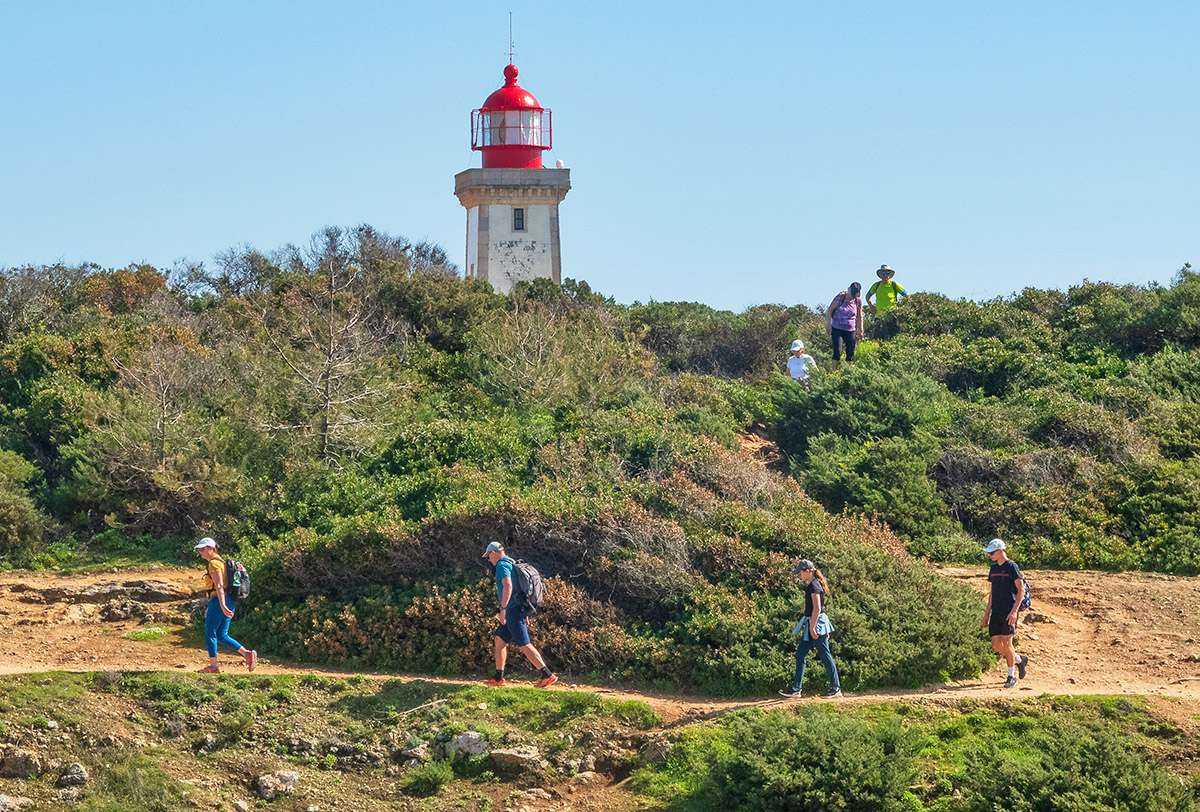
Be sure to take enough water and some snacks. There are beach cafes along the way, but these are mostly closed in winter. Shade is scarce, apart from a few juniper and pine trees here and there. Keep this in mind in hot weather and take a hat and sunblock.
Options for Hiking the Trail
Because this is a linear trail and not a loop, you have to decide what to do when you reach the other end, especially if your car is parked where you started. Some people simply turn around and walk back, making it a 12-kilometre hike. You could also call a taxi or Uber at the far end to take you to your car.
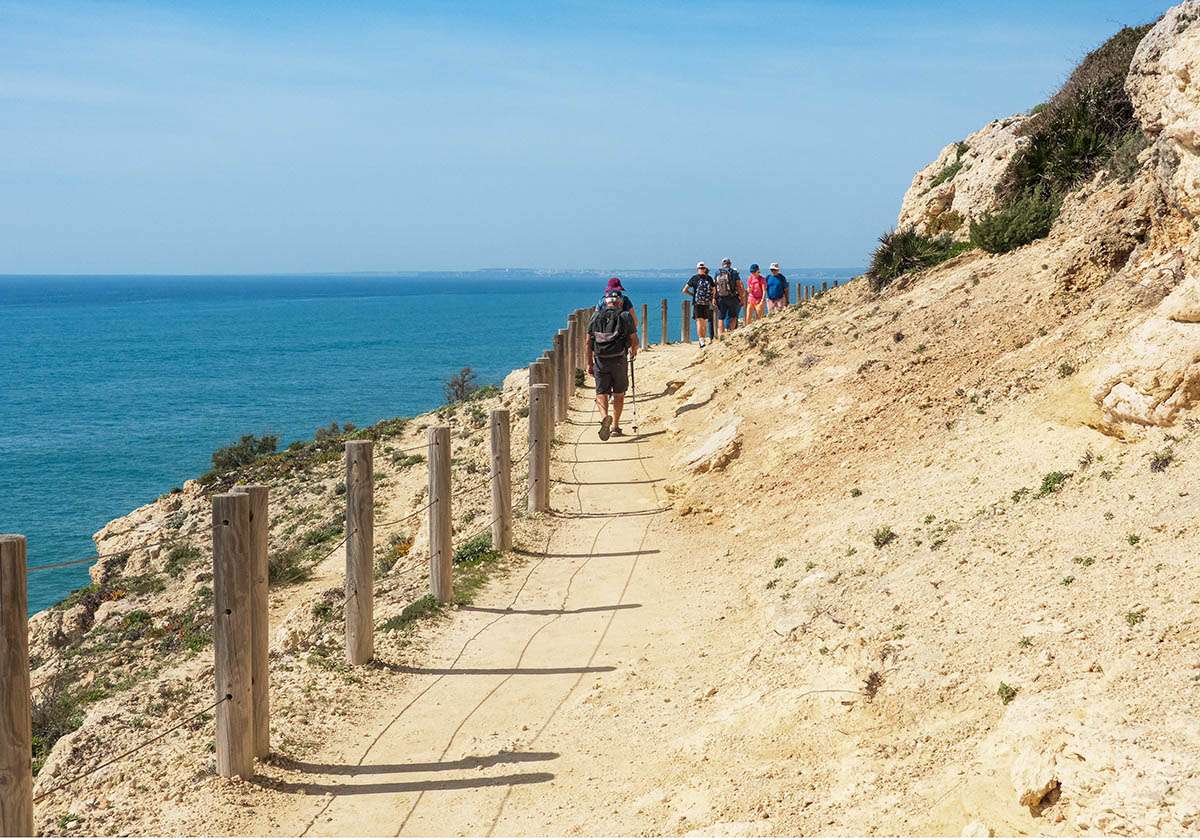
Yet another option is to break the trail in sections. Drive to Benagil Beach, Carvalho Beach, or Alfazina lighthouse, and walk a section to a turn-around point, and then back again. If we were to pick only one section, it would definitely be the stretch between Marinha Beach and Benagil Beach.
When to Go
You can walk the trail year-round. We went in winter, which was ideal, not only for the trail but for visiting Algarve in general. The amazing beaches are chock-a-block with tourists in summer, many of whom walk the trails as well. Parking lots near the beaches often fill up, plus the heat can be uncomfortable for hiking.
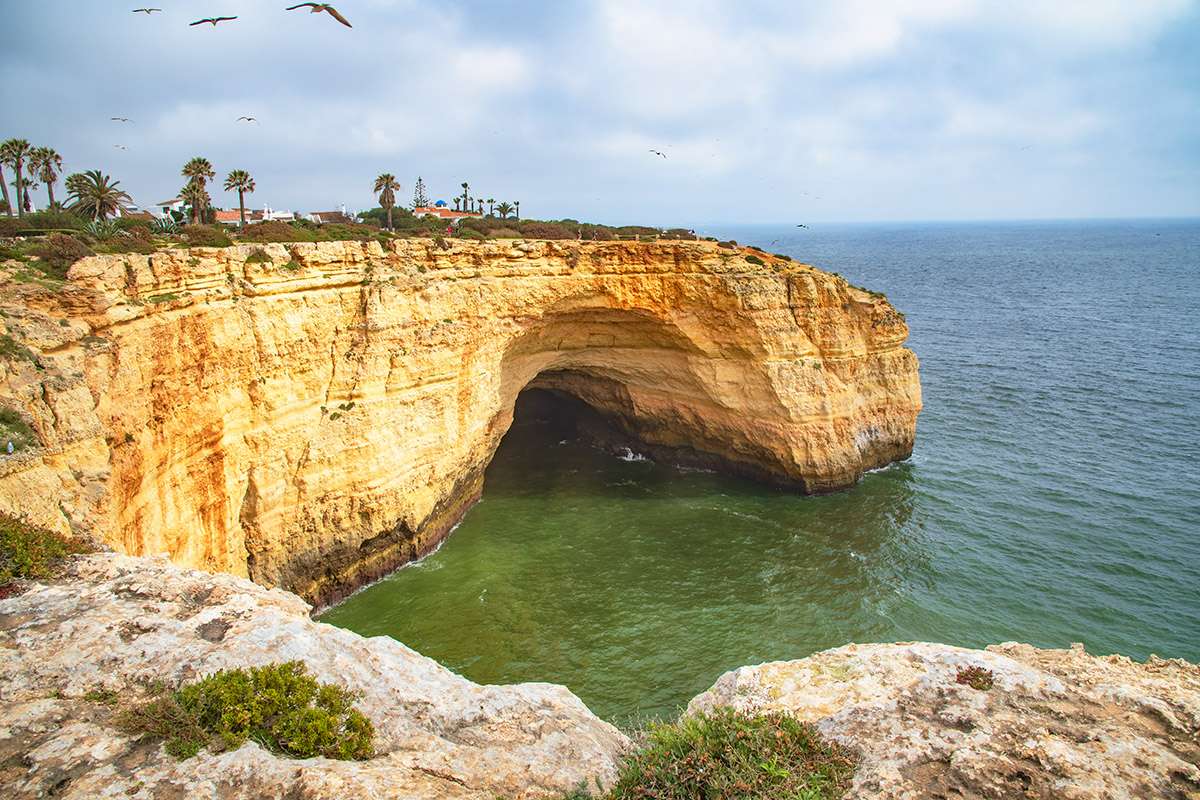
But in winter, when it’s too cool for swimming, the crowds of beachgoers are gone. With temperatures usually in the mid to high teens, and sometimes reaching the low 20s degrees C, it’s perfect for hiking. However, the winter brings more changeable weather. There were always people on the trail when we visited in February, but it was never crowded, and we had no trouble finding parking at the beach parking lots.
Final Thoughts
There are other spectacular stretches of coastline in Algarve, and other great hikes throughout Portugal. But if you were to pick one that has some of Algarve’s most scenic coastlines, plus is not too long and not too difficult, the Seven Hanging Valleys Trail would be hard to beat.
Other articles on Portugal you might enjoy
SUBSCRIBE to Photojourneys below
Feel free to PIN this pos on Portugal’s Seven Hanging Valleys Trail