All photos © Robin and Arlene Karpan
When we think of landscape photography, we usually visualize grand sweeping scenes captured with a wide-angle lens. While a wide perspective is usually still the best option in most cases, there are some situations where a longer telephoto lens might be preferable for the artistic vision that we’re after.
A telephoto lens is generally considered any focal length that is longer than our so-called “normal” field of view, which is around 60mm or so, and that magnifies the subject. Many mid-range zoom lenses, such as a 24-120mm lens, have both wide-angle and telephoto capabilities. Lenses that are strictly telephoto come in a wide array of focal lengths such as 70-200mm, 100-300mm, 80-400mm, or 600mm to name only a few, and can be either zoom or prime lenses (those with a fixed focal length).
1 – Telephotos allow us to photograph difficult-to-reach places
Some places are difficult or impossible to get to, so a telephoto lens can bring the landscape to us instead. It might be a small rocky island just offshore, a rugged coastline where it is treacherous to walk, or a distant mountain peak.

2 – It makes it easier to eliminate distractions
A telephoto may help to create order out of chaos and simplify the scene. Sometimes we come across a beautiful scene, but not all of it is beautiful. A highway or power lines may run in front, a construction site is to one side, or attractive light is illuminating only part of the scene. A wide lens takes everything in, but with a telephoto you can zoom in to the part that caught your eye, such as these monoliths on Quebec’s Quarry Island.

3 – We can increase the prominence of the sun or moon
When the sun or moon is a significant element in your image, a telephoto lens can help to give it more prominence. With a wide-angle lens, any objects in the background, including the sun or moon, might seem abnormally small. With a telephoto lens, it’s possible to make the sun or moon seem a lot larger in relation to your subject, even enormous if you use a lens in the 300-600mm range.
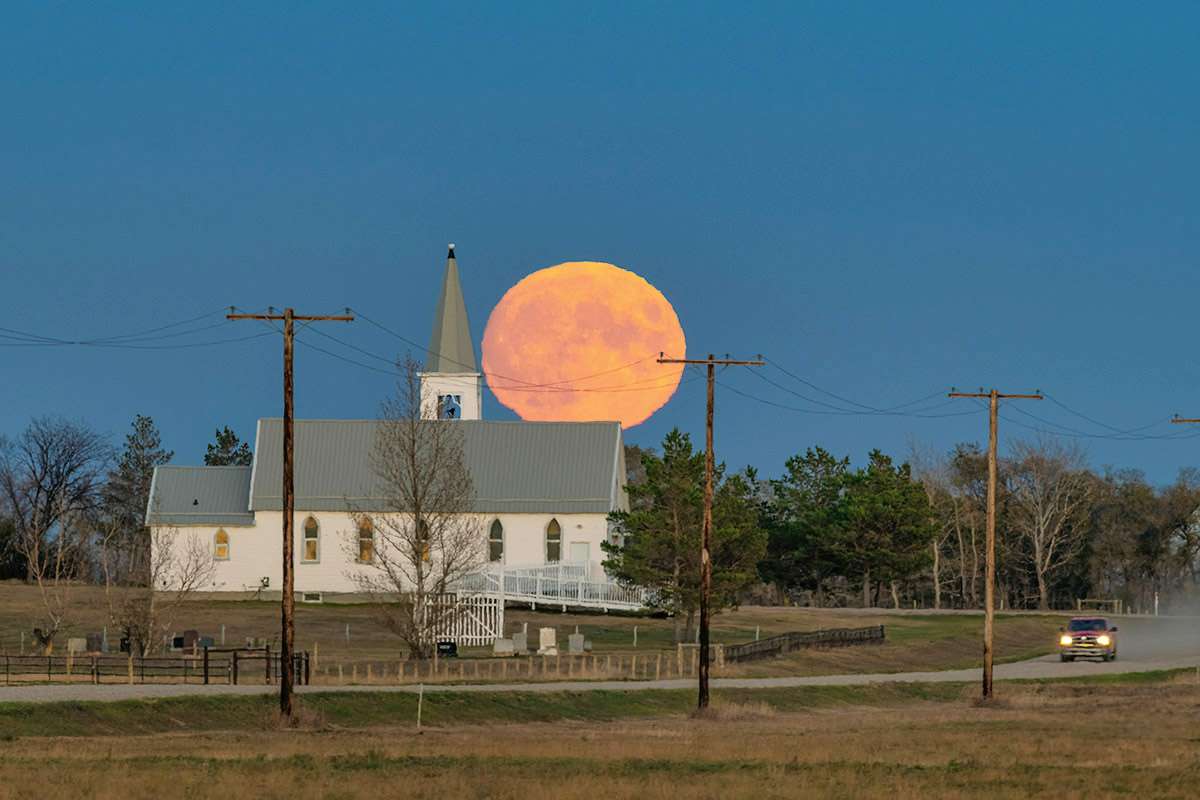
The trick here is to also pick a vantage point that is far enough away from your foreground subject so that you zoom in on it, making the moon behind it appear larger in relation to it. For really long telephotos such as 500-600mm, this could be a kilometre away or more. The longer the focal length, the more we need to pay attention to the depth of field to keep everything in focus. We get into more detail on how to do this in this posting – How to Photograph the Full Moon.
4 – Telephotos can give us a more intimate view of the landscape
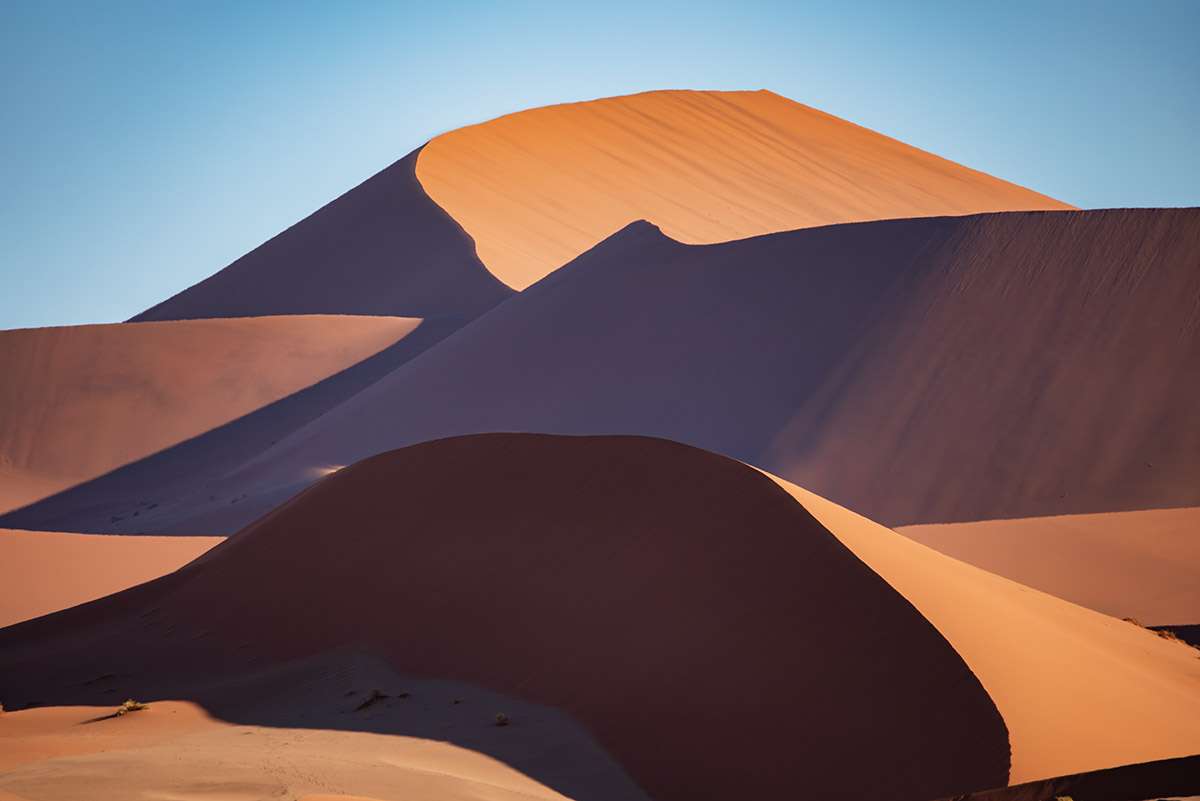
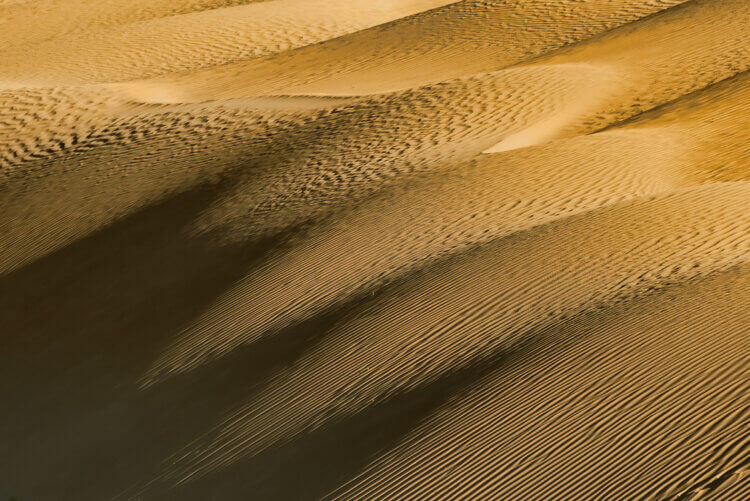
Sometimes it’s a piece of the landscape that catches your eye rather than the overall scene. So why photograph more of the terrain than is necessary? We can also isolate one area to create an abstract rather than a literal interpretation of the scene. Including only what is necessary is good advice no matter what lens you’re using, but a telephoto helps us to zero in on a small part of the scene.

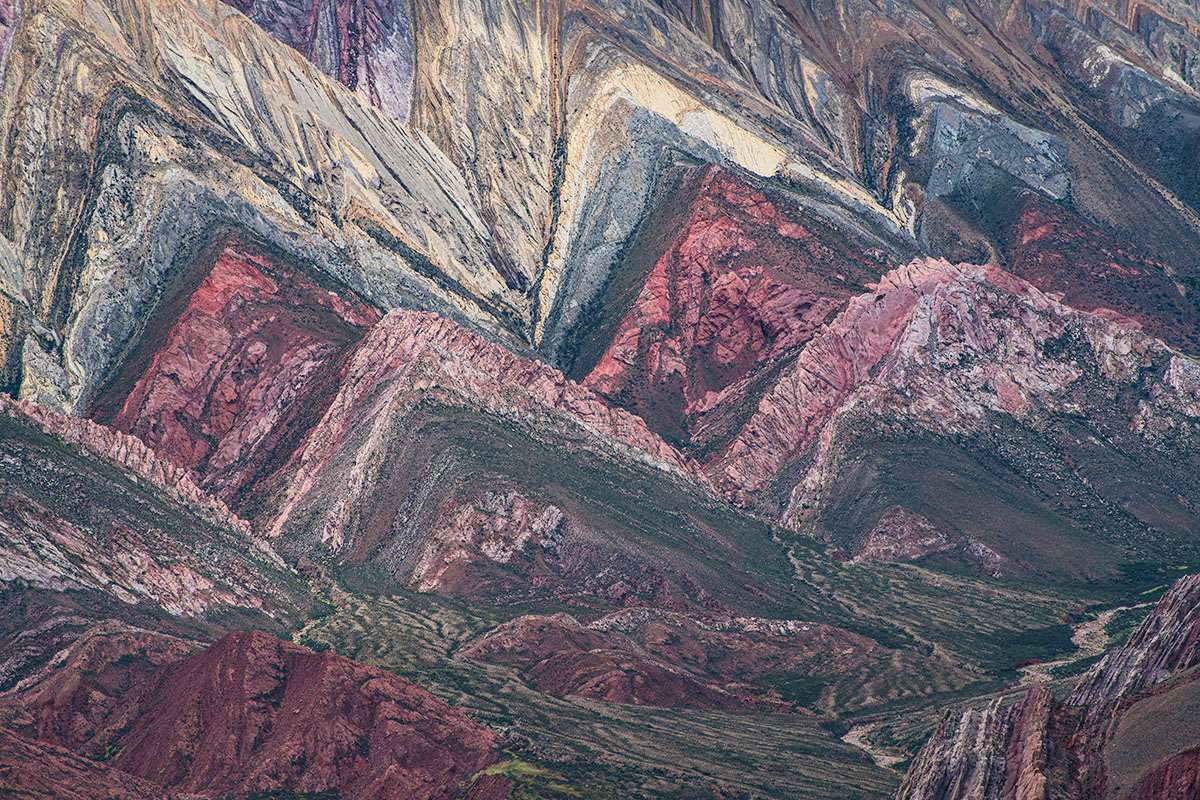
5 – Telephotos multiply your photographic possibilities
Using a wide-angle lens at a photogenic viewpoint gives one perspective, unless you wait for changing light or move around to find other angles. But with a telephoto, it’s possible to get several different images from the same spot.
Let’s say that you’re looking over a valley with a river, golden trees line the water in the autumn, and the background is a line of mountain peaks. That would probably make a great wide-angle shot, but why stop there? Switching to a telephoto lens opens up possibilities such as zooming in on a particularly colourful clump of trees, reflections in the river, or a specific rugged-looking mountain face.
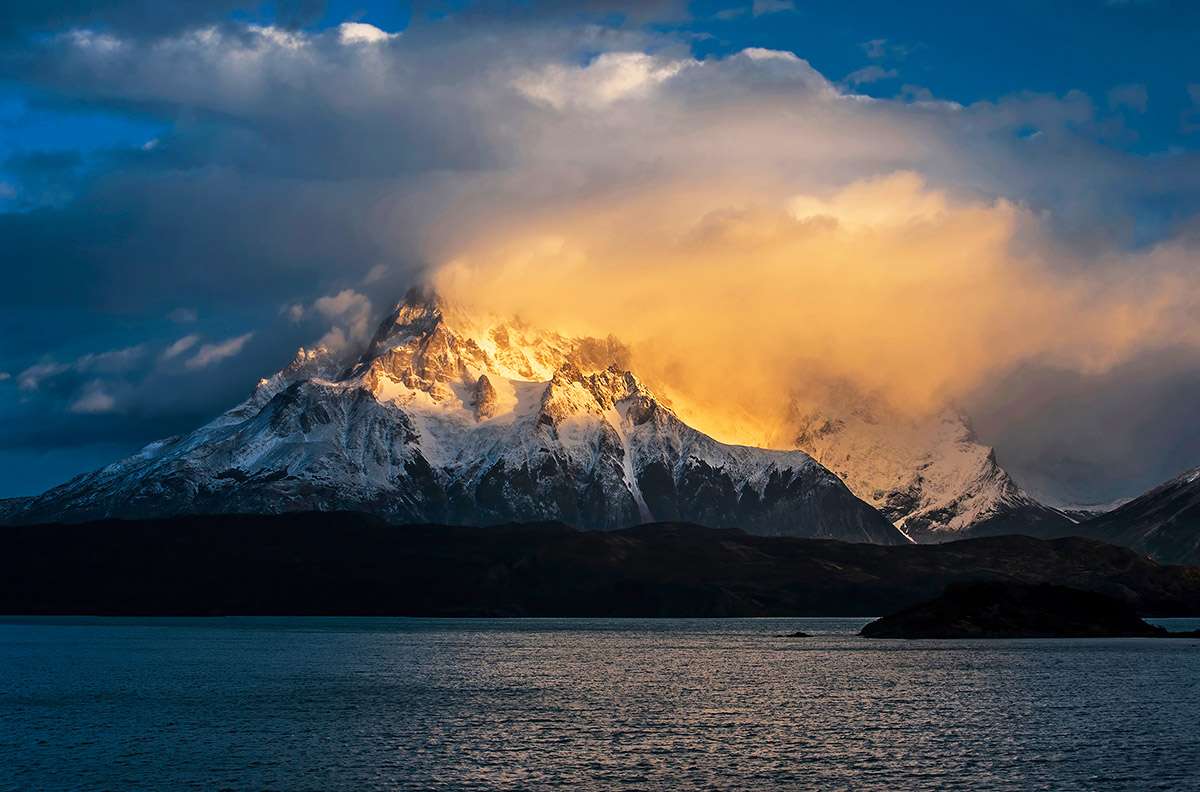
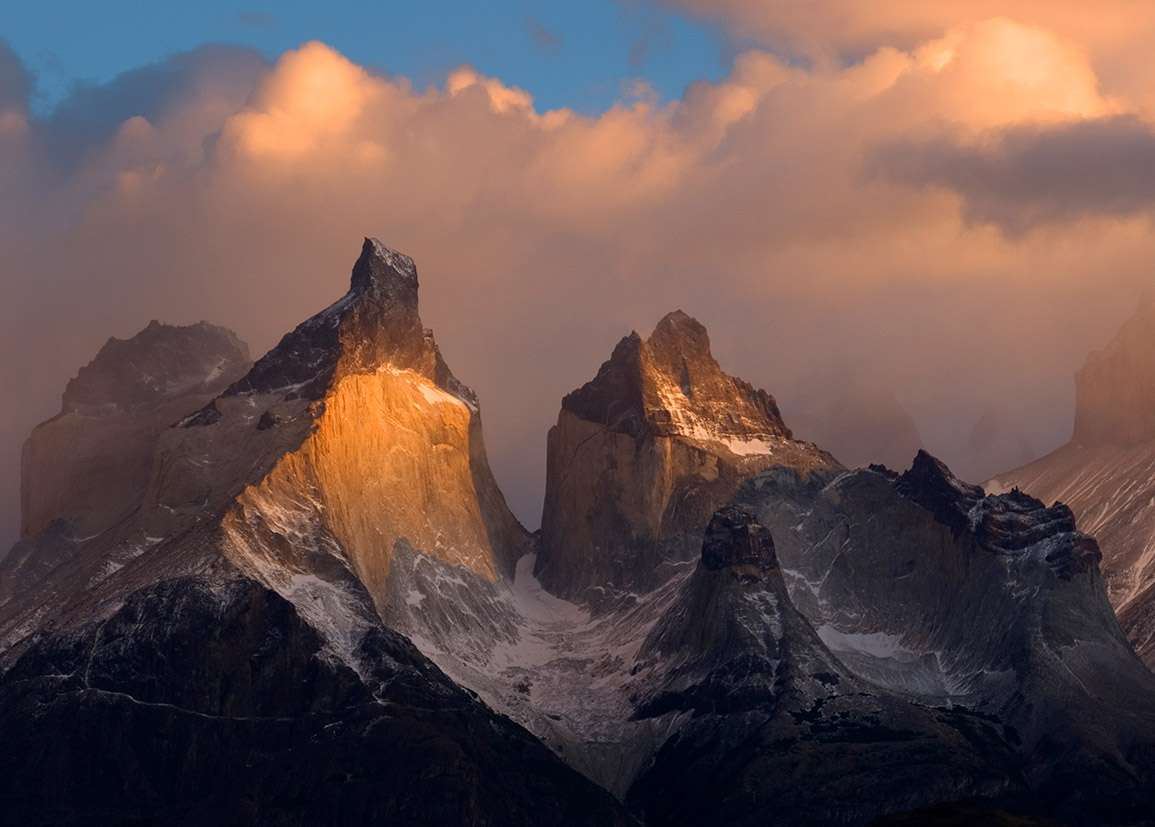
The following two sunrise photos in Torres del Paine National Park in Chile were taken from the same vantage point. The first is a 35mm wide-angle shot showing a mountain and its setting on the edge of the lake. The second is another mountain peak beside it where I zoomed in to provide a closer view of the sun hitting one section of the mountain.
6 – Use telephotos to compress the scene
When we photograph a landscape with a telephoto lens, such as in the opening photo using a 500mm lens, the elements from front to back look more compressed, as if they are closer together than they actually are, just as a wide-angle lens makes them look farther apart. One is not necessarily better than the other – it all depends on the effect that you are after. Compressing the scene is especially useful when we want to show layers in the landscape, often making them appear as if they are overlapping.
7 – It’s easier to de-emphasize a bland sky
A successful grand overview landscape using a wide-angle lens usually requires both the land and sky to be attractive. But sometimes Mother Nature doesn’t cooperate and hands us a bland, non-descript white sky, even though the rest of the scene may look inviting. An option using a wide lens is to point the camera down more, decreasing the amount of sky in the frame or even eliminating it. This may or may not work, depending on the scene. By switching to a telephoto lens, it opens up more options in framing the scene while decreasing emphasis on the sky or leaving it out of the frame entirely.

8 – Isolate leading lines at a distance
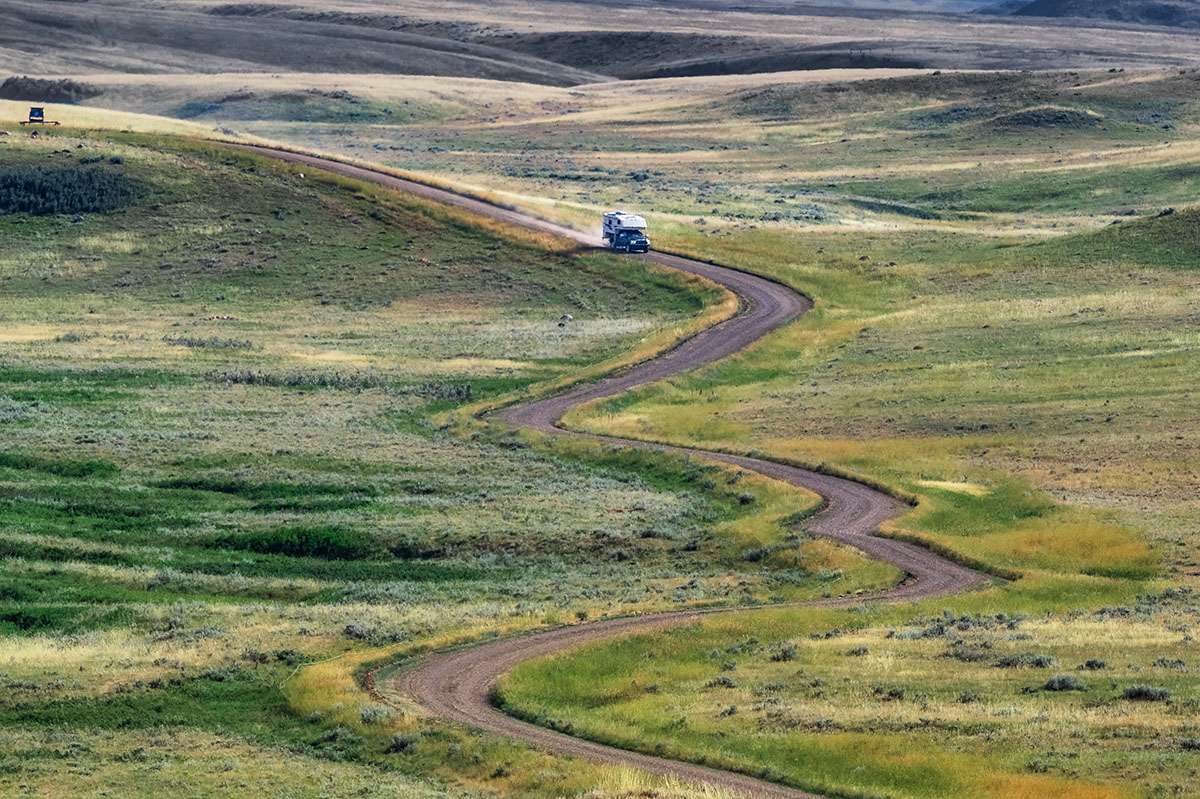
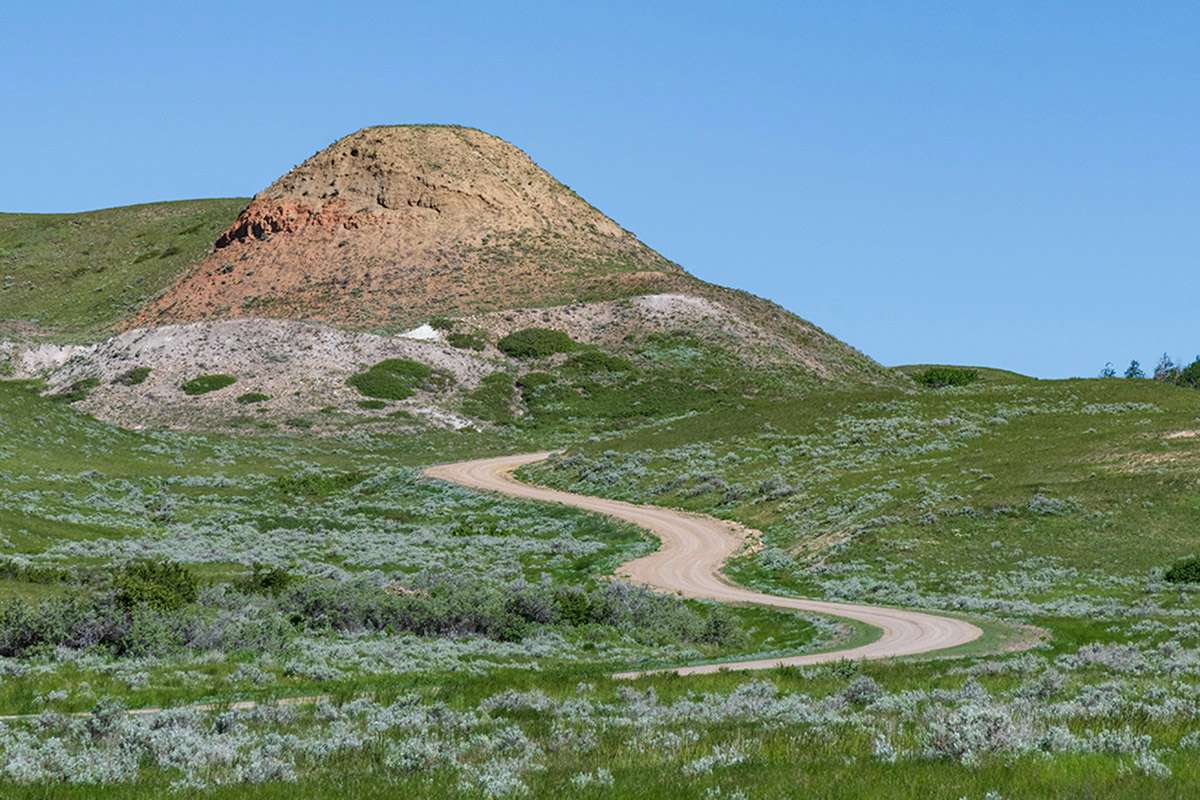
A useful tool in creating a composition is to use leading lines – something in the foreground (or even other parts of the frame) that lead your eye to the main subject in the scene. Sometimes leading lines are not immediately obvious when looking at a wide view, but may exist in a more isolated part of the scene. In the following image, the foreground was quite busy, but by using a telephoto, I was able to simplify the scene by including only the main subject and the curved road leading to it.
9 – Capture weather details
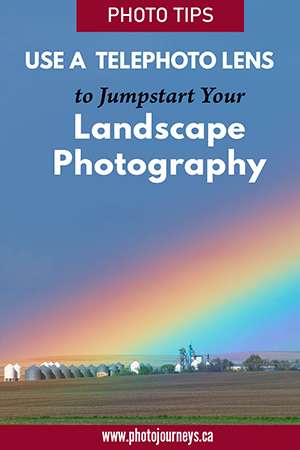
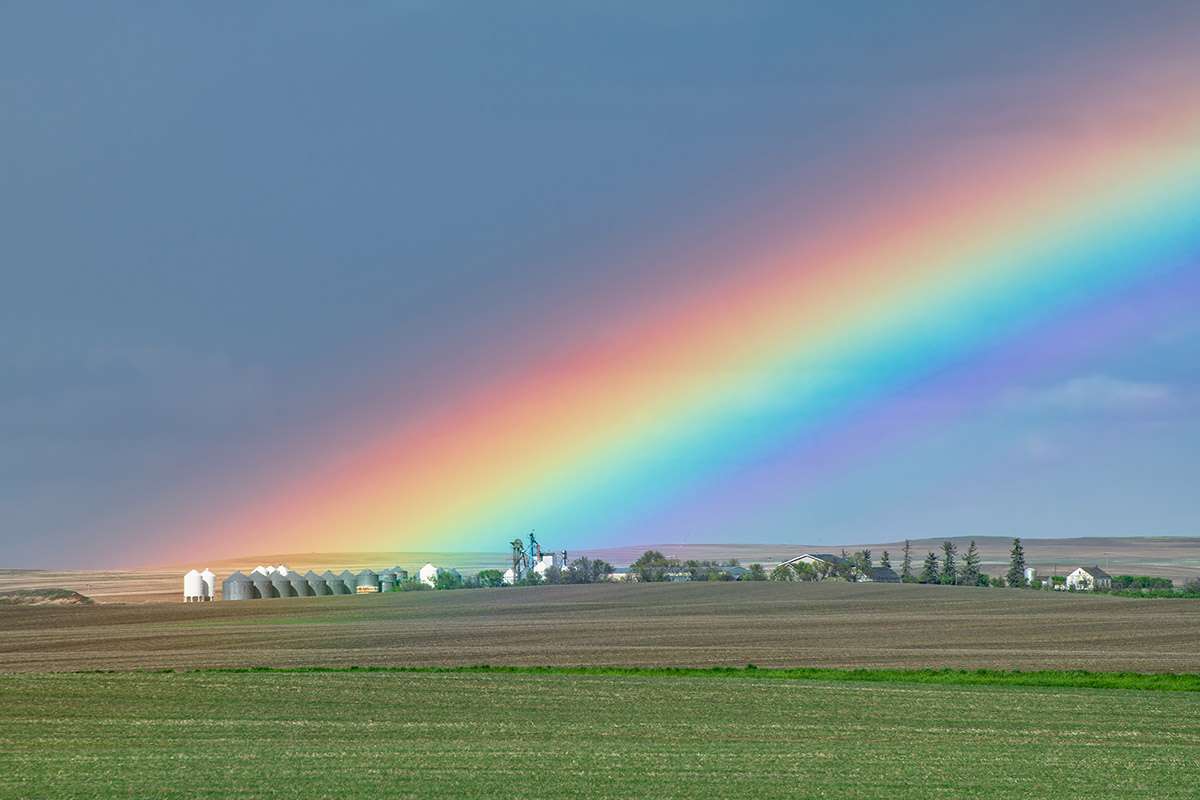
When it comes to photographing weather, wider lenses are generally the most useful, such as showing a stormy sky or the expanse of a full rainbow. But there are times when it helps to isolate part of the scene. Rainbows, for example, are not always full. Often we see dazzling colours at one end while the other end fades into clouds. So why not concentrate on where it is best and try zooming in? That way the rainbow becomes a larger part of the frame, and we can more readily see the distinct colours.
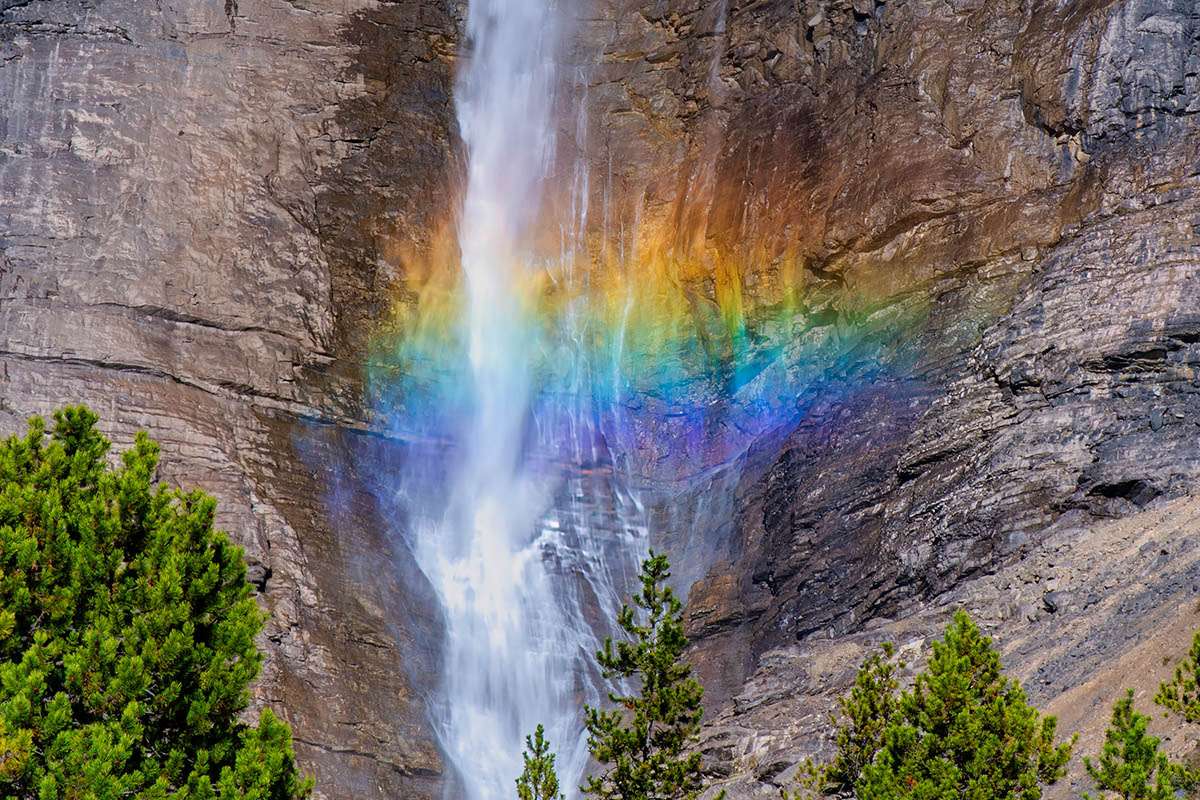
Sometimes we get a rainbow effect from flowing water, such as at a waterfall, when the sun hits it at just the right angle. These tend to be fairly isolated, so it may help to zoom in to make the effect a more prominent part of the scene.
Photographing potentially dangerous weather is safer when done from a distance. It’s not a great idea to photograph lightning, for example, in the midst of a storm. It’s a lot safer to use a telephoto lens to photograph a distant storm.
10 – Use a telephoto to isolate action to increase impact
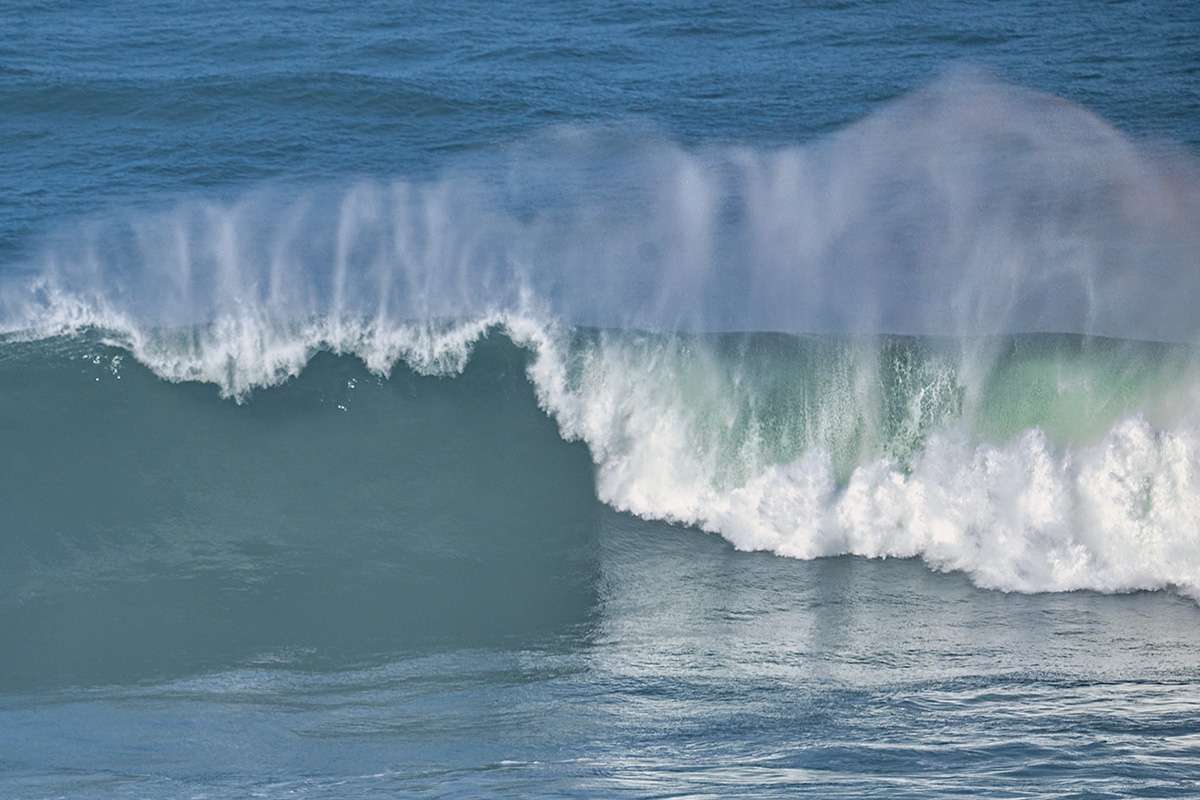
Landscapes aren’t always static scenes. Sometimes we also find action such as pounding waves. Usually we want to show the action as part of the larger scene to give it context. But sometimes the action itself is so compelling that we want to isolate it so that it fills more of the frame and creates more impact.
Choosing a telephoto lens
The good news is that choosing a telephoto lens for landscapes is easier, and a lot less expensive, than choosing one for wildlife. For wildlife, we usually want a fairly “fast” lens, such as f/4 or f/2.8 so that we can use fast shutter speeds to stop the action and get a shallow depth of field so that the critter stands out from the background. But for landscape photography we usually want more depth of field, so usually (though not always) we use f-stops such as f/8, f/11, or f/16. So we don’t need a fast lens, which is both more expensive and heavier to carry.
For us, this isn’t an issue when we are travelling by car, since we almost always have our longer telephotos along that we use for wildlife. We simply use these if the opportunity for a landscape shot comes up. But when hiking, where keeping weight down is more of a concern, our go-to telephoto for many years has been a Nikon 100-300mm f/4.5-5.6 lens (most other camera brands also have similar lenses); it’s reasonably compact, lightweight, and fairly inexpensive, but does the job when we want a longer reach.
When we want to go even lighter on a hike, I sometimes take my Sony RX100VII, a small point-and-shoot camera that fits in my pocket but has a high-quality Zeiss lens and a telephoto reach up to 200mm.
Final thoughts
When choosing between wide-angle and telephoto lenses, it shouldn’t be looked at as either-or, but rather as using whatever makes the most sense in the circumstances. Wide-angle is still the best bet for most landscapes, but including telephoto lenses as well opens creative possibilities.
Other photography articles on Photojourneys that you might enjoy
SUBSCRIBE to Photojourneys below
Feel free to PIN this article
Feel free to PIN this article