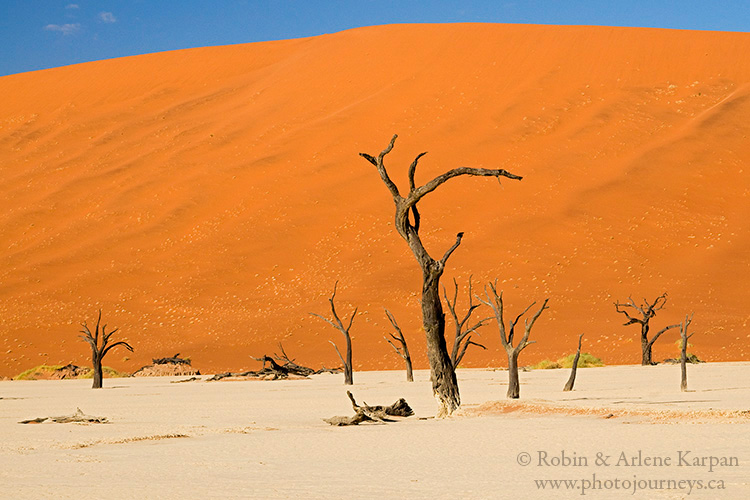
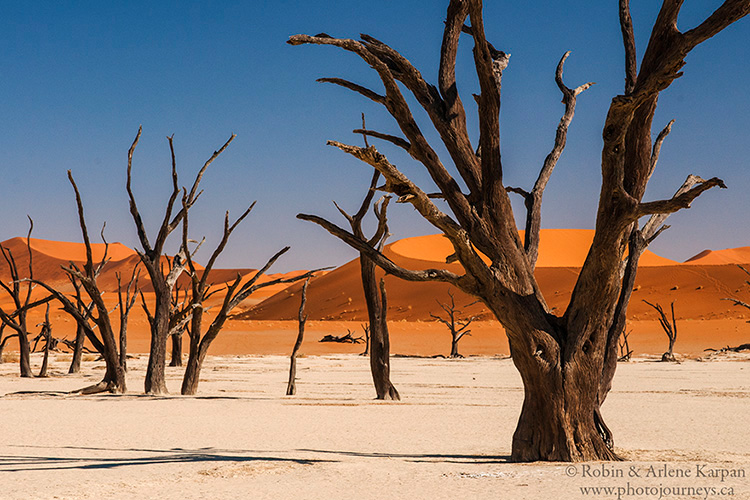
Dead Vlei is an ancient marsh that dried up hundreds of years ago.
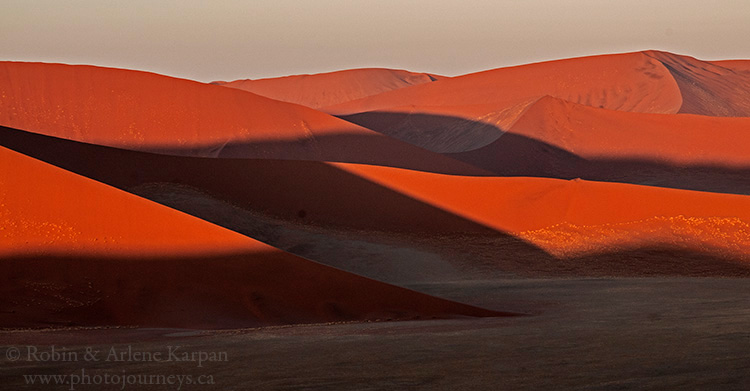
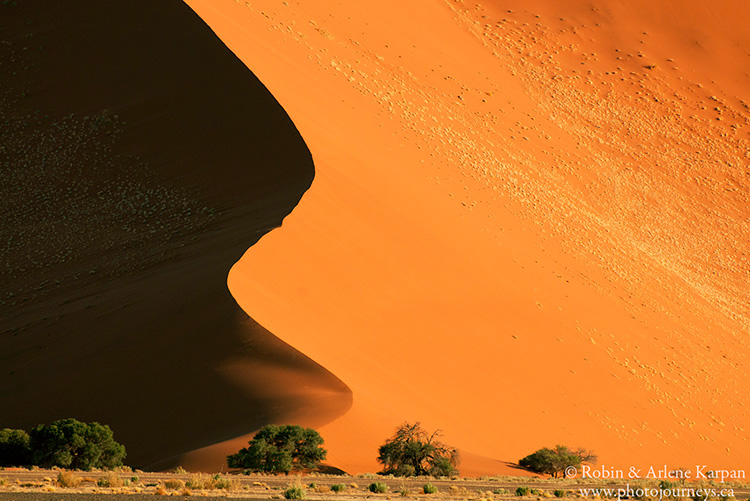
When we think about places with magical landscapes, Namibia always springs to mind. For a photographer, a visit there is like dying and going to heaven. Some of the scenes are almost unreal, especially the colours. When we looked at photographs before our first trip to Namibia, we kept asking – are those colours for real, or are people just getting too carried away with Photoshop? Once there, it was exhilarating to find that they are indeed for real – orange sand that turns a kaleidoscope of shades with the direction of the sun, or mountains with tinges of fire-engine red. It is one of those rare places that more than lives up to the hype.
Our experience with Namibia, so far at least, has been limited to the south, in places such as the sand dunes of Namib-Naukluft National Park, and the intriguing quiver tree forests. We are excited to be making another trip to Namibia shortly, returning to the sand dunes (the largest in the world) for more photography, plus exploring other parts of the country that will be new to us. So be sure to subscribe for more photos and stories of our adventures in this fascinating country.
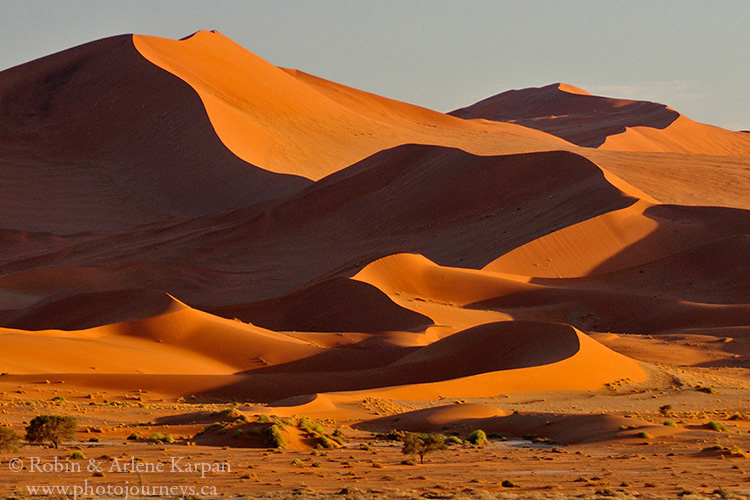
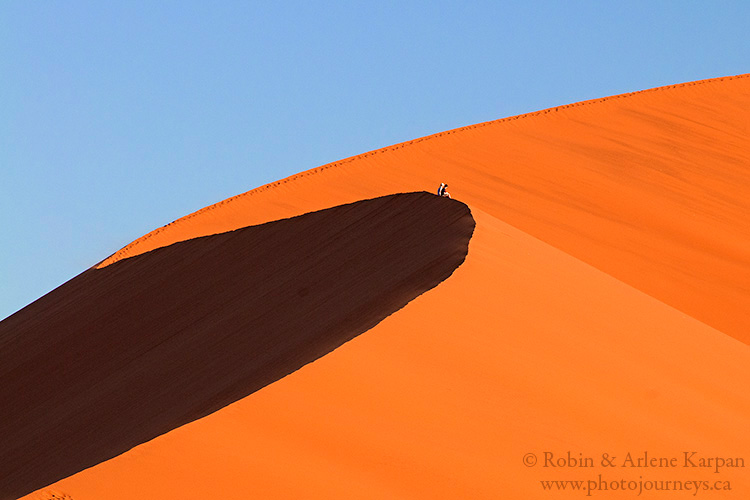
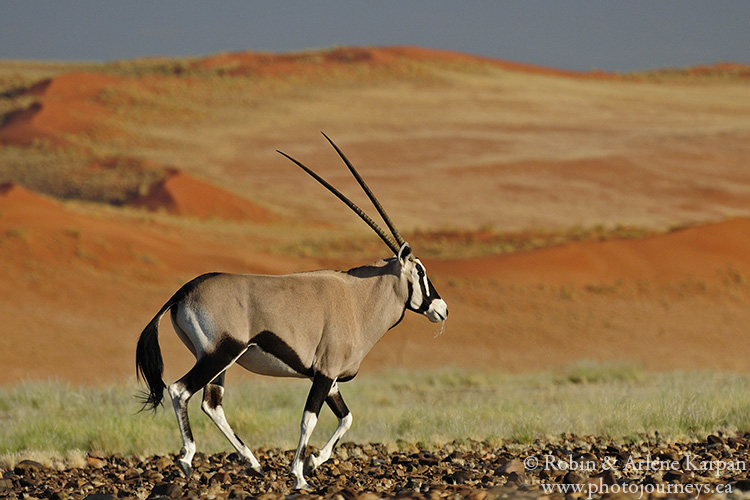
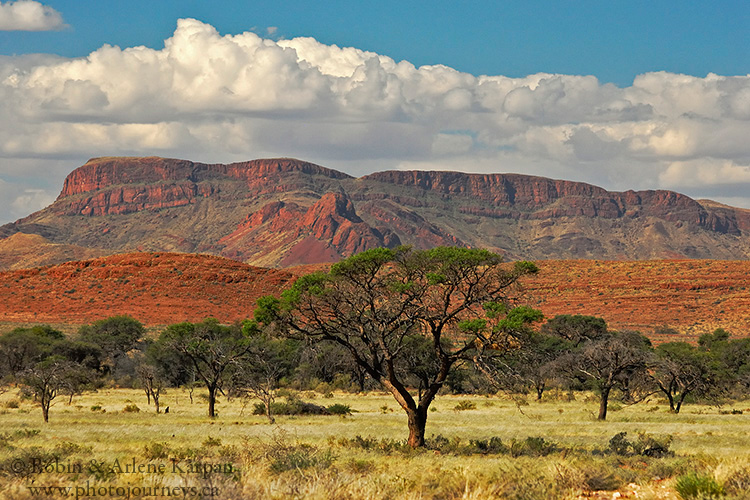
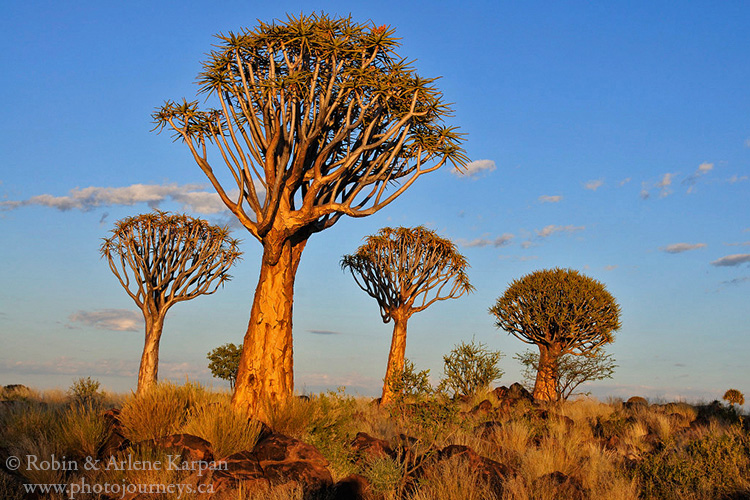
The massive sand dunes (close to 300 metres high) at Sossusvlei in Namib-Naukluft National Park. Visitors look like tiny dots, half way up Dune 45. The dune is so named because it is 45 kilometres from the entrance to the park. It is the most popular dune to climb since it is right beside the road. View from the top of Dune 45 at sunrise. The sand always a reddish-orange hue. but the colours become even more intense with the low angle of the sun. Trees are dwarfed by the massive dune Desiccated remains of ancient trees in Dead Vlei. Gemsbok are one of the few large animals that seem to thrive in the desert. Colourful hills and rangeland in southern Namibia. Despite the name, they aren’t trees at all, but rather giant aloe plants. The name originates with the San Bushmen, who used the mostly hollow branches of the trees as quivers for their arrows.
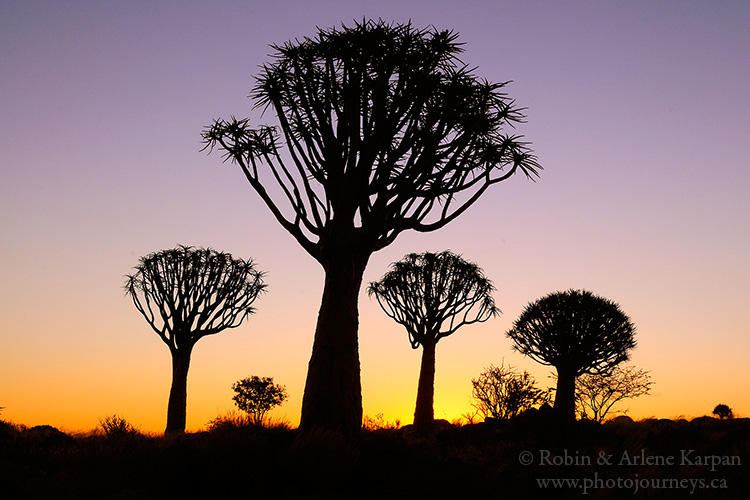
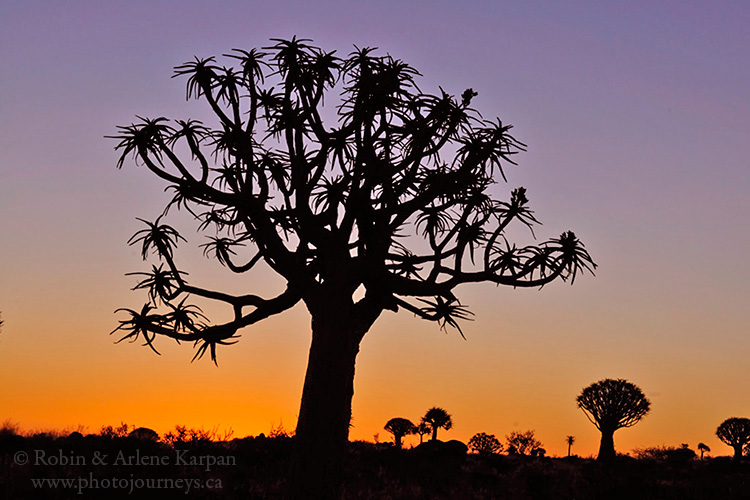
The best thing about this quiver tree forest is that here is a campground right next to it, so we could photograph at both sunset and sunrise. Another tree at sunrise
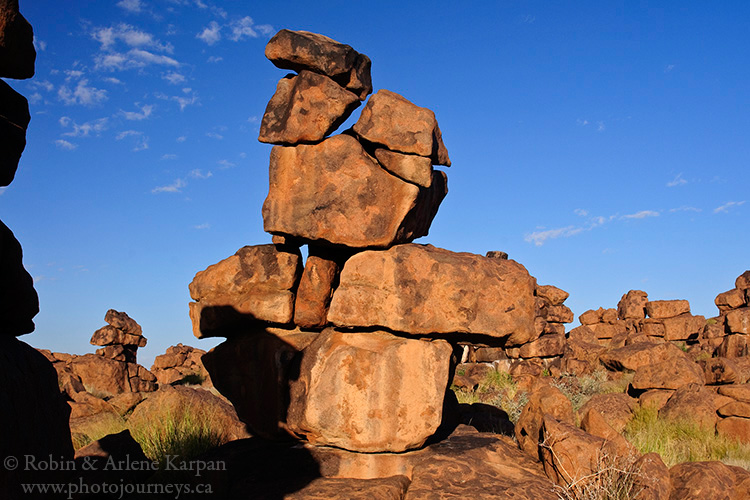
The Giant’s Playground is a fascinating area of dolerite boulders that have weathered through eons into bizarre shapes. They are a natural formation, although it looks like a giant has been playing around with over-sized lego blocks.
SUBSCRIBE to Photojourneys below
Feel free to PIN this article
1 thought on “12 Photos to Put Namibia on Your Bucket List”
Stunning! Who knew about that incredible desert colour! Looking forward to your next photos from this fascinating place.
ID used to identify users for 24 hours after last activity
24 hours
_gat
Used to monitor number of Google Analytics server requests when using Google Tag Manager
1 minute
__utmz
Contains information about the traffic source or campaign that directed user to the website. The cookie is set when the GA.js javascript is loaded and updated when data is sent to the Google Anaytics server
6 months after last activity
__utmv
Contains custom information set by the web developer via the _setCustomVar method in Google Analytics. This cookie is updated every time new data is sent to the Google Analytics server.
2 years after last activity
__utmx
Used to determine whether a user is included in an A / B or Multivariate test.
18 months
_ga
ID used to identify users
2 years
_gali
Used by Google Analytics to determine which links on a page are being clicked
30 seconds
_gac_
Contains information related to marketing campaigns of the user. These are shared with Google AdWords / Google Ads when the Google Ads and Google Analytics accounts are linked together.
90 days
__utma
ID used to identify users and sessions
2 years after last activity
__utmt
Used to monitor number of Google Analytics server requests
10 minutes
__utmb
Used to distinguish new sessions and visits. This cookie is set when the GA.js javascript library is loaded and there is no existing __utmb cookie. The cookie is updated every time data is sent to the Google Analytics server.
30 minutes after last activity
__utmc
Used only with old Urchin versions of Google Analytics and not with GA.js. Was used to distinguish between new sessions and visits at the end of a session.



Stunning! Who knew about that incredible desert colour! Looking forward to your next photos from this fascinating place.