All photos © Robin and Arlene Karpan
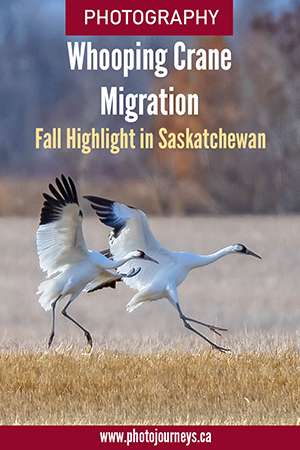
Saskatchewan is the top spot anywhere for seeing and photographing whooping cranes, one of the rarest and most famous endangered birds in North America. Each fall, these magnificent white birds migrate around 4,000 km from their nesting grounds in Wood Buffalo National Park, straddling the Alberta / Northwest Territories border, to their winter home in Aransas National Wildlife Refuge on the Texas coast in the Gulf of Mexico. They fly a direct and fairly narrow route, with their favourite stop to rest and feed along the way being south-central Saskatchewan.
Since we last wrote about this six years ago in Photo Journeys, a lot has changed – for the better! The whoopers are visiting Saskatchewan in greater numbers, and are arriving earlier and staying longer. This year we saw our first whooping cranes on Sept. 9, and they may well have been here for a few days already.
Exactly where they stop may vary from year to year, but it has usually been within an hour or so drive from our home in Saskatoon. Some places they tend to favour include Last Mountain Lake National Wildlife Area (North America’s oldest bird sanctuary), Muskiki Lake, Radisson Lake, and the pothole country southeast of Saskatoon.
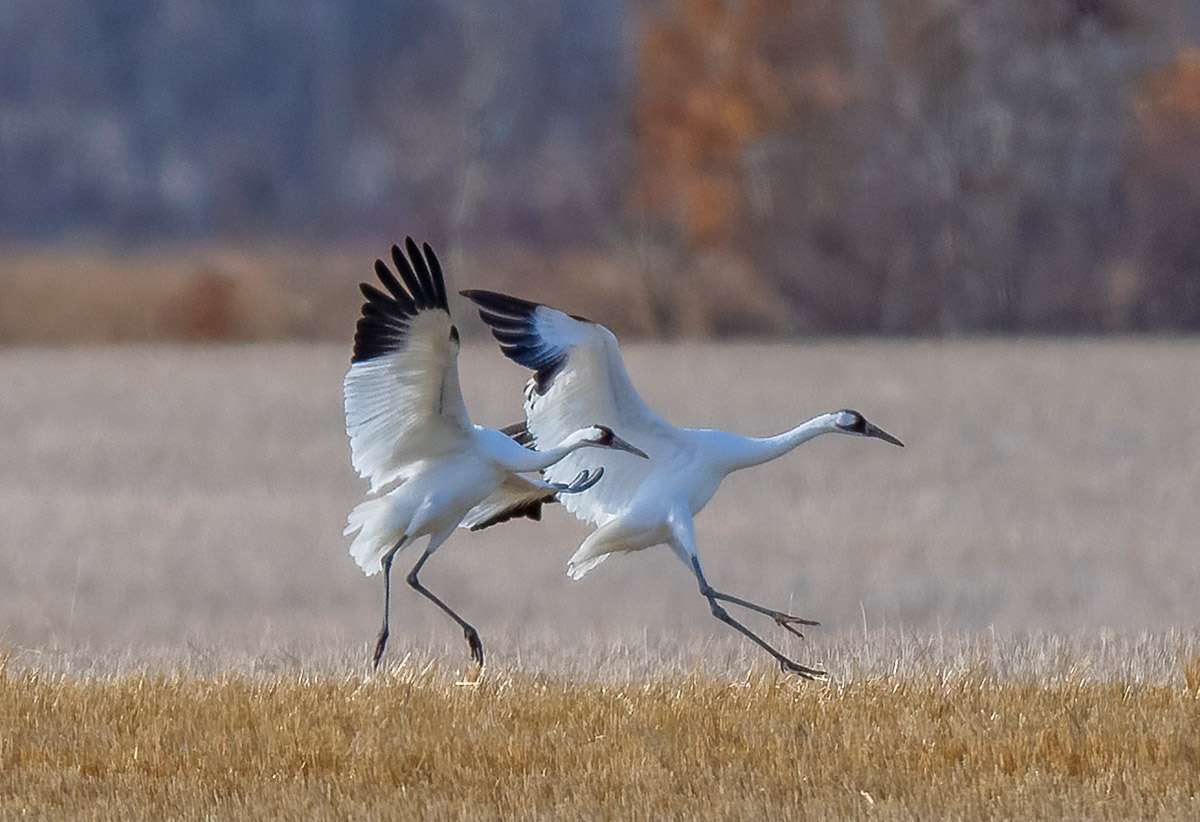
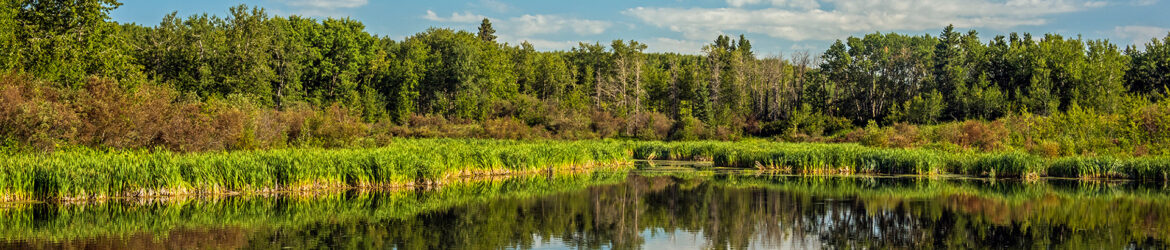
In recent years, the top hotspot has been almost straight north of Saskatoon where the combination of wetlands and nearby grain fields make it handy for feeding. Typically they don’t all travel together, so it might be possible to find clusters of whoopers in different spots.
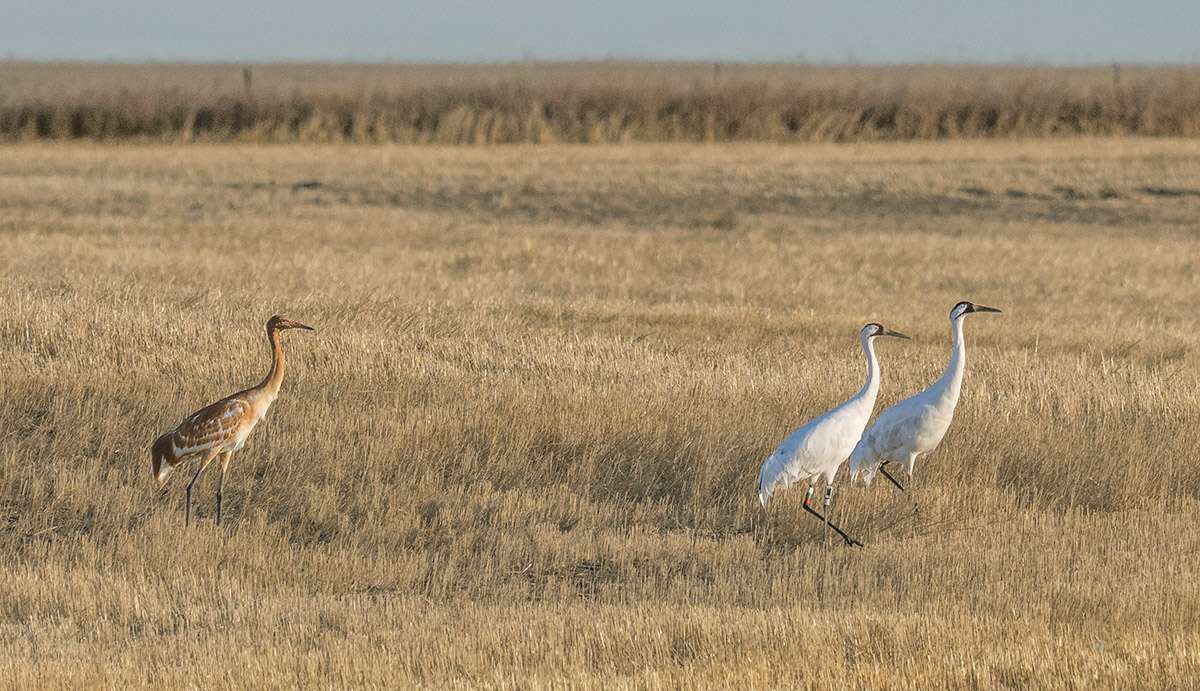
Back From the Brink, A Whooping Crane Success Story
Whooping cranes have come back from the brink of extinction. The population dropped to only 16 or so adult birds in the 1940s. With conservation efforts in Canada and the United States, their numbers gradually recovered. Recent population estimates are over 500 birds in the wild population. But the birds are still listed as endangered, and scientists are concerned that climate change and habitat loss could disrupt their recovery.
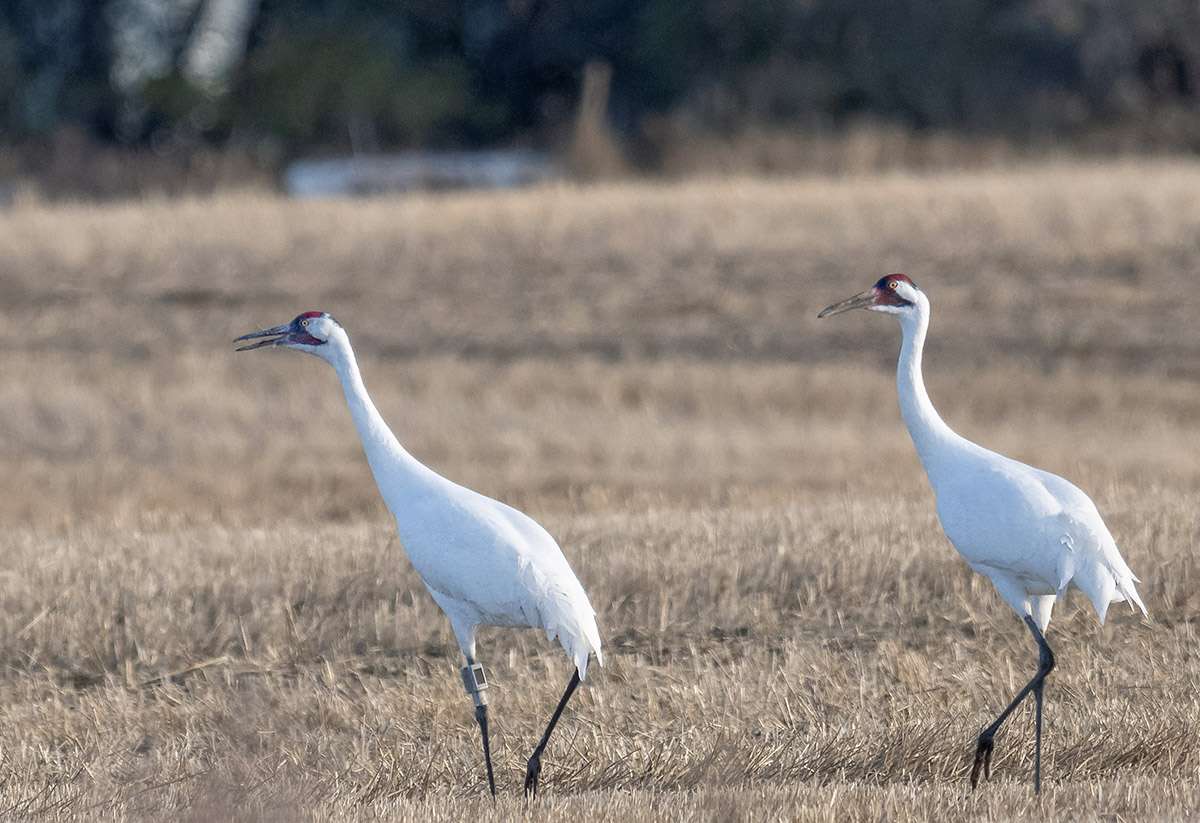
How to Recognize Whooping Cranes
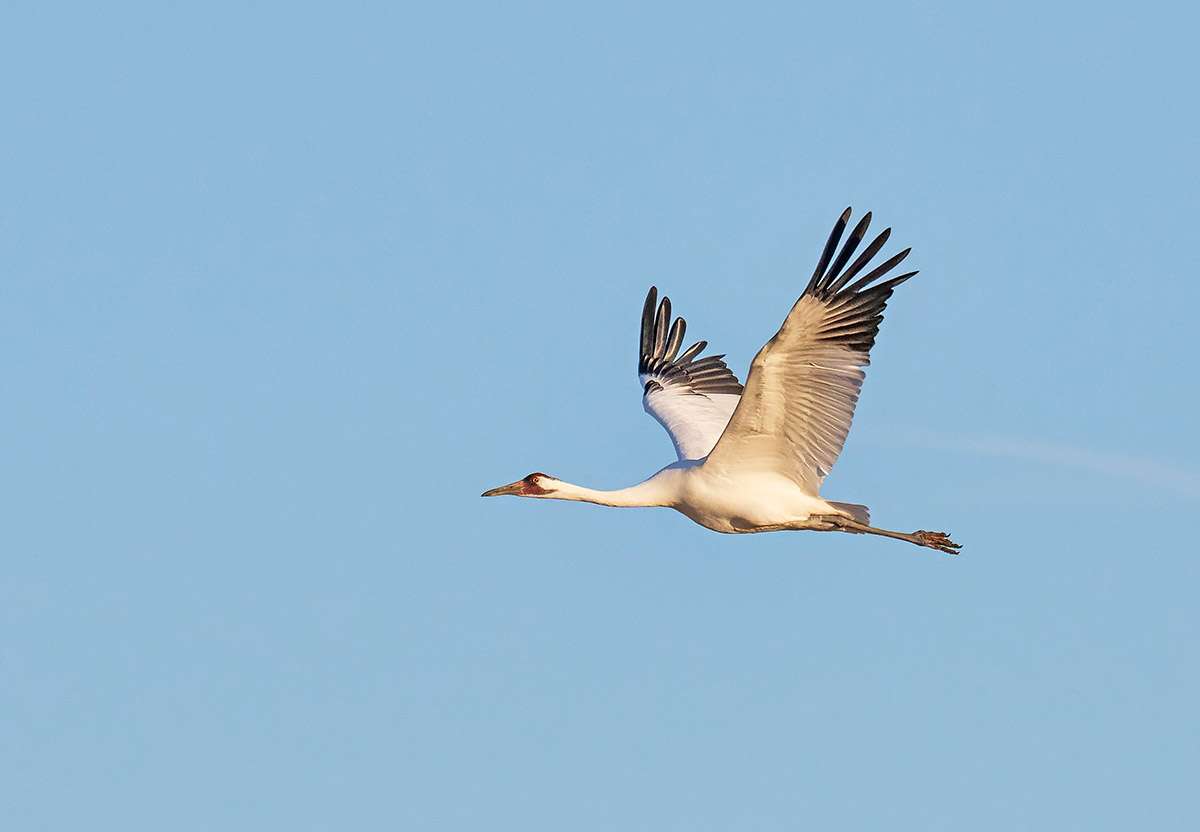
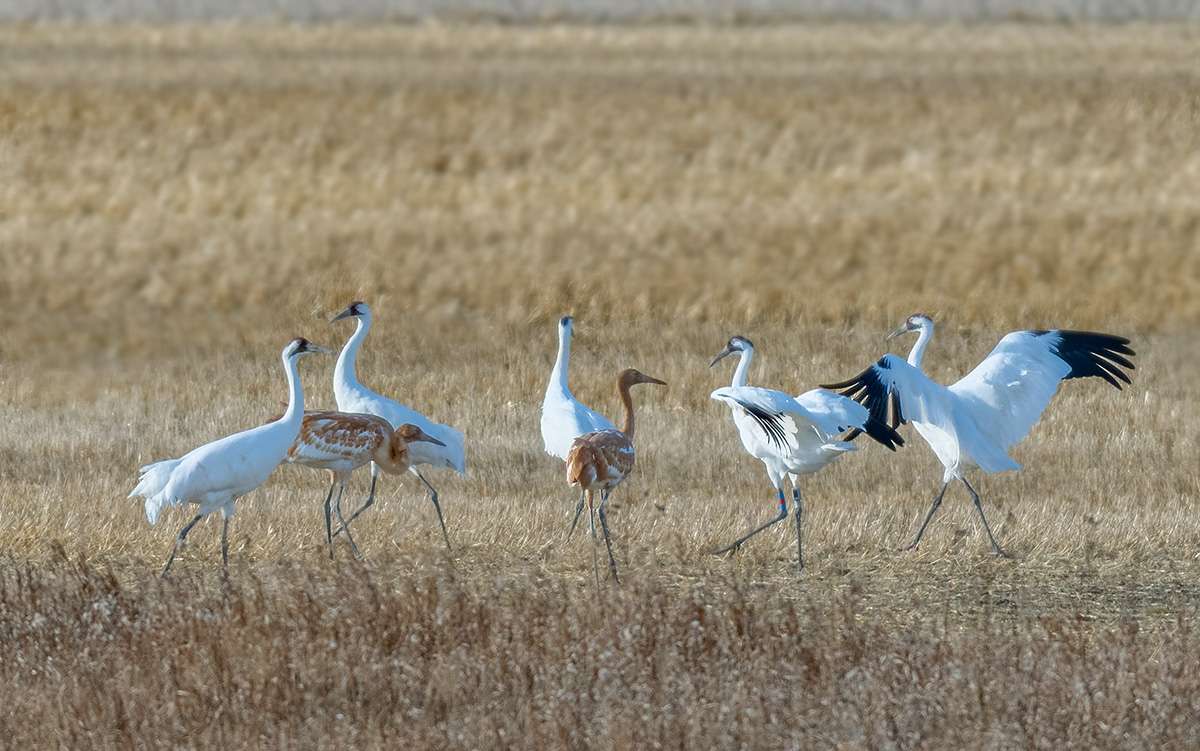
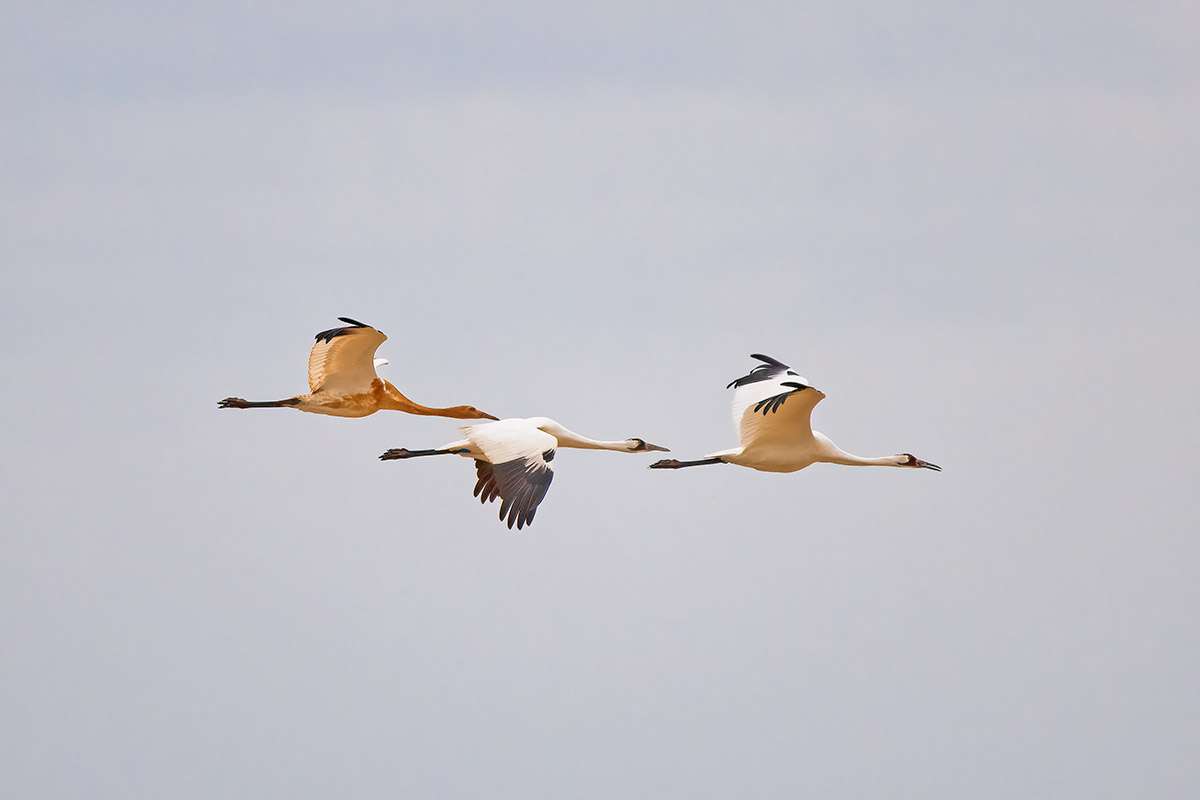
Adults, with their pure white plumage and black wing tips visible in flight, can reach 1.5 metres in height — North America’s tallest bird. Their wingspan can top an amazing two metres, yet this impressive bird weighs just over 7 kg. Immature youngsters are only slightly smaller and have reddish-cinnamon plumage. Their unmistakable call sounds like a bugle, with trumpet-like tones carrying far into the distance.
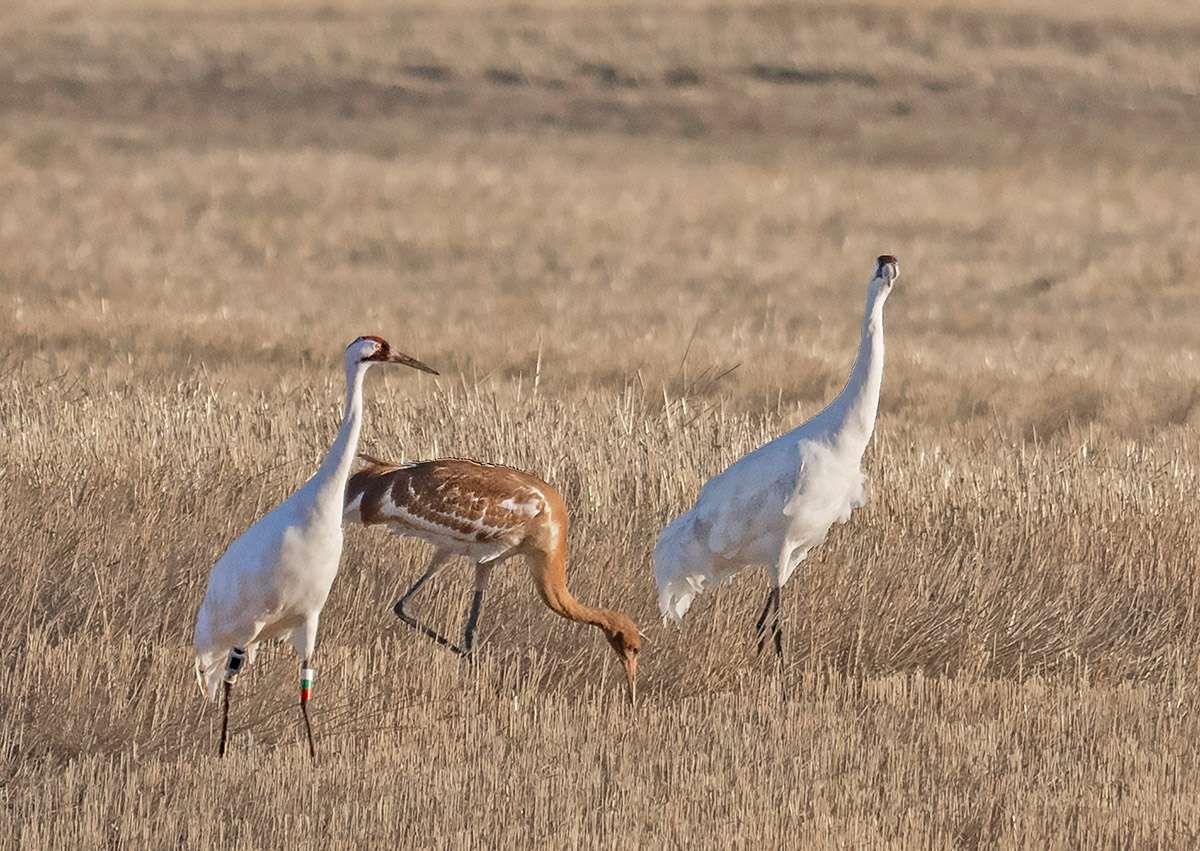
Whooping cranes can sometimes be mistaken for sandhill cranes. However, sandhills are smaller, and grey in colour. Whoopers have a bright red cap, and a red and black face mask. Also, sandhills travel in much larger groups. While whooping cranes usually stick with their own kind, we sometimes find them mixed in with sandhill cranes.
Whoopers Arriving in Larger Numbers and Staying Longer
Only a few years ago, it was common to see small numbers of cranes at a time. But more recently we can usually find them in larger groups. On one photo trip, we could see 50 birds at once, plus there were certainly more in other parts of the field and in nearby fields. Other observers have occasionally counted over 150 whoopers – about 30% of the world’s wild population.
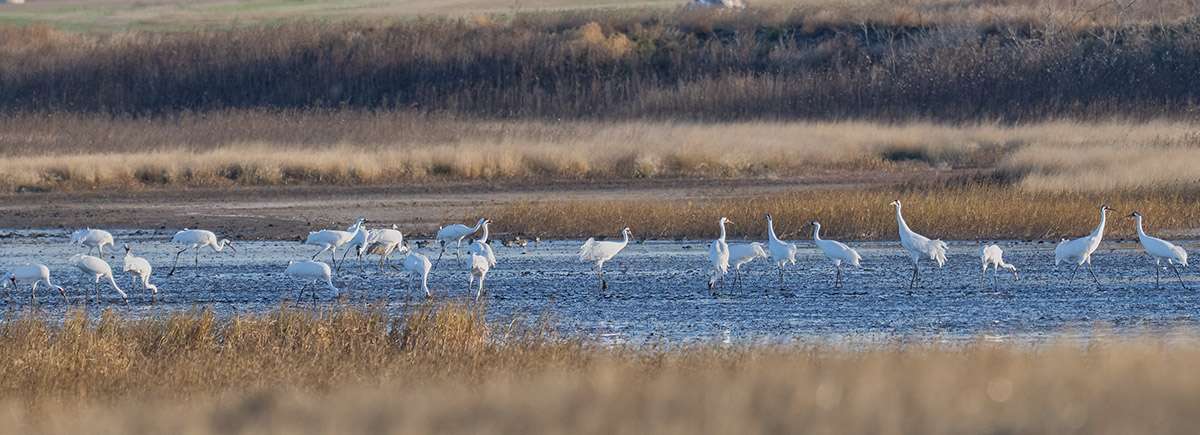
While seeing larger flocks is certainly more rewarding for birdwatchers and photographers, scientists have expressed concern that if a large flock were to suffer from a disease or an unexpected weather event, it could potentially wipe out a significant part of the total population.
One explanation for the larger flocks is not only that the total population has increased, but also because of disappearing wetlands, especially in the southern Great Plains of the United States. With fewer suitable wetlands, more birds are forced into fewer places.
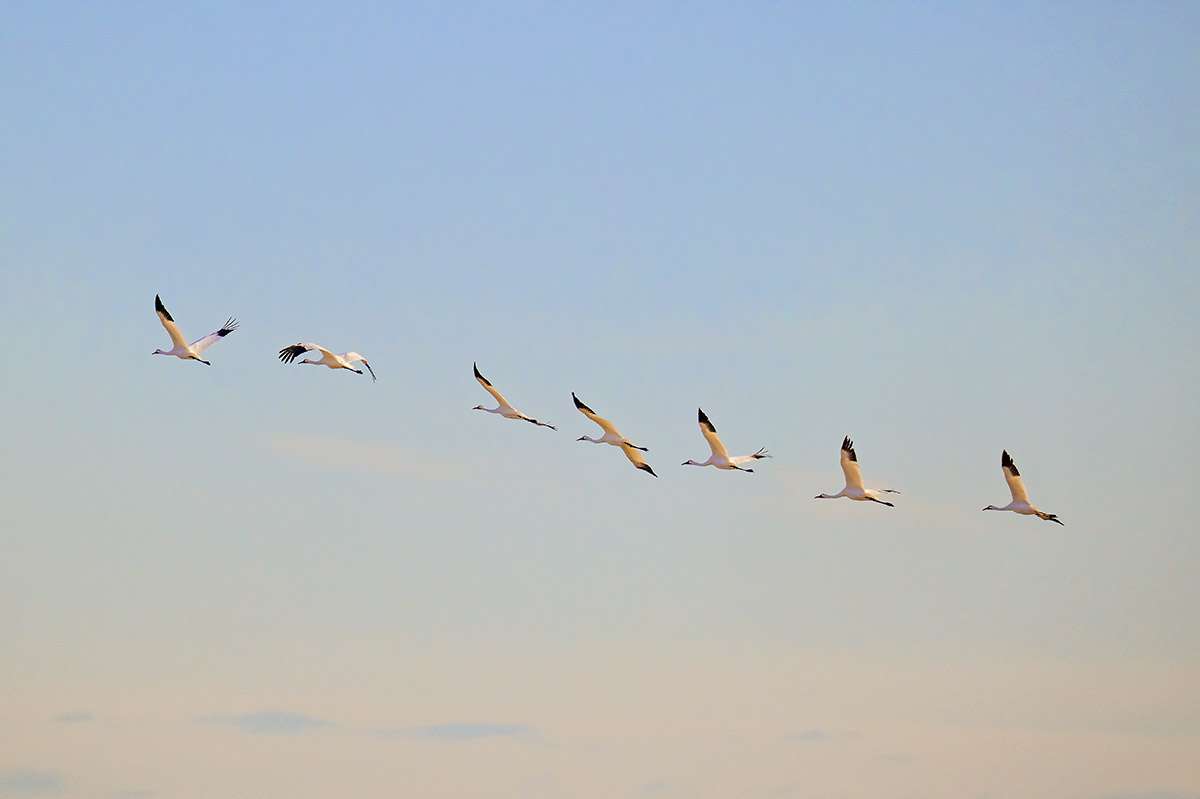
A recent study by Environment and Climate Change Canada and the US Fish and Wildlife Service found that the birds are spending less time at their winter home in Texas by arriving later and leaving earlier. In Saskatchewan, the opposite is happening during fall migration. They are arriving earlier and departing later. They arrive as early as the first week in September and stay as late as the first few days of November. That’s about 20 days longer than they spent in Saskatchewan 50 years ago.
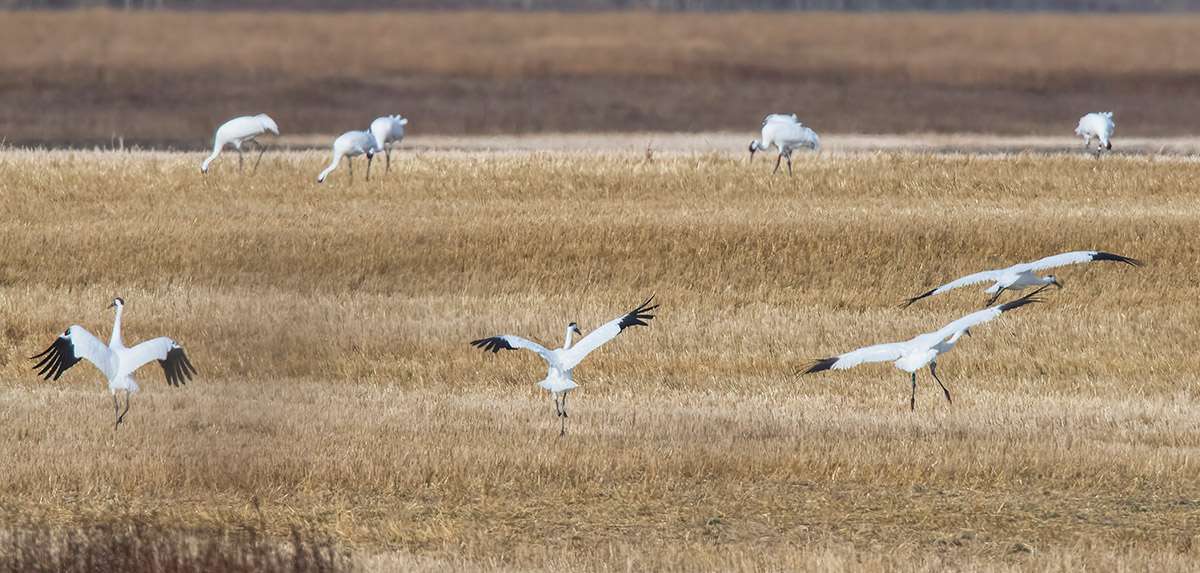
The authors predict that the trend will continue, with their time in Saskatchewan becoming more significant than their stay on the Gulf coast. There have been tongue-in-cheek suggestions that the cranes became upset when Donald Trump changed the name of the Gulf of Mexico to the Gulf of America.
Whooping Cranes Are a Challenge to Photograph
Whoopers aren’t easy to photograph. They won’t tolerate people getting anywhere near, so it’s important not to disturb them. They like to feed in grain fields on their way south. The mostly open nature of this setting adds to the challenge, since there is often nowhere to hide to watch or photograph.
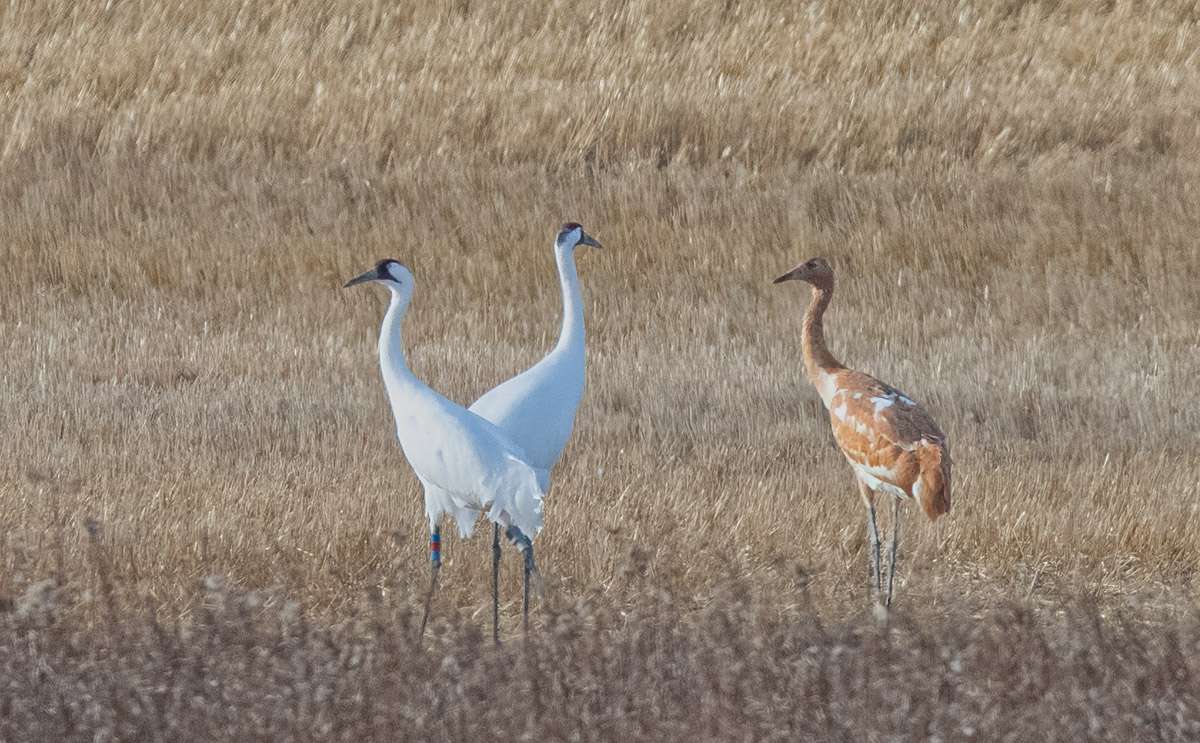
The best strategy is to photograph from inside your vehicle on the side of the road. While they might get used to traffic going by on the road, getting out of the car might cause them to move away. If you do get out to set up a tripod or scope, for example, it’s usually best to stay close to the vehicle and not make sudden movements or slam doors.
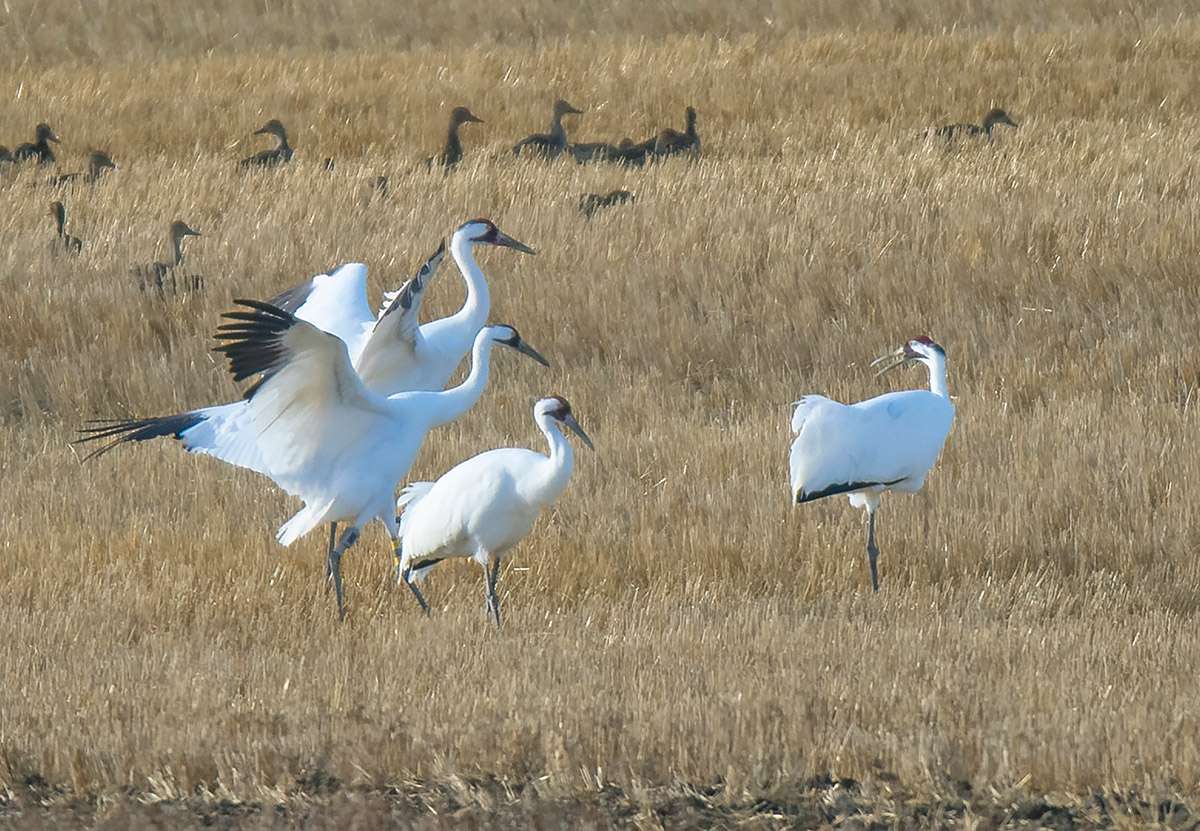
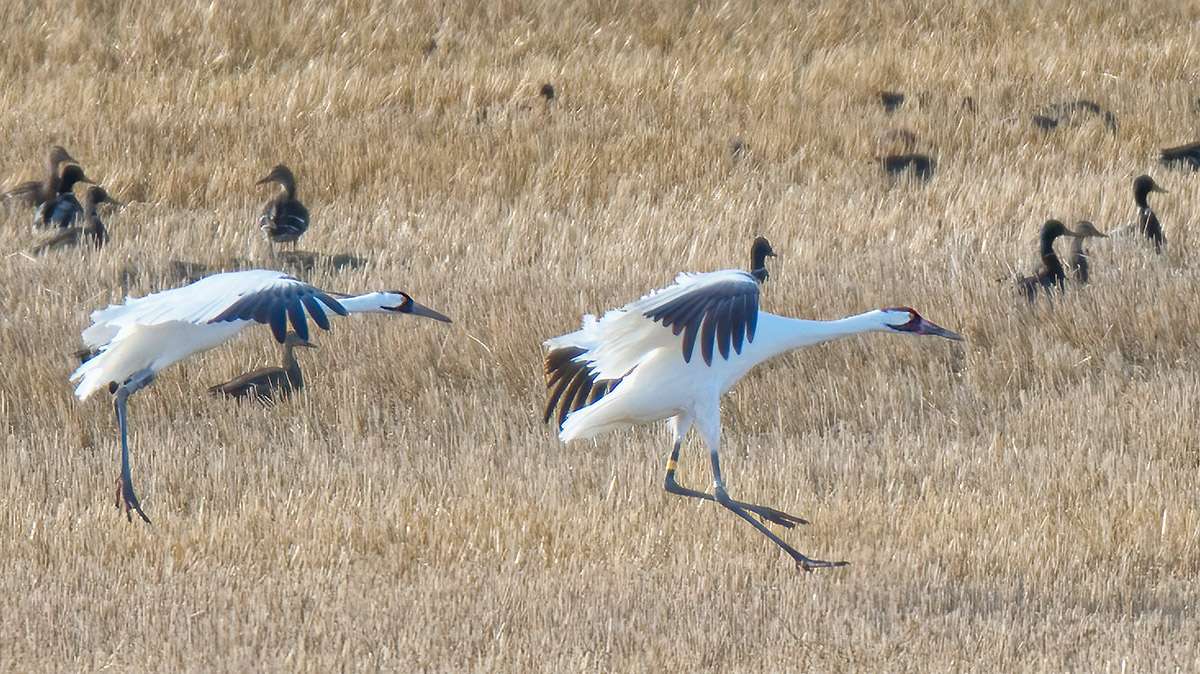
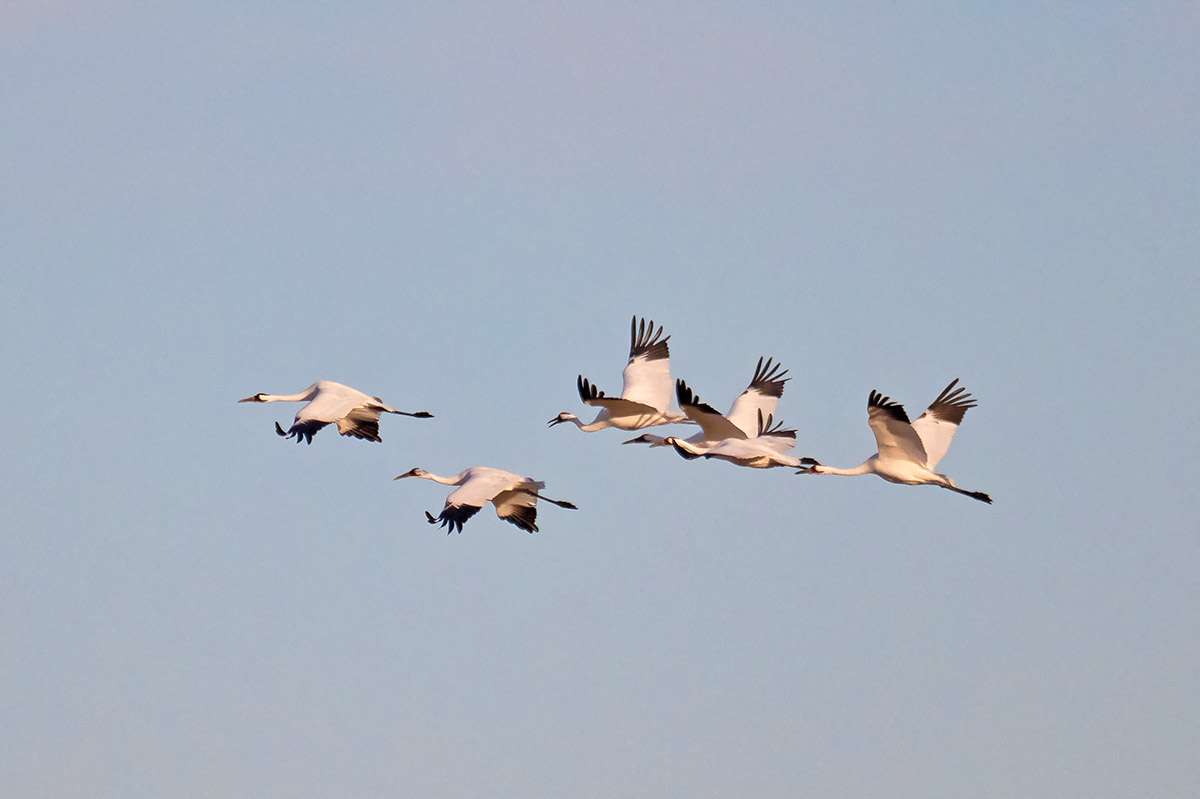
Use the longest telephoto lens you have. I used a 600mm lens, but even with that I had to crop the images a fair amount when processing. The whoopers sometimes move around a lot, feeding in one area, and then flying a short distance to another nearby area. These short flights provide some of the best photo opportunities. They fly low and slow, gracefully gliding much of the way. As they came in for a landing, their feet came down and the wings tipped up as they almost did a running landing to slow down. We got some of our best flying shots when they decided to soar almost right above us.
Despite the challenges, watching and photographing these iconic birds ranks among the great outdoor adventures anywhere.
When to Go
With the possibility of seeing them anywhere from September to late October, and sometimes even into early November, we have a lot of choices. Early October is usually a good bet to try to find the greatest numbers, but every year could be different. If you have a choice, go on a weekday. There will be other cars driving around, especially on weekends, so with more traffic the birds may decide to feed farther away from the road.
How to Visit
One option is to go on your own and look for the birds. The word usually gets out in nature viewing circles as to where the cranes are hanging out each year. But keep in mind that the whoopers move around a lot so yesterday’s hotspot may have nothing going on today.
Taking a guided trip has some advantages in that you travel with someone who has experience. The Saskatoon Nature Society usually runs crane viewing trips for members, and commercial operators provide other options. Check with Tourism Saskatchewan for a list of possibilities. New on the scene this year is a trip offered by The Wild View which combines whooping crane viewing with other nature and wildlife activities in the nearby Redberry Lake Biosphere Region.
You might also enjoy these posts with photography tips
SUBSCRIBE to Photojourneys below
Feel free to PIN this article on Whooping Cranes in Saskatchewan for later