All photos © Robin and Arlene Karpan
If you thought that legends of Sasquatch were merely fanciful tales and the stuff of B movies, this place will make you think again. The Sasquatch Museum in Harrison Hot Springs, British Columbia, takes a closer look at these mythical 10-foot-tall hairy creatures who walk on two feet and wander among forested mountains. You may even come away a believer.
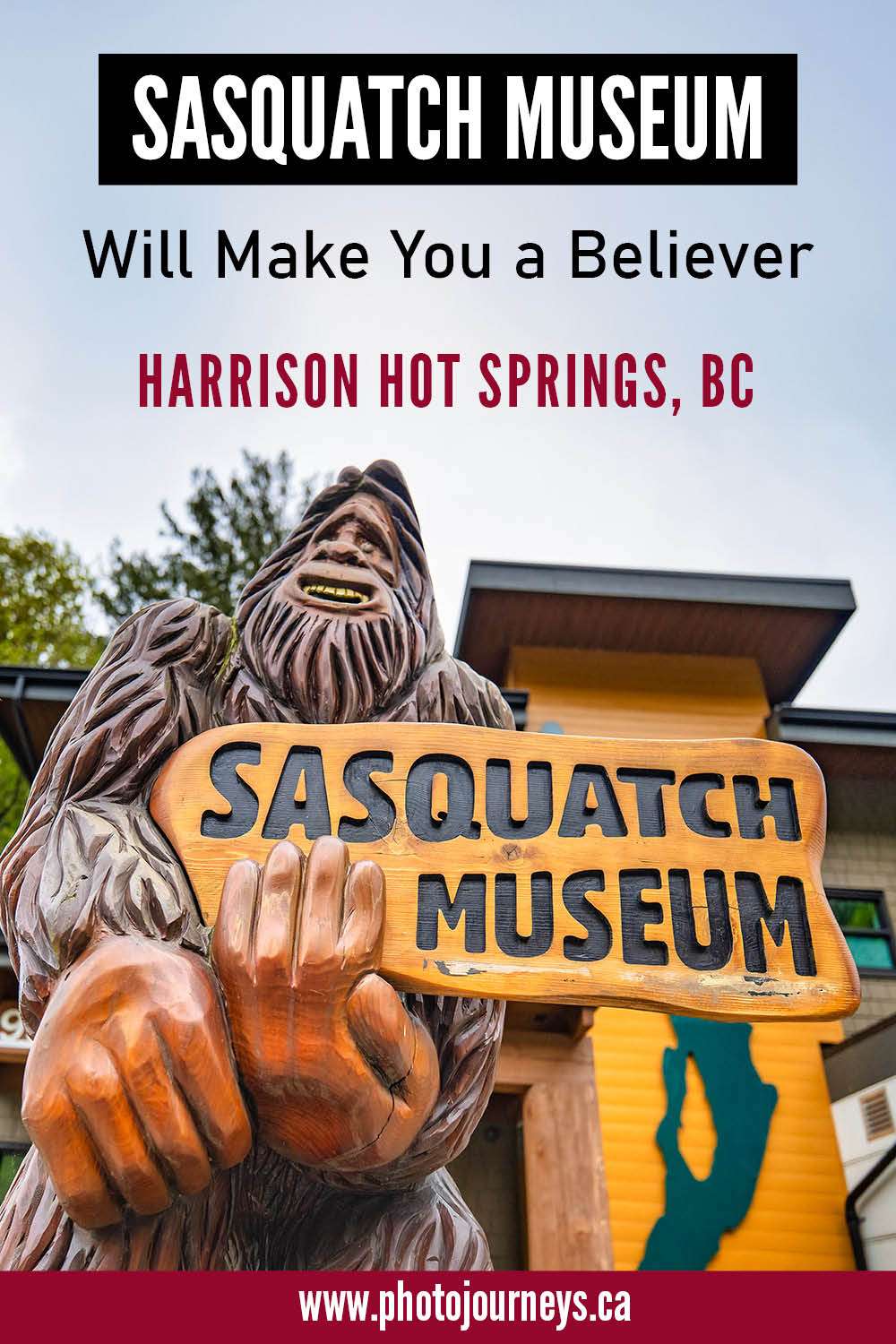
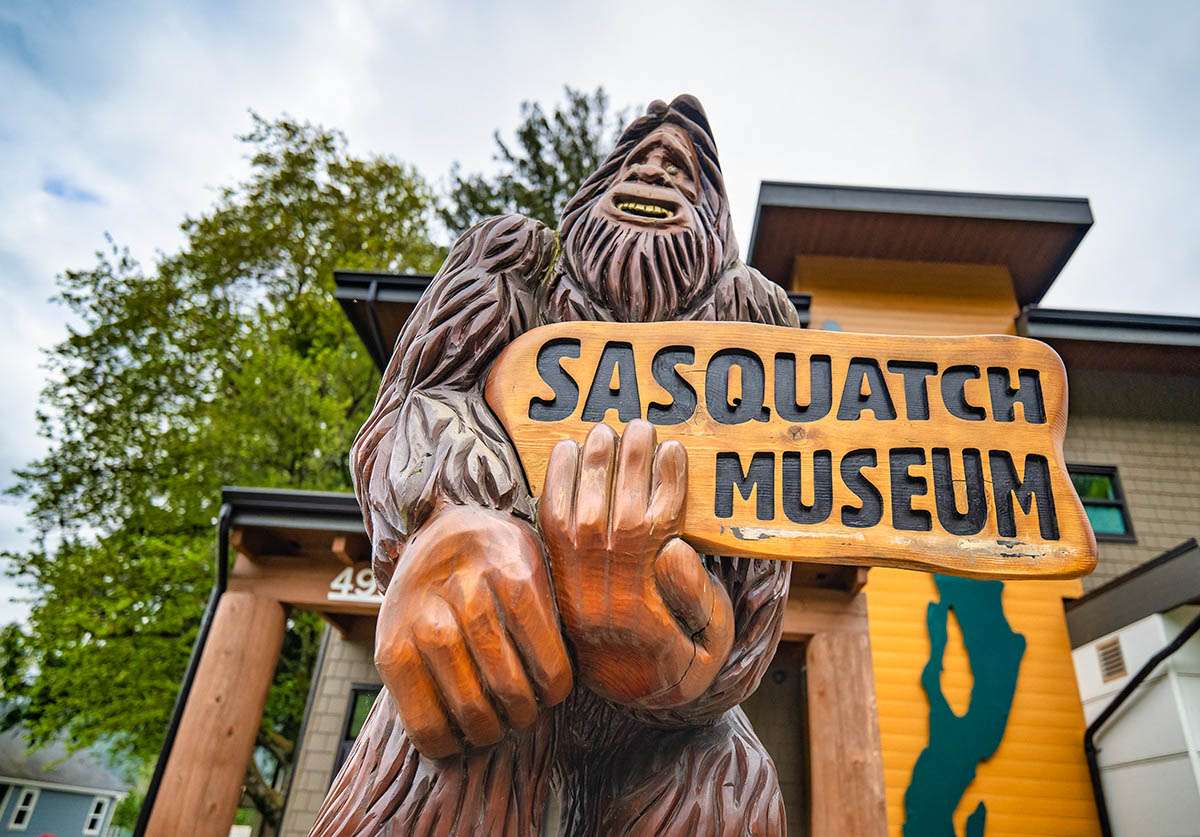
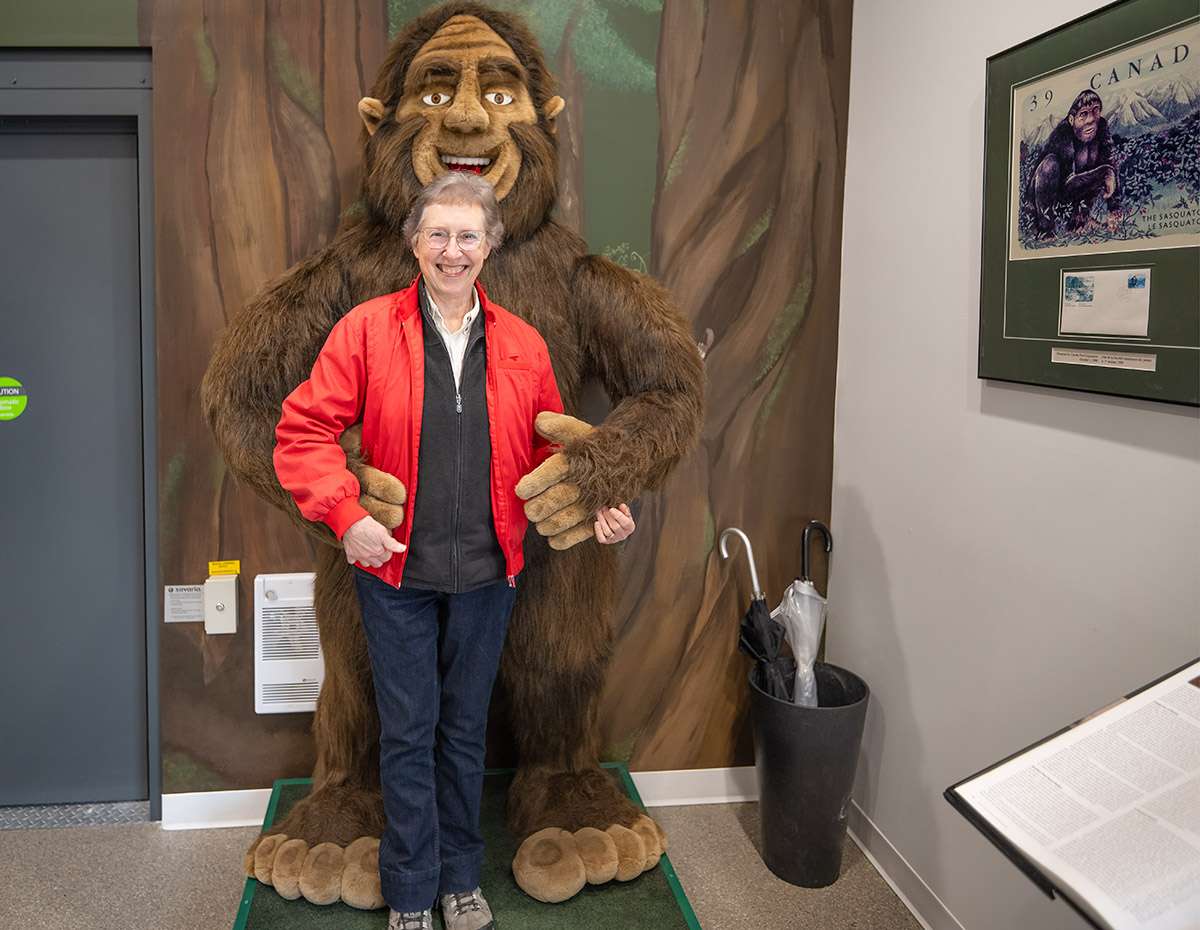
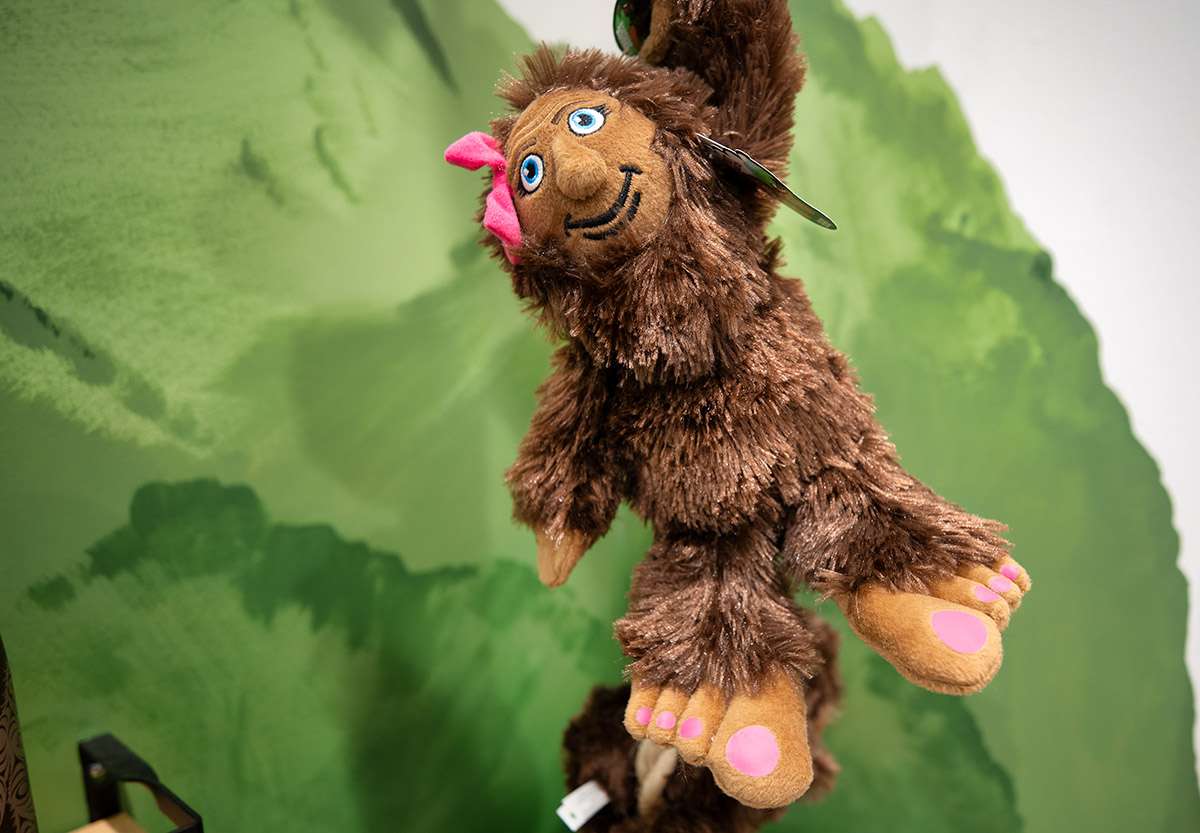
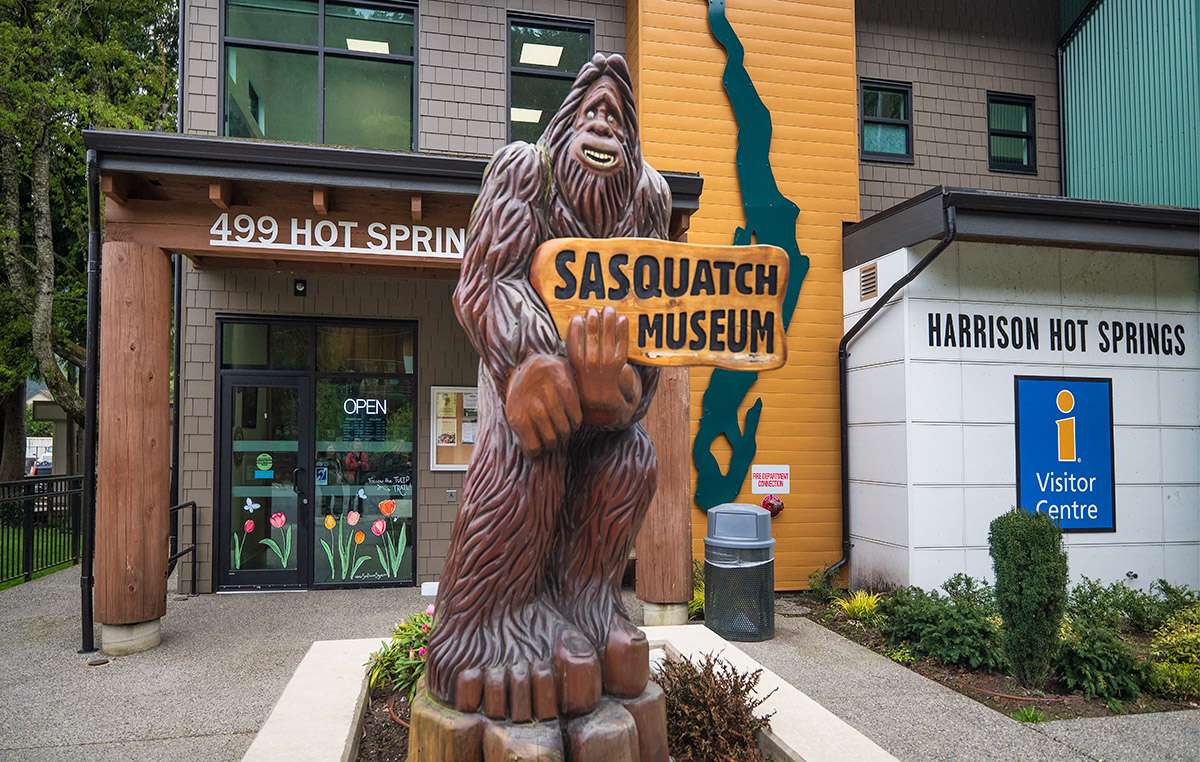
The free museum is located inside the Harrison Visitor Centre on Hot Springs Road. Outside, a friendly-looking carved Sasquatch offers a welcome. Once inside, you come face-to-face with another smiling and cuddly creature that almost begs you to have your picture taken with it.
Origin of the Sasquatch
This small town, beautifully situated on the shores of Harrison Lake, is certainly Sasquatch central. Indeed, the word “Sasquatch” is believed to have originated here with the Sts’ailes First Nation, from their word for “hairy man,” which is Sasq’ets. Over time, it became pronounced as “Sasquatch”.
The mythical creature has deep roots in First Nations culture, where it is considered a spiritual or supernatural being that watches over the land. It is not a monster or something to fear. It can appear and vanish when it feels like it, often showing itself on moonlit nights when the light is just right.
While the Harrison area is a top hotspot for sightings, Sasquatch are not unique to here. They have been reported throughout Western Canada and in the northwest United States, where they are more commonly referred to as Bigfoot. Many sightings seem to carry similar characteristics—ape-like individuals with black or reddish hair with no visible neck, who walk on two feet and live in forests.
Stephanie Gallamore, Executive Director of Tourism Harrison, showed us through the museum and indicated that there have been more reported Sasquatch sightings here than in other places. “I don’t know if it is just because we are so close to so many different indigenous communities,” she said. “They have a close relation to the land and the spirit world.”
Stephanie described an encounter that occurred with a couple near aptly-named Sasquatch Provincial Park. A man turned around to look at his wife, then glanced up in the trees, and they saw it. Unfortunately, there were no footprints or photos, but Sasquatch investigators are digging further into the report.
“We have people coming in all the time sharing their stories,” said Stephanie. “We’re really giving people a safe space to share their experiences because sometimes it is a little bit uncomfortable, and not everyone is a believer.”
Fact or Fiction?
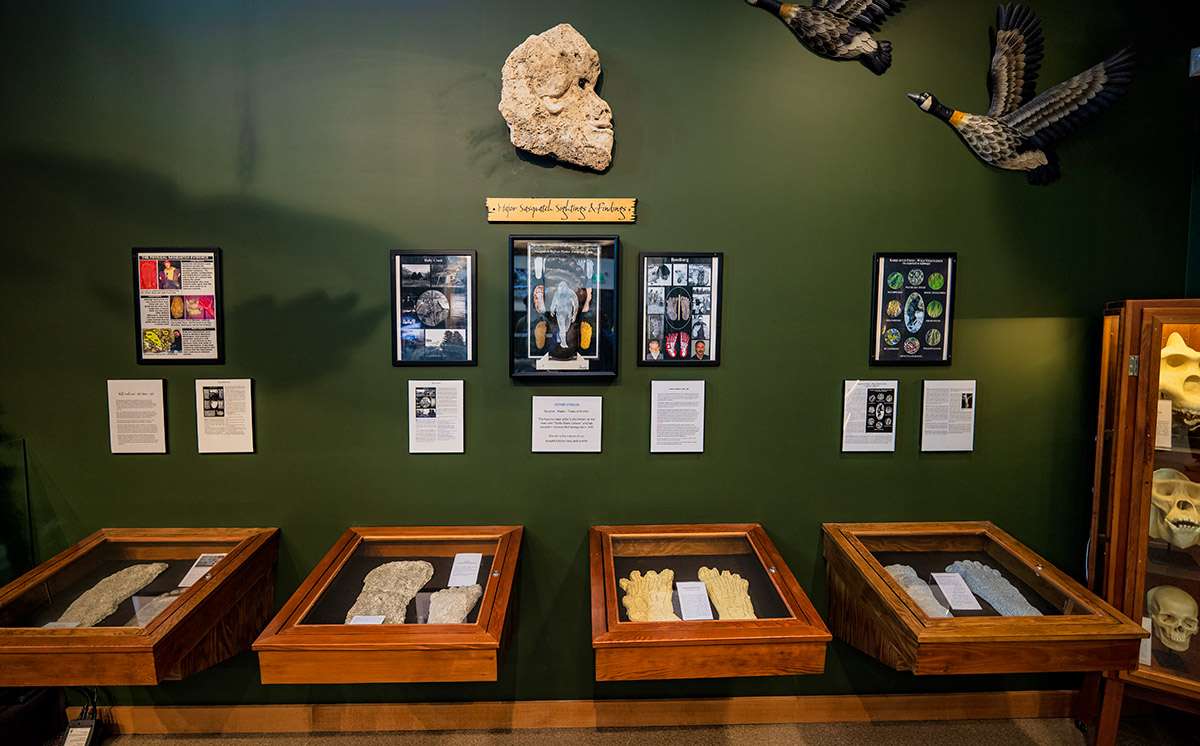
The evidence for the existence of Sasquatches in museum displays can be quite convincing.
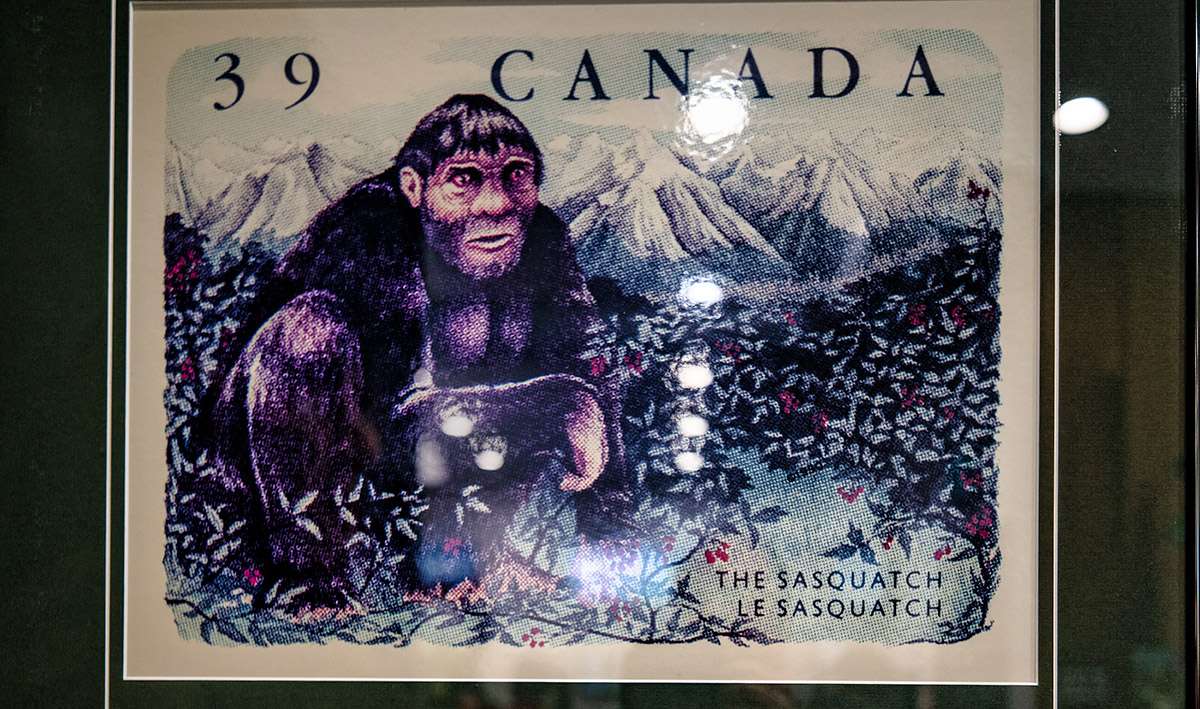
Even Canada Post paid homage to the Sasquatch in a series of commemorative stamps highlighting Canada’s folklore. A copy of the 39-cent stamp is on display, which portrays the legendary creature against a mountain backdrop.
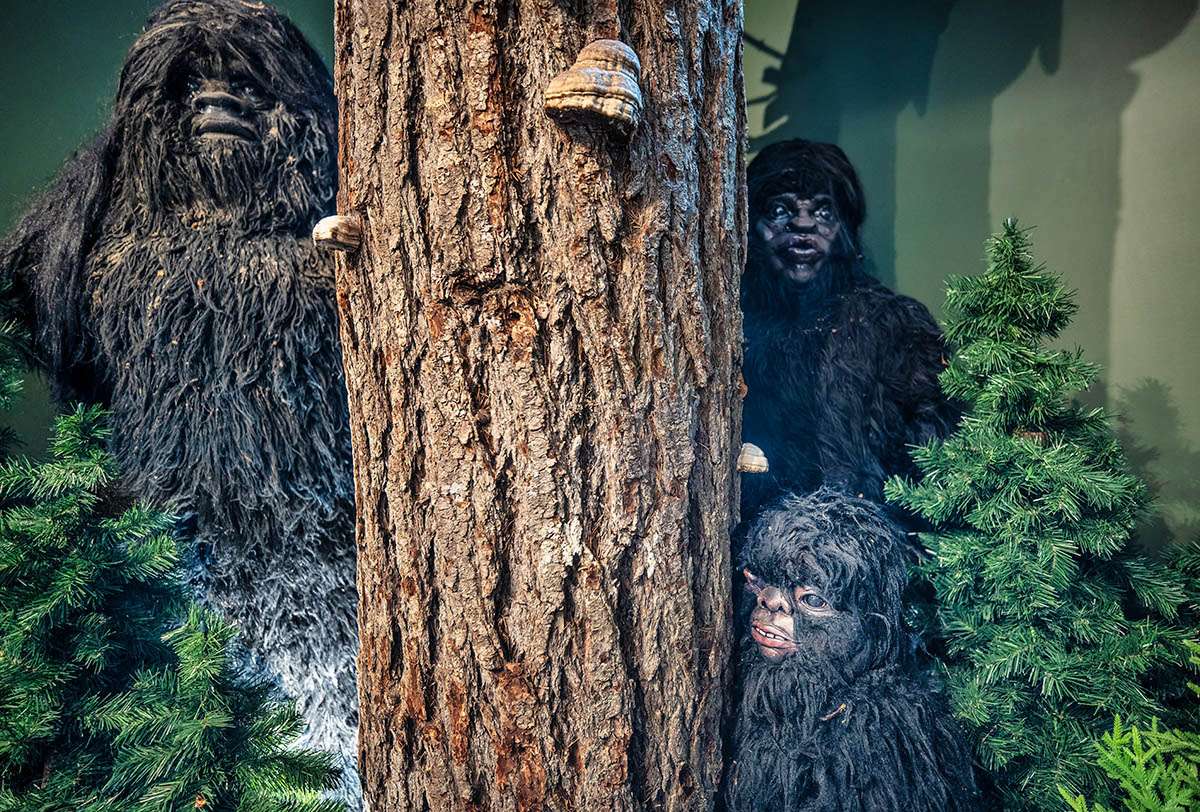
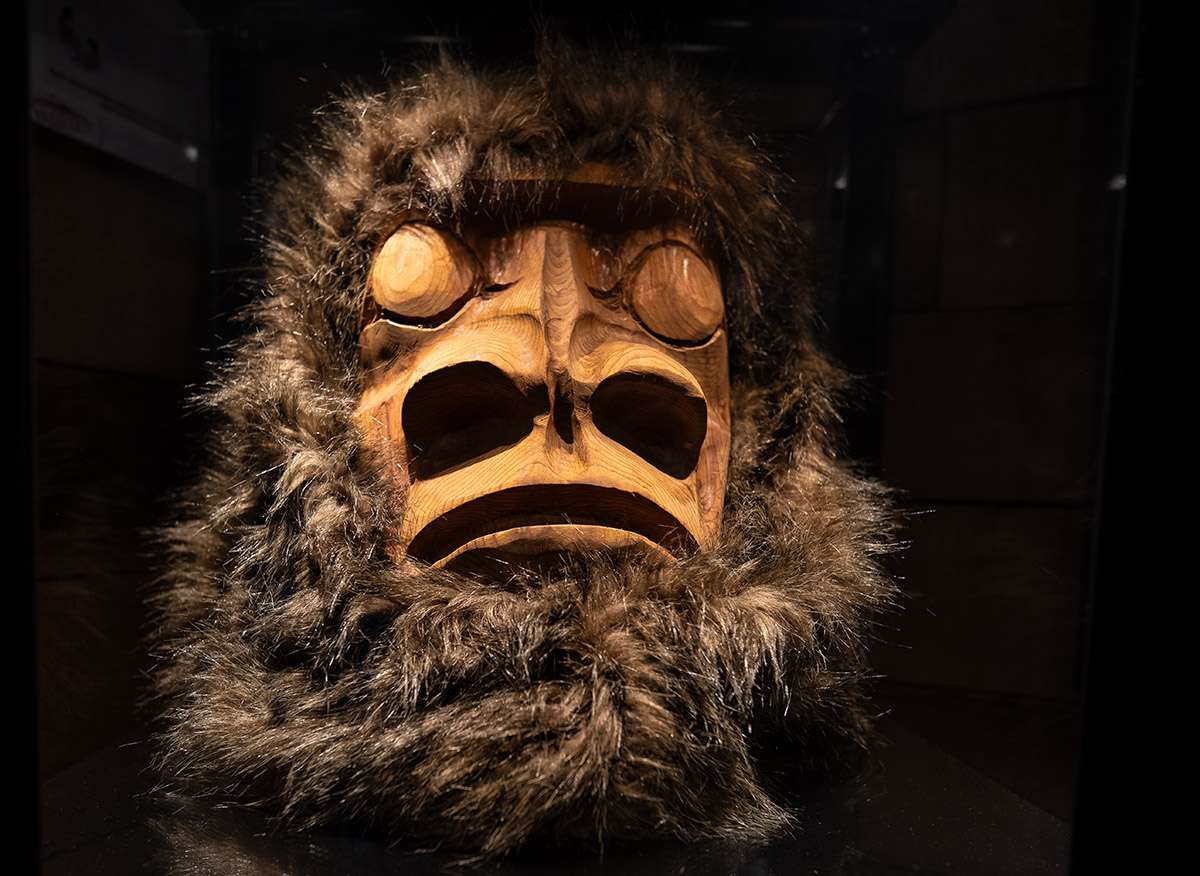
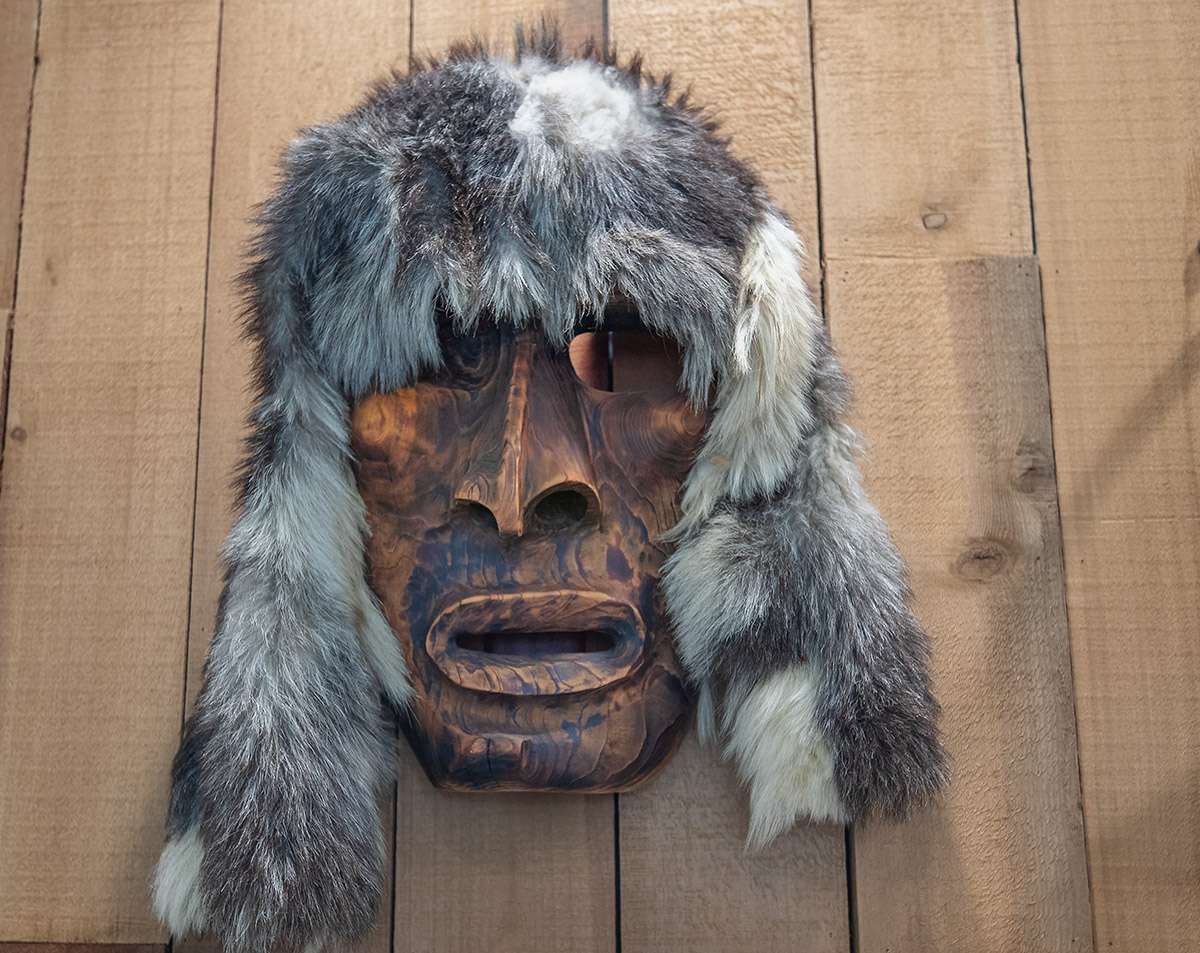
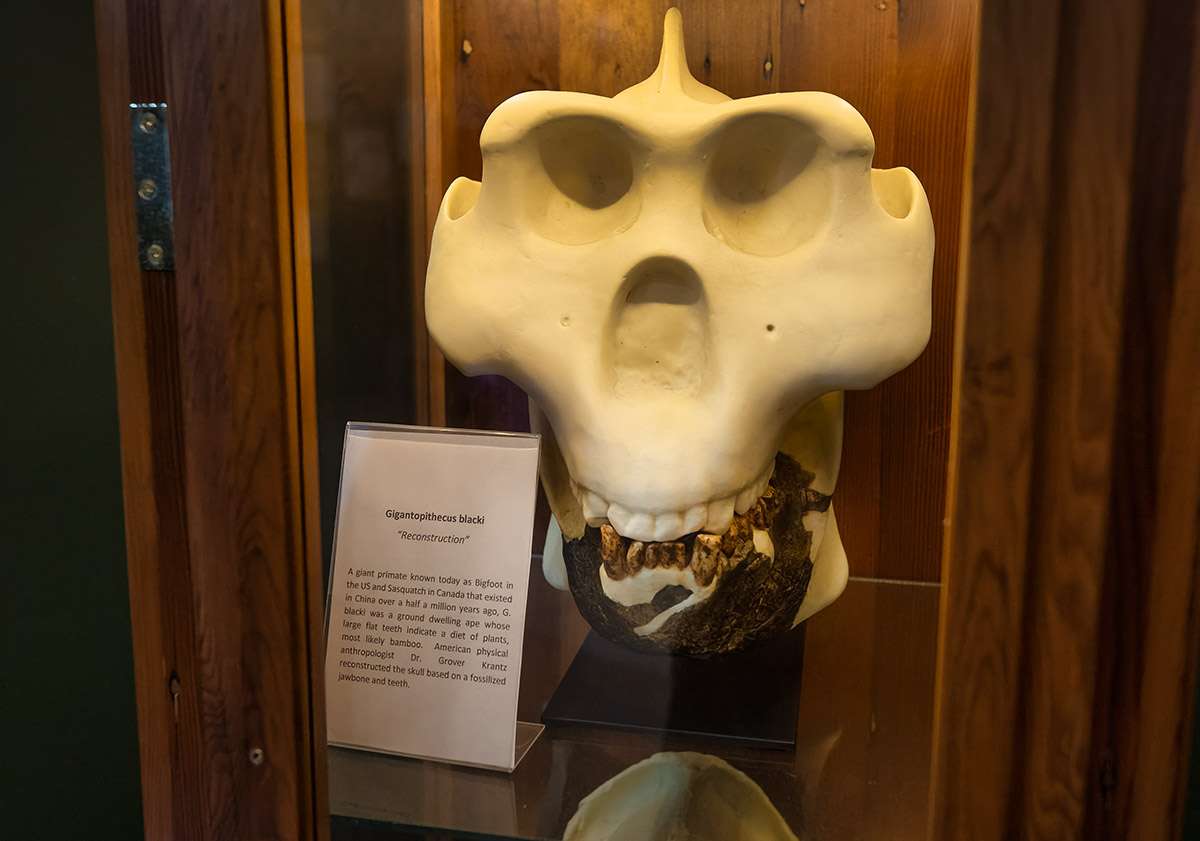
Masks carved by local indigenous artists and other artwork show Sasquatches in various poses. In one corner, a friendly Sasquatch family with a young child stands by trees in a forested landscape. A large reconstructed skull of a giant primate suggests that there could be a connection with the Sasquatch and a ground-dwelling ape that existed in China 500,000 ago.
One exhibit deals with a local legend, John Green, a prominent journalist and researcher who compiled a database of over 3,000 Sasquatch sightings and track reports. Like many, Green started as a skeptic, thinking that this was all nonsense. He even wrote an April Fool’s Sasquatch story in 1953. But as he heard more and more credible stories, Green became a convert and eventually a renowned authority in the field and author of several Sasquatch-related books.
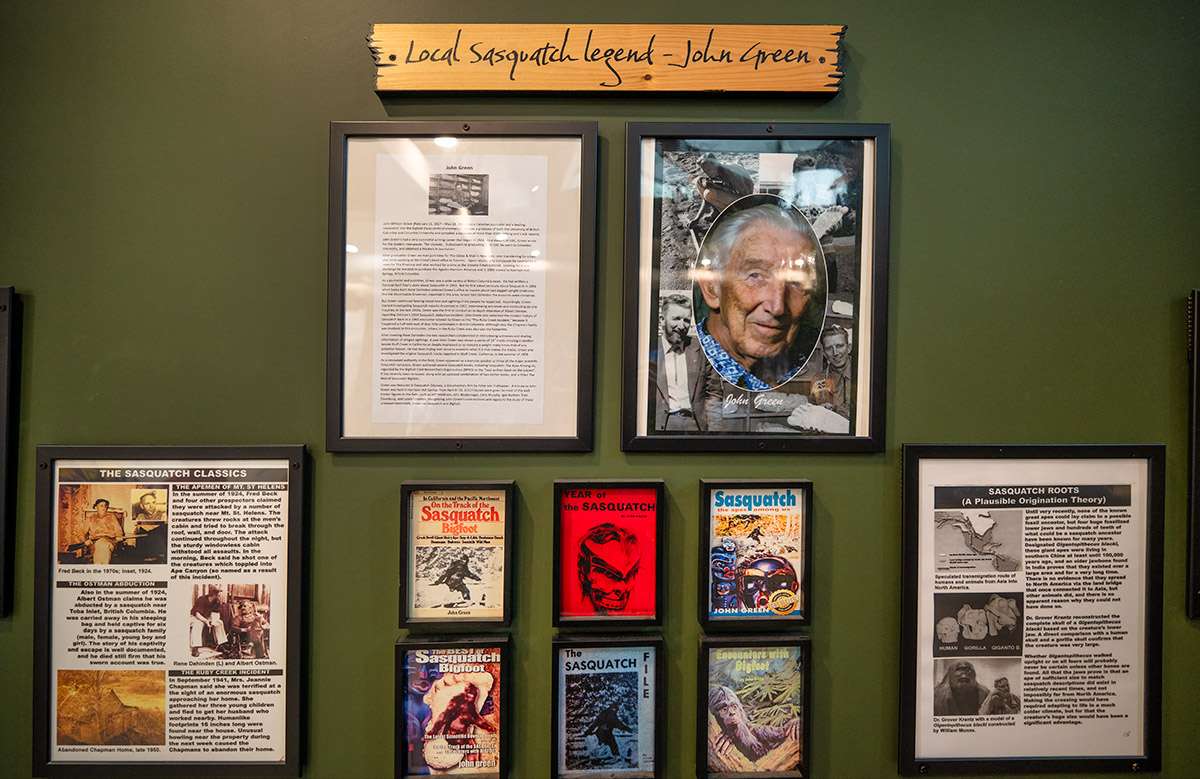
More displays tell of accounts where a large creature actually abducted someone, and another where a cabin was attacked. Footprints found nearby confirmed that the creature was huge in stature. Other research findings and reports from those who studied Sasquatches are available, and several castings of footprints show their immense size.
The museum also has a copy of the famous Patterson-Gimlin video shot on October 20, 1967 in northwest California. Although it is grainy and shaky, iconic “frame 352” shows a hairy creature looking back directly at the camera. Could it be a person in a gorilla costume, an elaborate hoax, or irrefutable proof that Sasquatches exist? You decide.
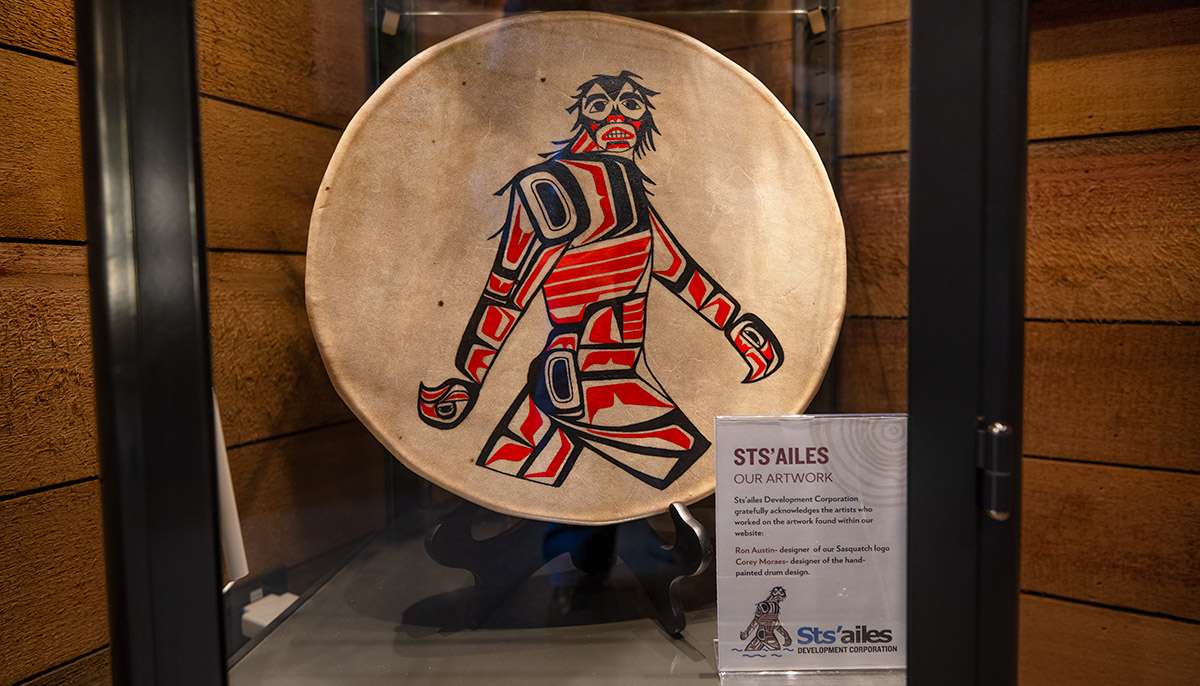
A stylized Sasquatch that has become the symbol for the Sts’ailes nation and appears on the Sts’ailes national flag. Beside the black, white, and ochre-colored figure, a quote from Kelsey Charlie of the Sts’ailes Sasquatch Dancers describes the Sasquatch as a shape-shifter that people should not be afraid of.
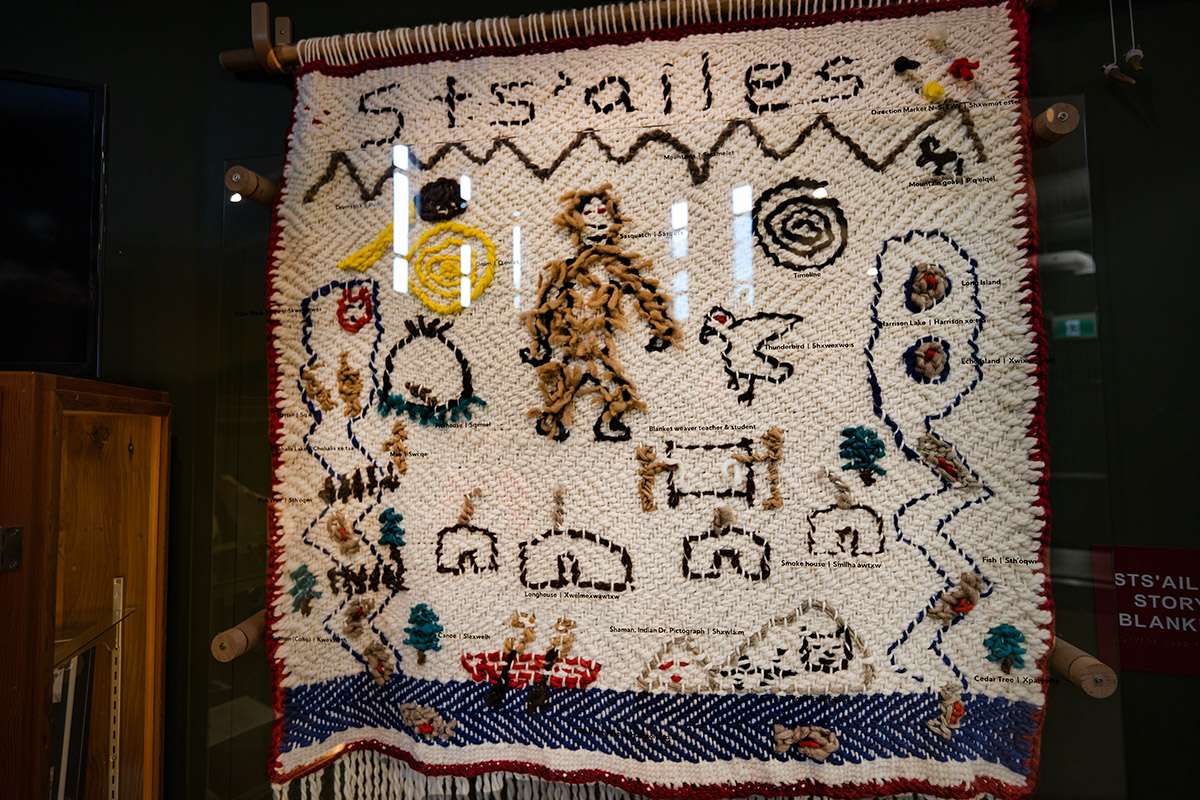
To find out more about the people on whose traditional land the museum is located, you need look no further than the impressive story blanket prominently displayed on one wall. The blanket depicts elements from their culture and connection with the land, including the mountains, river system, wildlife, and of course, a Sasquatch.
Another part of the museum is a recreated Sts’ailes longhouse where you can watch videos and discover more about their rich heritage.
Beyond the Sasquatch
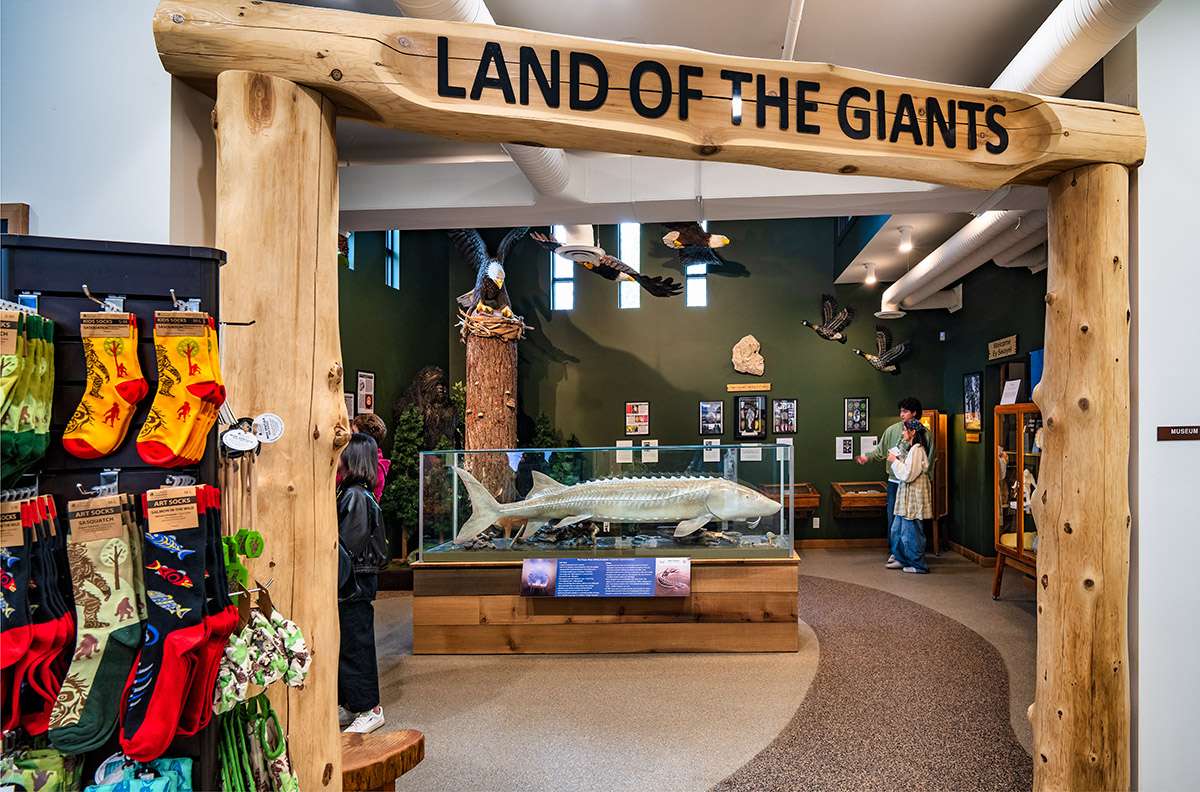
The large banner “Land of the Giants” at the entrance to the museum refers to more than just Sasquatches. There are other giants to discover in this region, and more stories to learn.
Looking like a prehistoric monster with a lineage that dates back to the time of the dinosaurs, the white sturgeon is the largest freshwater fish that inhabits the Fraser River and Columbia River watersheds in BC. They can grow up to 13 feet long, weigh up to 1000 pounds, and can live to be 100 years old or more. The Fraser River is a prime spot to fish (catch and release) for white sturgeon, providing anglers with both a sustainable and unforgettable fishing adventure.
The Harrison River has been designated as Canada’s First Salmon Stronghold. The river and its watershed are home to all five salmon species, along with steelhead, in abundant numbers. In late fall, migrating salmon attract large numbers of bald eagles, along with bears.
Around Town
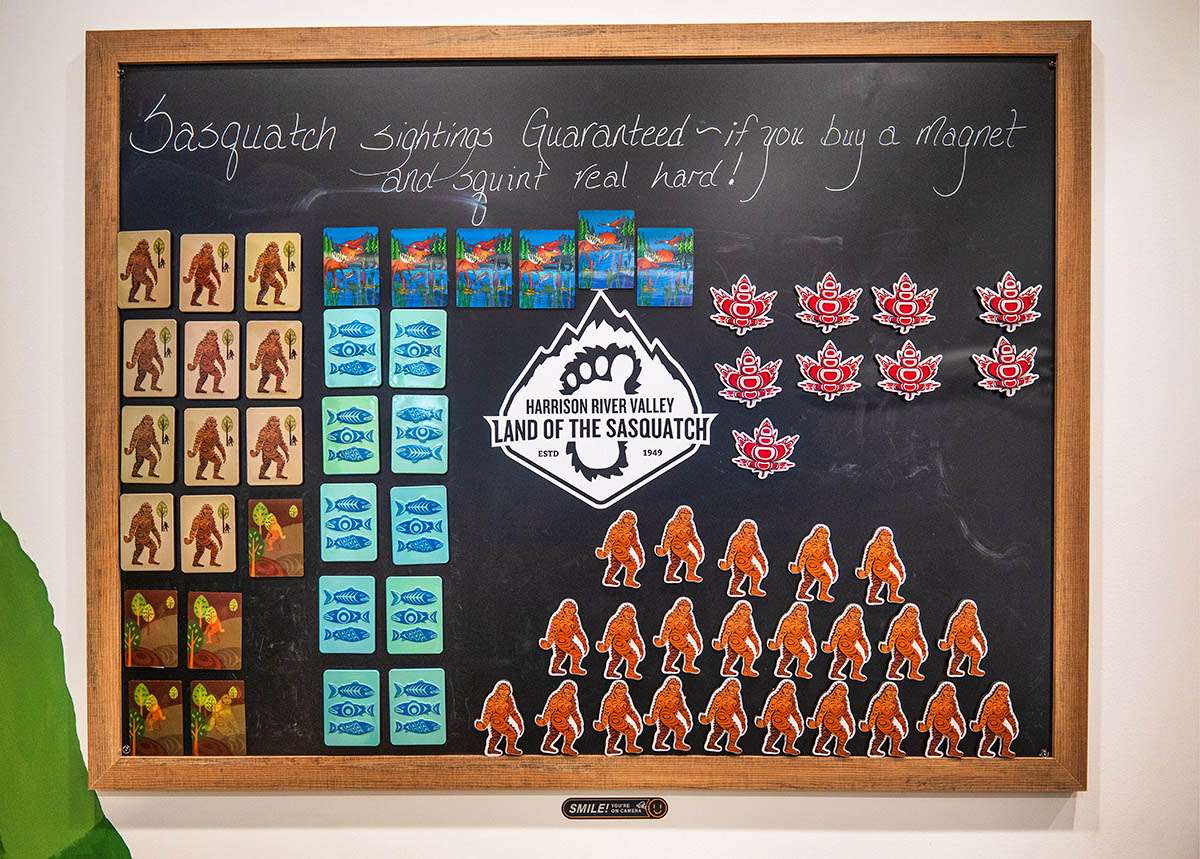
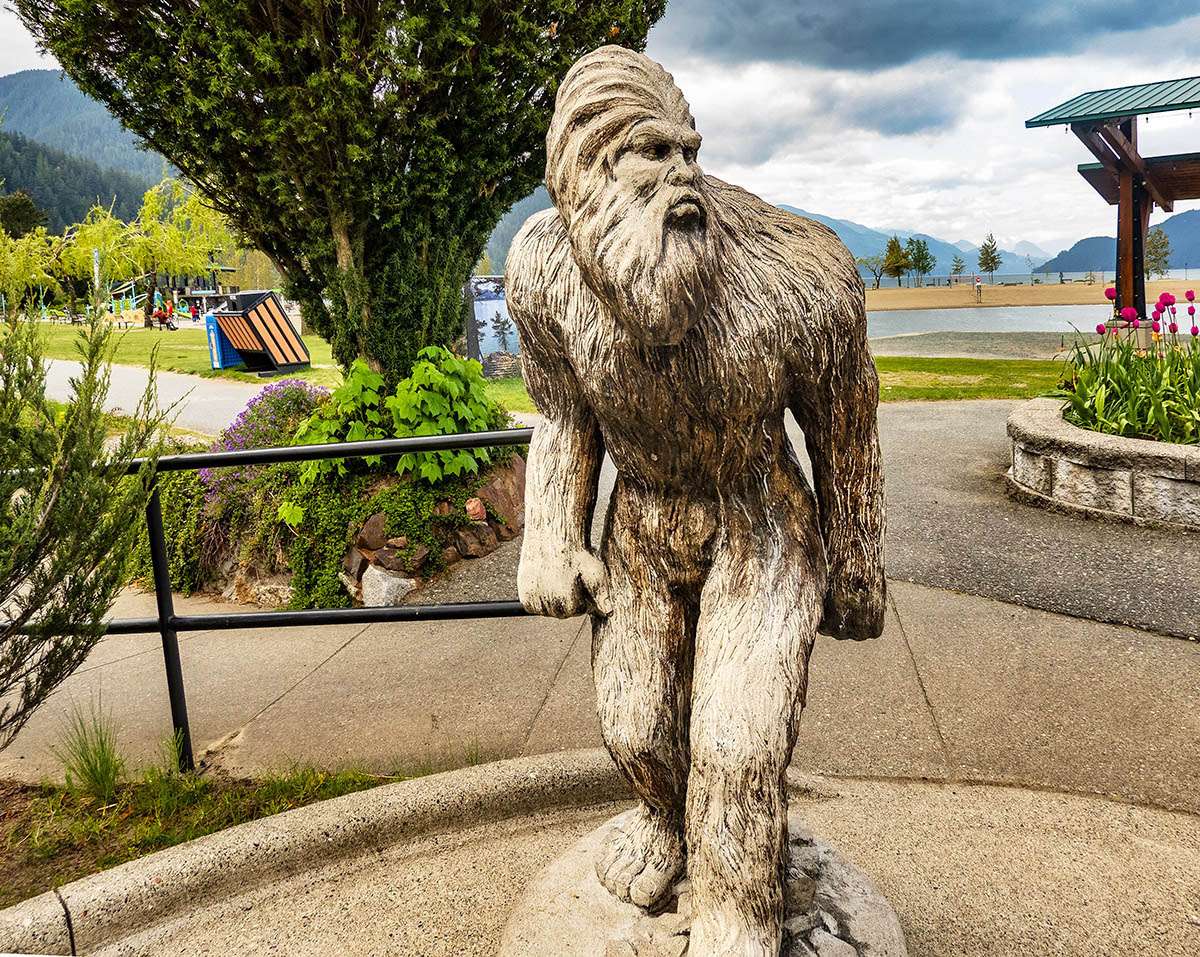
The Sasquatch theme and other depictions of the creature pop up all around town. You can find them at souvenir stores, along the outlined Sasquatch Trail that goes to a mall and along walking paths, at Sasquatch Mountain Resort, and at the Sasquatch Inn & Pub, to name a few. Then there’s the special event Sasquatch Days held in June, where local Sts’ailes First Nations celebrate storytelling, have a salmon barbecue, and stage races in war canoes.
Resources
Tourism Harrison has plenty of information on events in the area, as well as suggested itineraries, including a dip in the famed Harrison Hot Springs, along with suggestions for camping, hotels, and lodges such as the amazing Fraser River Lodge on the banks of the Fraser River where we stayed. In spring, you can take in the nearby Harrison Tulip Festival at Onos Farms, named the World’s Most Instagramable Tulip Farm.
We would like to thank Stephanie Gallamore of Tourism Harrison for showing us through the museum and visitor centre, and other places around town, and Destination BC for assisting in travel arrangements.
SUBSCRIBE to Photojourneys below
Feel free to PIN this post on the Sasquatch Museum in Harrison Hot Springs, BC.