All photos © Robin and Arlene Karpan
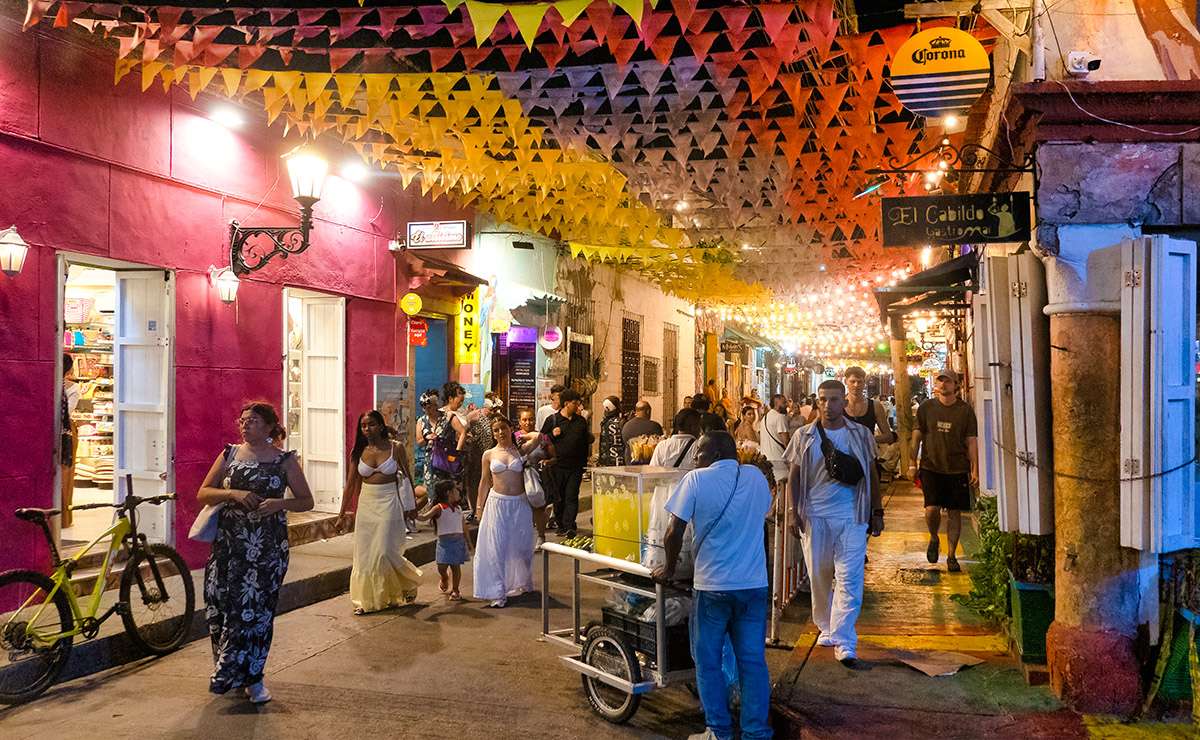
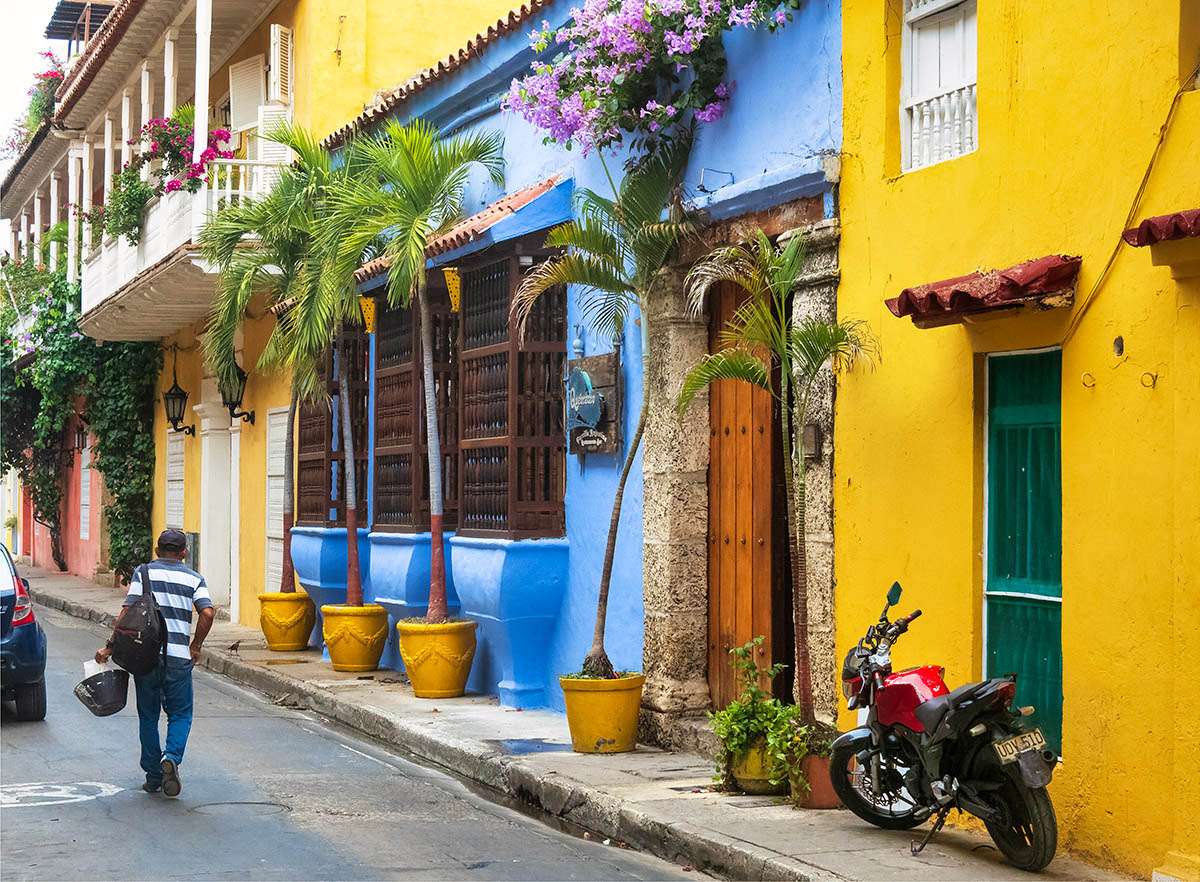
A jewel of Colombia’s Caribbean coast, Cartegena’s historic treasures have been recognized by UNESCO. This popular tourist destination combines old world charm with a vibrant culture, and the congestion of a large city. Old and new live side by side, and nature awaits only a short distance away. If we could sum up our first brief visit to Cartagena in one word based on our initial impressions, it would be “colour”.
Cartagena a Hub of the Americas
Founded in 1533, Cartagena became a stronghold of Spanish colonial power on the Caribbean coast of South America. It served as a base to ship looted gold and other treasures back to Spain, and was a centre for slave trading and expansion into the Colombian interior. Today, it remains a prime trade seaport and export hub for Colombia, shipping everything from coffee, tea, spices, fruits, and cut flowers to machinery and aluminum.
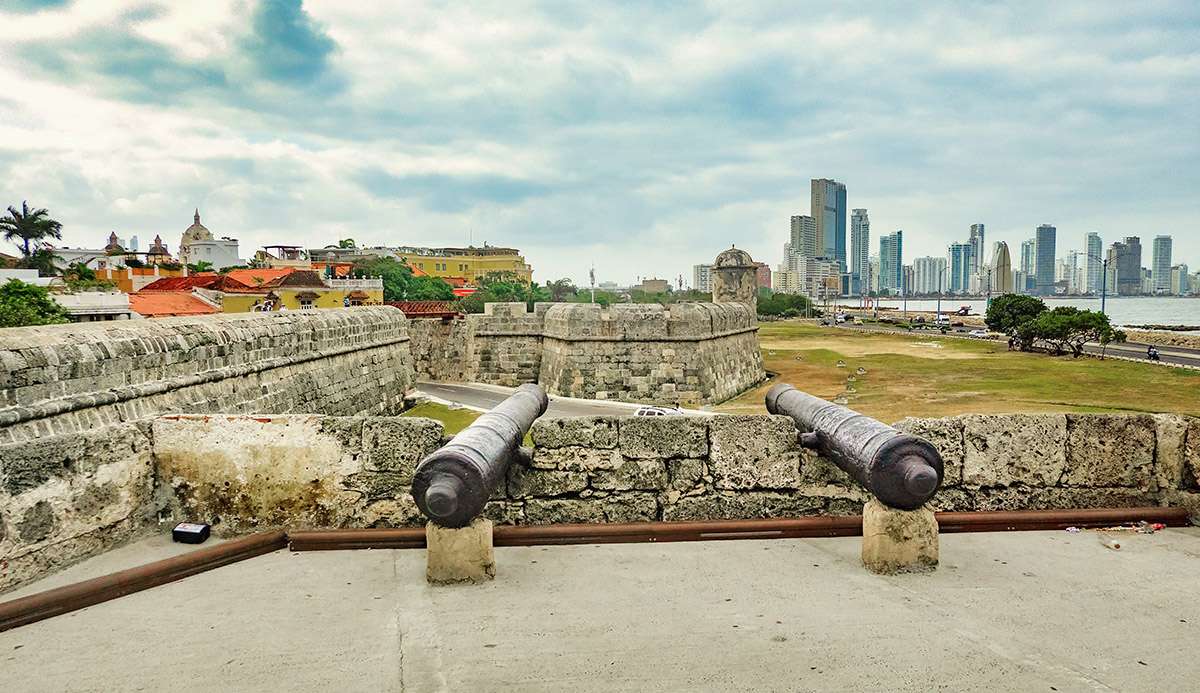
Cartagena’s early wealth brought attacks by pirates and by the British navy during wars between Spain and Britain. The need to protect the city led to the building of forts and massive city walls, making it one of the most fortified places in the Caribbean and South America. In the celebrated Battle of Cartagena de Indias in 1741, the city succeeded in repelling a massive British attack even though being greatly outnumbered.
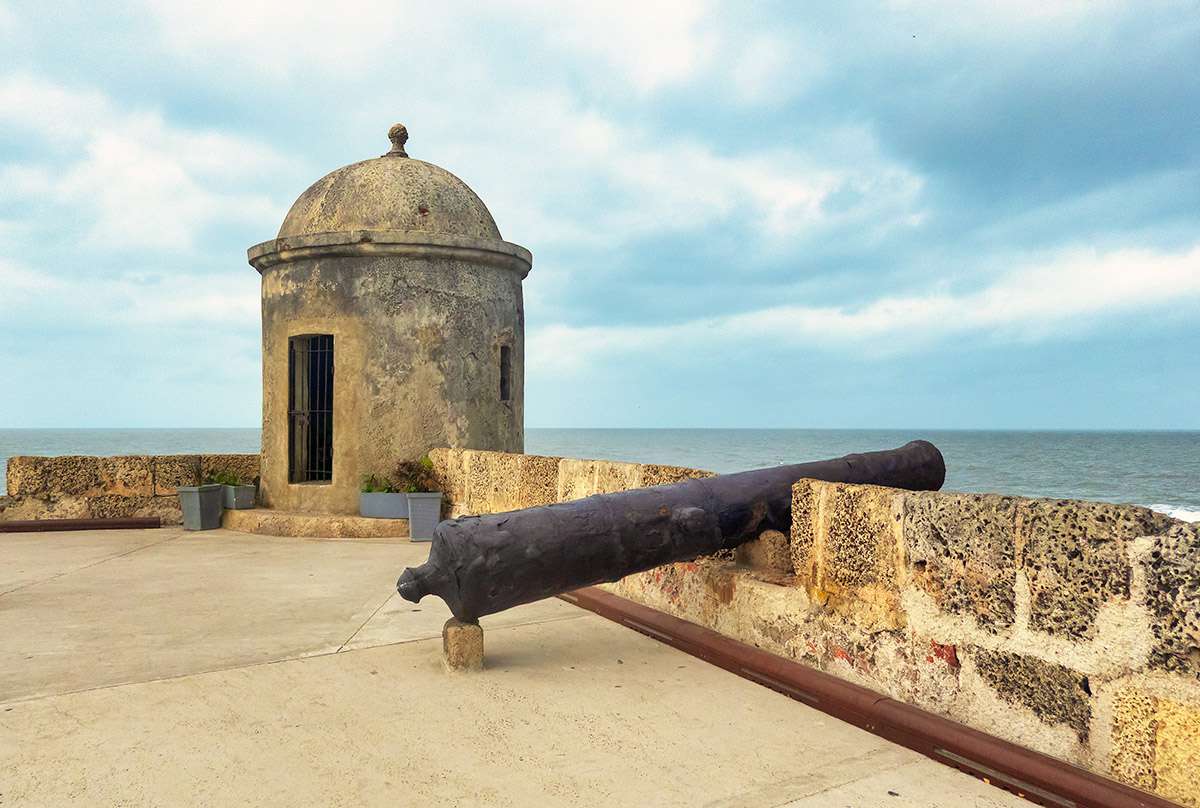
The fort and many of the walls remain. This, along with the many original colonial buildings and monuments, led to the old city in Cartagena becoming a UNESCO World Heritage Site.
Exploring the Old Town
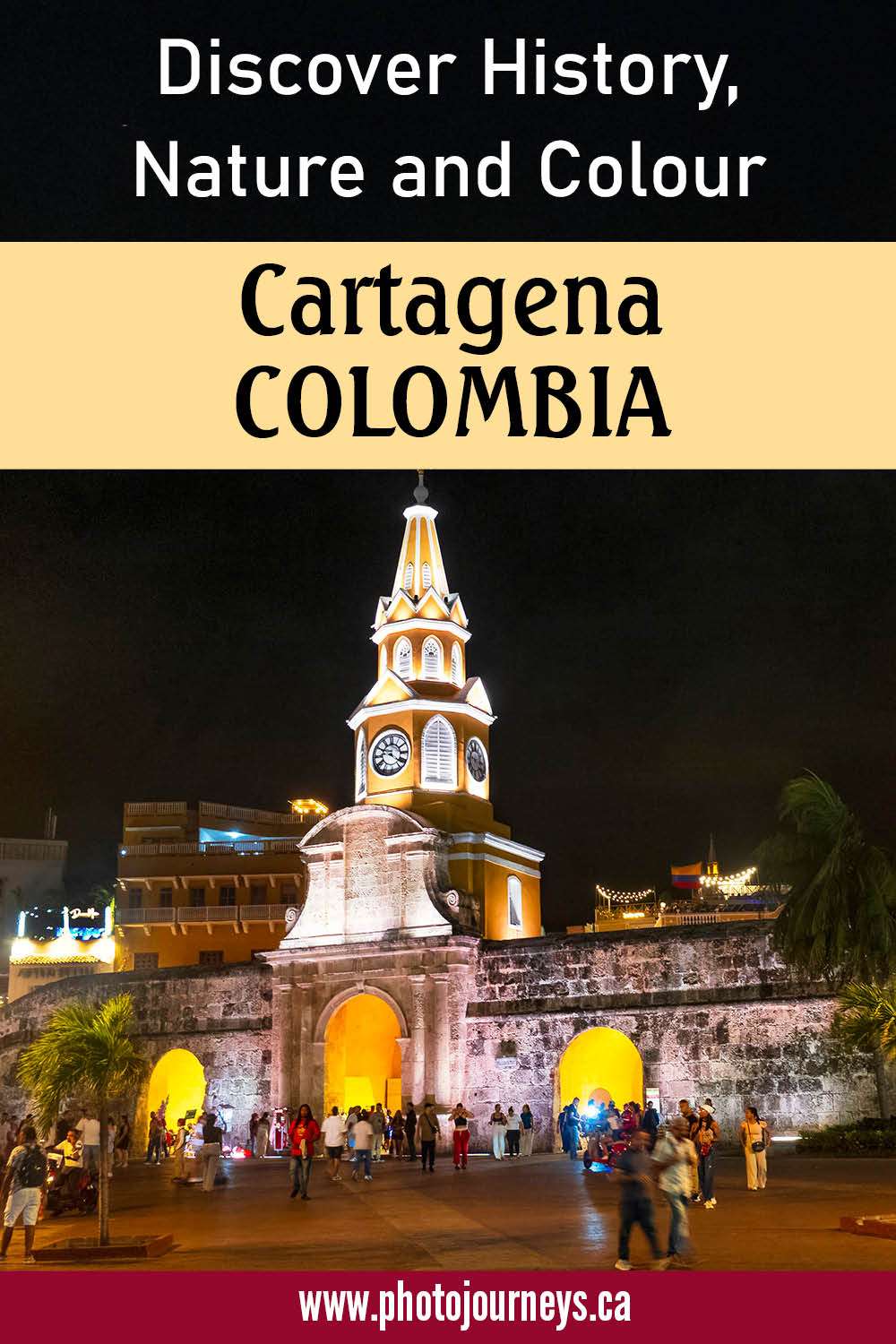
The Clock Tower is among Cartagena’s most famous landmarks and the principal entry to the old city. Dating to1601, it went through several rebuilds, eventually ending up with the clock we see today.
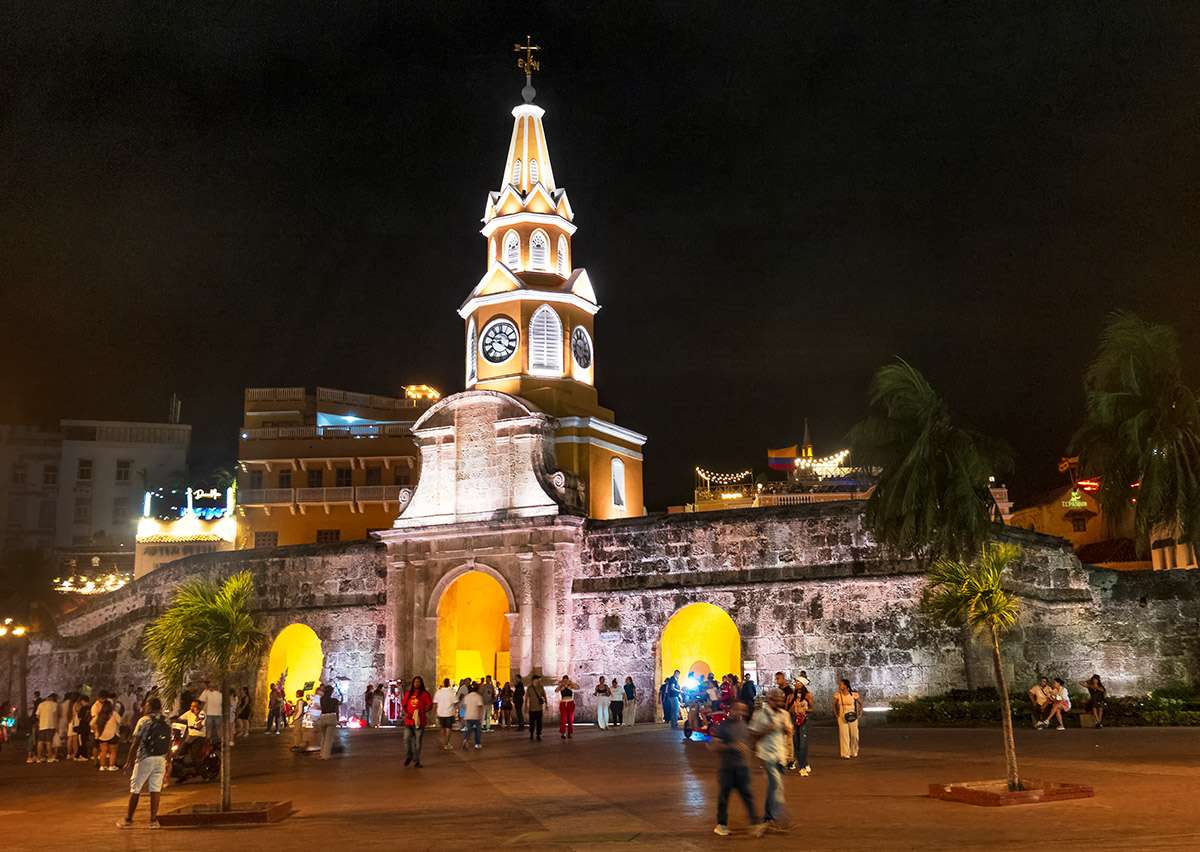
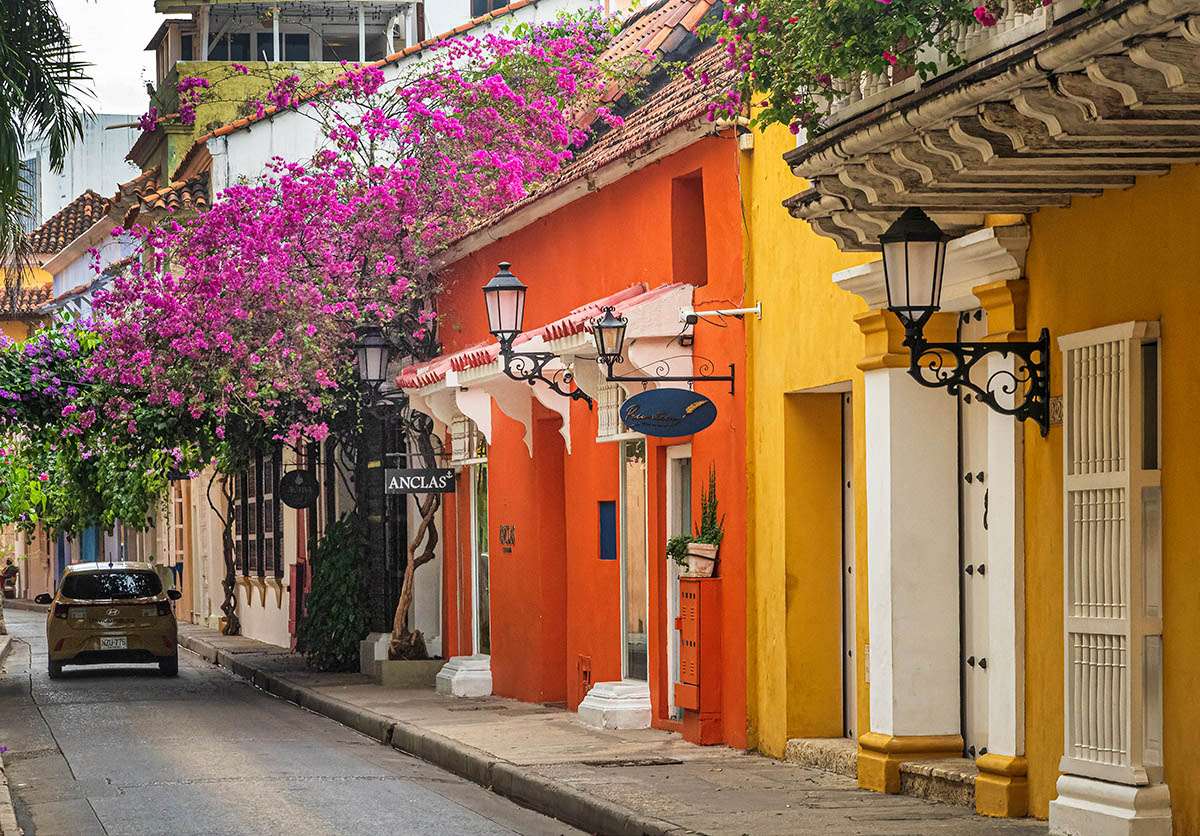
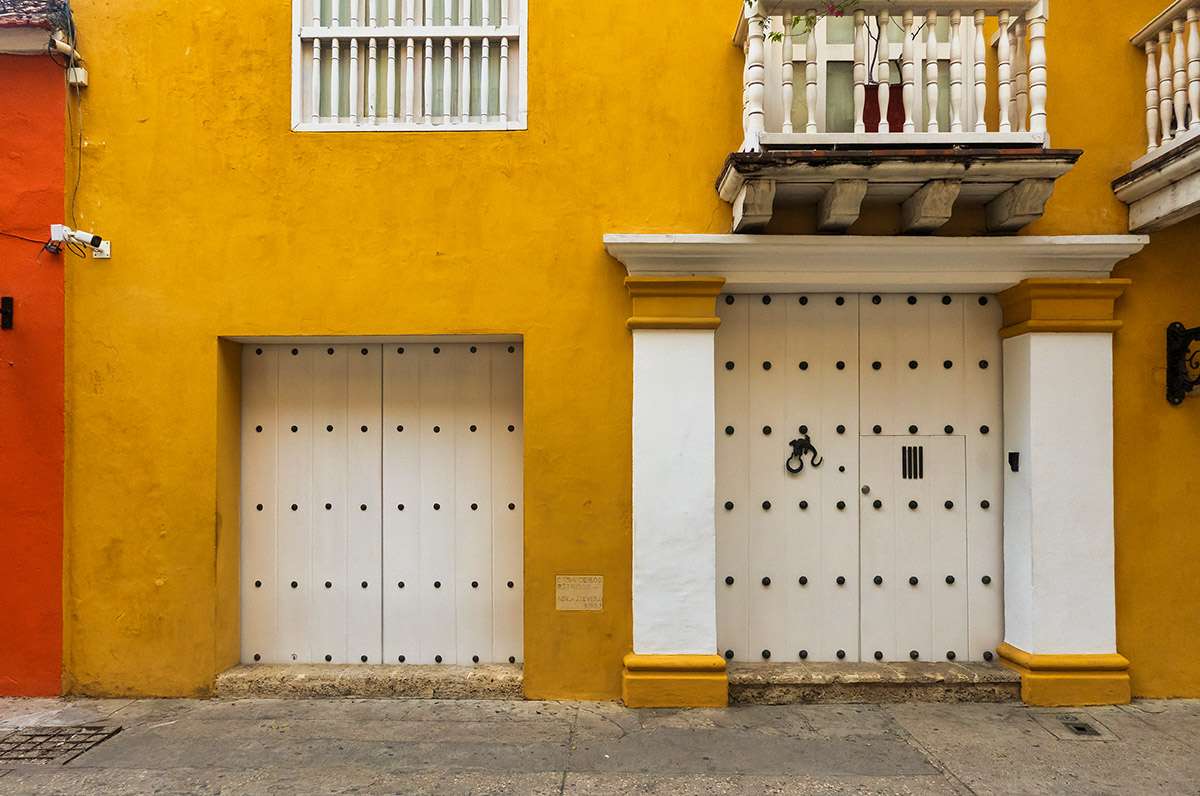
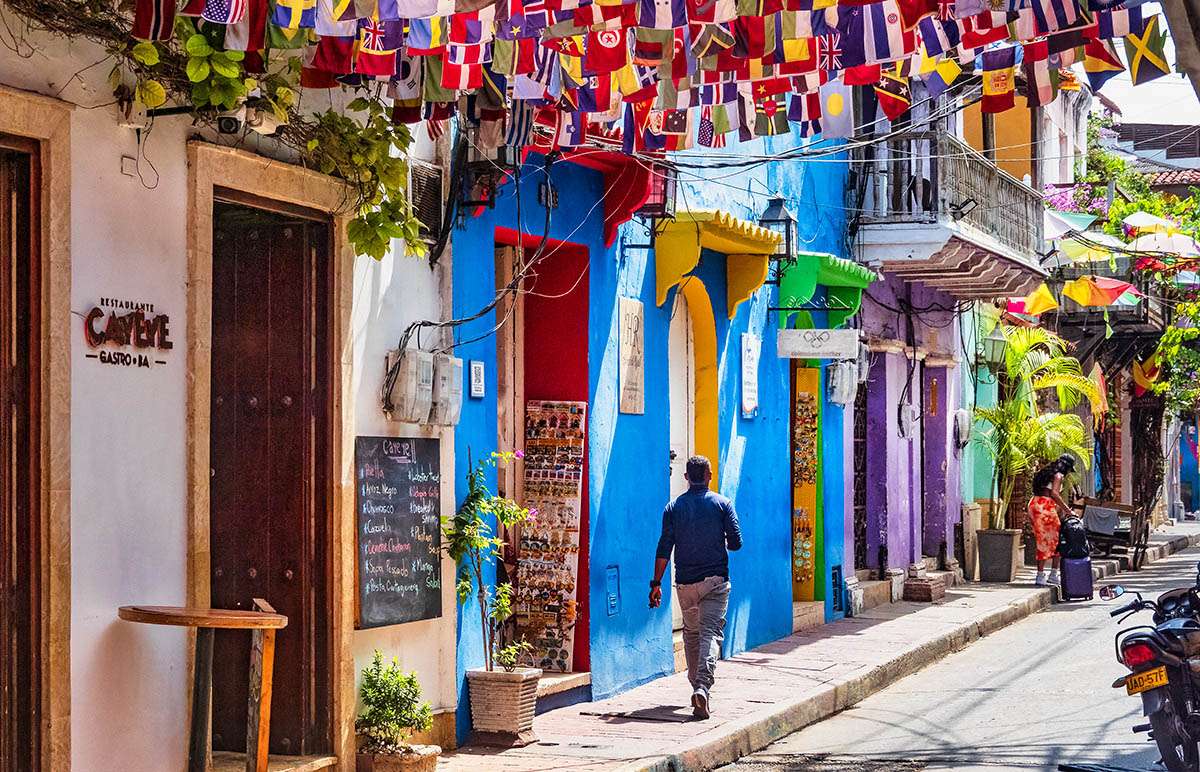
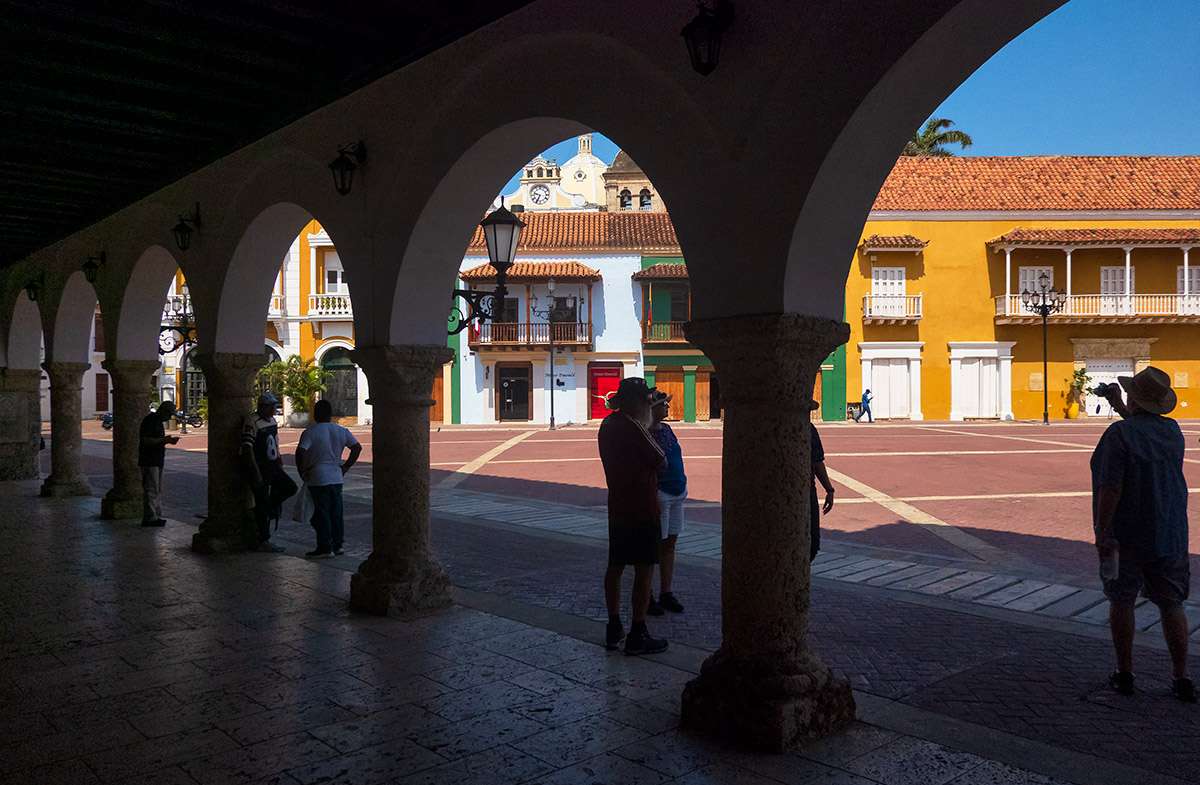
We can walk along the tops of the walls where old cannons still point out to sea, wander along narrow streets where wildly colourful buildings have huge wooden doors with elaborate door knockers, and balconies overflow with flowers. Historic churches appear at every turn. Parks range from the Plaza de los Coches near the Clock Tower, where a statue of Cartagena founder Pedro de Heredia gazes over passers-by, to Parque Bolivar where the famous liberator Simon Bolivar sits astride his horse.
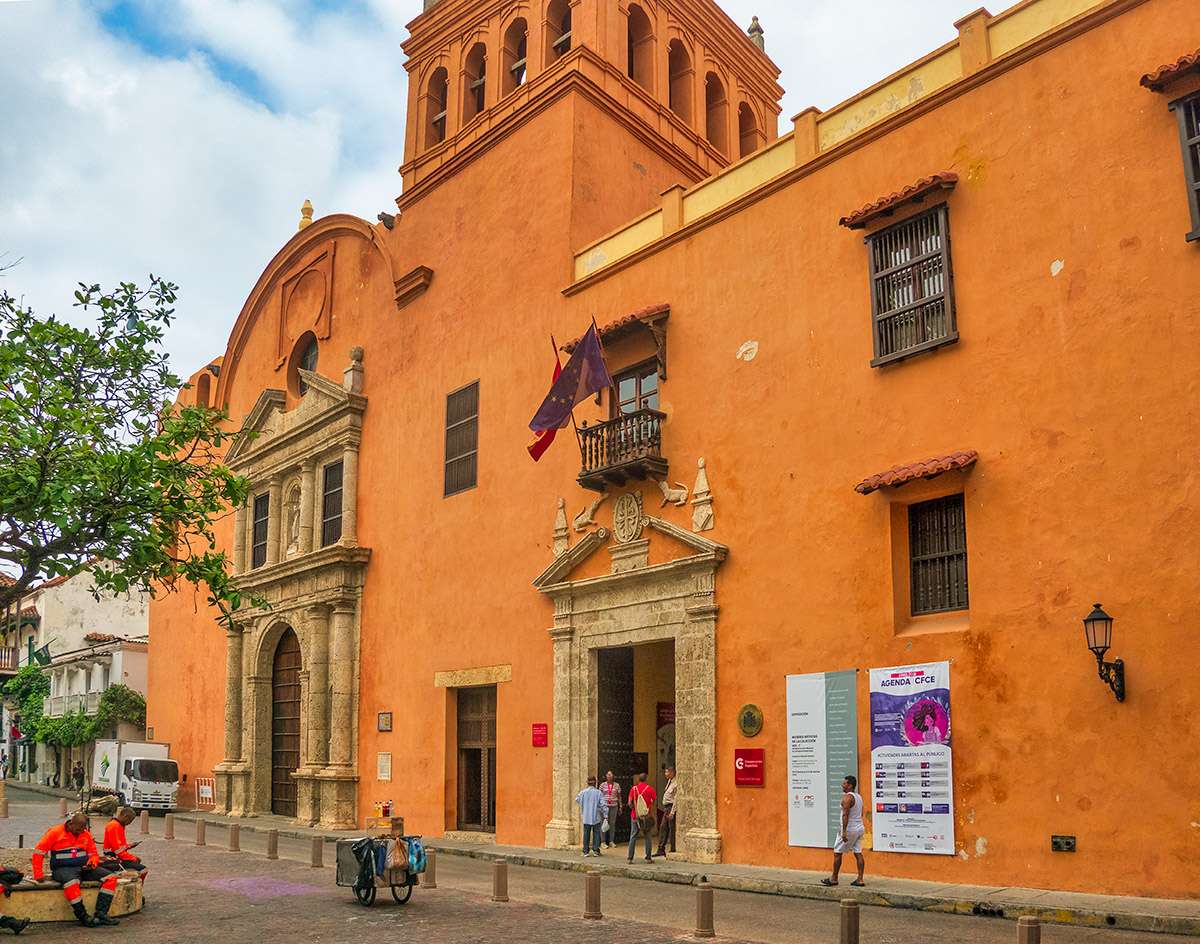
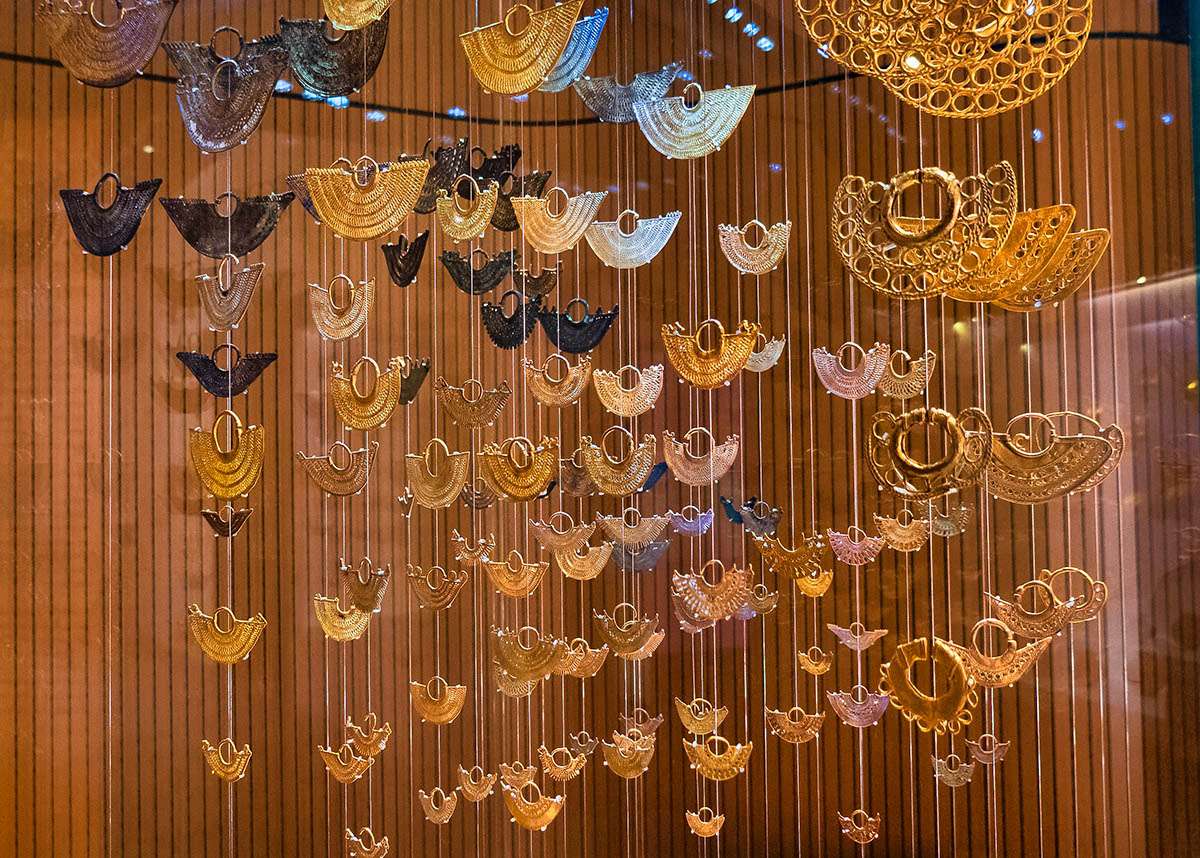
Cartagena has more museums than you could visit on a short stay. The small but excellent Zenú Gold Museum overlooking Parque Bolivar should be on your “must-do” list. It is reminiscent of the much larger Gold Museum in Bogota. But here the emphasis is on gold produced by the Zenú people of the interior coastal areas in pre-colonial times, much of which is amazingly intricate and dates back thousands of years. A good deal of Cartagena’s early wealth was built on raiding tombs for gold in Zenú territory.
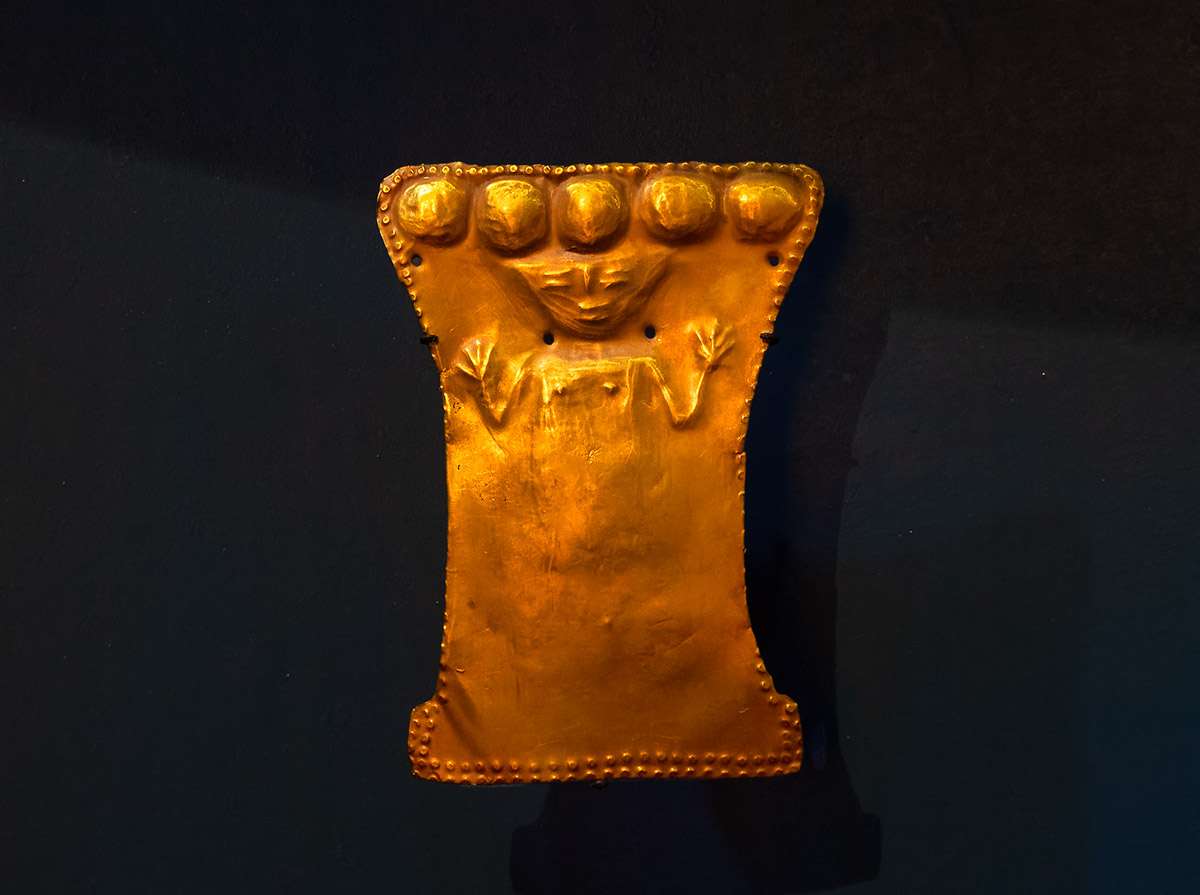
Labels and descriptions in the museum are in both Spanish and English. And the best part? Admission is free.
While the old city has plenty of official sites to visit, simply wandering the streets and taking in the colour is the ideal way to discover the city’s atmosphere.

Boat tours in the large protected harbour provide a great overview. It’s a stark contrast looking over the gleaming skyscrapers of the Bocagrande neighbourhood and the nearby historic centre with its colonial architecture and ancient walls.
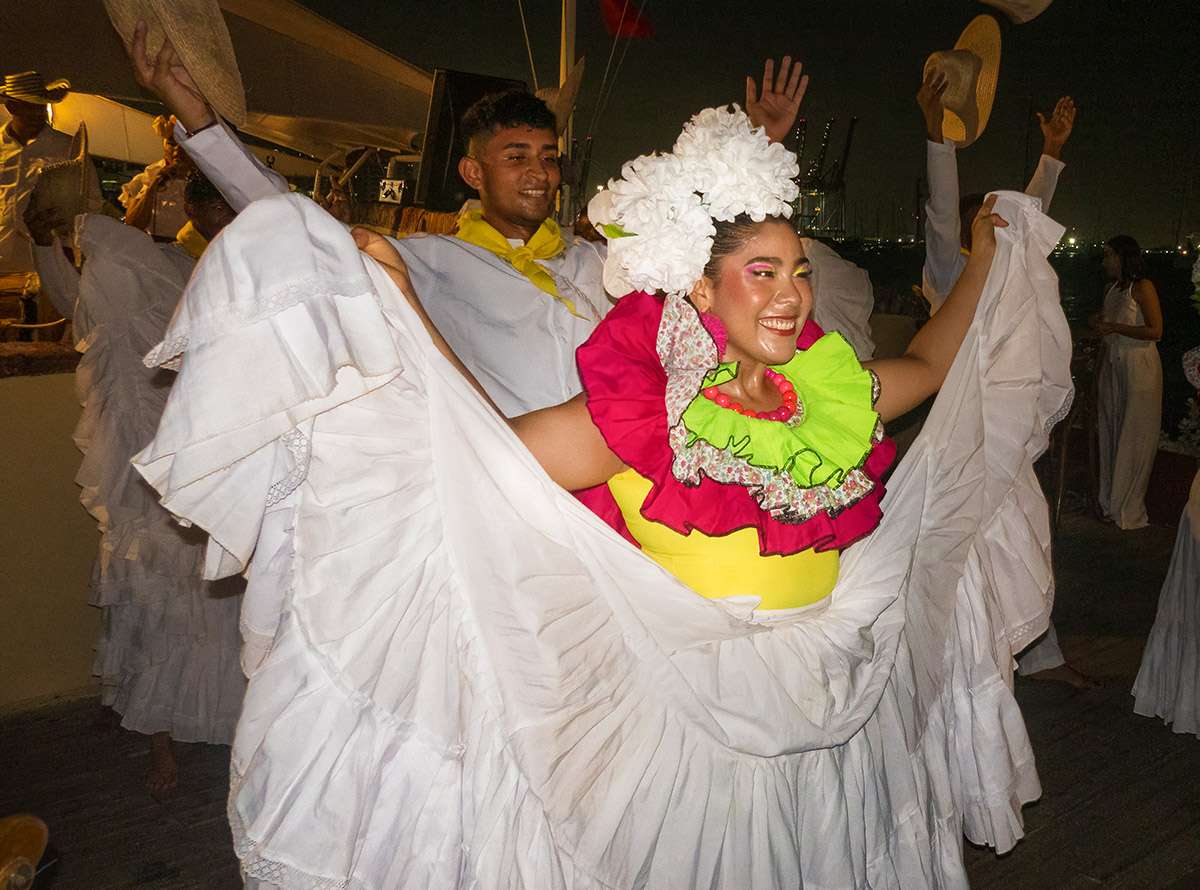
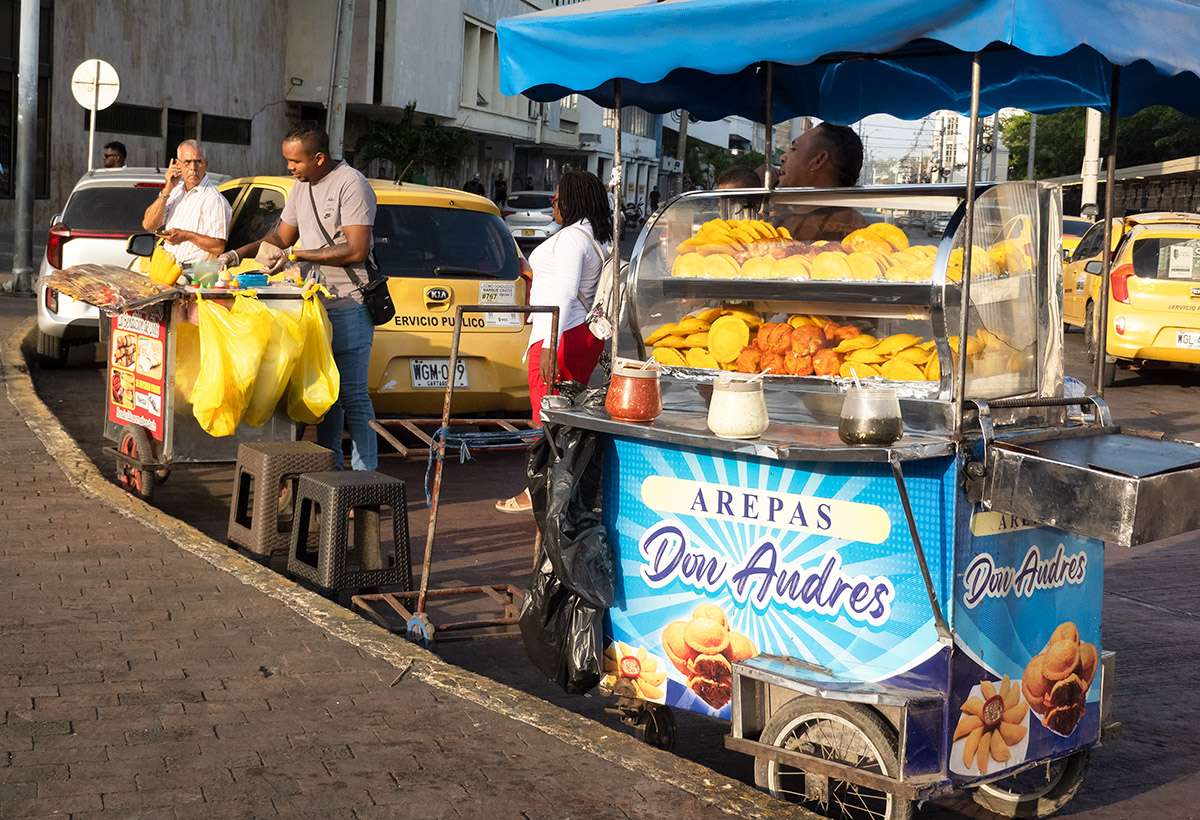
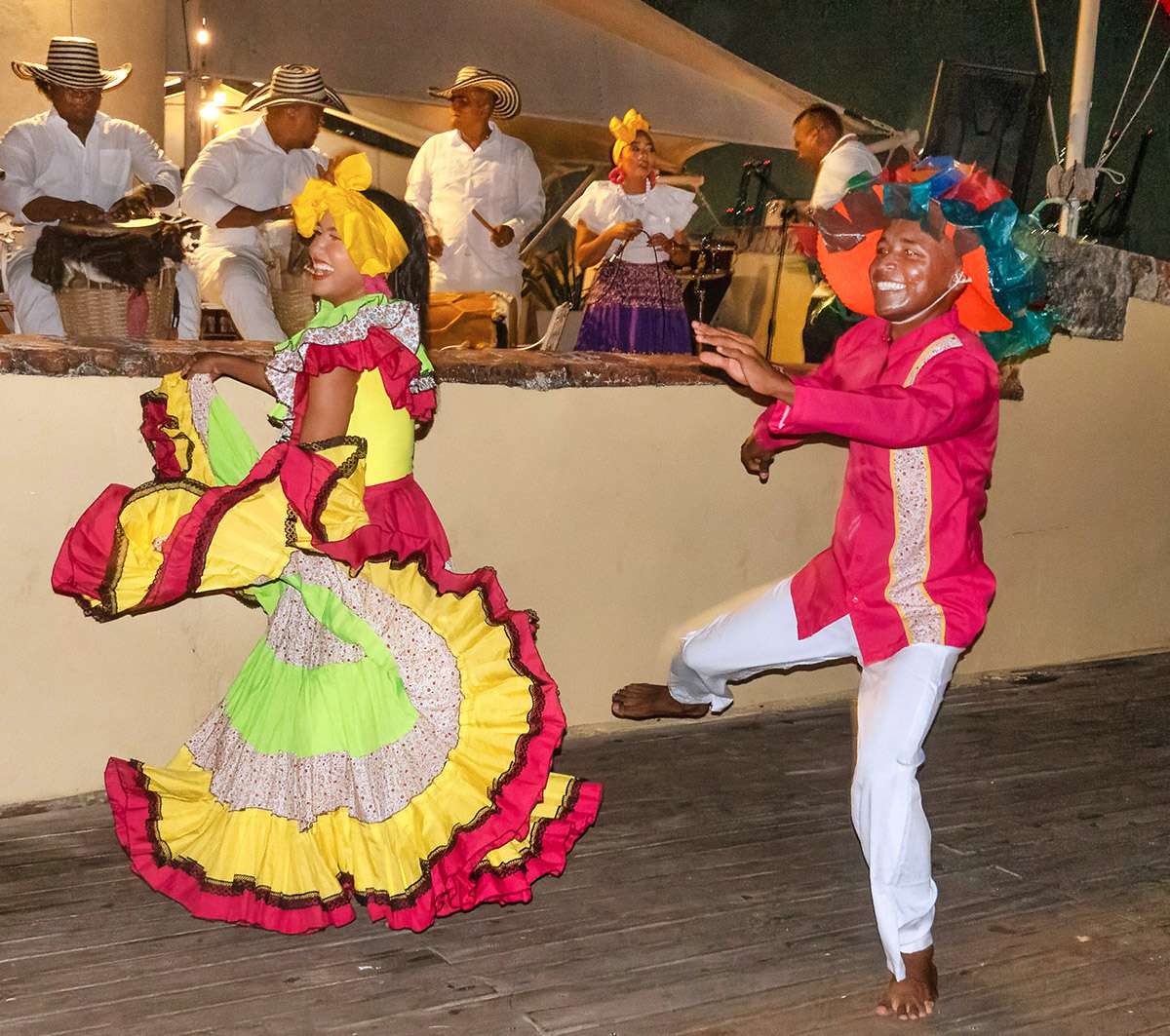
It would be hard to go hungry here with eating options running the gamut from basic to fancy schmancy. For something quick and easy, try the street food from the many vendors in the plaza near the Clock Tower. Or if you really want to splash out, there are places such as the famous Candé Cartagena restaurant, where Colombian Caribbean fare goes hand in hand with live music and dance presentations.
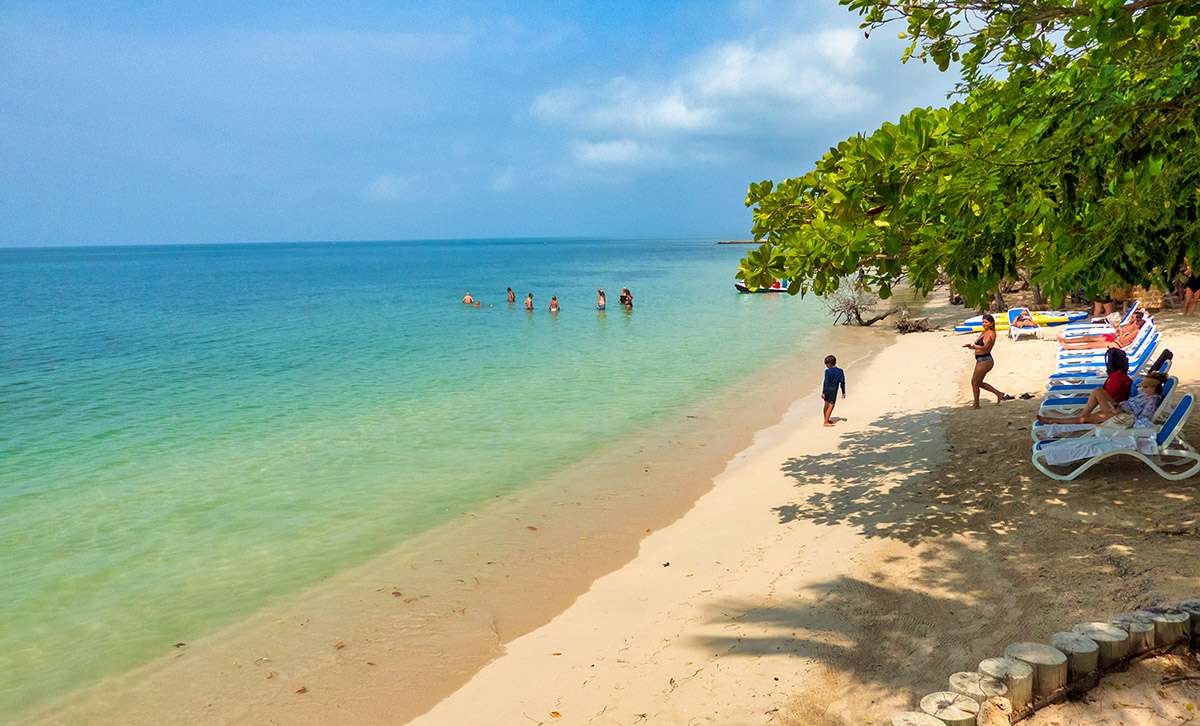
Of course, the Caribbean is known for beaches. While there are some near the city, many of the best beaches, along with swanky resort hotels, are on the nearby Rosario Islands and along the Barú Peninsula that stretches southwest of Cartagena.
Into the Forest
Our favourite excursion from Cartagena was the morning birdwatching trip we did with Hugo, a guide with Impulse Travel. We left at 5:00 am for the half-hour drive to a forest reserve a bit inland. An early morning start was ideal to catch the most wildlife activity and also to beat the heat which often topped 30 degrees by midday.
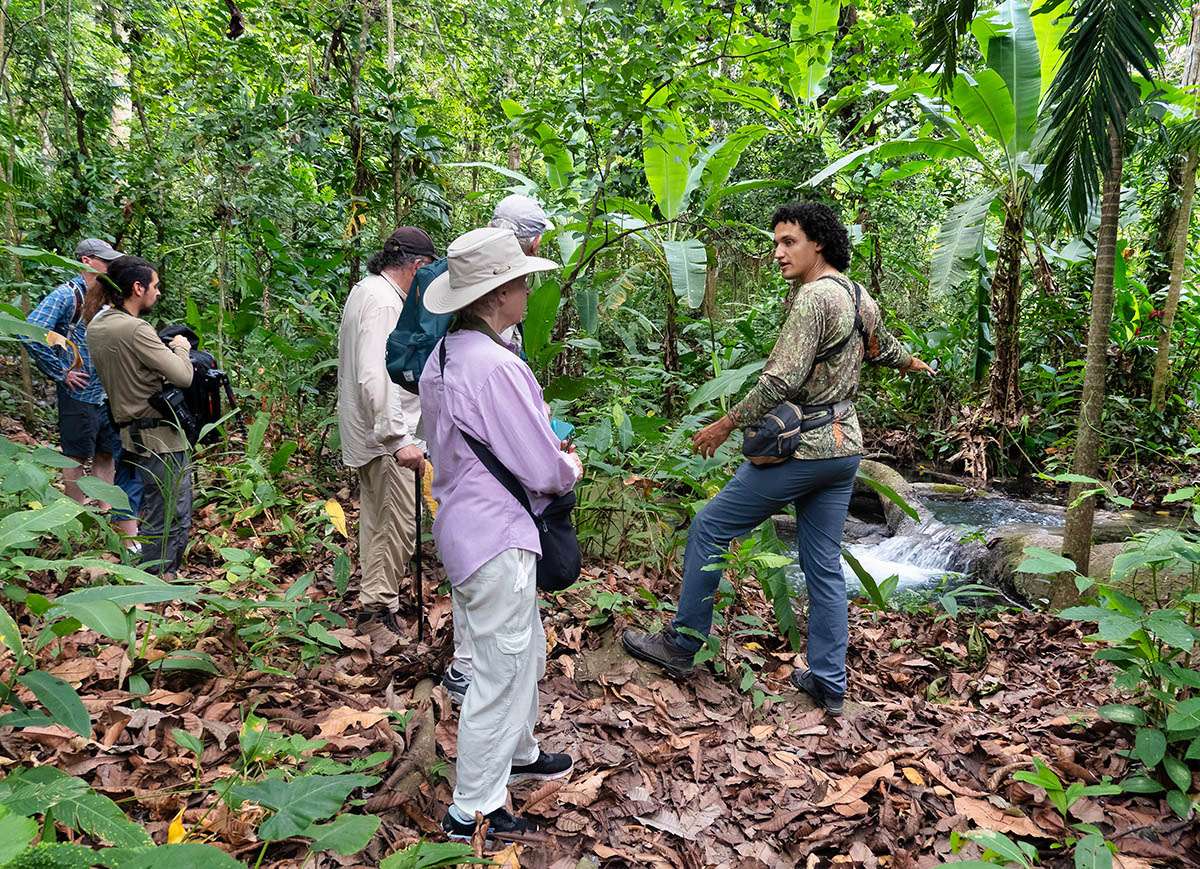
More than just birds, this was a wildlife experience to discover more about the semi-humid dry forest in the reserve. The spine-tingling roar of howler monkeys echoed through the otherwise quiet forest. We followed the sound and soon came to the troop of monkeys high in the branches. They peered down at us, but went about their business and didn’t seem alarmed at our presence.
But after a bit, one monkey scampered to a branch almost straight overhead, broke off pieces of wood and threw them to the ground. Perhaps they were tiring of us. We also had to be careful where we walked – you don’t want to step in fresh monkey poop.
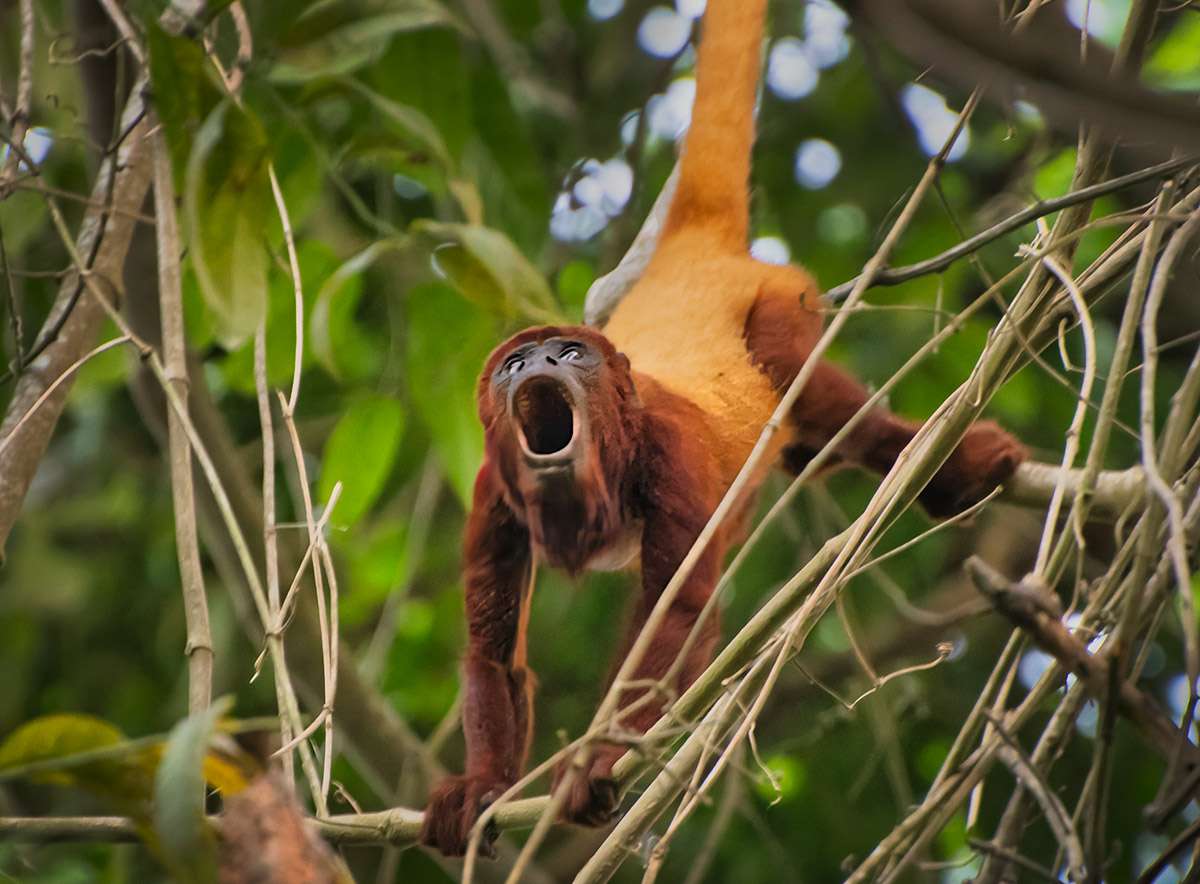
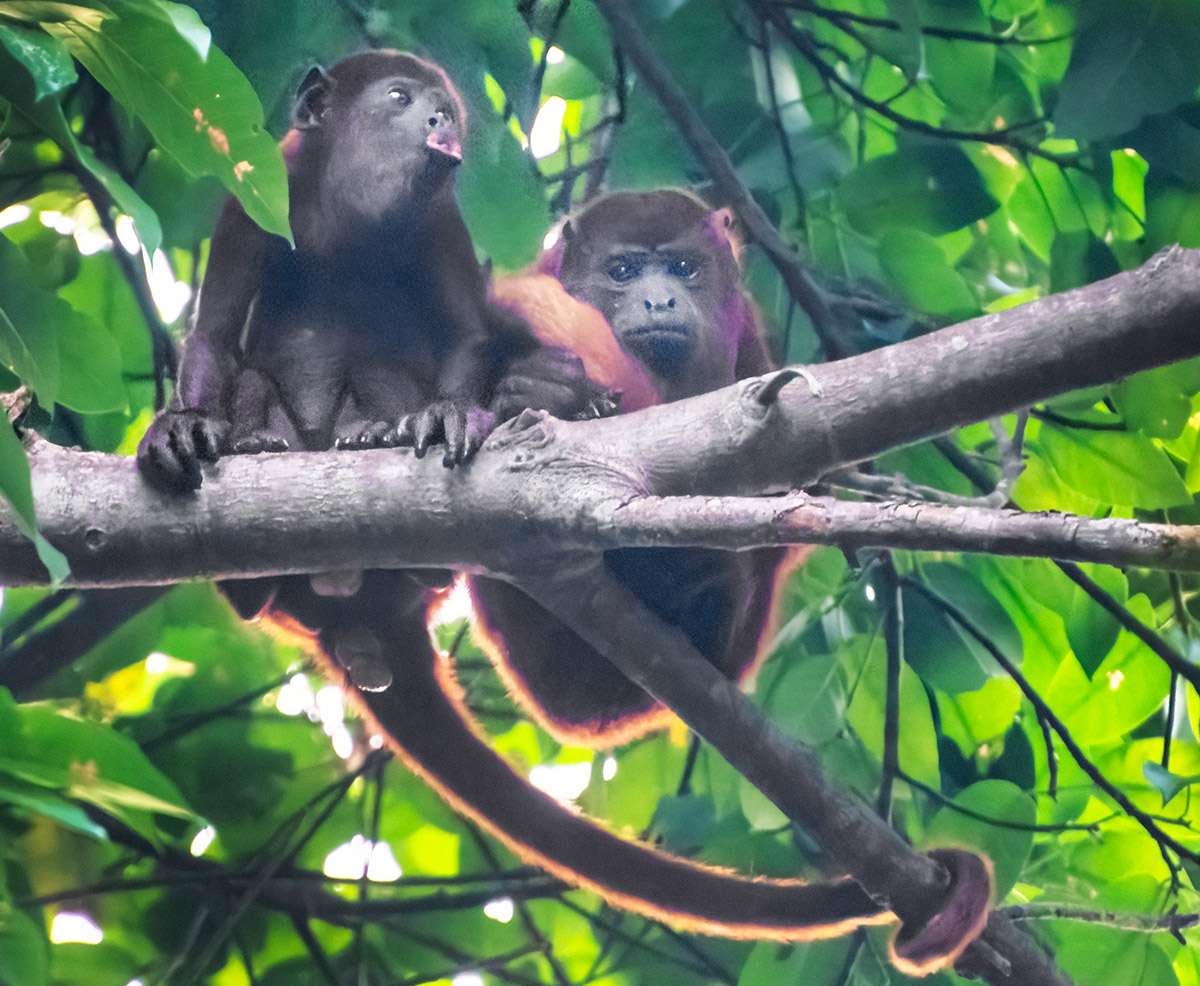
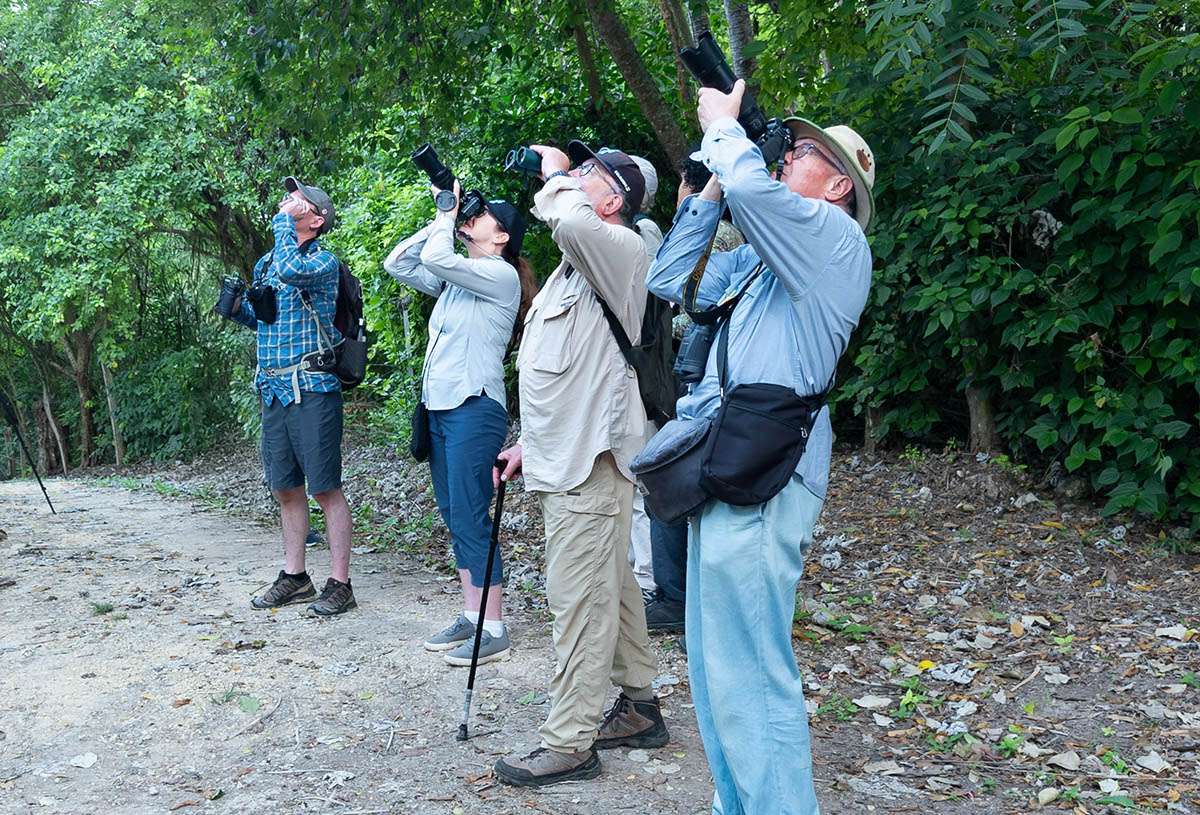
The howlers soon moved off, and our attention turned to birds which kept coming and going constantly. We were amazed at Hugo’s ability to identify birds by sound or to spot a green bird among the green leaves when most of us saw only trees.
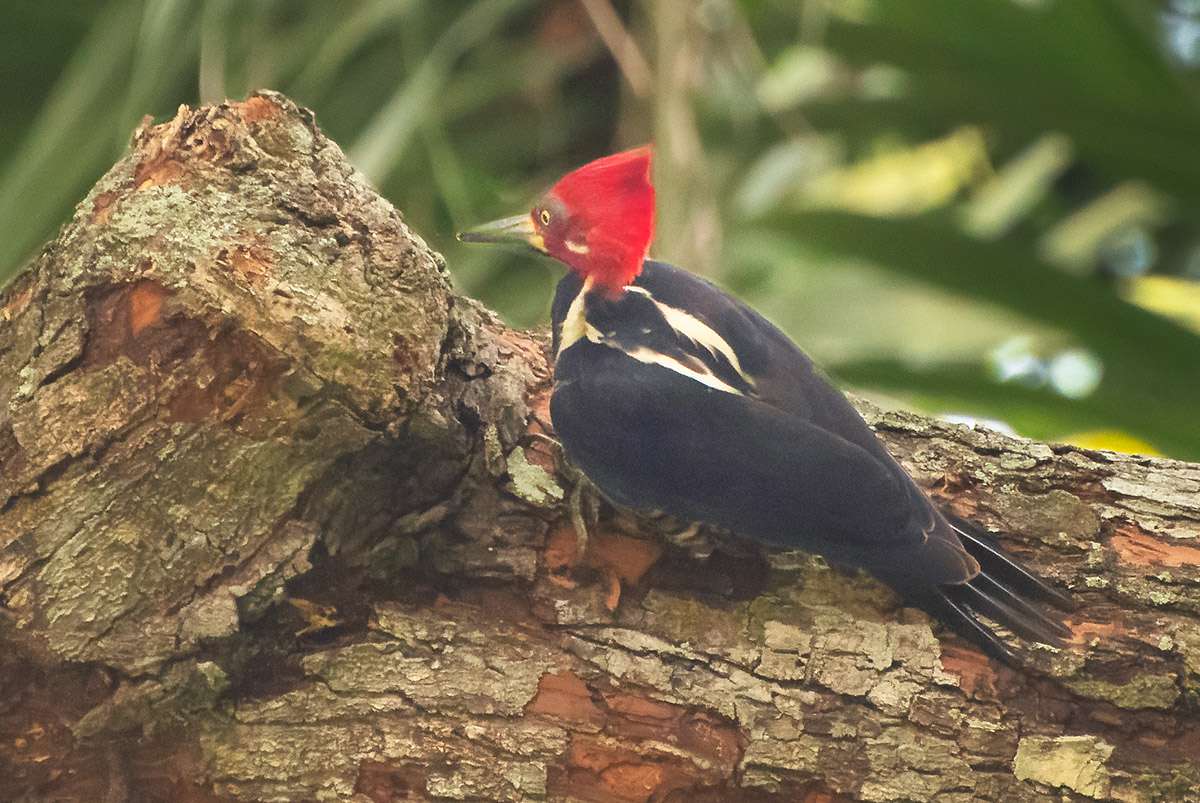
We spotted some rarely-seen species such as the collared forest-falcon, a rufous-tailed jacamar that had just consumed a large dragonfly after repeatedly flailing it, and a russet-throated puffbird that kindly cooperated by sitting still so we could see its striking orange and white plumage. A pair of crimson-crested woodpeckers made quite a racket tearing apart bark searching for insects.
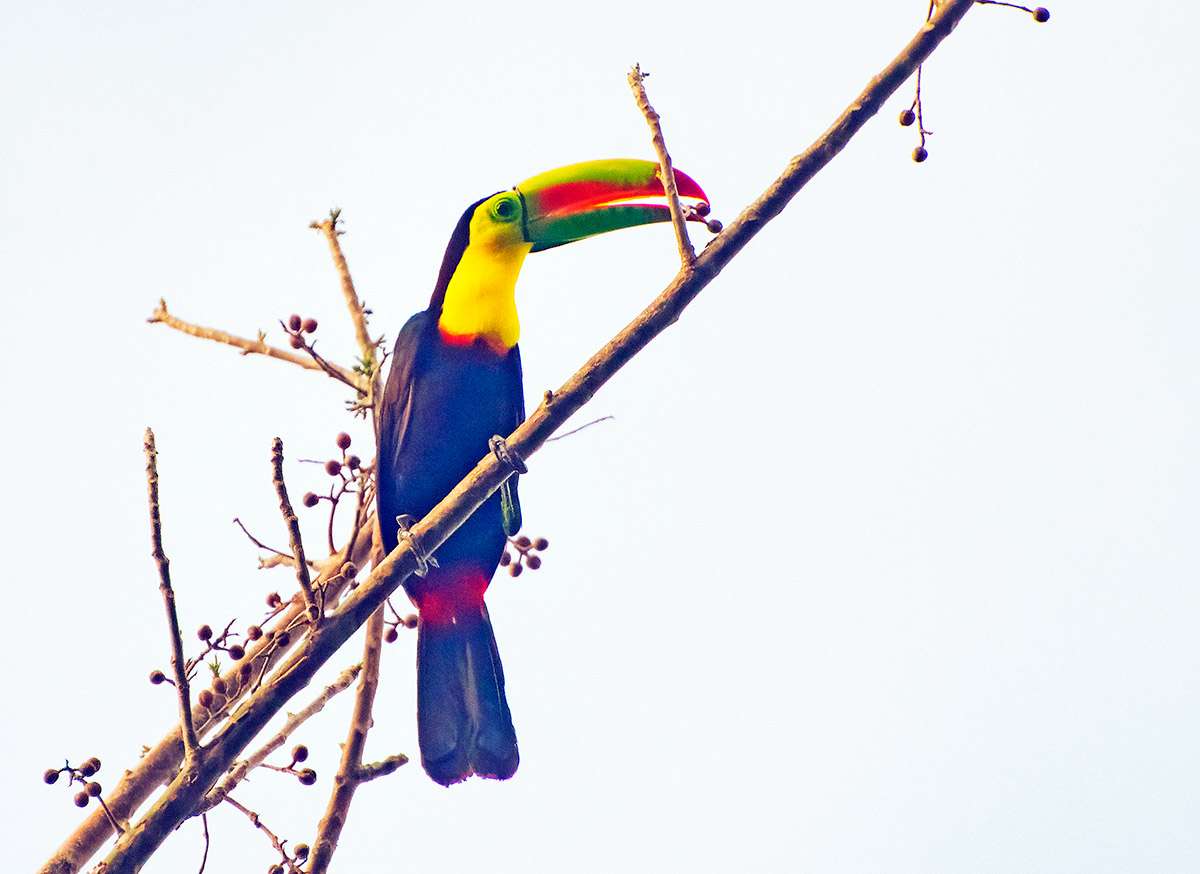
A highlight was when a few kaleidoscopic keel-billed toucans arrived, looking like they had come straight off a box of Fruit Loops.
Breakfast with a View
The plan, according to Hugo, was to wander around for a couple of hours to make the best use of the early morning, and then have breakfast. Since we were in the middle of the forest, we thought that breakfast would be simple picnic fare. Not so.
Hugo led us to a house where the owners of the land, Celedonia and Connie Piñeras, live. They had laid out an elaborate feast of warm arepas (corn flatbread), homemade jam, corn empanadas with a meat filling, sausages, coffee, and hot chocolate. And for starters we had the sweetest pineapple ever – honey gold pineapple, a tropical treat known for its sweet taste.
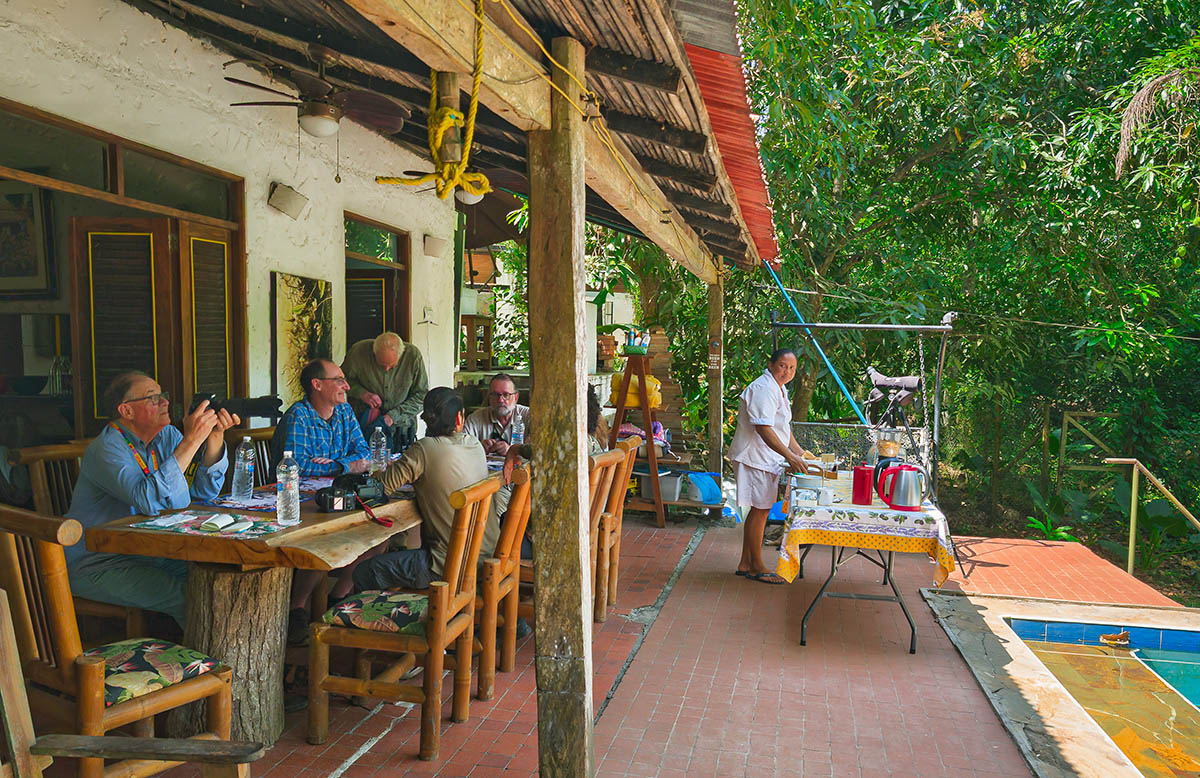
Most interesting was the story behind the formation of the reserve. Celedonia had inherited some land from his family. As a biologist, he grew to love and respect his land, and took steps to maintain it as a preserve. The dense foliage now teems with life, and serves as a place to host people such as us who take birding excursions. But above all, it’s about their much larger commitment to conservation and preserving forest biodiversity almost on the outskirts of Cartagena.
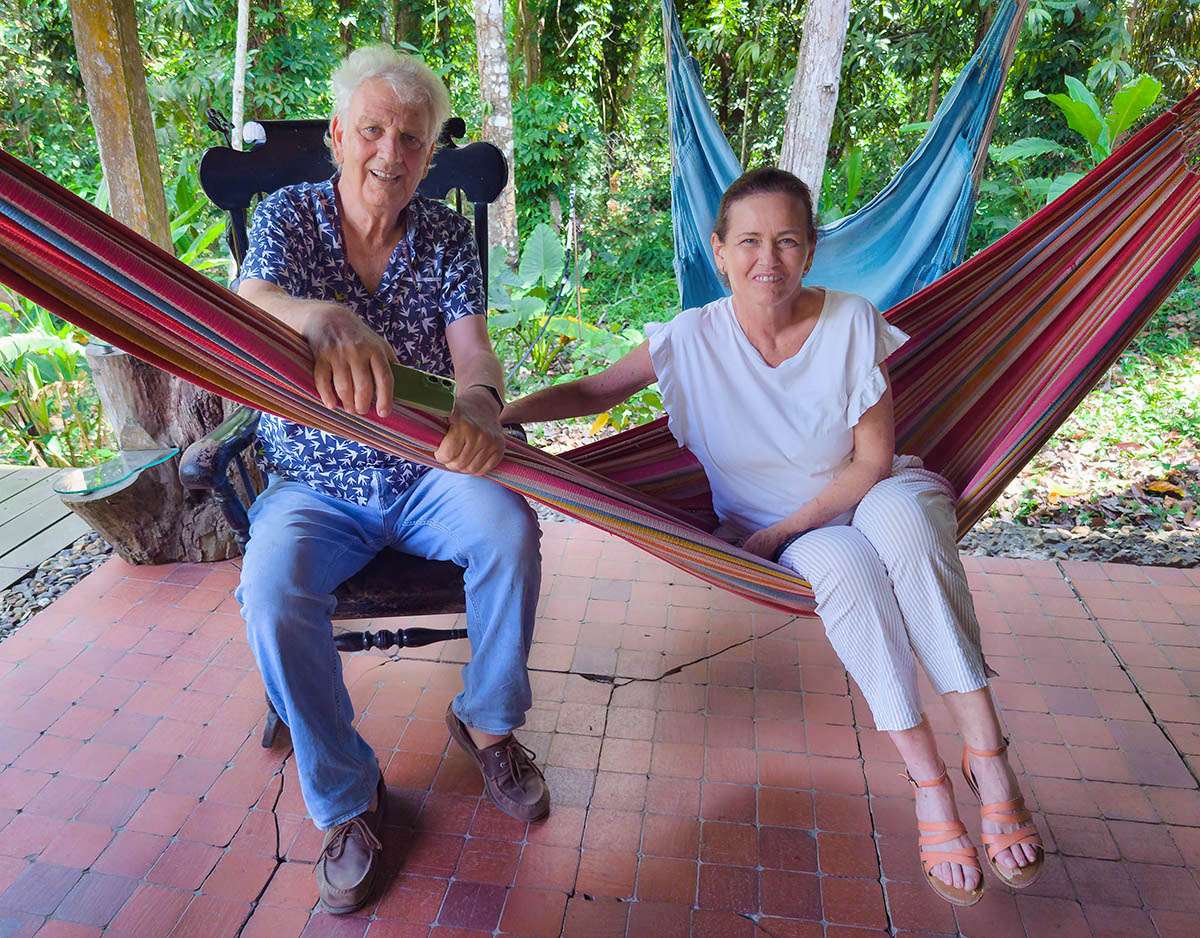
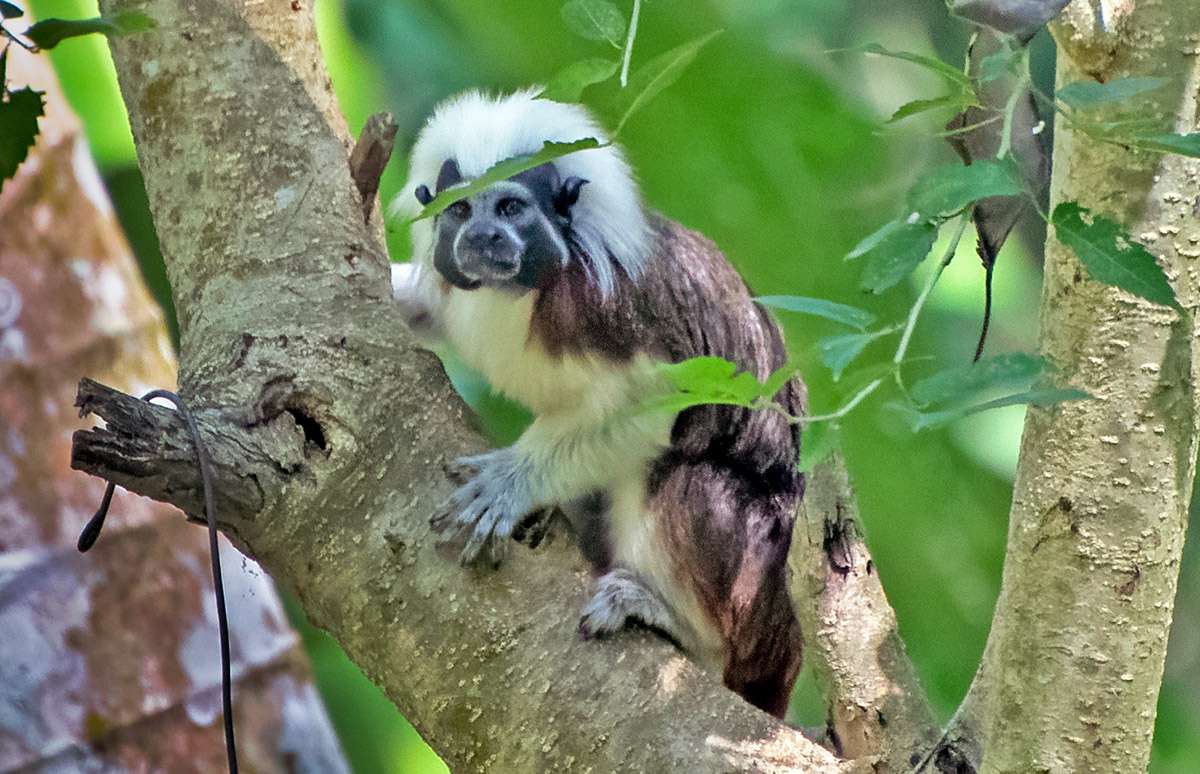
Nothing could beat the setting on the Pineras’ patio which stretched the entire length of the house. We could have stayed for hours watching the thick, jungly forest as hummingbirds and tanagers darted to the fruit feeders. And talk about luck – we even saw rare cotton-topped tamarin monkeys. This was a special find, since there are very few left in the wild, and they are difficult to see, measuring just about 20 cm long, and weighing less than 450 grams.
Resources
Impulse Travel specializes in custom-designed private tours, not only offering birdwatching experiences but a host of other adventures.
For accommodation in the old city of Cartagena, you can find everything from high end hotels such as the Osh Hotel to mid-range and budget offerings.
The Colombian Tourism website has great information on visiting Cartegena, as well as other parts of the country.
SUBSCRIBE to Photojourneys below
Feel free to PIN this post on Cartagena, Colombia