
All photos © Robin and Arlene Karpan
Just south of the tiny Saskatchewan community of Wood Mountain lies the region’s recreation hub, along with a couple of enjoyable spots to get in touch with Western Canadian history. A lot of visitors pass by on their way down Highway 18 to nearby Grasslands National Park East Block. But Wood Mountain Regional Park and Wood Mountain Post Provincial Park, almost next door to each other, are worth a closer look.
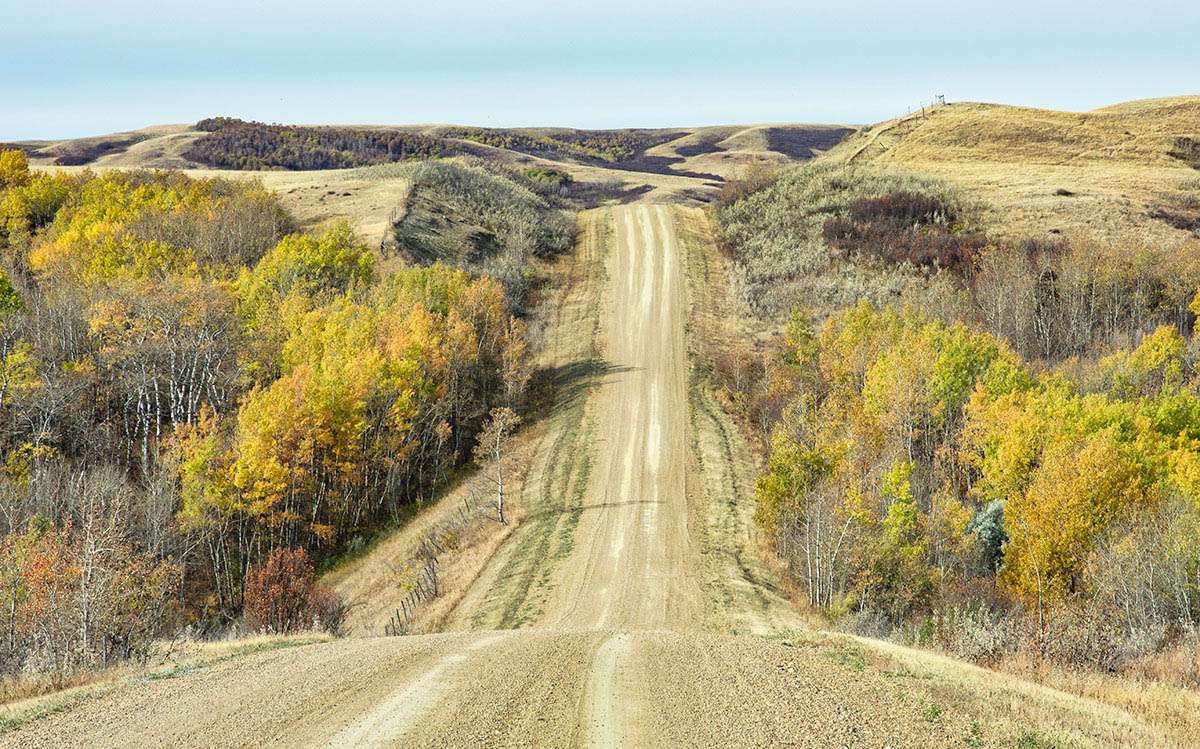
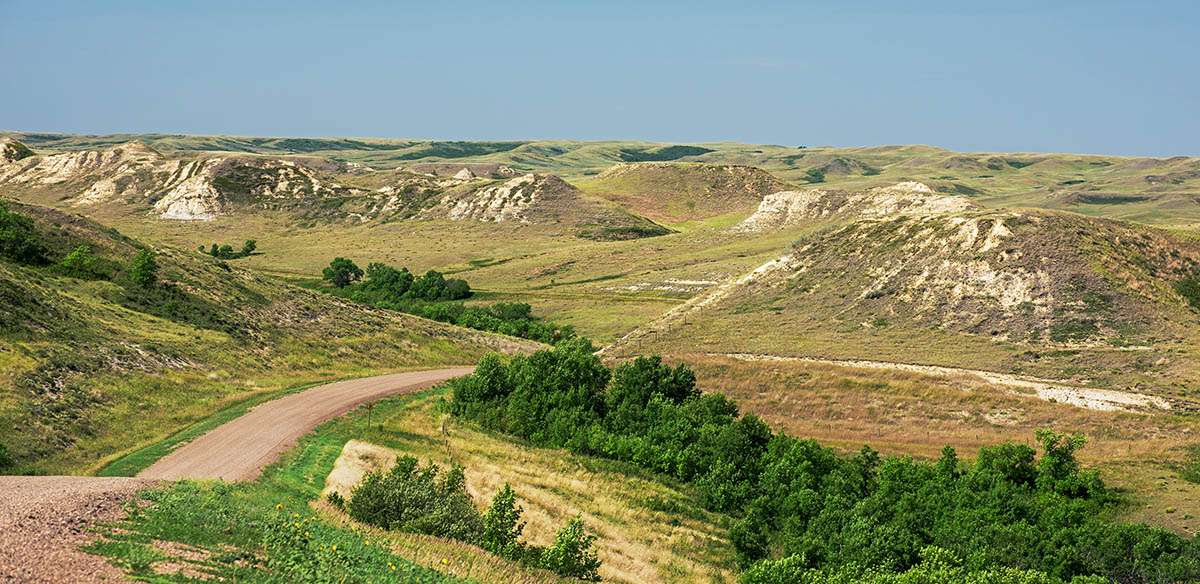
And the scenery ain’t too bad either. The landscape is part of the Wood Mountain Uplands, which along with the Cypress Hills, were the only parts of Saskatchewan to escape glaciation during the last ice age. Lying just north of the border with the United States, it’s a land of rolling hills – rugged in places – with wooded coulees and vast tracts of natural grasslands.
For many years, local First Nations people used the area in winter since it had an abundance of wood, water, shelter, and wildlife. Métis from the Red River in Manitoba came later, eventually establishing permanent settlements in the 1870s. The North West Mounted Police (NWMP) soon followed and set up a post. Most of Wood Mountain’s recent history was closely tied to ranching, and this is still cowboy country.
Wood Mountain Regional Park
The park is an important gathering place in this sparsely populated region. It features a full-service campground, food service, museum, picnic areas and playgrounds. It’s also a gateway to exploring other parts of southern Saskatchewan, such as Grasslands National Park.
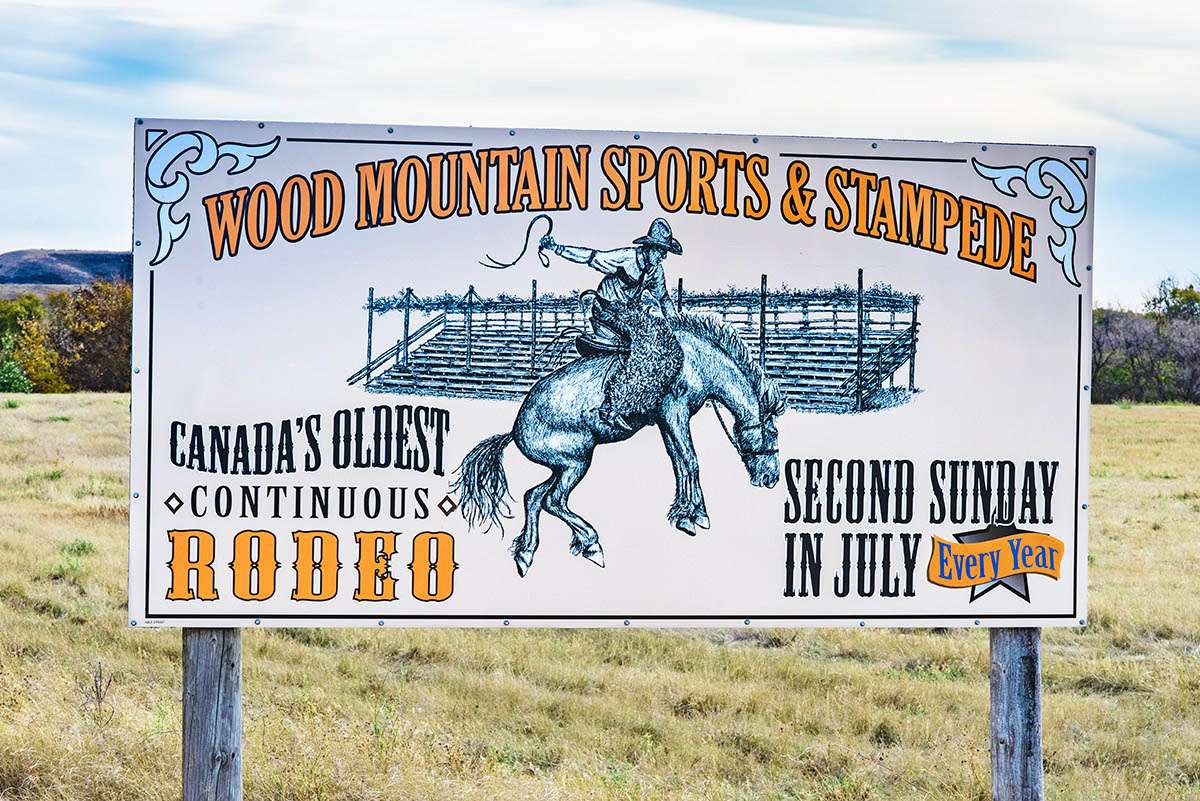
The park’s main claim to fame is the site of the annual Wood Mountain Stampede, Canada’s longest continuously running rodeo. It was in 1890 when Mounties and ranchers got together to stage sports events as a way of celebrating Dominion Day on July 1, now known as Canada Day. Even through the Depression and world wars, the stampede continued.
As the community grew and the word spread, more events were added. The roster now includes events such as barrel racing, steer wrestling, calf roping, and saddle bronc riding, and attracts international competitors and visitors.
Rodeo Ranch Museum
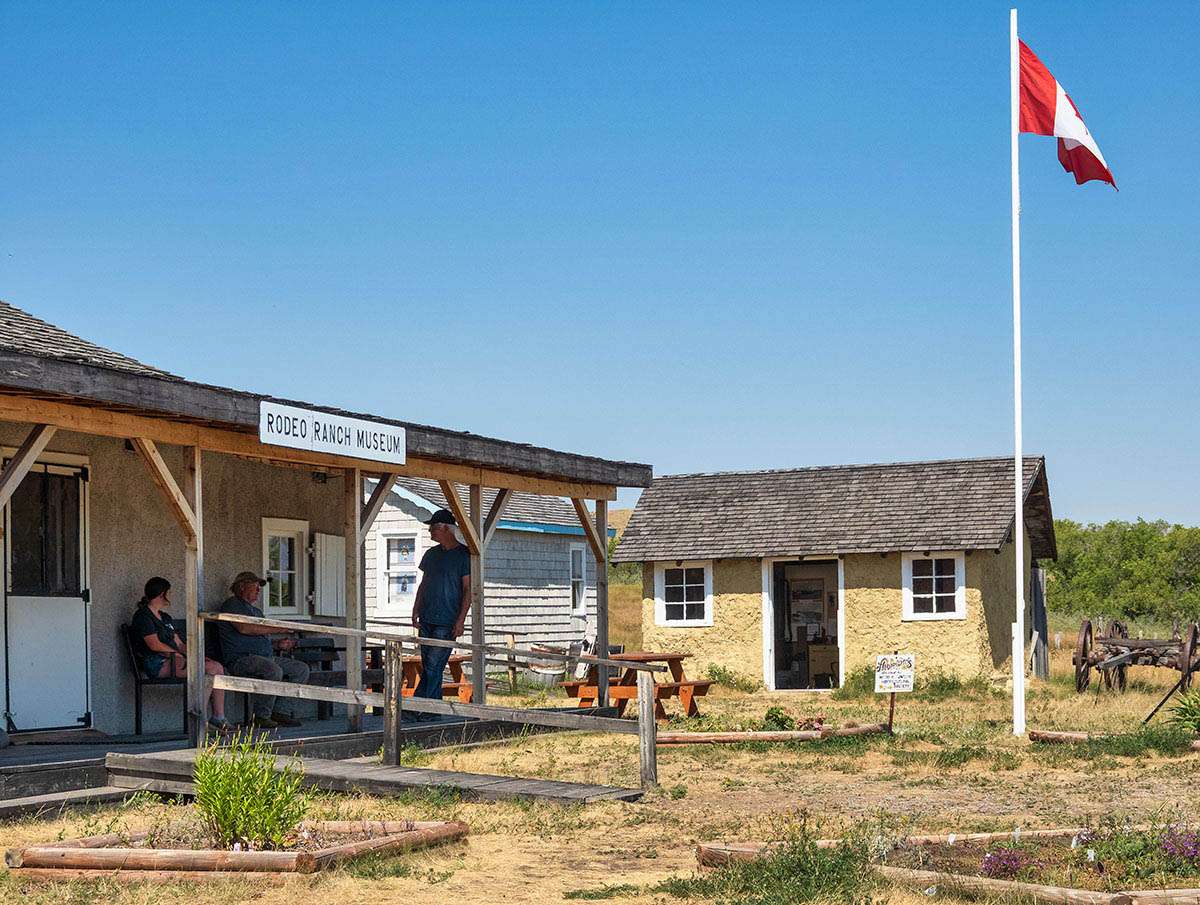
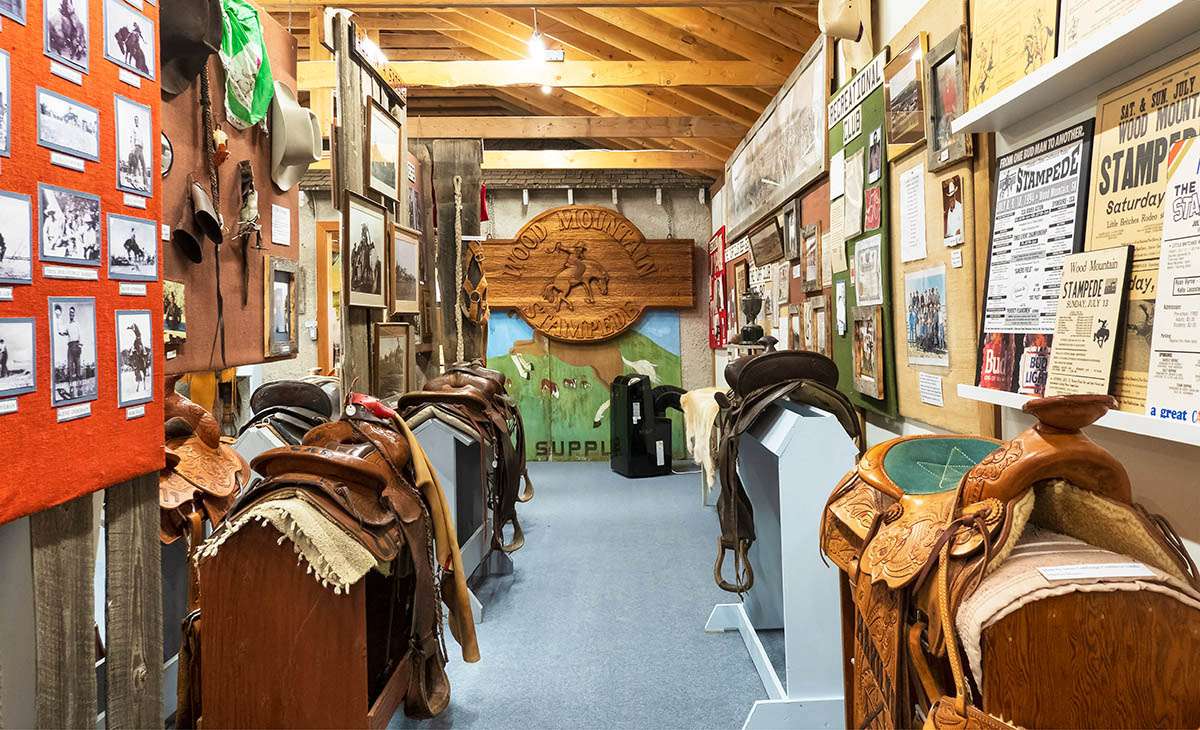
The place to learn more about the stampede, rodeo history, and ranching is the Wood Mountain Rodeo Ranch Museum, located in the regional park. From the moment you step inside, you’re immersed in the community’s rich ranching heritage.
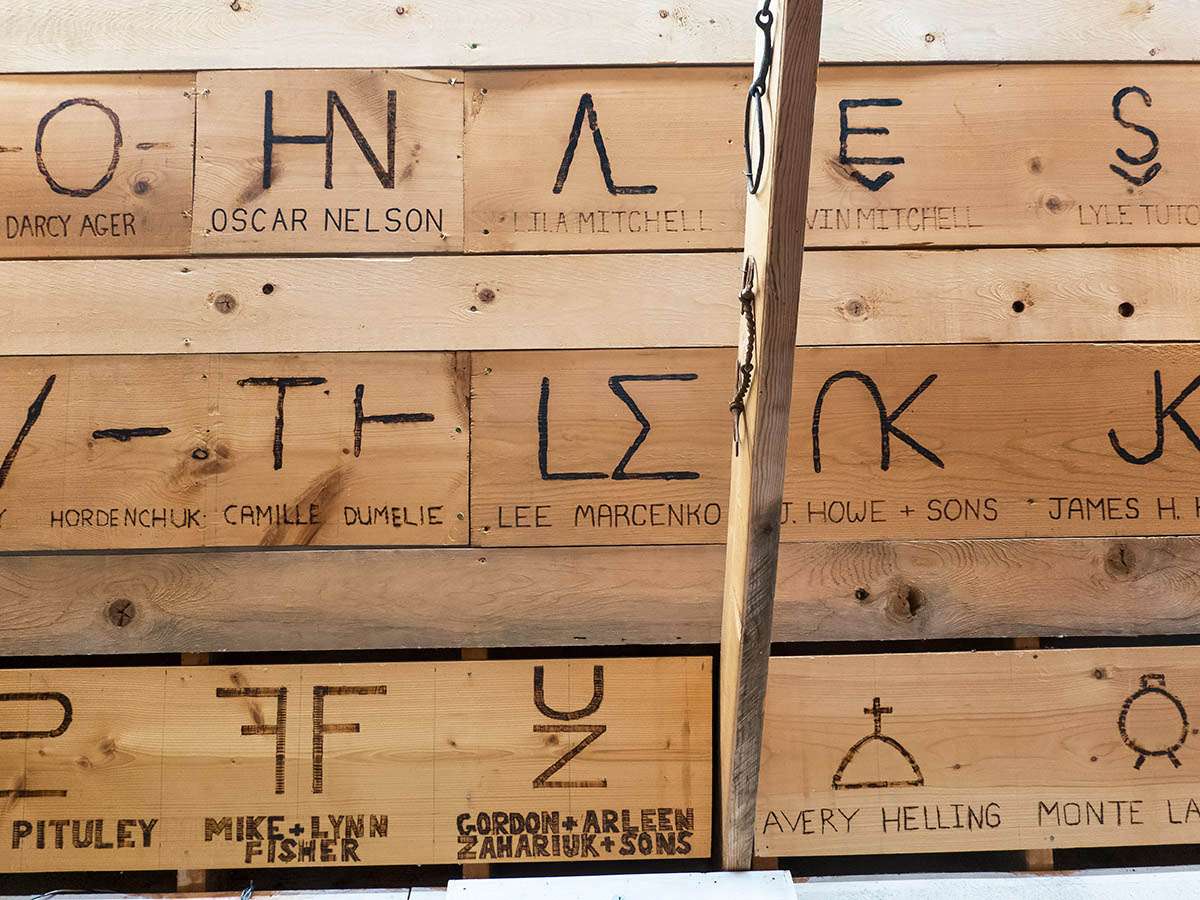
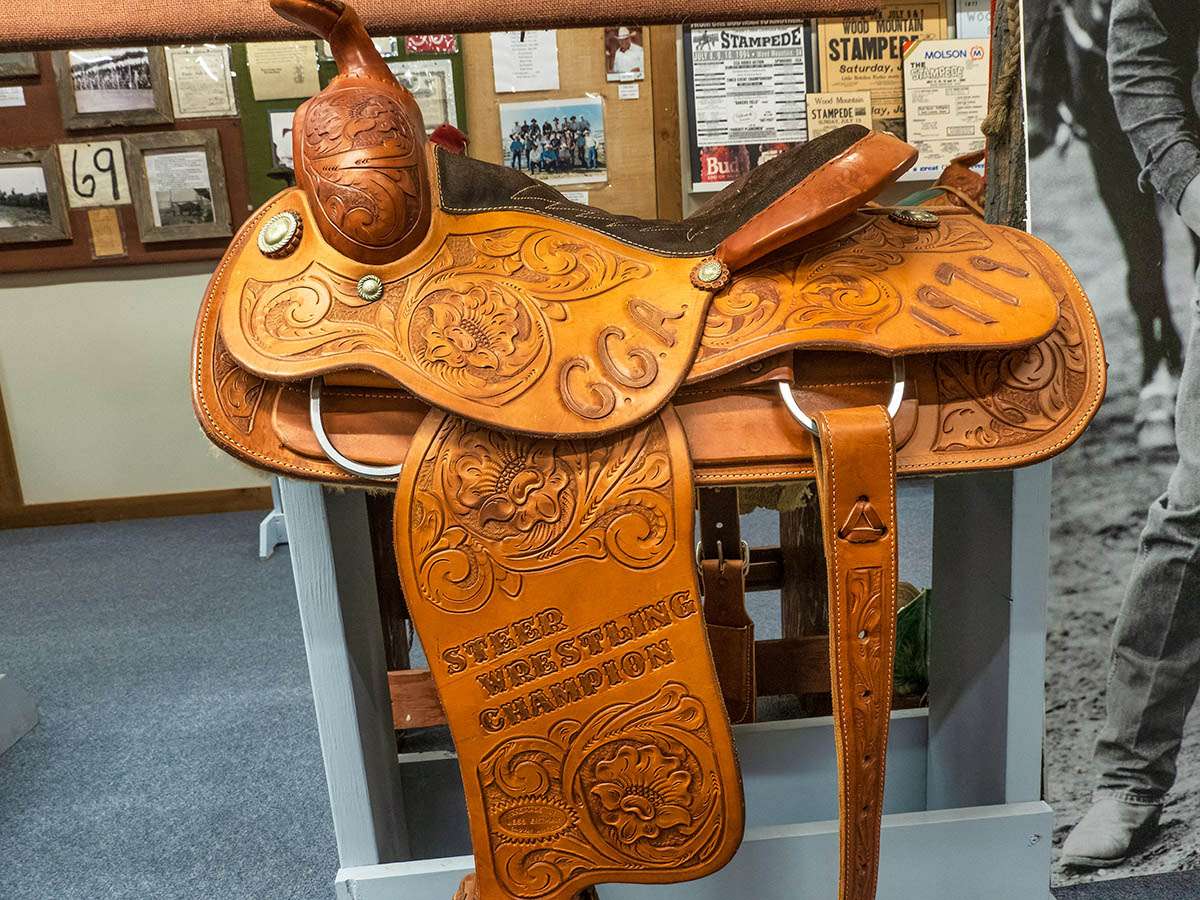
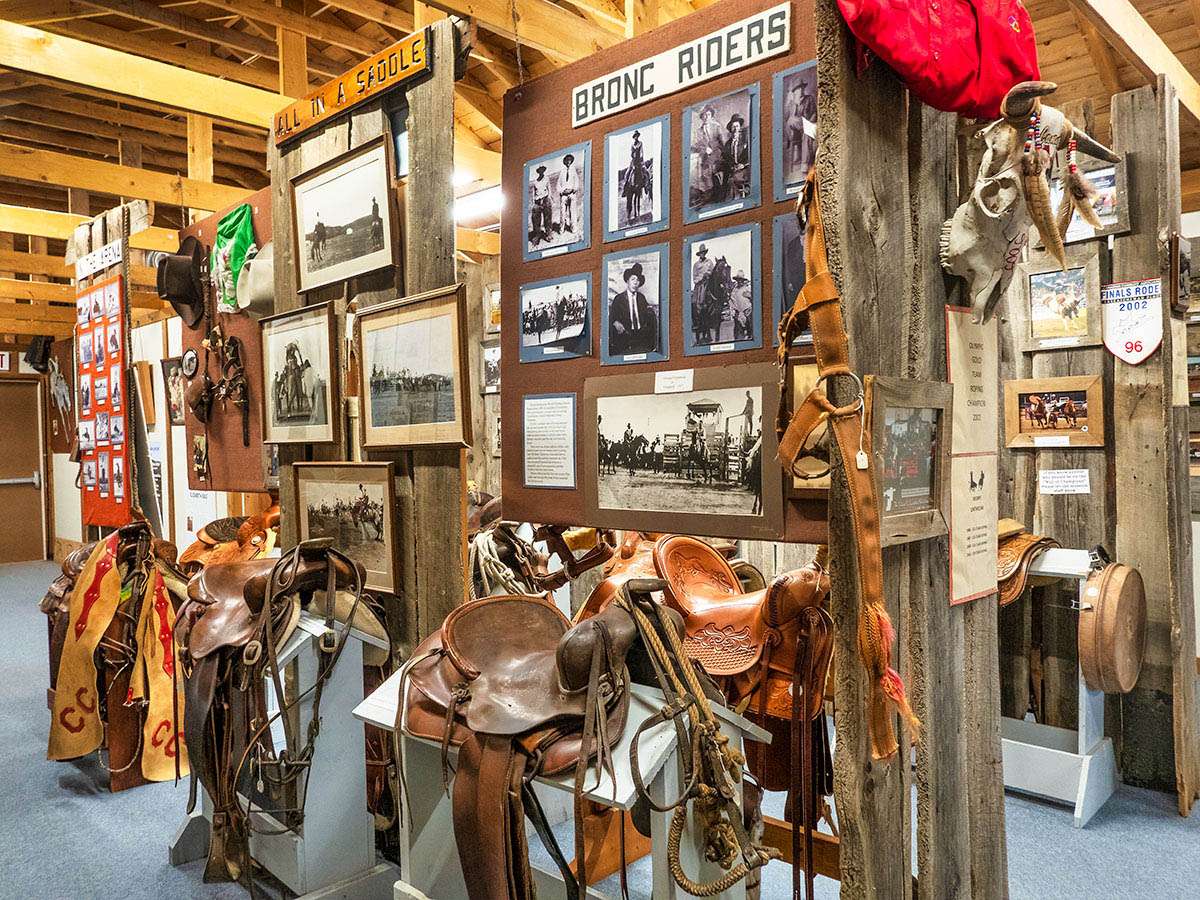
Brands from local ranches are burned right into the ceiling boards. Many impressive saddles demonstrate exquisite tooling work, along with ropes, chaps, bridles, and other cowboy gear. Trophies, posters, and displays of rodeo stars and competitors highlight the rodeo lifestyle. For example, Carl Olson from nearby Fir Mountain became world saddle bronc champion in 1947, and Mark Roy, who also grew up in Fir Mountain, won the world champion steer wrestling event in 1992.
Other exhibits tell of early history, the settlement years, and the role that Lakota people have played in the community, such as with their traditional music and pow-wows.
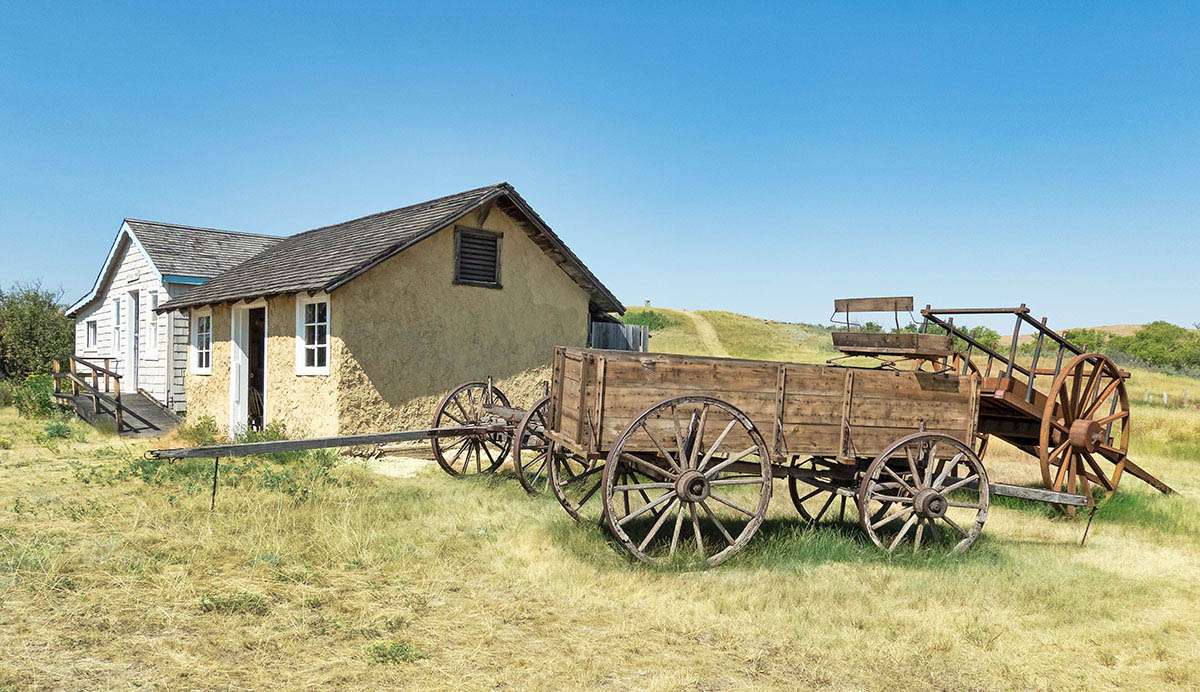
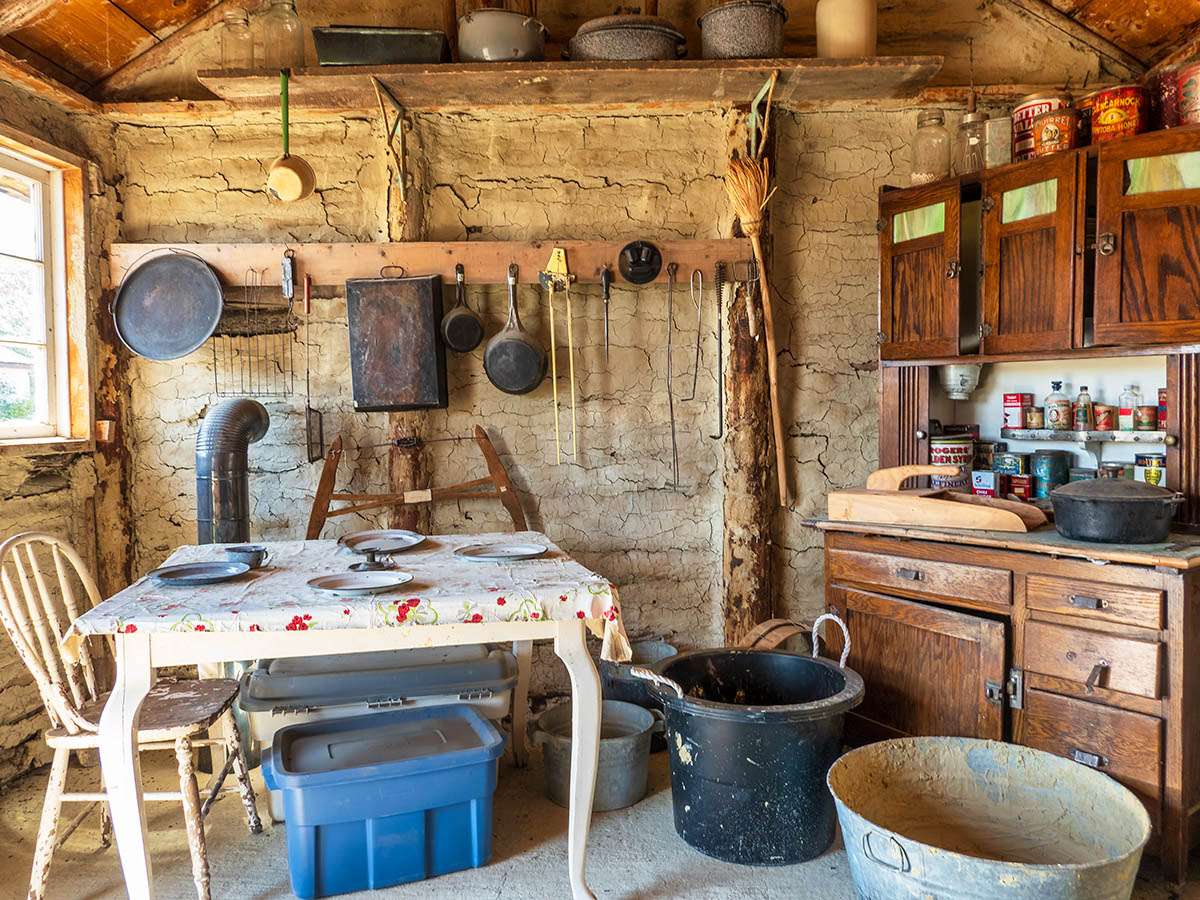
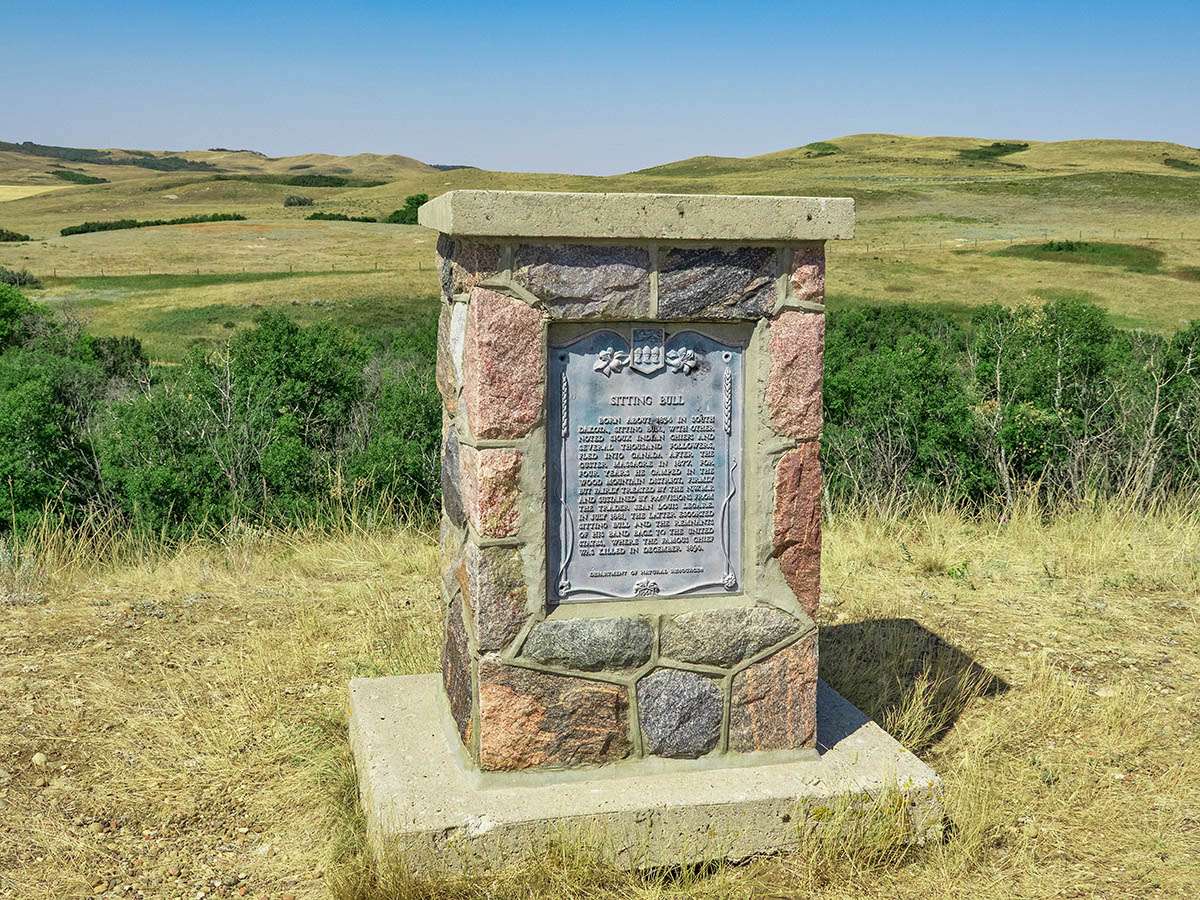
There’s more to see outside the museum as well. An adobe building portrays a typical home used by early settlers, and pays tribute to those from Serbia, Russia, Romania and other countries who moved here. Stretch your legs with a walk up the hill to see the monument recognizing Chief Sitting Bull, who took refuge in this area in the mid-1870s.
The Rodeo Ranch Museum also serves as an information centre for the East Block of Grasslands National Park, less than an hour’s drive south and west.
Wood Mountain Post Provincial Park
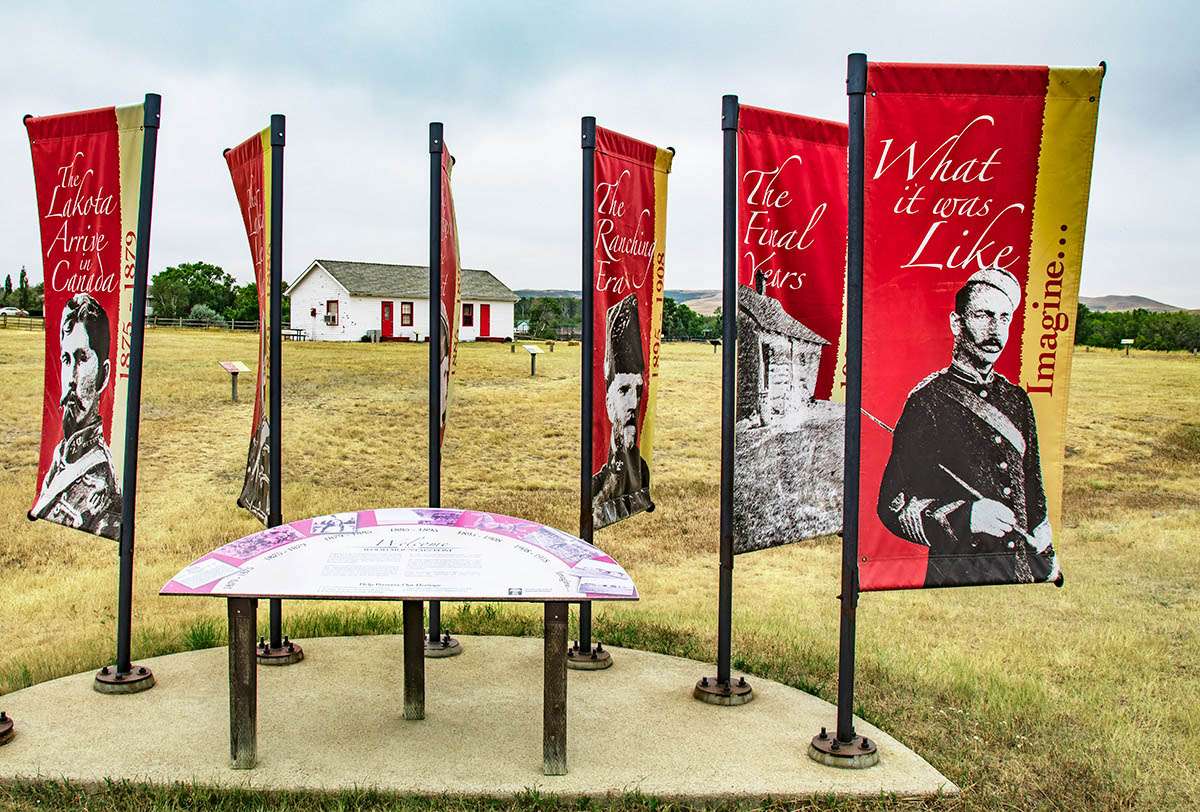
Head south on Highway 18 for only a couple of minutes to the site of the Wood Mountain NWMP Post established in 1874 to keep watch on whiskey traders, outlaws, and livestock thieves. Just two years later, things got very busy when Chief Sitting Bull and some 5,000 followers arrived, seeking refuge after defeating General Custer at the Battle of the Little Bighorn in Montana in 1876. Sitting Bull remained in Canada for several years, but eventually returned to the United States. Many of his followers stayed behind and are now part of the Wood Mountain area community.
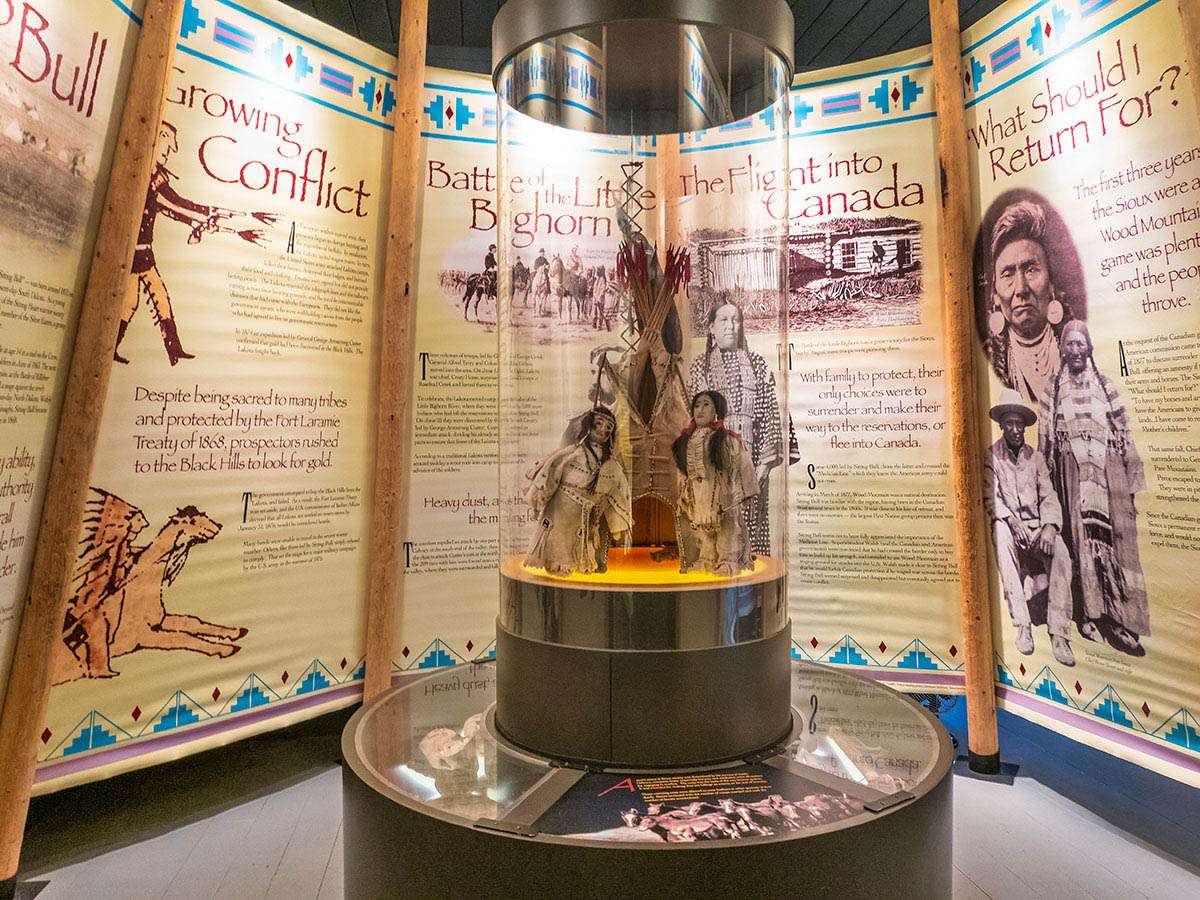
The story of Sitting Bull and the Sioux is one of many told through displays in the two reconstructed buildings at Wood Mountain Post Provincial Park. We learn more about Major James Walsh of the NWMP who succeeded in maintaining peaceful relations with Sitting Bull, and other topics such as the importance of bison, homesteading, the Lakota (Sioux) way of life, and the rich nearby resources including wood and grazing.
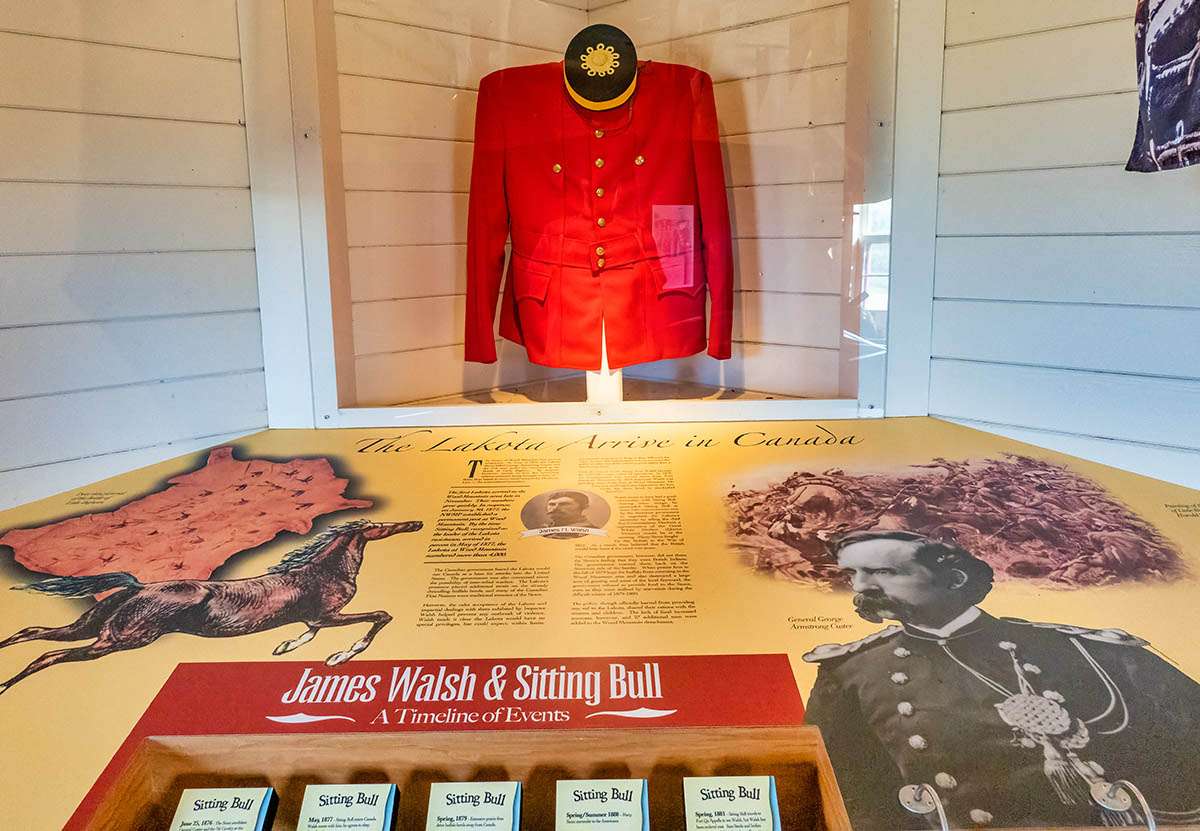
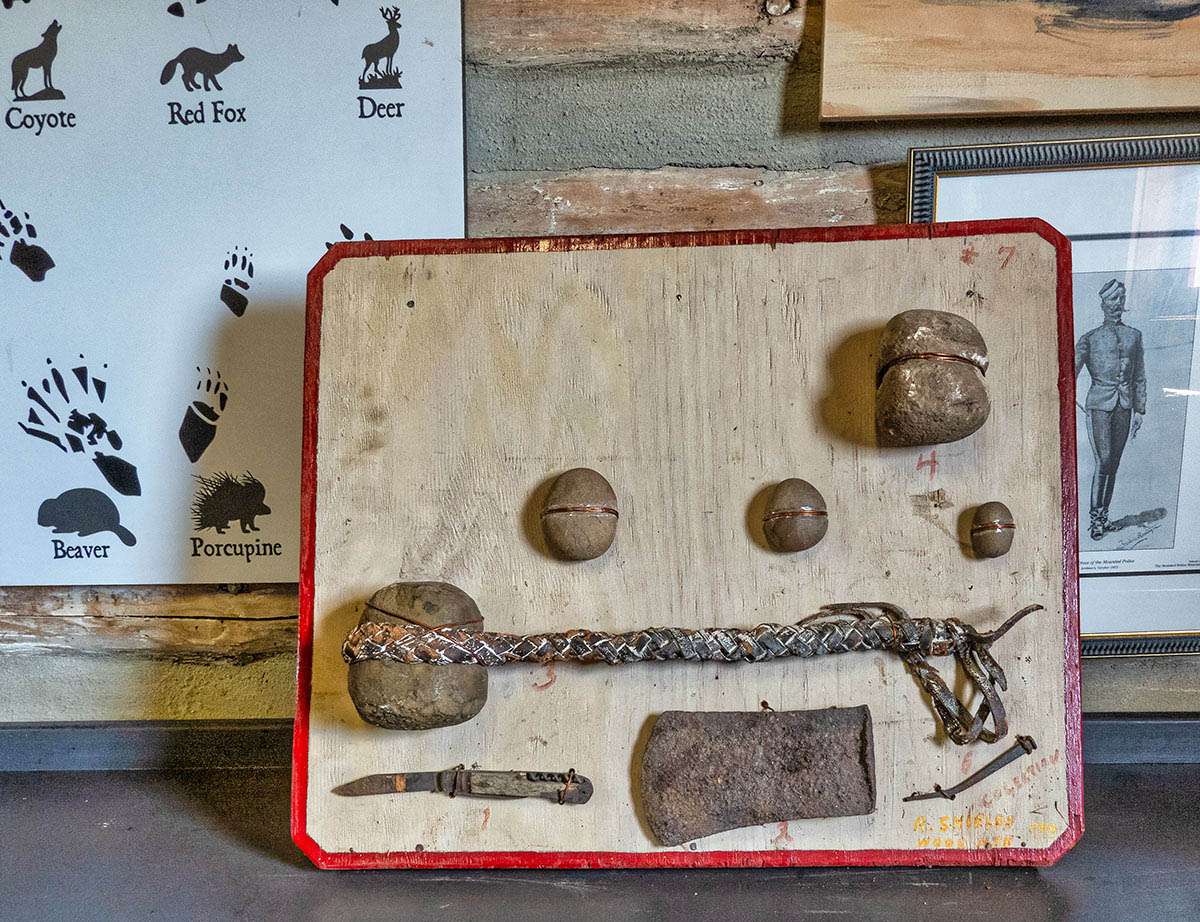
The small post is open during the summer when interpreters are on hand to answer questions and tell you more about the area. Check the website for opening dates and times, and special events or demonstrations that might be taking place.
Exploring Farther Afield
Wood Mountain is surrounded by great places to take a scenic drive. Here is a small sample of the many possibilities:
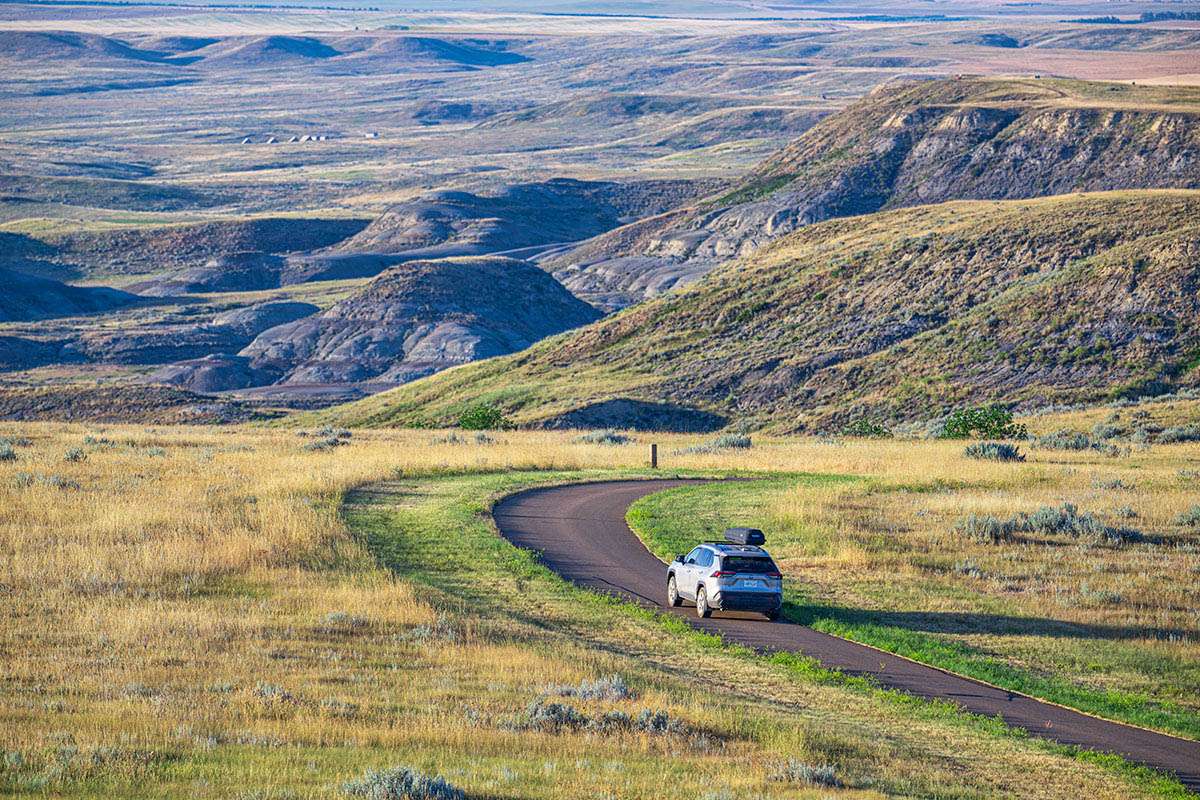
- The East Block Grasslands National Park, less than an hour southwest, is the area’s top attraction. The route is clearly signed as you head south on Highway 18. It’s a wild land with weathered buttes, steep hillsides, layers of different-coloured sediments and wooded coulees. The park features a well-equipped campground, visitor centre, and fabulous hiking. The jewel of the East Block is the spectacular Badlands Parkway, an 11-kilometre paved road that runs along the rim of the valley. Stops along the way give you closer views into the badland formations below, with interpretive panels describing the flora and fauna, and human history.
- Wood View Road starts just 3 kilometres south of Wood Mountain Regional Park and takes you west through wooded areas, up and down rolling hills lined with aspen trees, and shrub-lined bluffs and coulees.
- There are several great backroads routes between the park and Rockglen to the southeast. One option is to take Highway 18 to Rockglen, a worthy destination in its own right with places such as the Yost Wildlife Hike south of the highway, a large natural area with wildflowers and grassy meadows, and a hike to the highest hill with a great view over Rockglen. On the way back to Wood Mountain, take Canopus Road (watch for a sign on the north side of the highway) through hilly terrain with sweeping views.
Our book Saskatchewan’s Best Scenic Drives has more complete descriptions of these drives with mileages, and other suggestions of beautiful places to take in while you’re in the area.
SUBSCRIBE to Photojourneys below
Feel free to PIN this post on Wood Mountain Highlights