All photos © Robin and Arlene Karpan
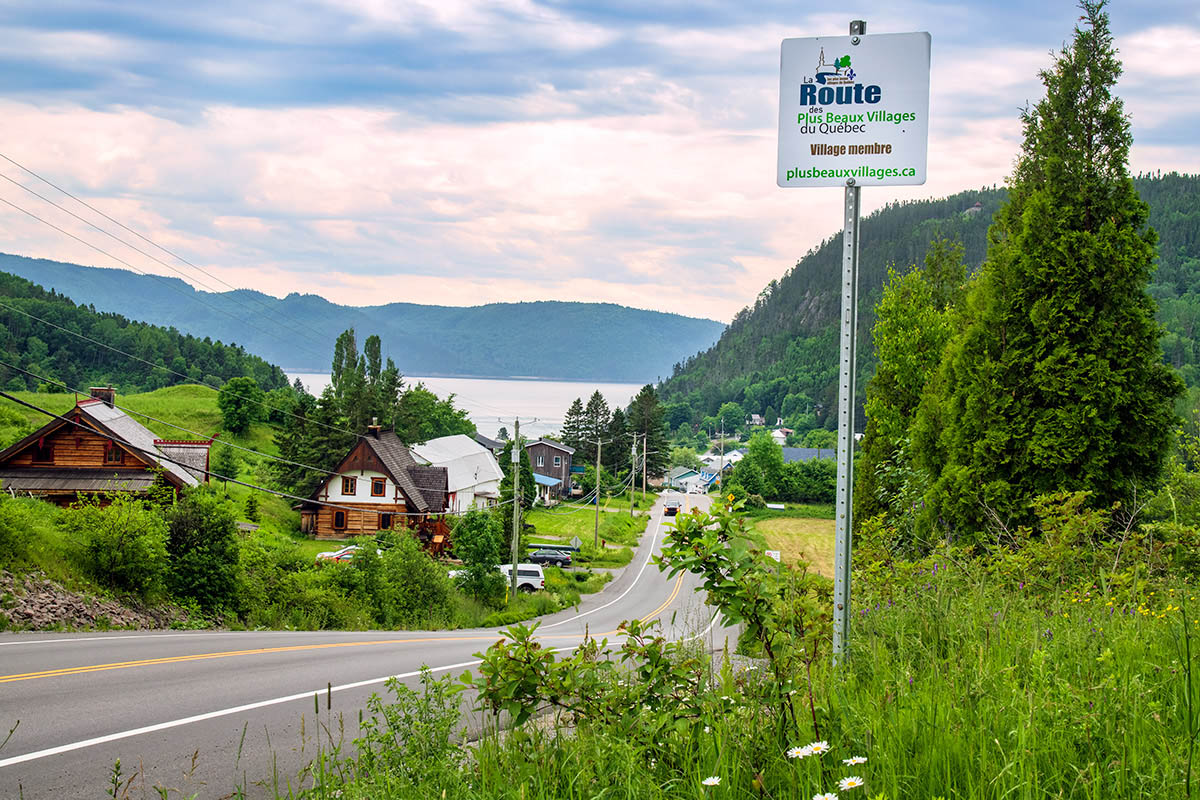
That’s not just our opinion, but an official designation. We come across many attractive villages while driving around rural Quebec, but 36 are members of the Association of the Most Beautiful Villages of Quebec, where things are cranked up a notch. They have to meet certain criteria, such being located in a scenic landscape, and have visually appealing heritage buildings.
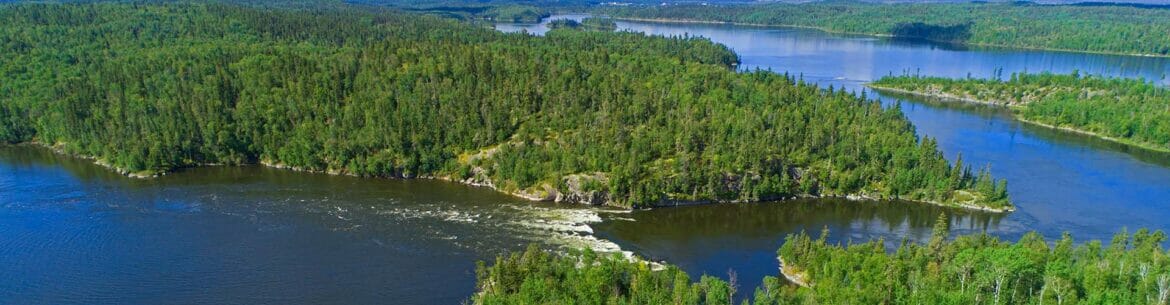
Three of these villages are situated in one of Quebec’s most distinctive landscapes, the Saguenay Fjord. Less than a three-hour drive north of Quebec City, this deep narrow inlet extends for over 100 kilometres between Lac Saint-Jean and the St. Lawrence River. It’s among the larger fjords in the world, and the most southerly in North America. Cliffs rise more than 400 metres in places and water depths can be over 200 metres. Any village located here already has a leg up meeting the scenic criterion.
L’Anse-Saint-Jean
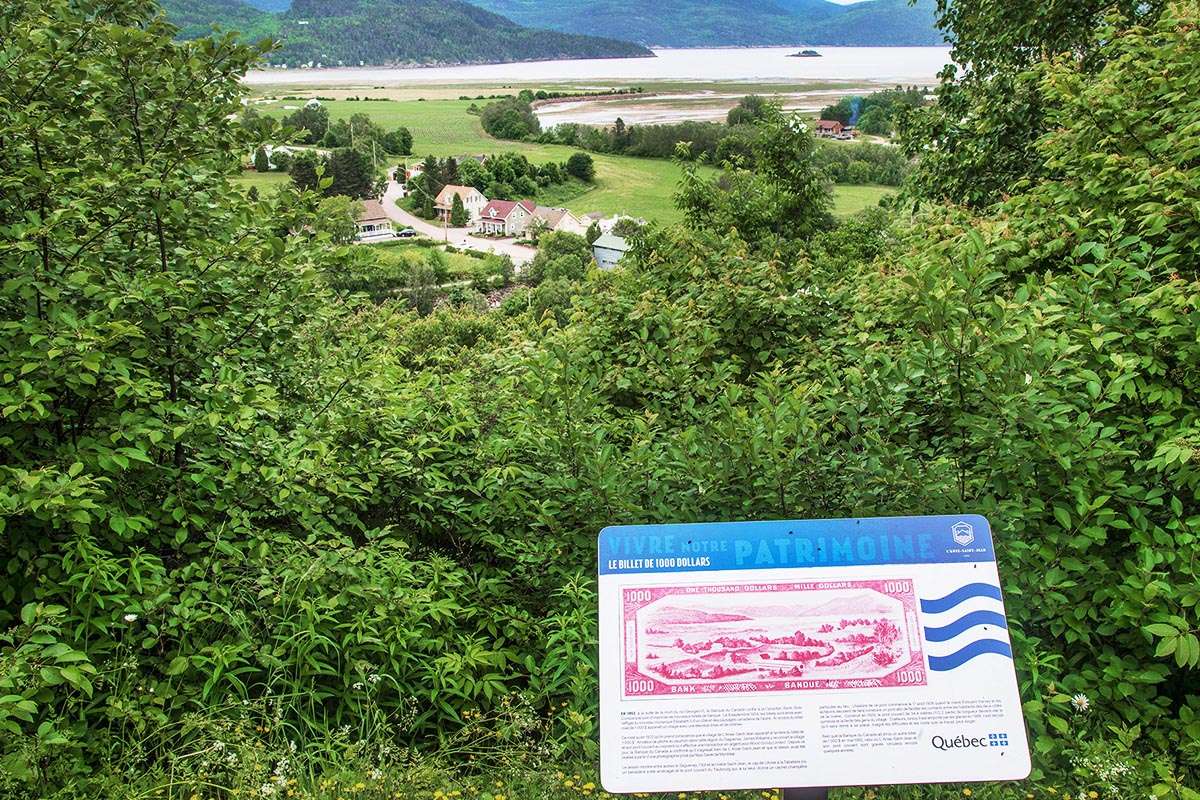
L’Anse-Saint-Jean has a thousand dollar view – literally. The setting was used on Canada’s thousand-dollar bill in 1954. The picturesque town of around 1,200 sits in a quiet cove on the fjord’s south side with a backdrop of forested mountains and rocky cliffs. A short walking trail leads to the hillside vantage point where you have the same view as the thousand-dollar bill. There may be more trees and a few more buildings now, but the scene still looks remarkably similar.
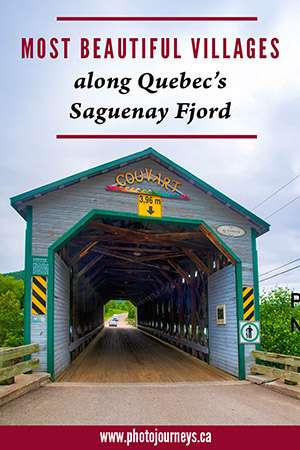
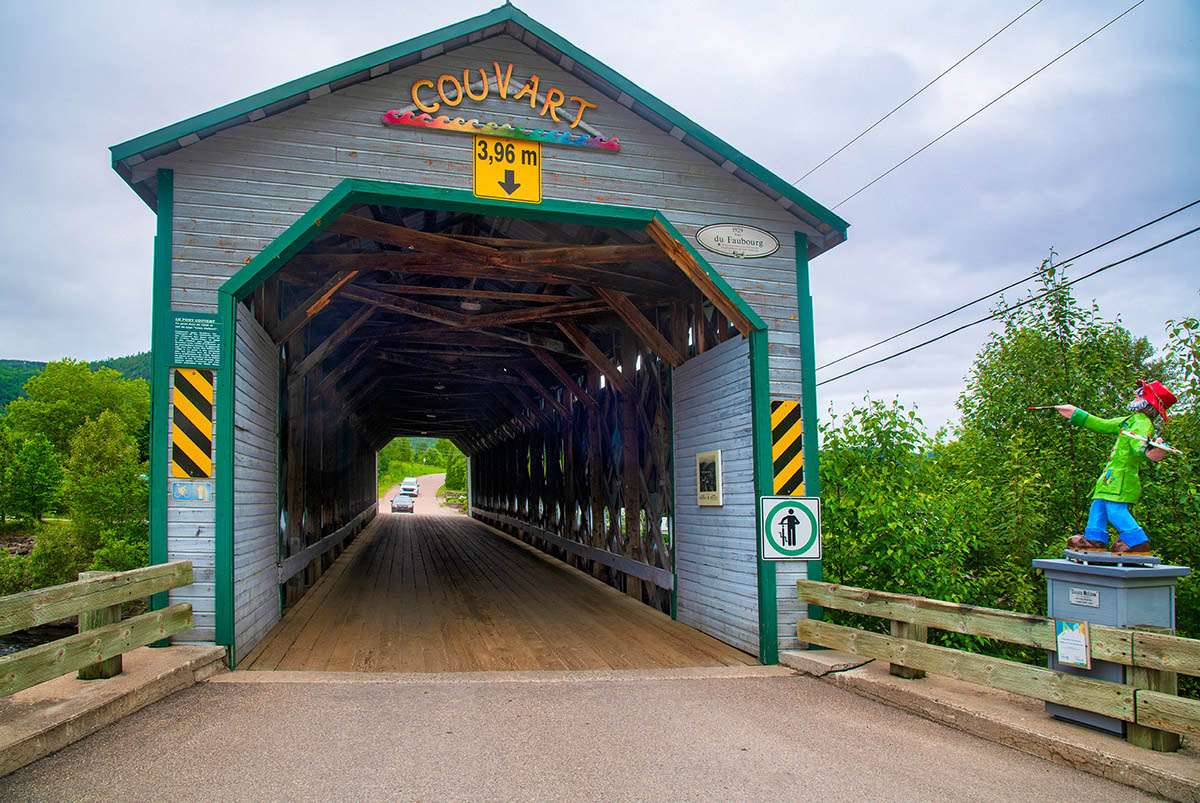
Historic buildings dot the village which dates to 1838, though its history goes back as far as 1668 when a Jesuit priest built the first chapel. The most famous structure is the covered bridge, the Pont du Faubourg, built in 1929 and still used for cross-river traffic. An unusual though nice artistic touch is the series of paintings hanging along the inside walls, and a sculpture of a painter near the bridge entrance.

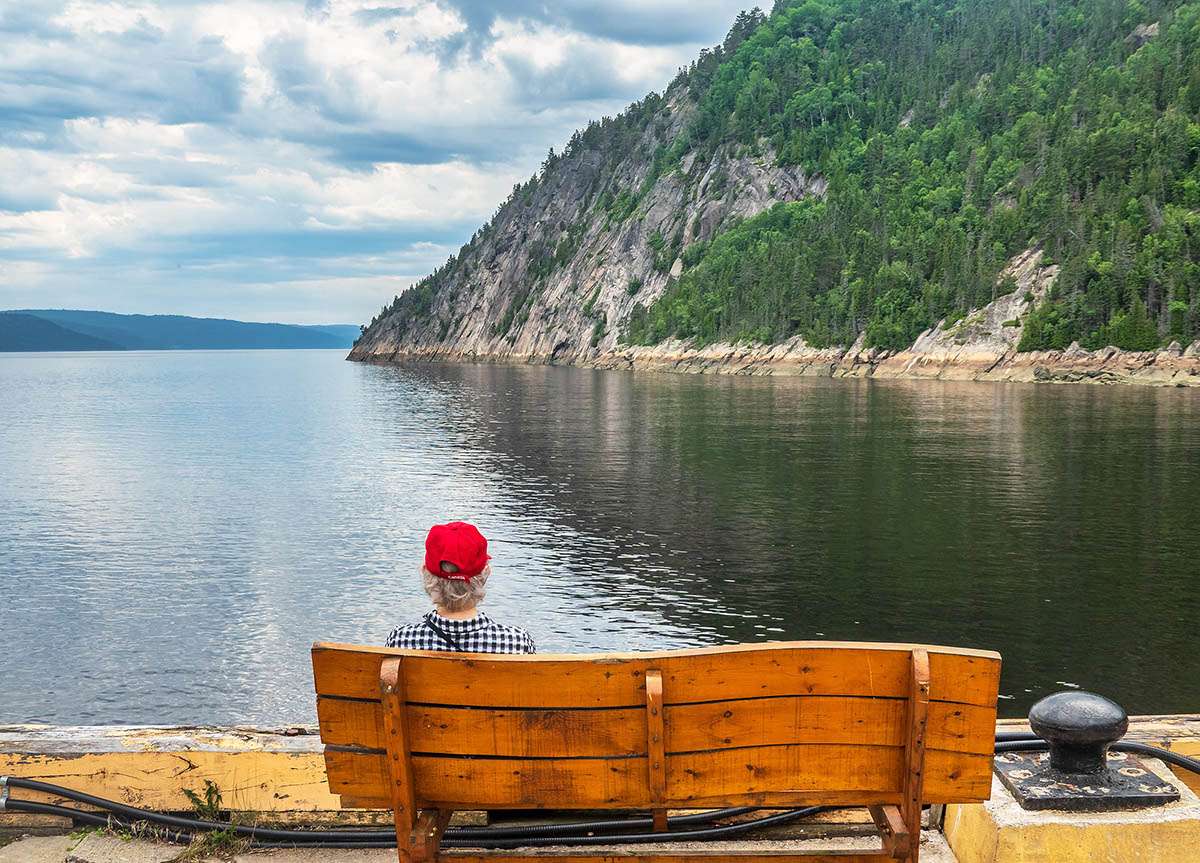
The action centres along the town’s waterfront. You can take boat trips from the wharf, and nearby restaurants offer amazing views. Towering cliffs, one with a dramatic waterfall, line one side of the inlet. And you can even venture deeper into the mountains or farther along the coastline by following several nearby hiking trails.

Sainte-Rose-du-Nord
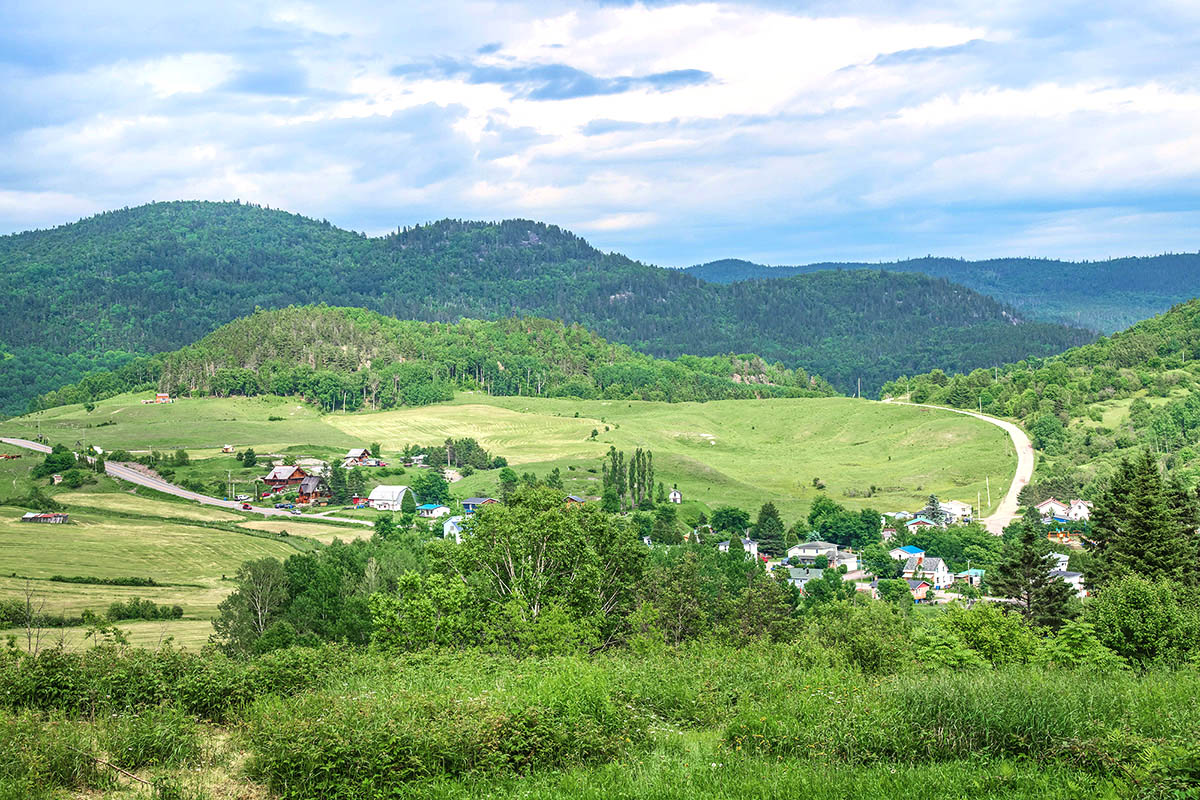
Sainte-Rose-du-Nord is a village of around 500 in a stunning setting on the north side of the fjord, approached by a winding valley road. The tiny community is squeezed between the mountains and a small beach, with a backdrop of cliff-lined shores. It’s difficult to go anywhere without having a grand view.
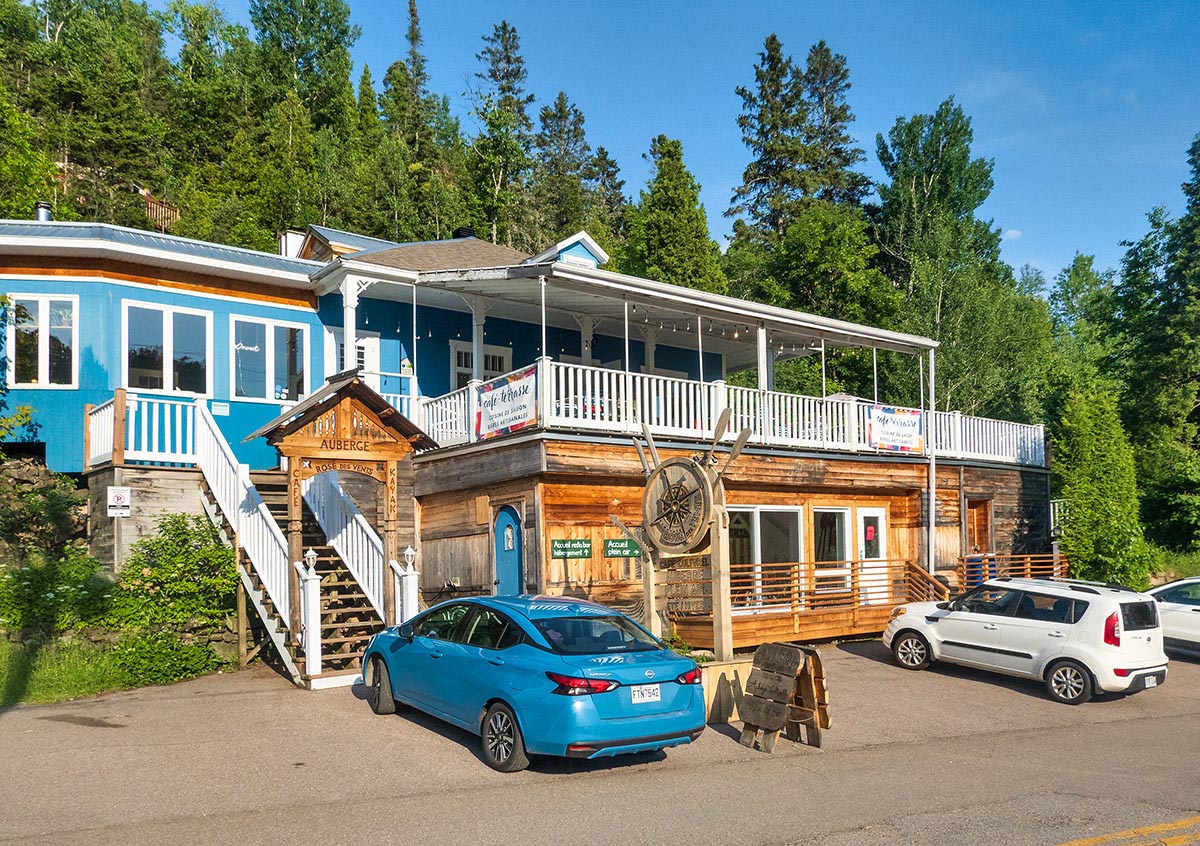
We stayed at the Auberge Rose-des-Vents, beautifully situated near the beach. In addition to rooms, they have two yurts (one of which we stayed at) in the forest just behind the main building. The popular outdoor patio of the café/bar serves as a community meeting place for both visitors and residents. They have a well-deserved reputation for their food, with many smoked meats, sausages, cheeses, and bakery products locally sourced and freshly prepared. An added nice touch is a separate fully-equipped kitchen which overnight guests can use.
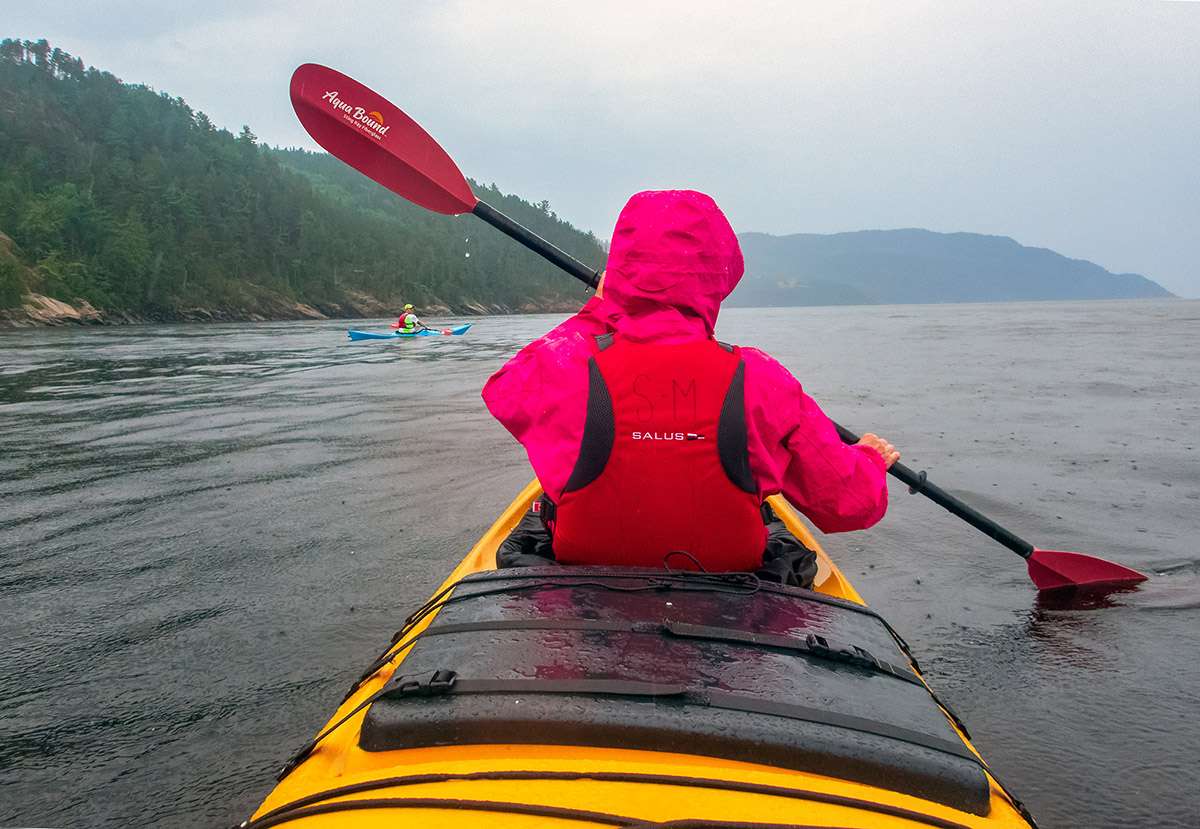
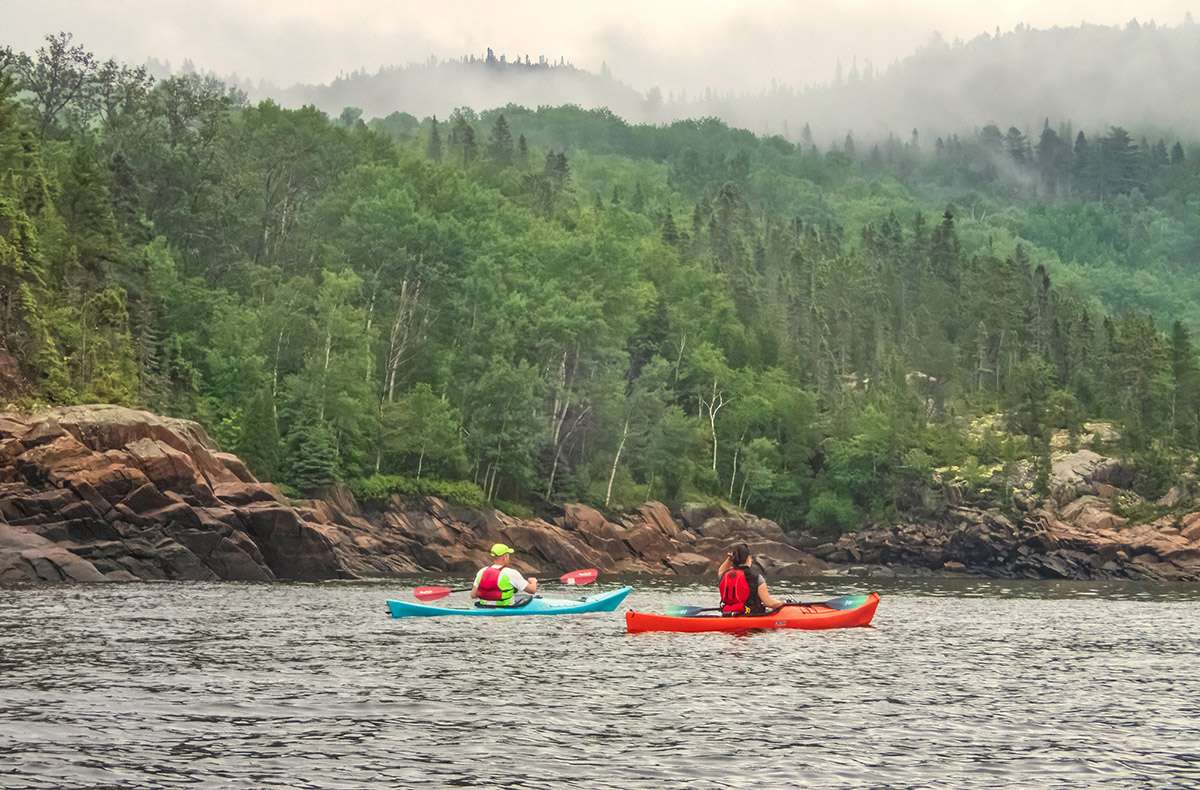
The Auberge also operates kayaking and camping excursions. The morning of our paddle brought rain and fog, but the trip went ahead as planned. Kayak guide Rosalie, who enjoys kayaking in the rain, was in high spirits as she outfitted us for the trip. Despite a steady but light rain, the weather was reasonably warm with almost no wind. As we paddled past the rugged shorelines of the fjord, low clouds and fog blanketed parts of the cliffs, giving them a mystical feel. Gliding our kayak through that surreal landscape remains one of the most memorable parts of our visit.
Tadoussac
Located at the mouth of the fjord on the St. Lawrence River, Tadoussac is not only designated a Most Beautiful Village, but is also a member of the World’s Most Beautiful Bays Club. It represents 42 bays in 25 countries, and is one of only two in Canada, the other being the Bay of Chaleur between Quebec’s Gaspé Peninsula and New Brunswick.
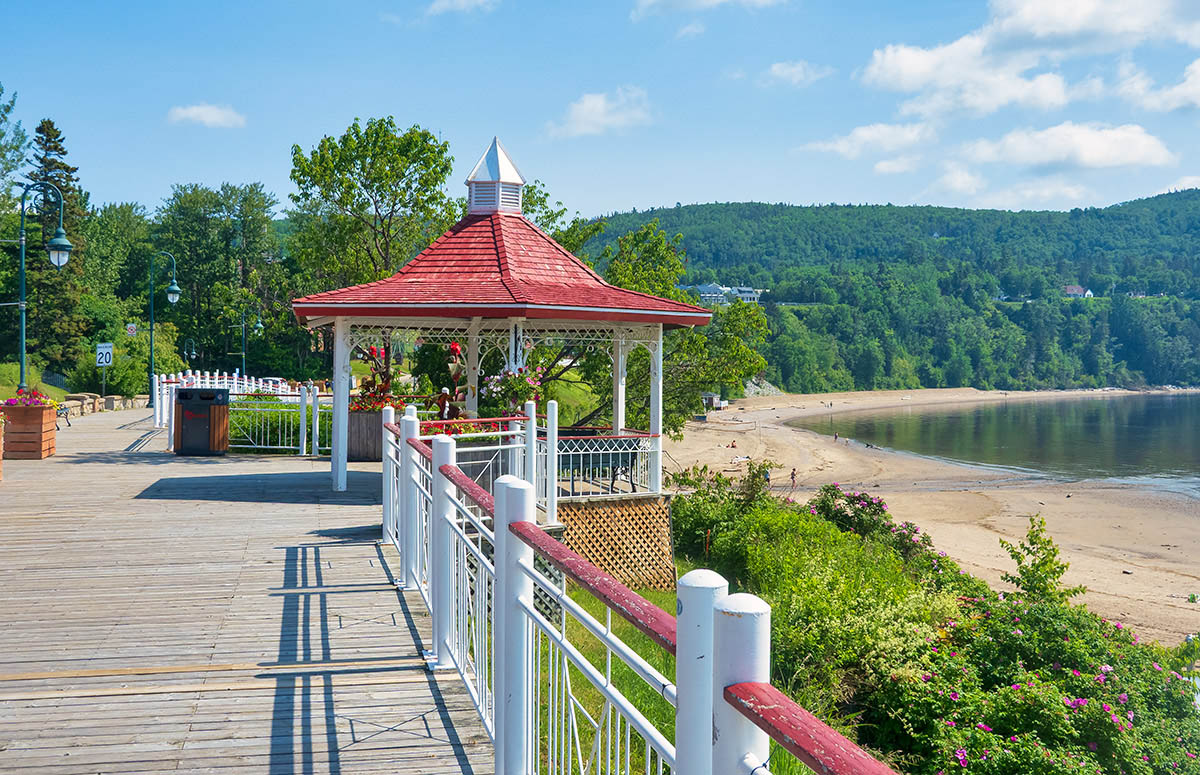
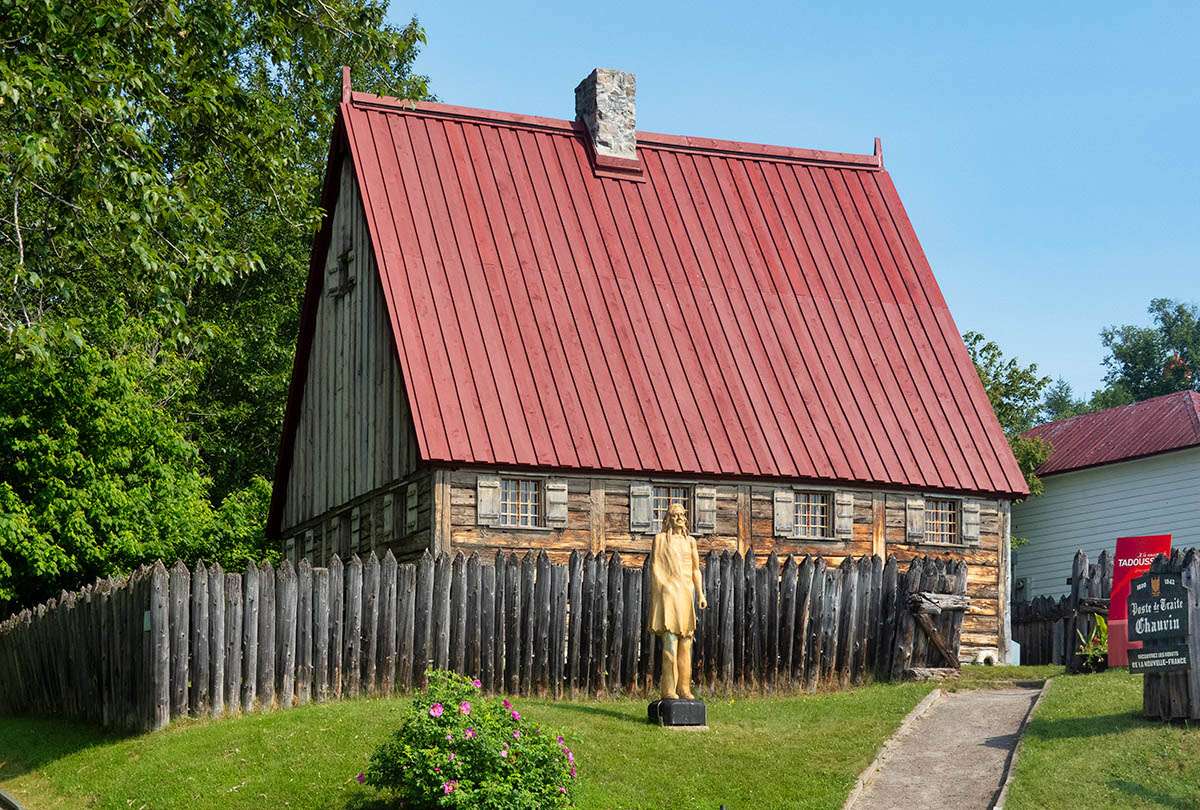
With its strategic location, Tadoussac has long been an important trading centre, first to Indigenous groups of the region, then to European traders who set up shop at the beginning of the 17th century. We can visit a replica of the post established by Pierre de Tonnetuit in 1600, considered the first fur trading post in Canada.
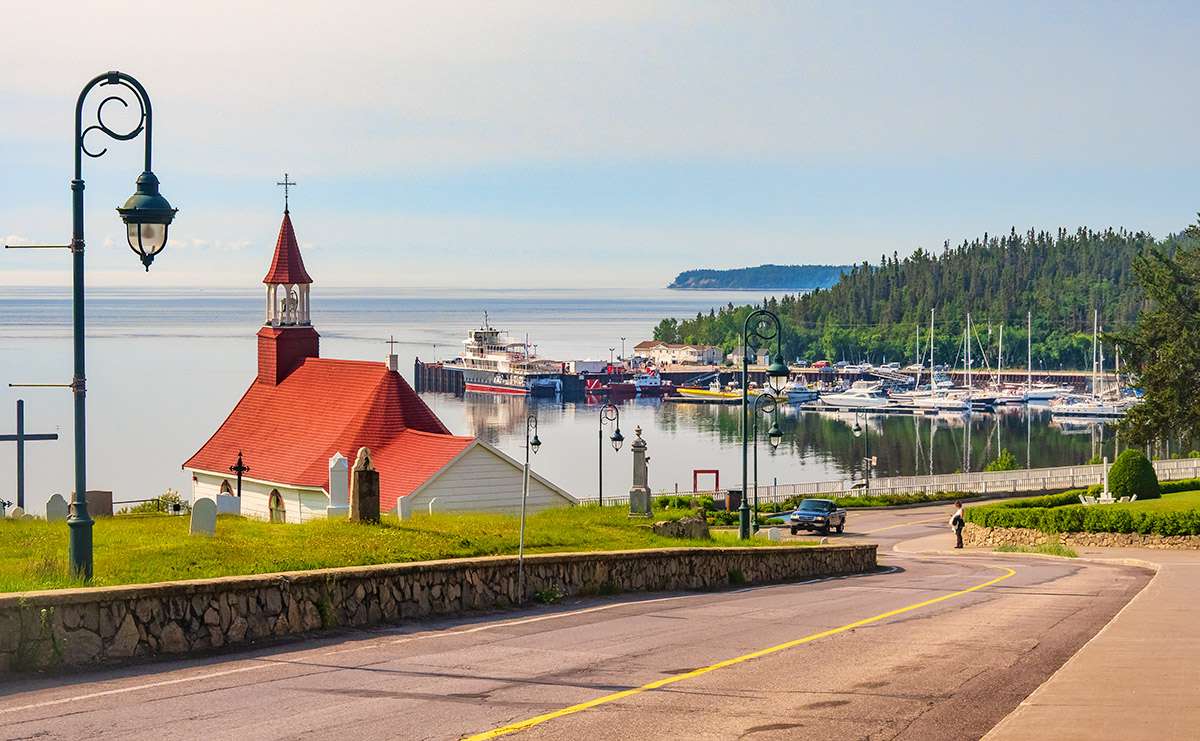
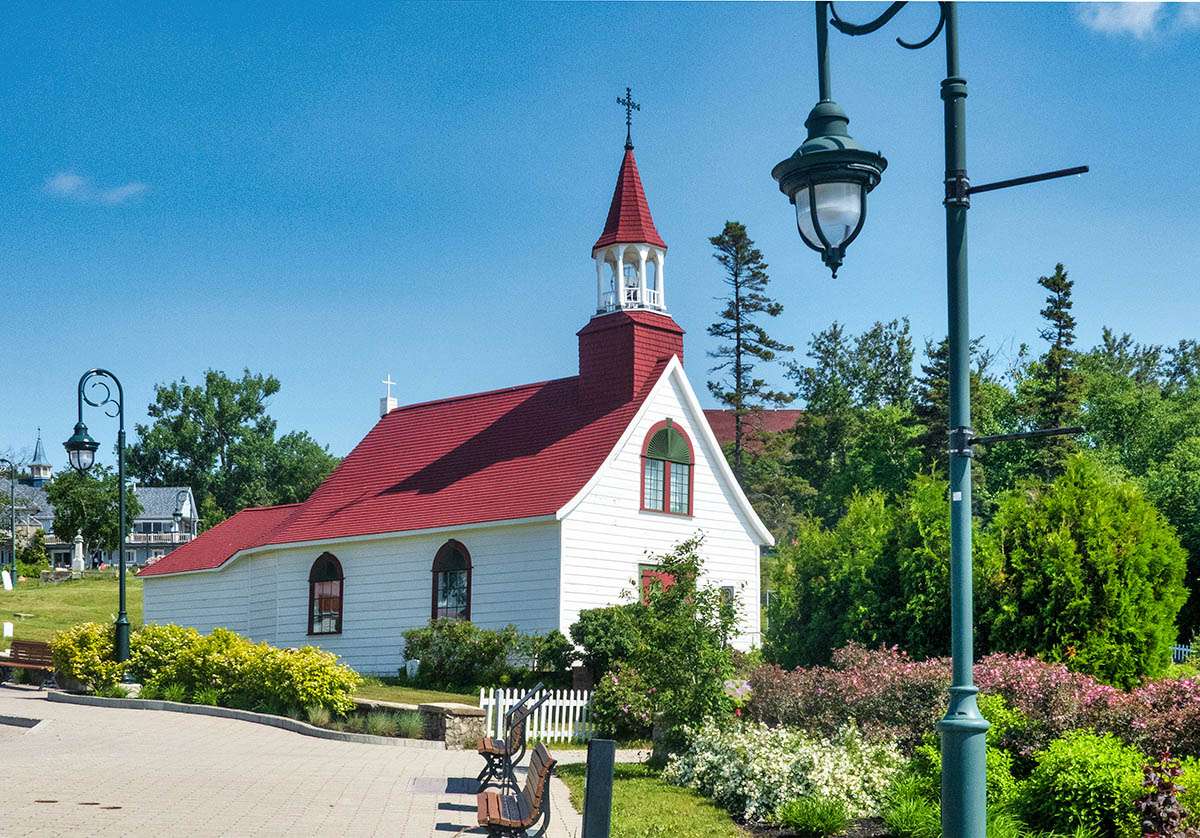
A highlight is Tadoussac’s “Little Chapel”. Built in 1747, it is thought to be the oldest wooden church in North America. Now a National Historic Site, the chapel features displays from the New France colonial era.
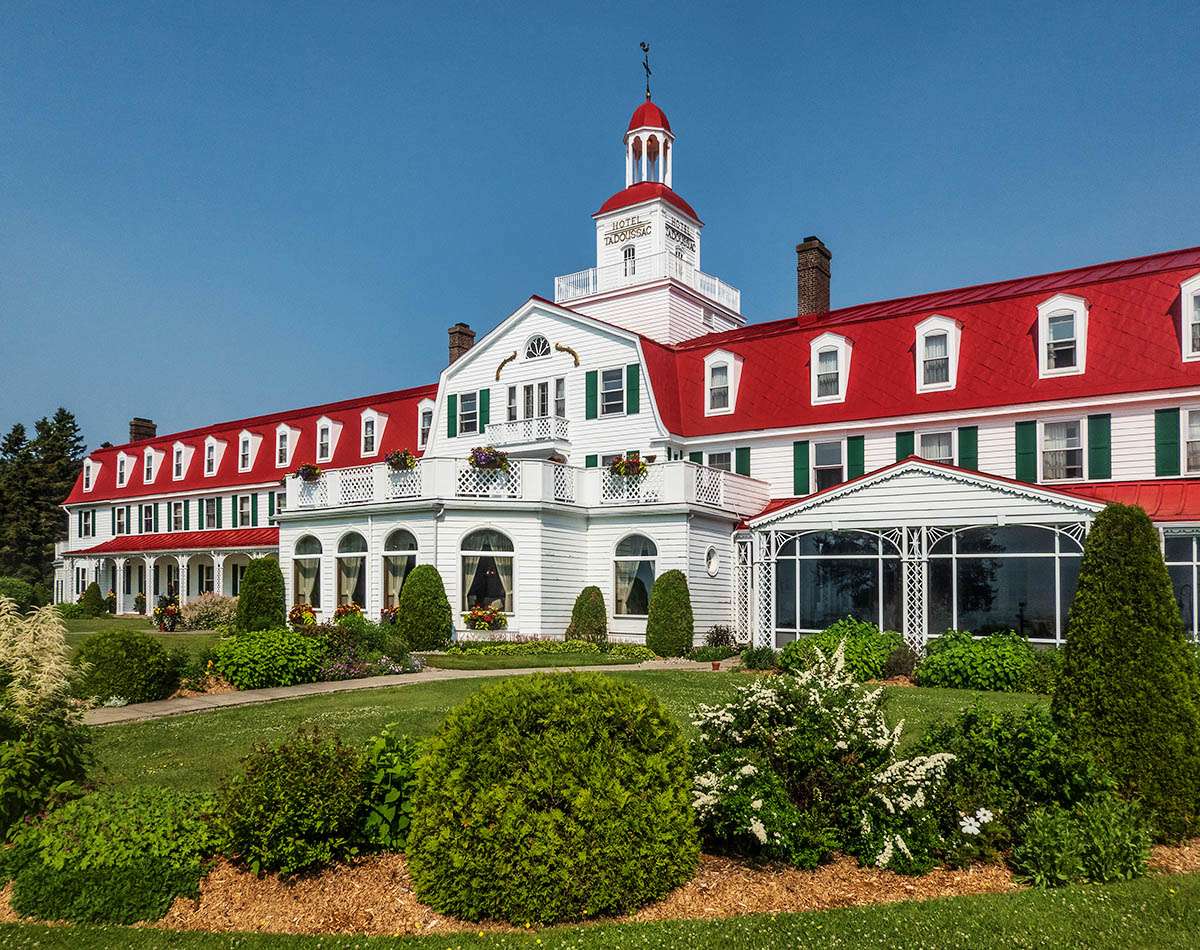
Dominating the waterfront is the elegant Hotel Tadoussac with its gleaming white facade and brilliant red roof. The original hotel was built in 1864 and was replaced by the current building in 1942.
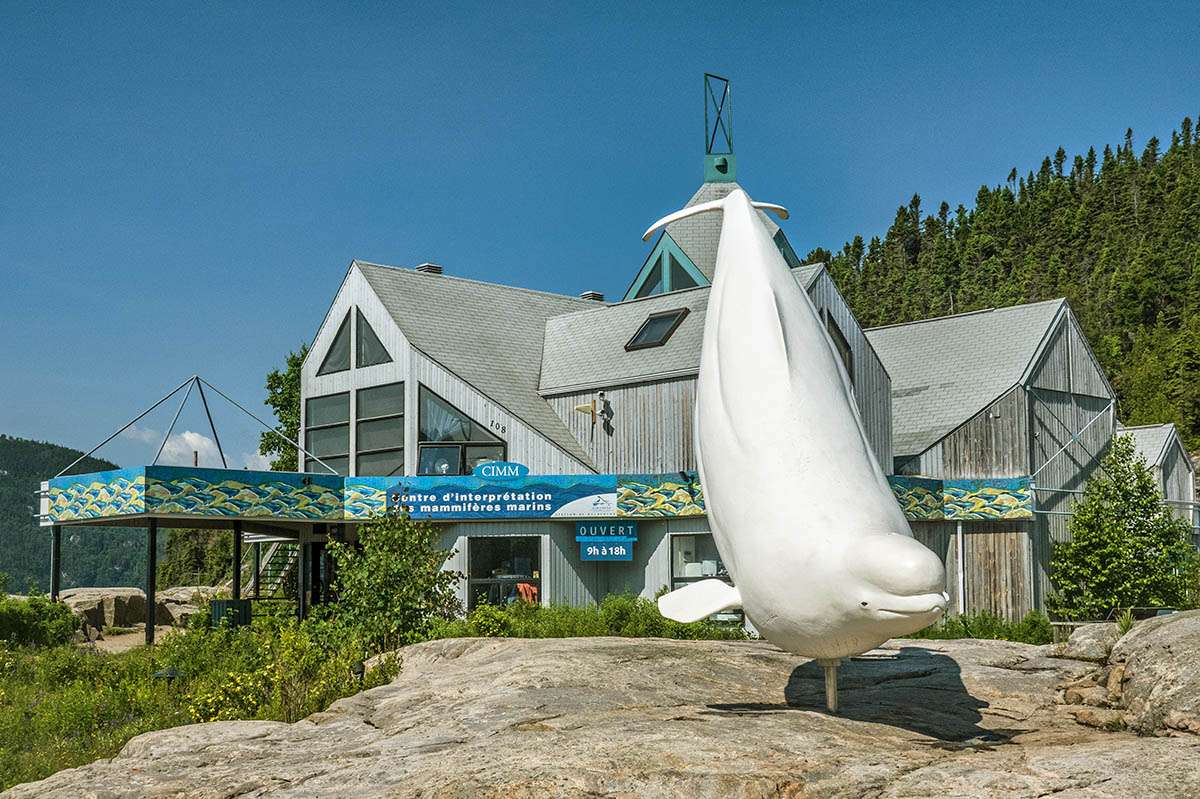
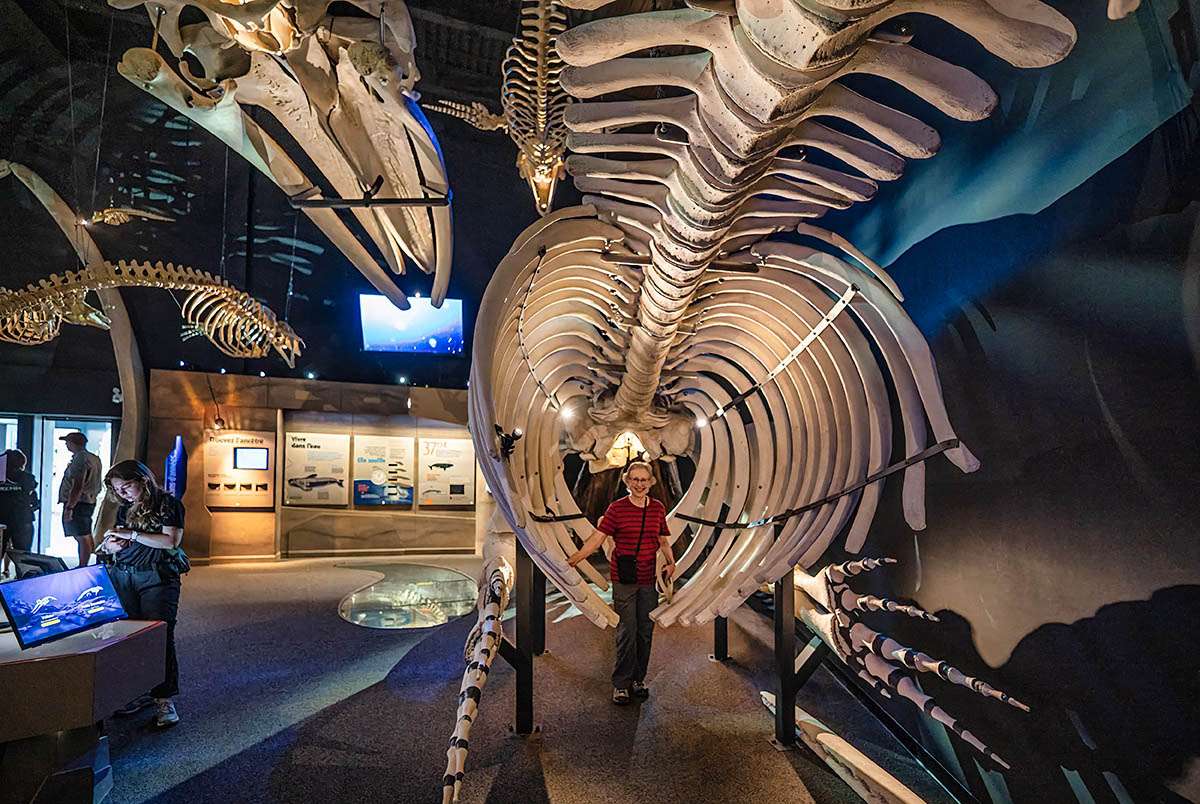
The Marine Mammal Interpretation Centre stands out as a top attraction. The impressive interior features several exhibits and whale skeletons, including a 13-metre-long sperm whale. And nothing beats walking inside the ribcage of a North Atlantic right whale to get a better idea of its immense size. Naturalists on hand can answer questions and provide further information. Stand on the rocks near the centre’s entrance, and you just might spot beluga or minke whales in the river estuary.
Resources
For more details and ideas on other attractions in the area, visit the Tourisme Saguenay-Lac-Saint-Jean website.
A complete listing of members of the Association of the Most Beautiful Villages of Quebec.
We thank Tourisme Saguenay-Lac-Saint-Jean and their partners for assisting us with our visit to the area.
Other Articles on Quebec that you might enjoy
SUBSCRIBE to Photojourneys below
Feel free to PIN this article on Three Beautiful Quebec Villages for later