All photos © Robin and Arlene Karpan
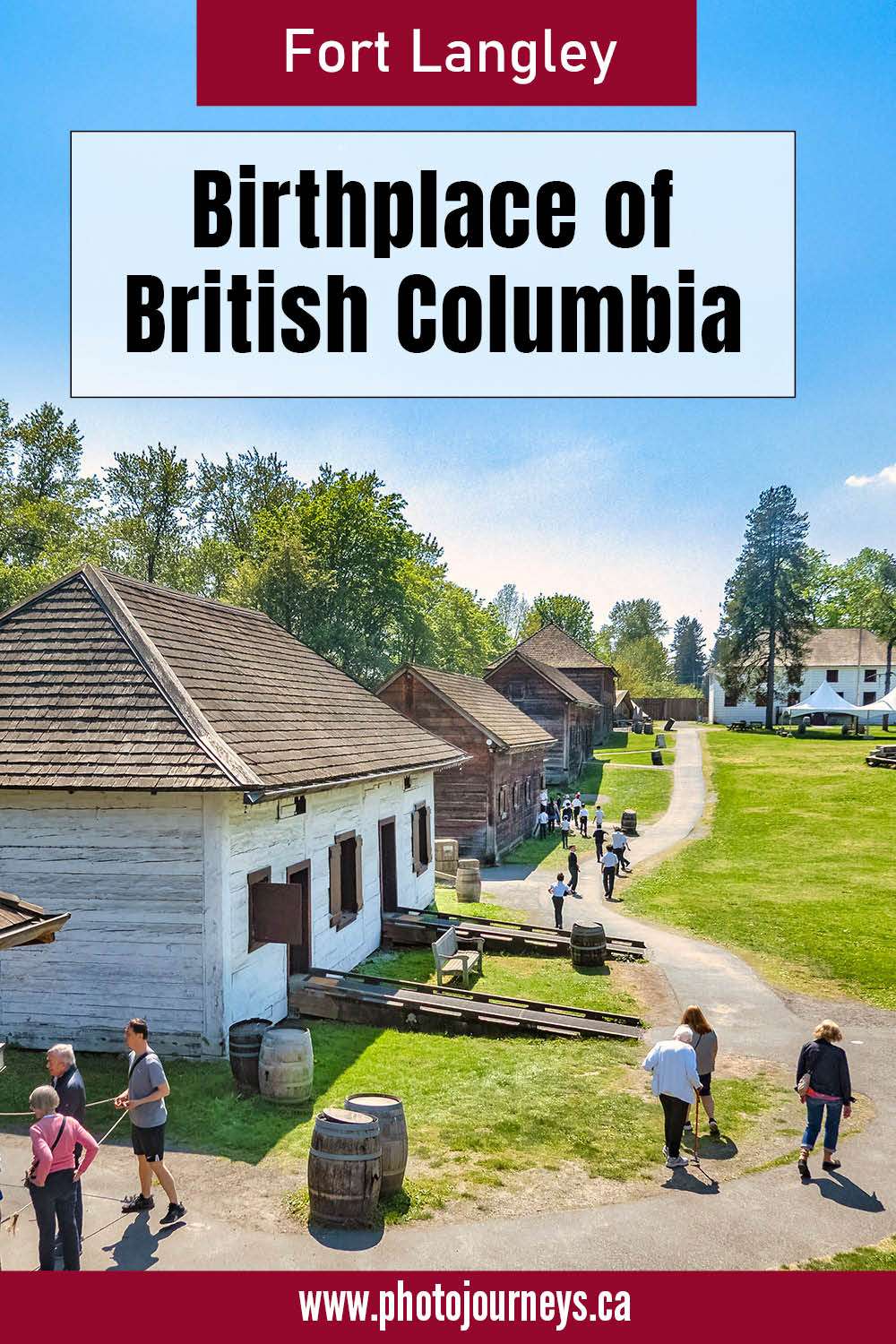
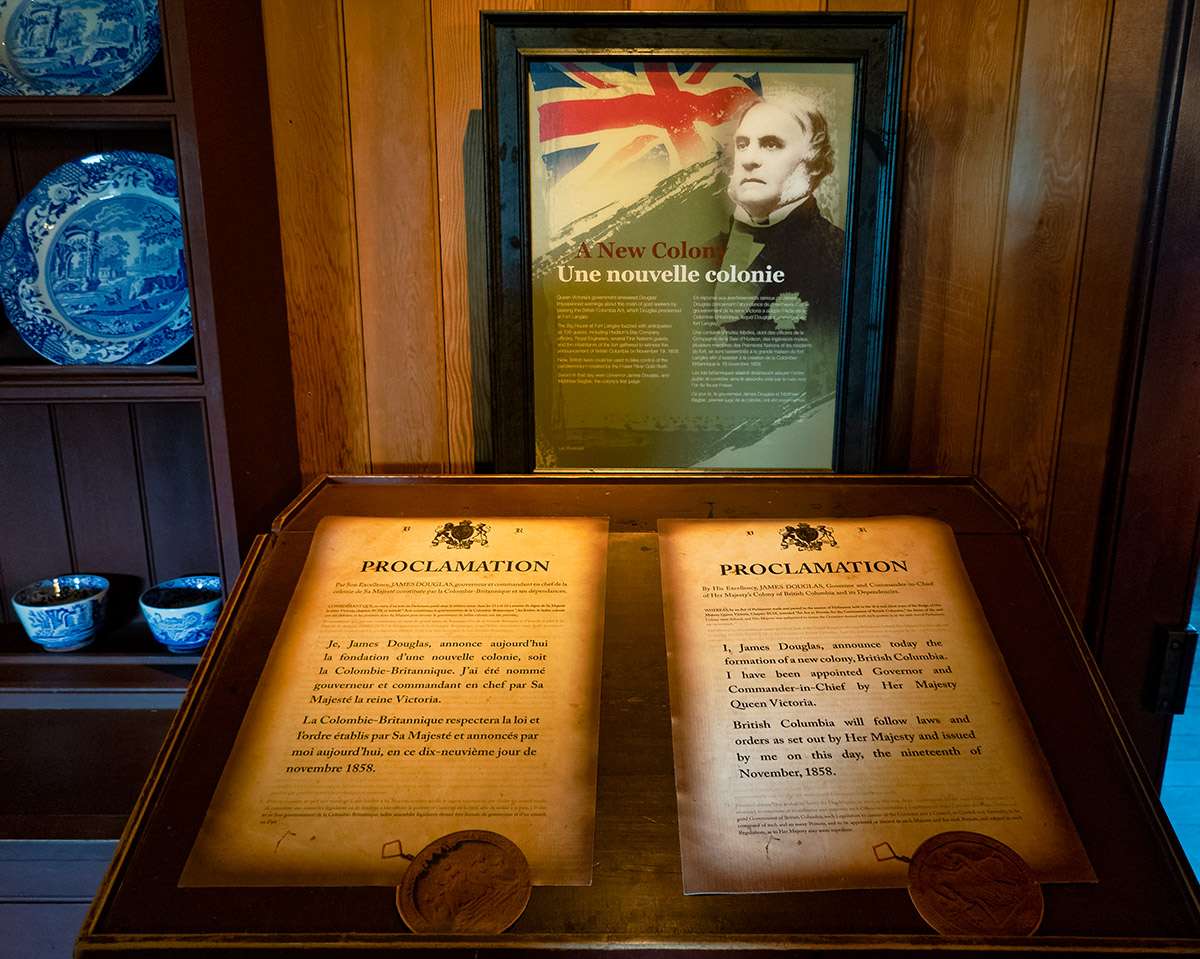
Fort Langley is where British Columbia officially began. At this Hudson’s Bay Company fur trading post on the Fraser River, newly-appointed Governor James Douglas declared the establishment of the Colony of British Columbia on November 19, 1858. This paved the way for the eventual formation of the Province of British Columbia, which joined the Canadian Confederation in 1871.
The urgent need to proclaim the colony stemmed from the discovery of gold along the Fraser River in 1857, bringing thousands of American gold seekers and settlers into Hudson’s Bay Company territory. Amid concern over annexation by the United States, Britain moved fast to protect its interests, giving Douglas authority to administer the new colony.
About 50 kilometres east of Vancouver, Fort Langley today is both a National Historic Site and a pleasant riverside village of around 3,500, part of the larger Township of Langley.
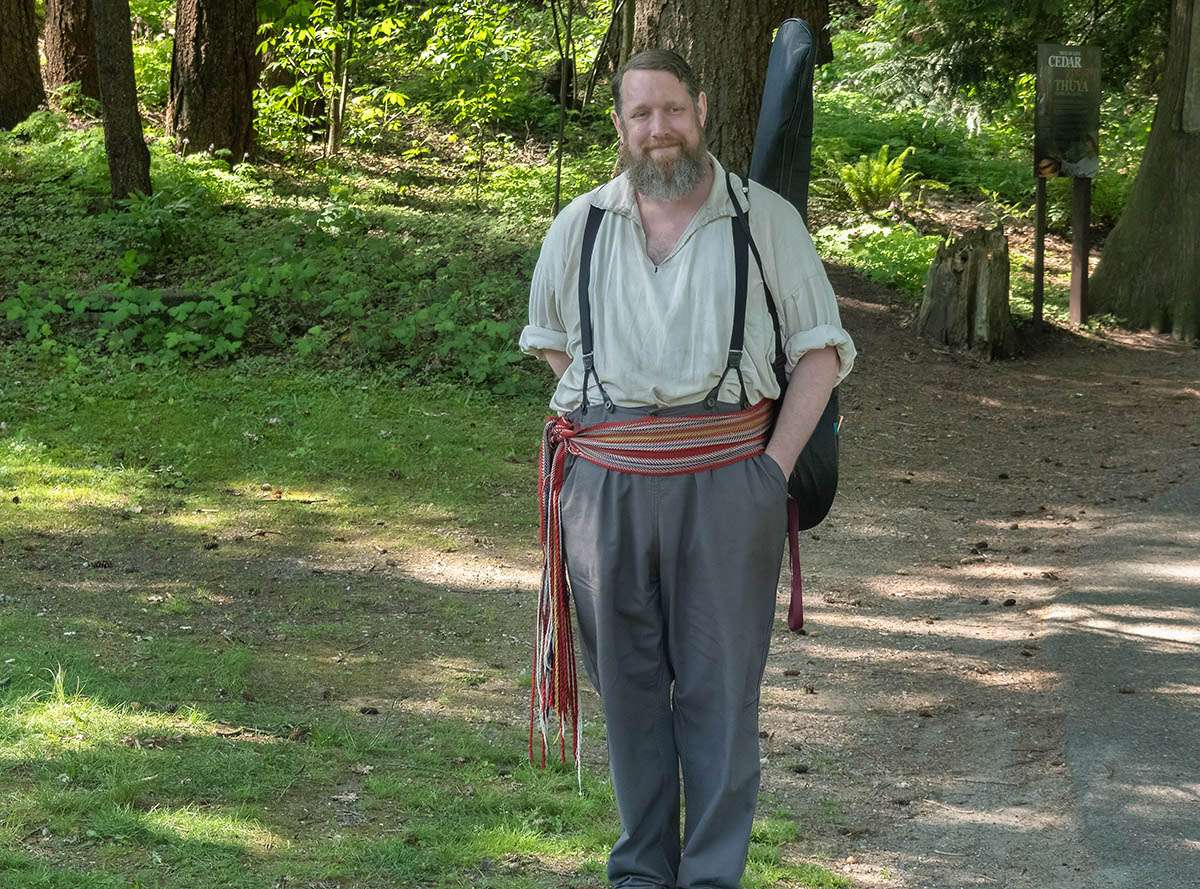
Visiting the Fort
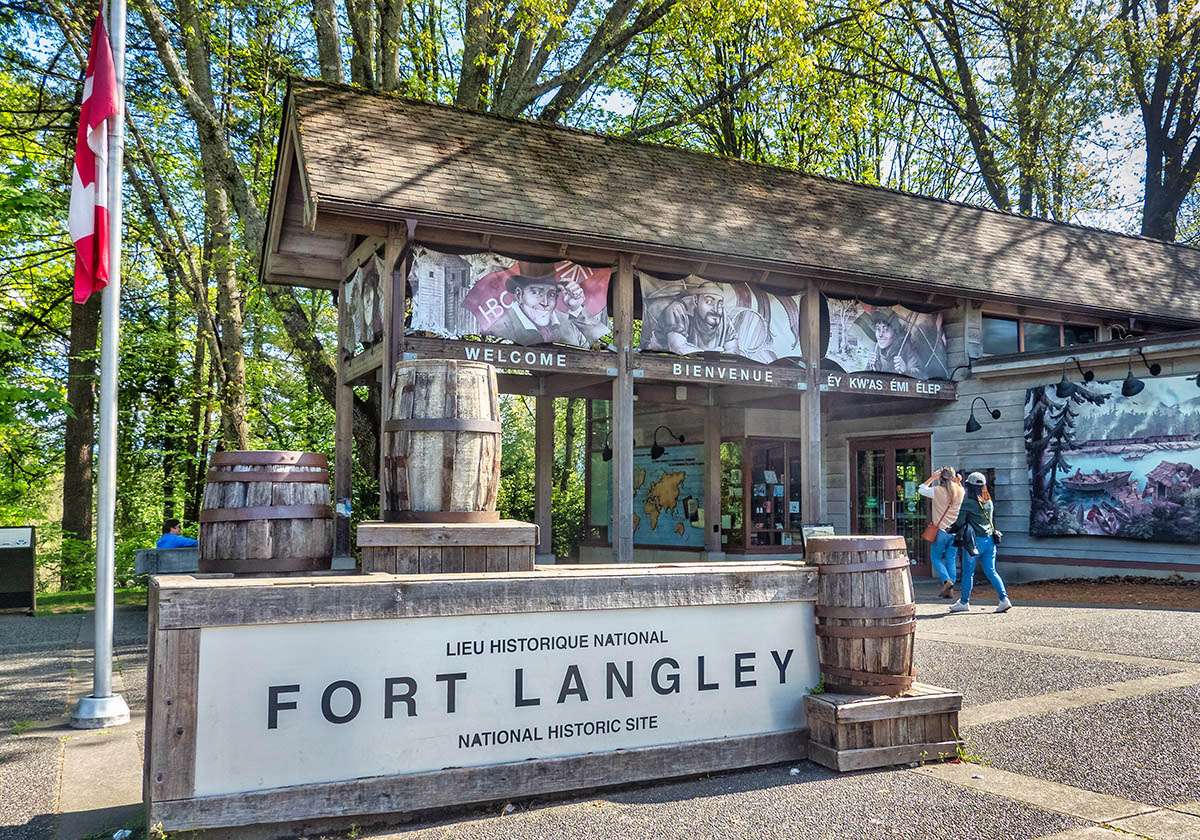
Fort Langley National Historic Site is just a few minutes’ walk from the village centre. This year, between June 19 and September 7, entrance to the fort is free thanks to the Canada Strong Pass which also provides free entry to other national parks and historic sites operated by Parks Canada across the country. If you want to stay overnight at one of the on-site oTENTiks (a cross between a tent and a small cabin), discounts are available for those fees as well as part of the Canada Strong Pass.
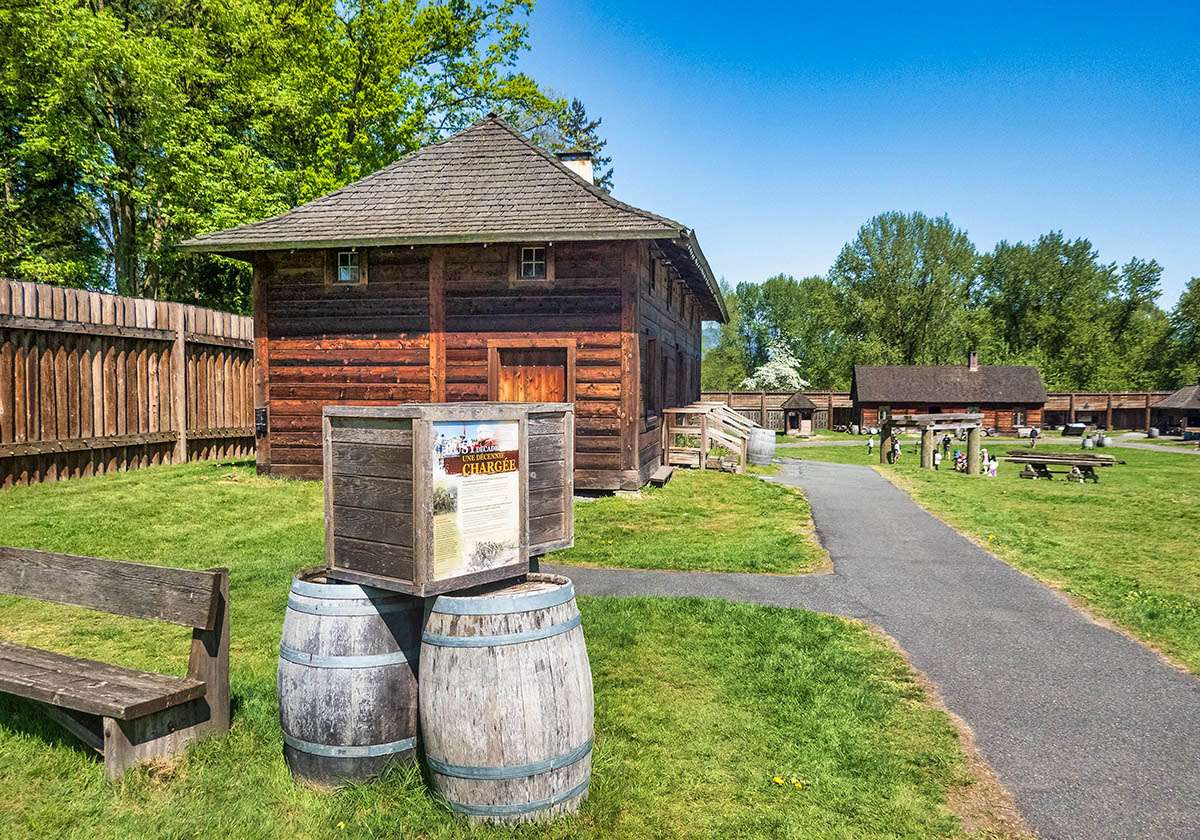
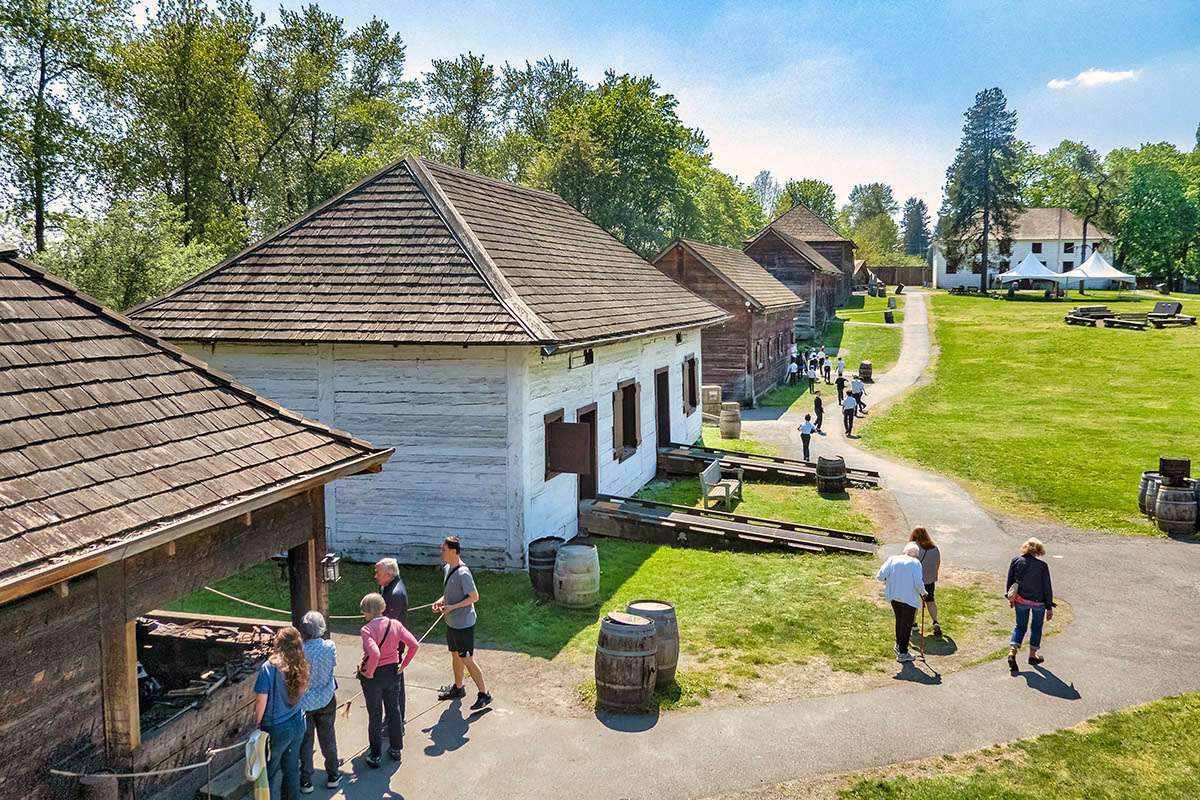
The fort was constructed on this site in 1840. An original log building plus several reconstructed buildings bring back those bygone years when this was the centre of mainland BC’s early economic life. Displays show how goods were packed and shipped to key ports in Alaska, Hawaii and other Pacific locations. As the fur trade declined, the fort turned its focus to exporting foods such as salmon and cranberries.
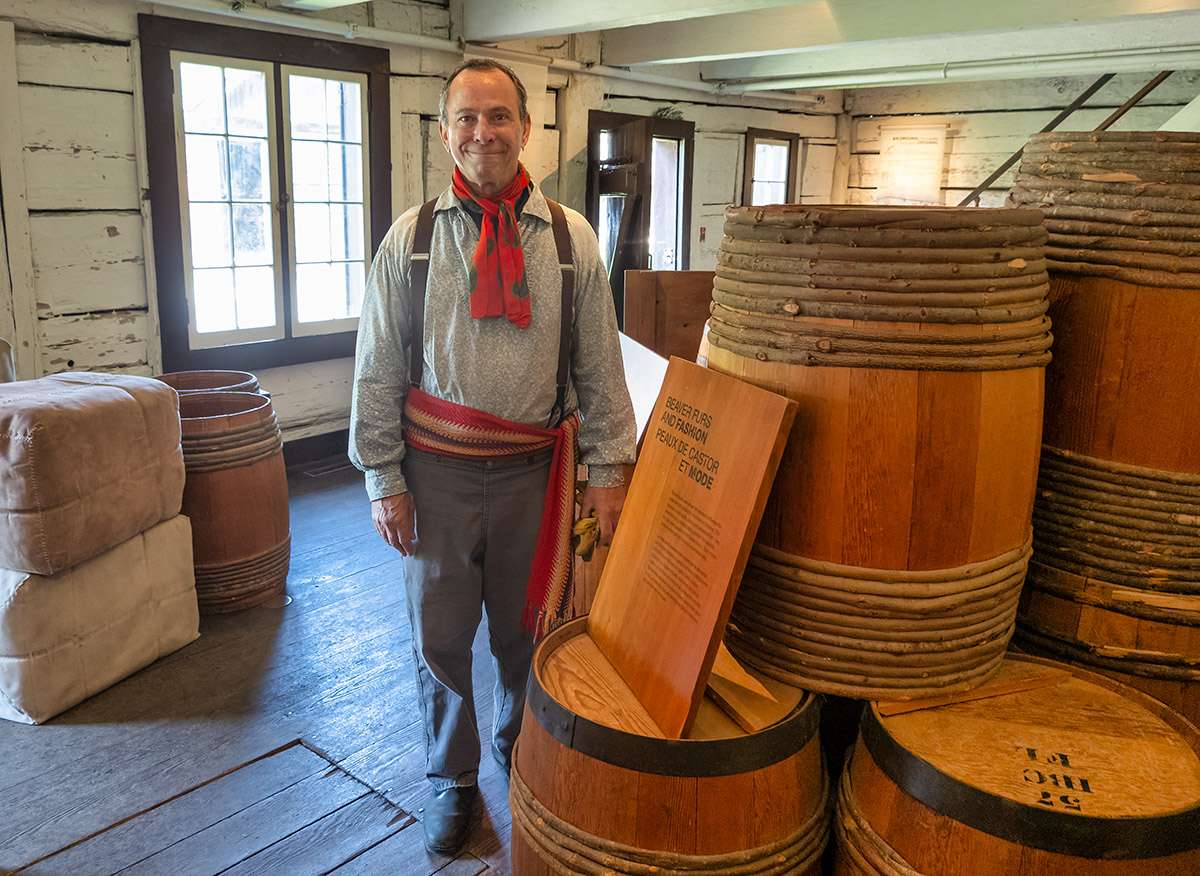
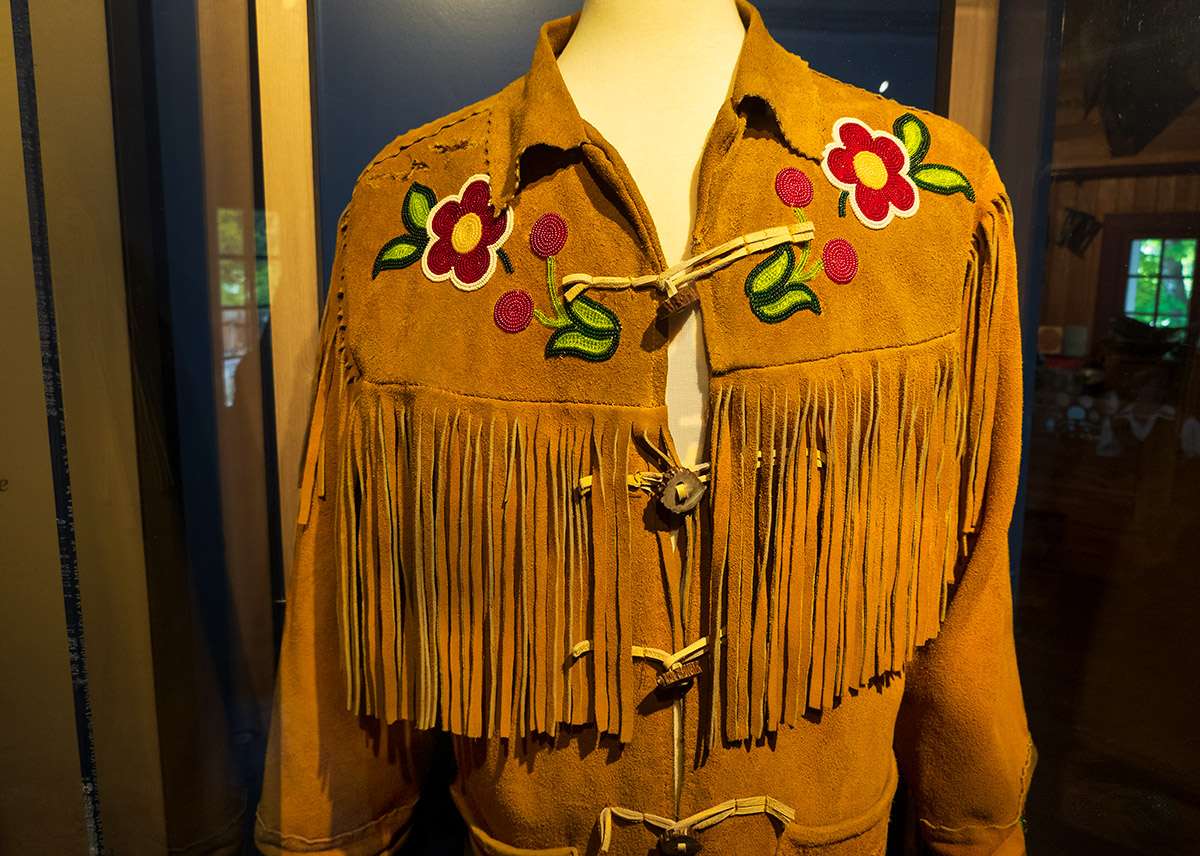
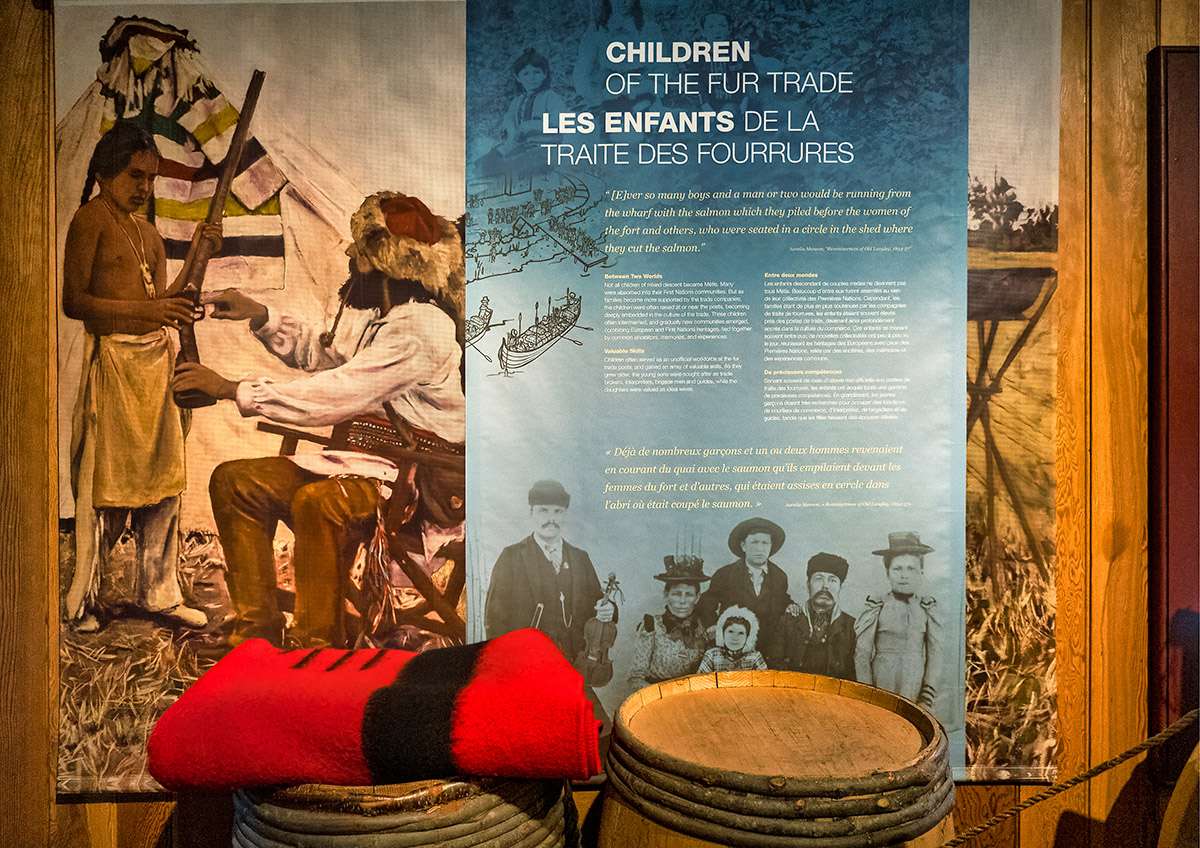
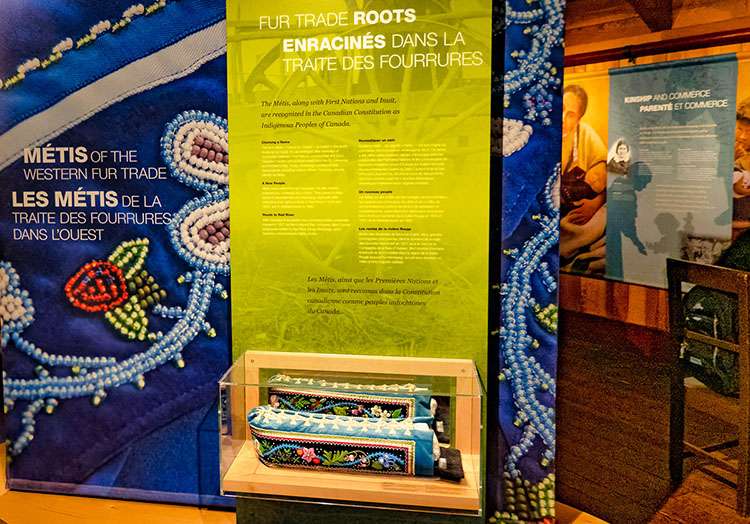
The largest building, the Big House, contains a copy of the historic document proclaiming the formation of the Colony of British Columbia, as well as other exhibits on life at the fort, the origins of the fur trade, and relations with Indigenous peoples.
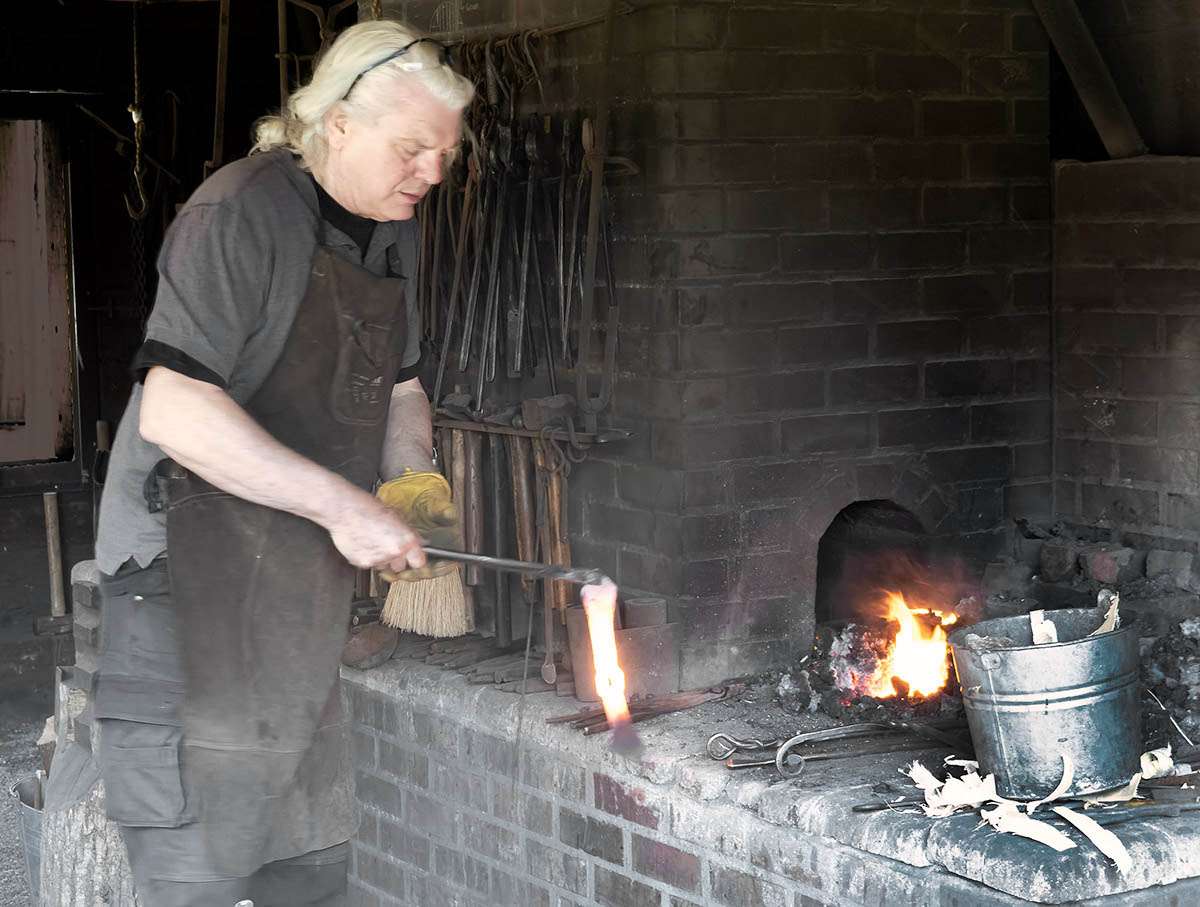
Demonstrations are a big part of a visit to the fort. Interpreters in period costume show how barrels were made in the cooperage, and how tools and repairs were carried out in the blacksmith shop that has a working forge. You can try your hand at panning for gold, climb the bastions and walk along the palisades for an overview of the fort, or gather together to hear Indigenous storytelling.
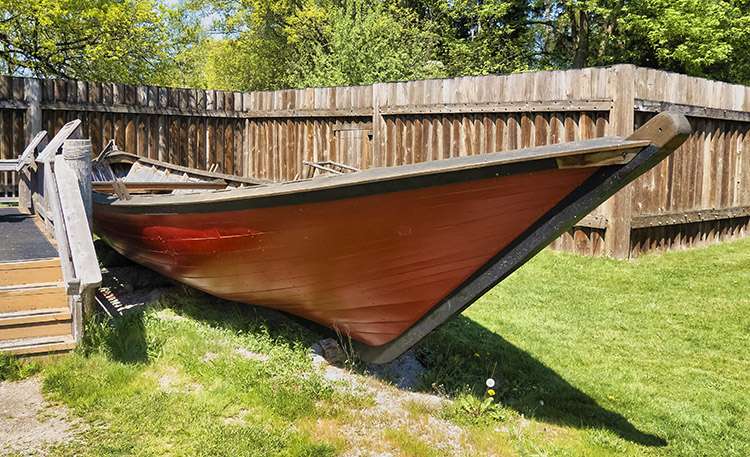
One display features a York boat, built by Métis artist and craftsman Pat Calihou. York boats were used along waterways as transportation between fur trade posts. They could be as long as 14 metres and carry up to six tonnes of cargo.
Tea Blending at the Fort
Tradish’s The Ancestor Café at the fort was where we took part in a unique experience that introduced us to tea blending. Led by Chef Sarah Meconse Mierau, originally from the Sayisi Dene First Nation in northern Manitoba, we learned about natural plant medicines and how they are gathered and used. She showed us how to combine them into our own custom tea blends.
Sarah had always been motivated to provide traditional foods for Indigenous people who were not able to find products from the land on ordinary store shelves. She created a line of jams under the label Tradish using local fruits, maple syrup for sweetening and chia seeds for thickening. Then she developed this tea blending experience to share her knowledge of traditional foods and medicines.
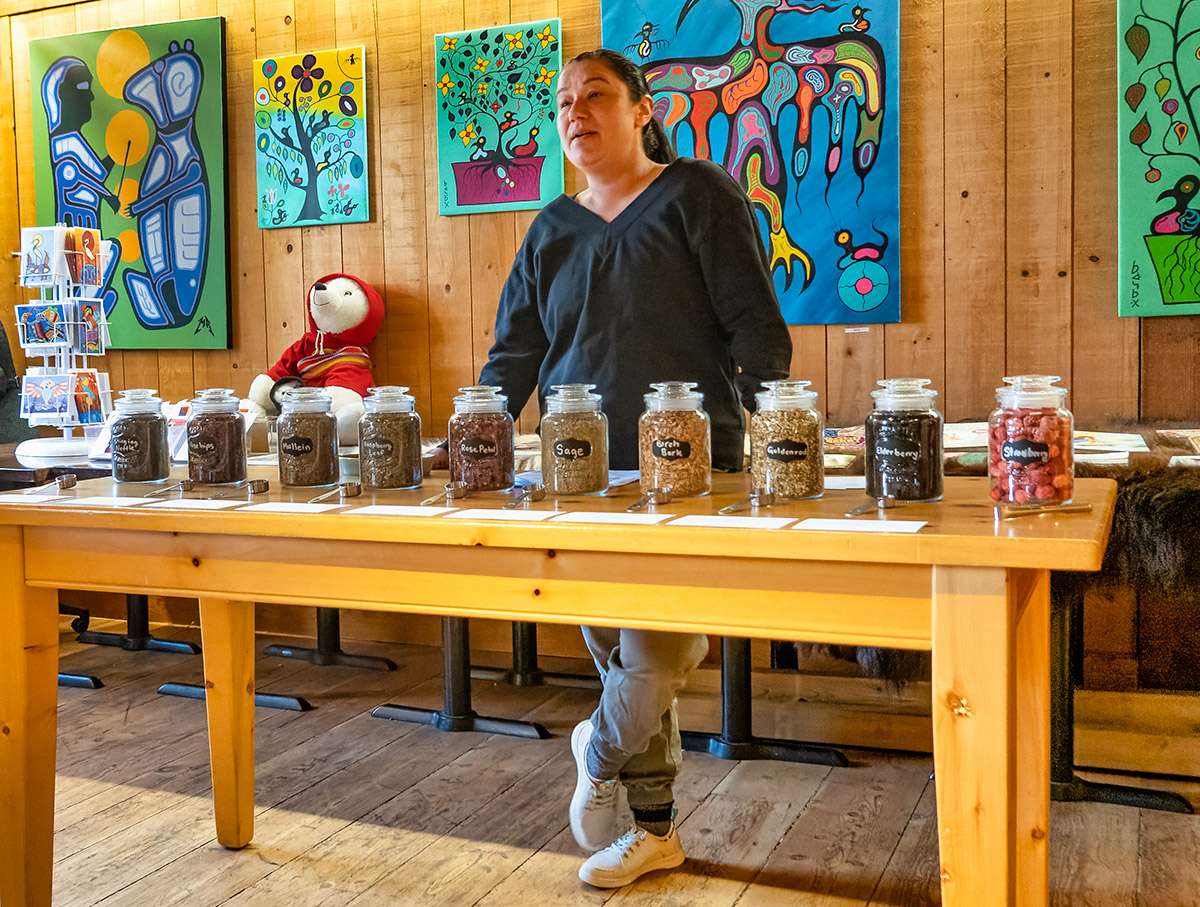
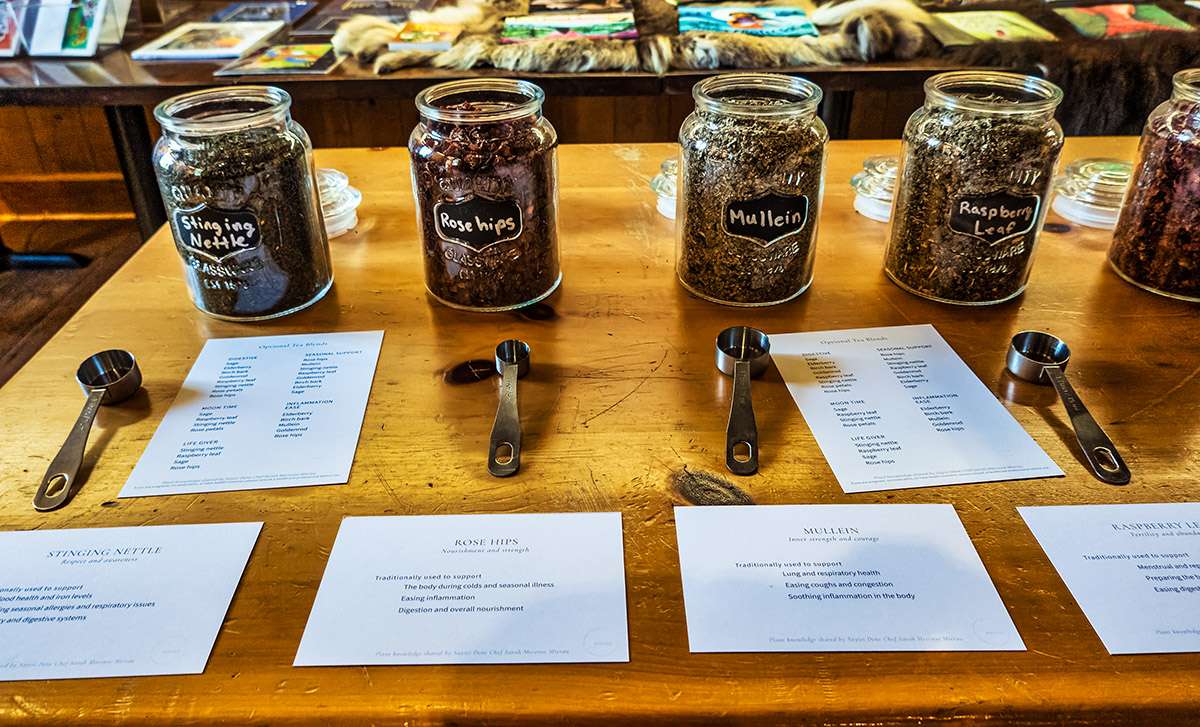
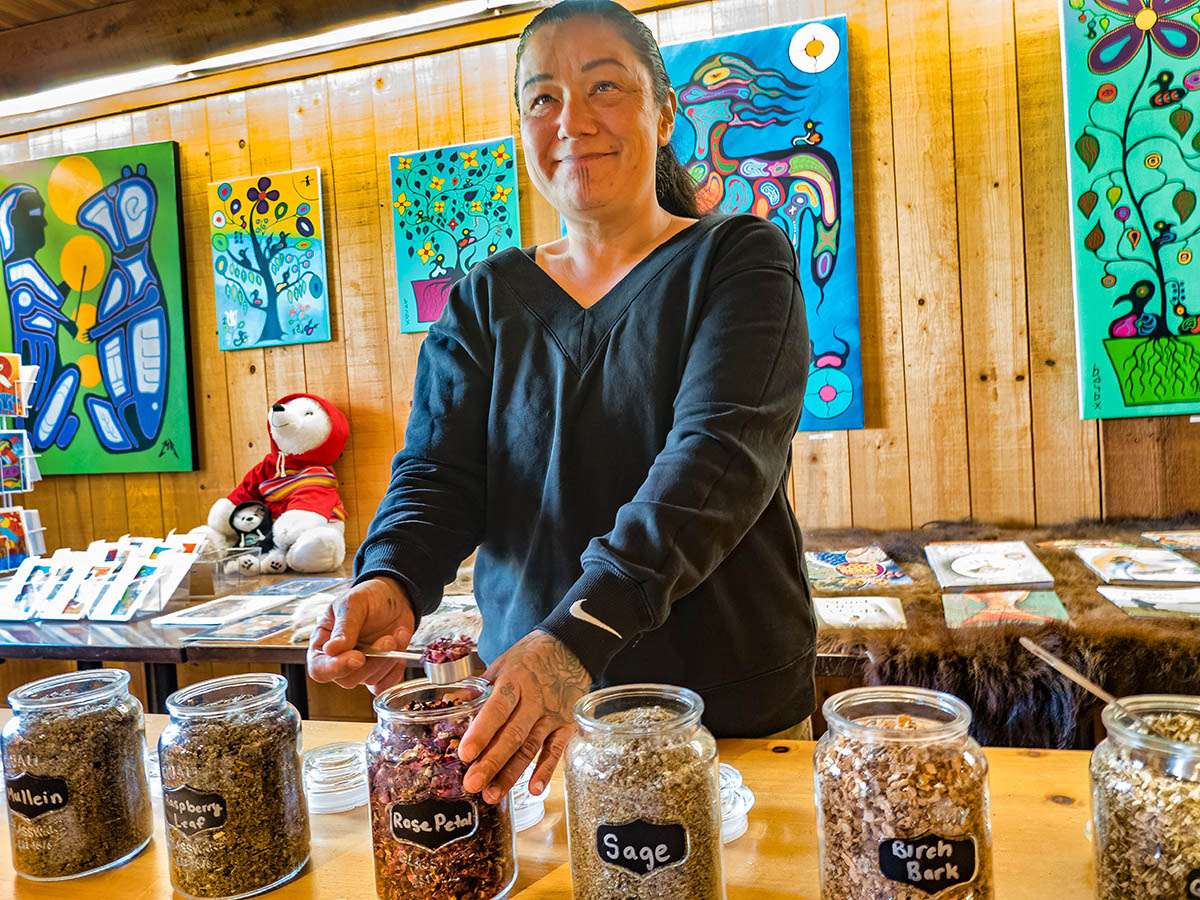
Sarah began with a smudge, a cleansing ceremony with burning sage pushing out negative energy, and sweetgrass pulling in positive feelings. In front of her were several jars containing dried plants such as goldenrod, elderberry, raspberry leaf, stinging nettle, rose hips, rose petals, and birch bark. After she explained the uses and medical properties of each plant, it was time for us to create our own special blends.
However, there was one important caveat. “You have to think loving thoughts,” Sarah said, “because you can heal people with those loving thoughts that you put into food. Your energy does transfer into the foods.”
While Sarah provided some general guidelines, we didn’t follow exact recipes. The idea was to decide for ourselves which ingredients to use in our own creations. When we sampled our tea blends, they tasted surprisingly good – refreshingly warm, earthy, and calming.
Then Sarah and her son brought out bannock tacos topped with chili made with local ingredients, a popular menu item at Tradish Café. Sarah explained how each plate she serves is created with purpose, nourishing much more than just the body.
Downtown Fort Langley
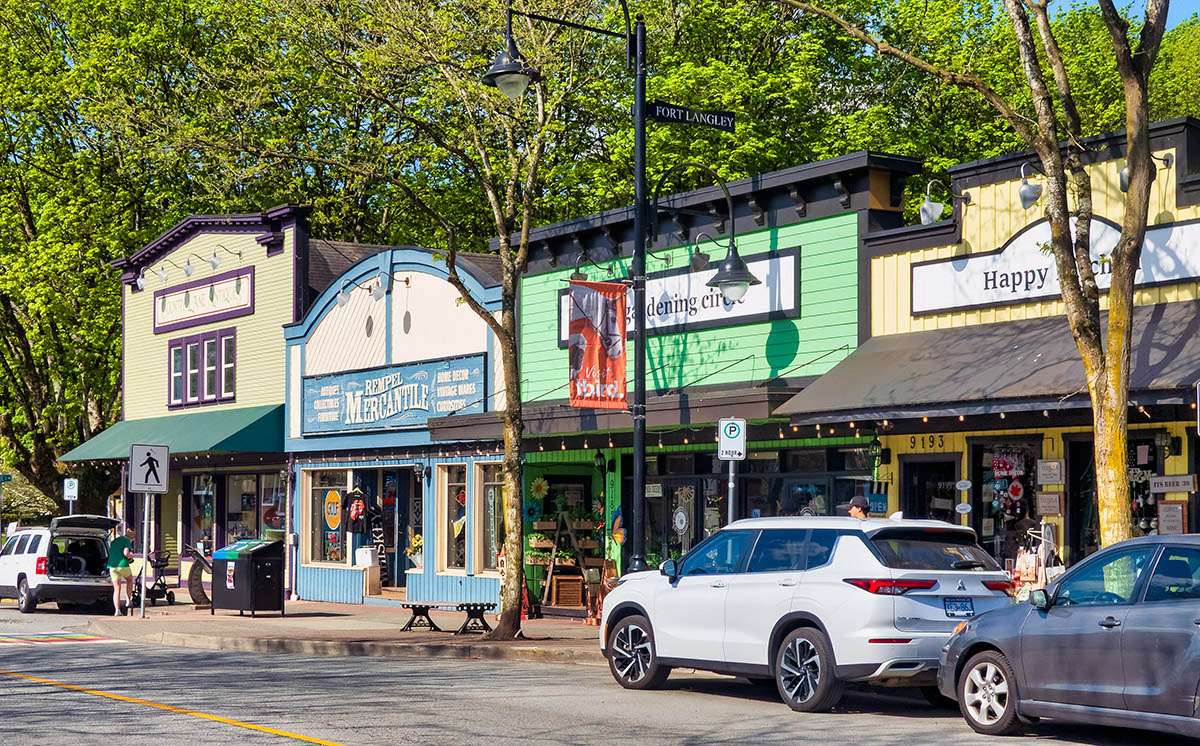
The compact village centre is definitely worth a stroll around. The heart of downtown spreads along the waterfront near the Fraser River. Glover Road and Mavis Avenue anchor the main shopping district, lined with restored vintage buildings and newer ones designed to preserve the historic character.
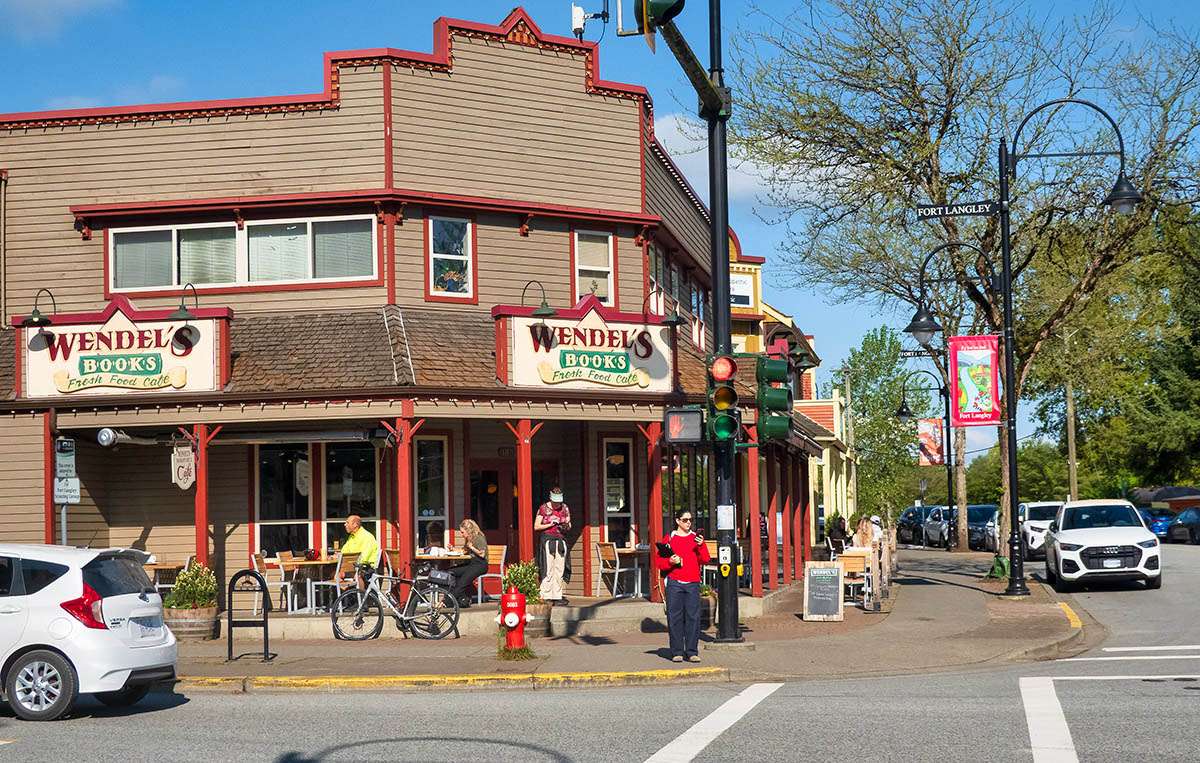
There’s no shortage of places to explore in the easily walkable central area, beginning on Glover Road where brightly painted stores entice you to take a closer look. Shops and eateries abound with enough ice cream, chocolate, and candy stores to satisfy any sweet tooth. Then there’s the corner bookstore, one-of-a-kind boutiques, preserved historic railway station, and dozens of antique dealers in the Village Antique Mall.
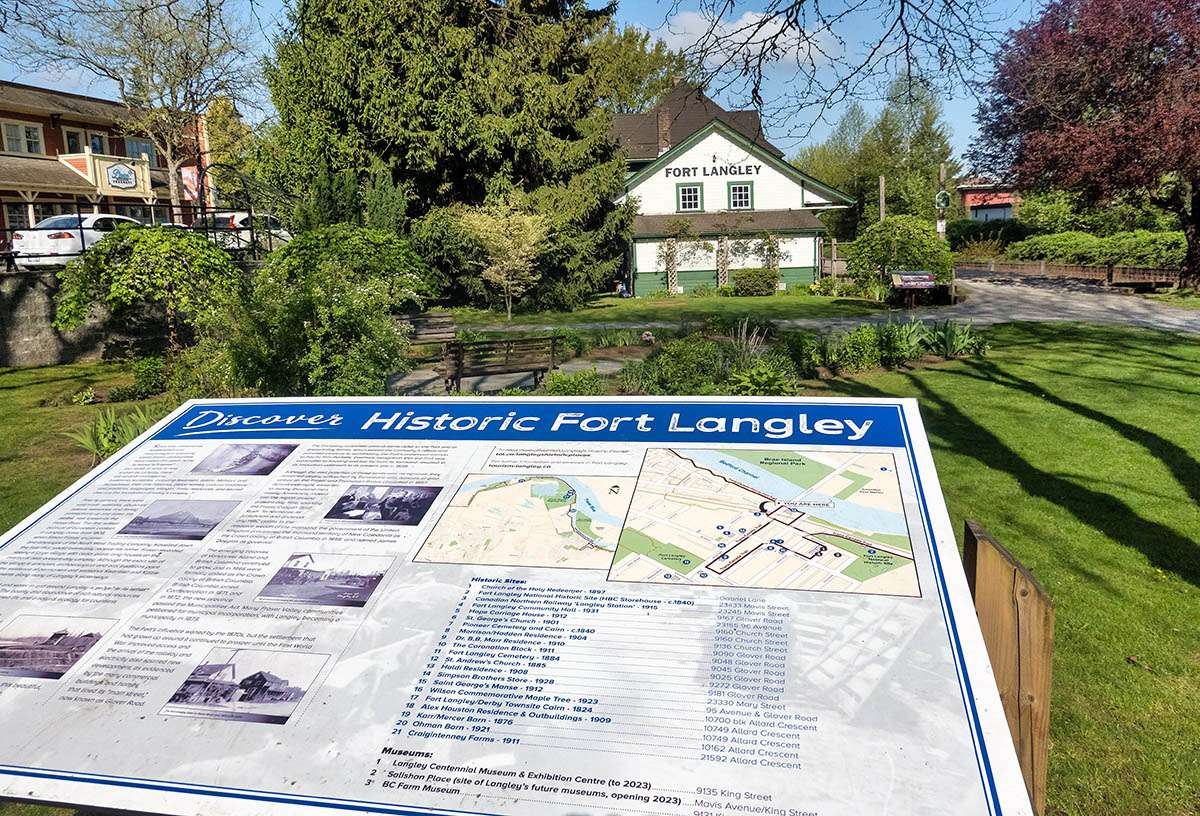
You might notice that Fort Langley does not have cookie-cutter food chain eateries. Instead, independently-owned cafes, bistros, and pubs abound. Fine dining places include Saba, specializing in Mediterranean-inspired dishes (they even make their own ketchup), and popular bakeries such as Blacksmith, known for their generous brunch offerings.
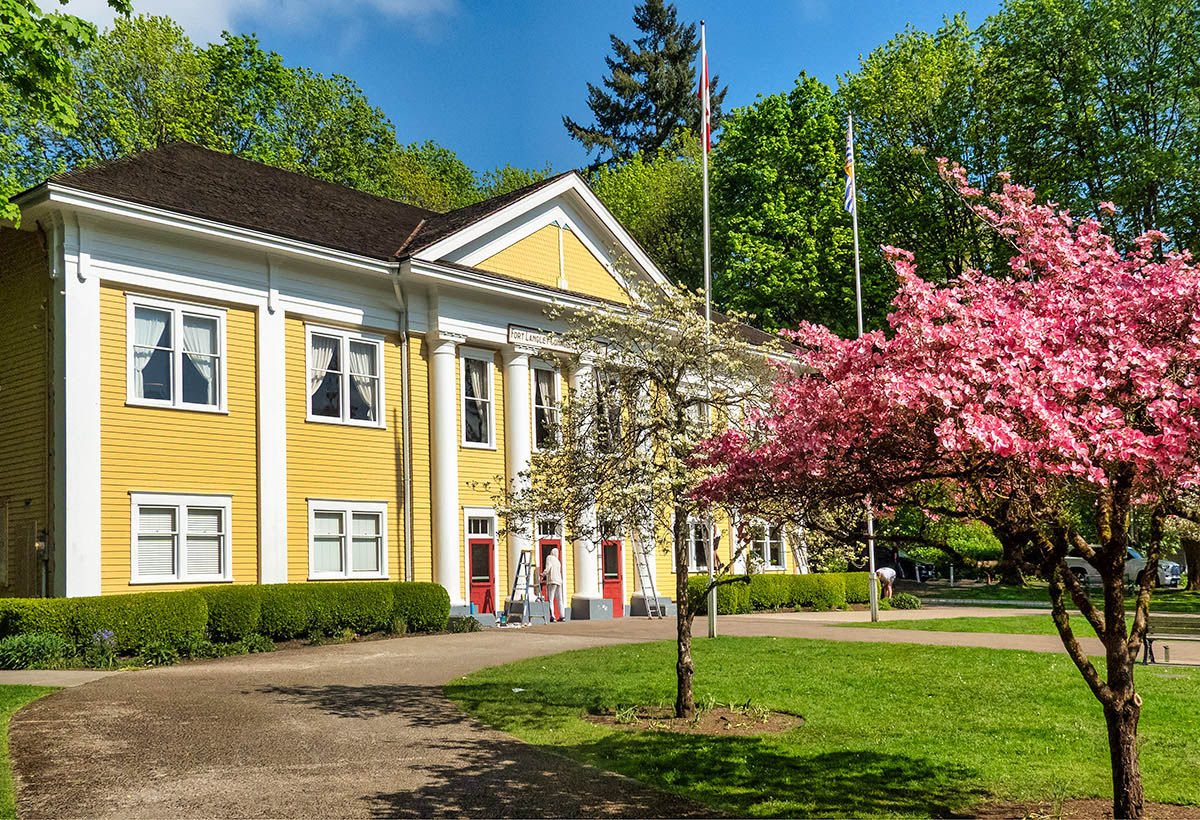
As you stroll down Glover Road to the ornate Fort Langley Community Hall, you might be struck by feelings of déjà-vu. If you think that these buildings look familiar, your hunch is probably right. The streetscape and individual buildings have appeared in numerous movies and TV series over the years – fantasy and horror flicks, sports, crime, and warm and fuzzy Christmas movies.
Resources
- Tourism Langley’s website has plenty of information on things to do, festivals, special events, and accommodation options. We stayed at the Sandman Signature Langley, just a short drive from the central historic area.
- Fort Langley National Historic Site
- Find out more about Chef Sarah Mierau and Tradish.
- Hosted tea blending gatherings can be coordinated through Chew on This, a company started by Lise Hines, which supports local food businesses.
We thank Tourism Langley and Destination British Columbia for assisting us in our visit to Fort Langley.
SUBSCRIBE to Photojourneys below
Feel free to PIN this article on Fort Langley for later