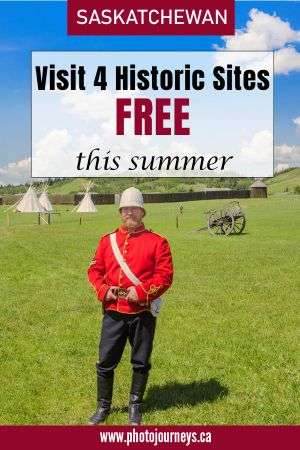

The Canada Strong Pass is being offered again this year. Between June 19 and September 7, we get free entry to national parks and historic sites throughout the country operated by Parks Canada.
Like last summer, national parks are expected to be quite busy. But national historic sites don’t get the same crowds and are easier to visit on short notice. This is a great chance to visit four sites in Saskatchewan that normally charge admission but will be free. They cover various aspects of Saskatchewan and Western Canadian history from the development of farming to the coming of the Mounted Police, Métis and First Nations culture, and significant events that changed the course of Canadian history.
Fort Walsh National Historic Site
When it comes to combining history with dynamite scenery, it’s tough to beat Fort Walsh nestled in a valley in the beautiful Cypress Hills.
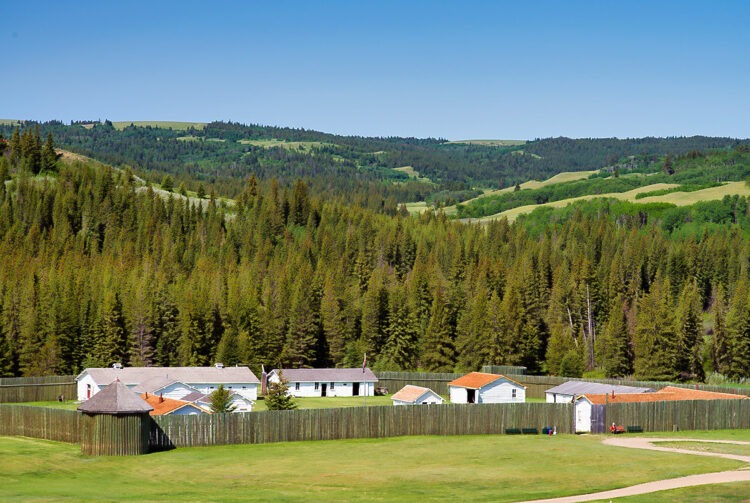
It was the infamous Cypress Hills Massacre that led to the creation of Canada’s iconic Mounted Police. In 1873, American wolf hunters killed several local Nakoda whom they wrongly accused of stealing horses. This incident was the final straw that convinced the federal government to form the North West Mounted Police to deal with lawlessness.
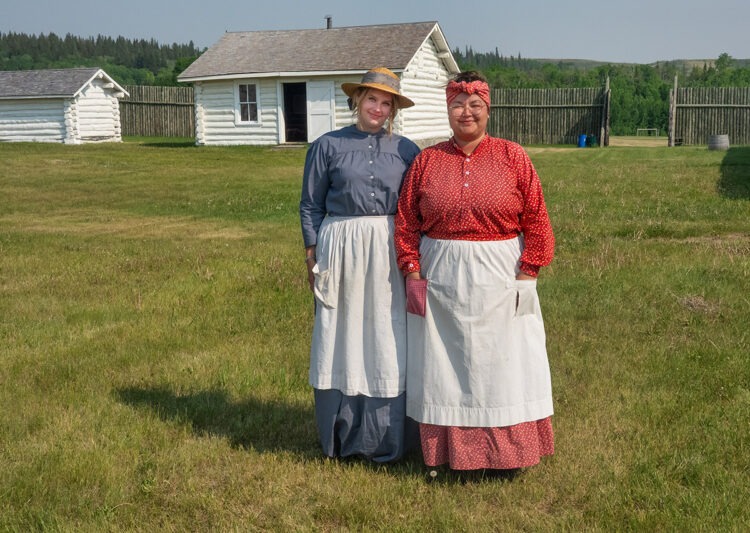
Fort Walsh was established in 1875 near the massacre site to ensure peaceful settlement. It became Mounted Police headquarters, and in later years, the fort was used to train horses for the RCMP musical ride.
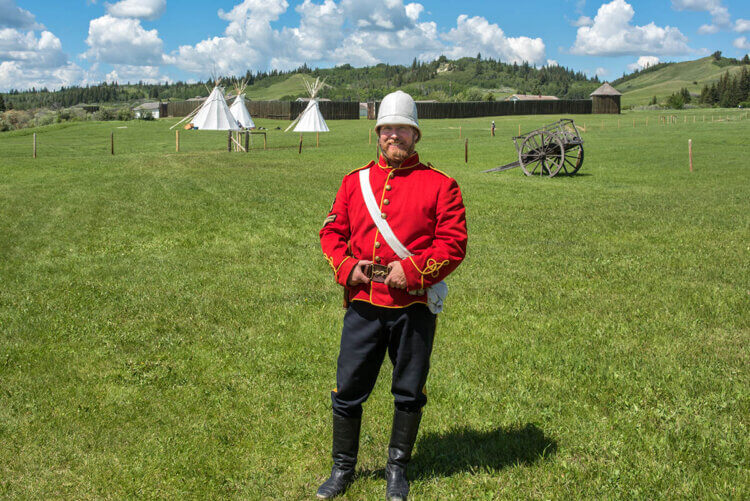
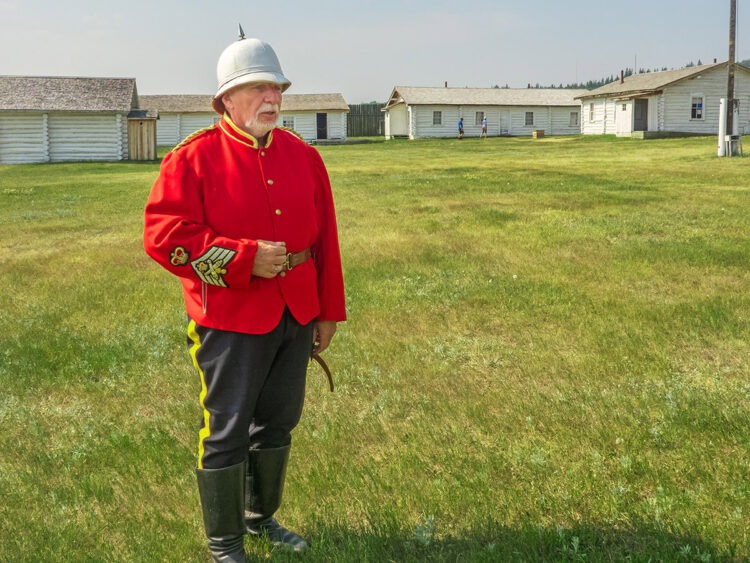
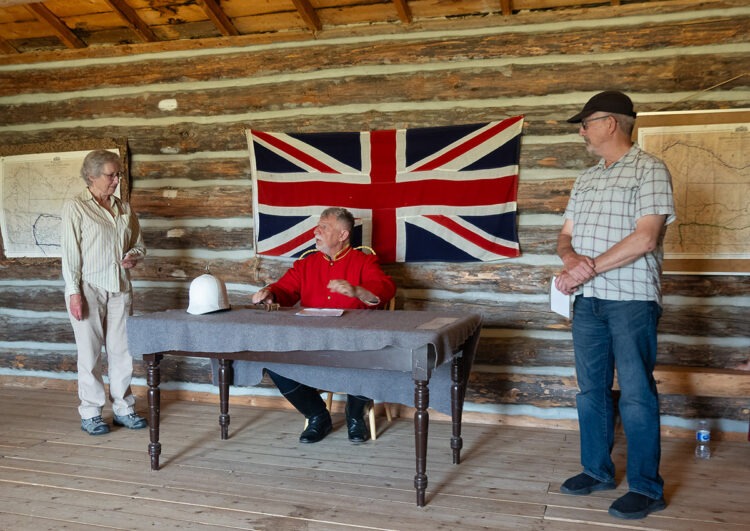
An interpreter takes you through the buildings and brings the past to life. Special activities take place in summer. One that is always a hit with visitors is the mock trial, where an ill-tempered judge metes out 19th-century justice to “volunteers” from the audience.
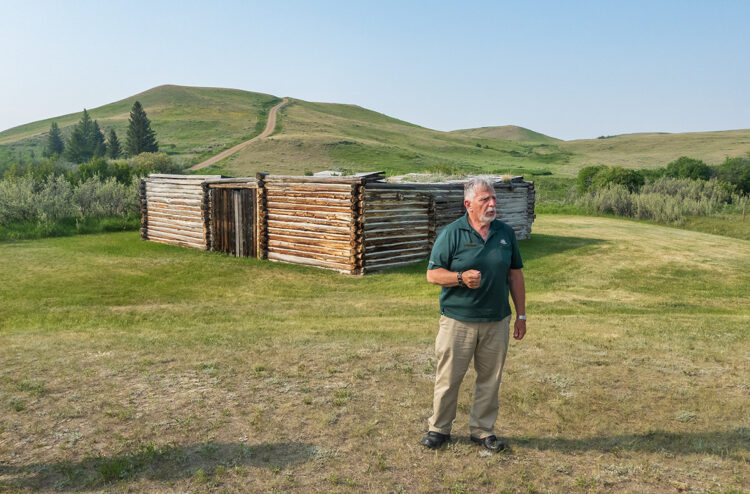
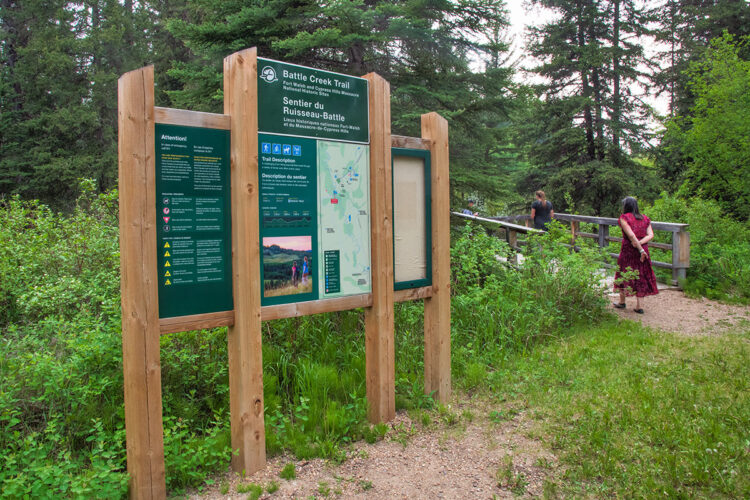
Beyond the fort, trails lead into the hills or along meandering Battle Creek. A longer walk across hilly prairie takes you to the site of two former trading posts where the Cypress Hills Massacre took place.
For a more a detailed look, see our posting Fort Walsh Combines Compelling History with a Gorgeous Setting
Fort Walsh is located next to Cypress Hills Interprovincial Park, a wonderful wilderness playground that combines unique mix of prairie grasslands, forest, and uplands. Here are a couple of postings to give a flavor of the area:
Batoche National Historic Site
Batoche took centre stage in the 1885 conflict when Louis Riel led an uprising against Canadian authorizes. The historic site lies about halfway between Saskatoon and Prince Albert on the banks of the South Saskatchewan River. Métis culture and heritage take centre stage here, along with the story of events leading to the Battle of Batoche in May 1885.
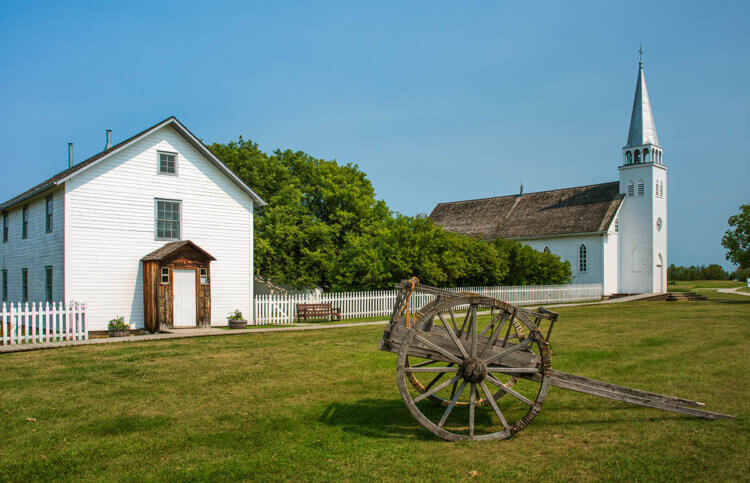
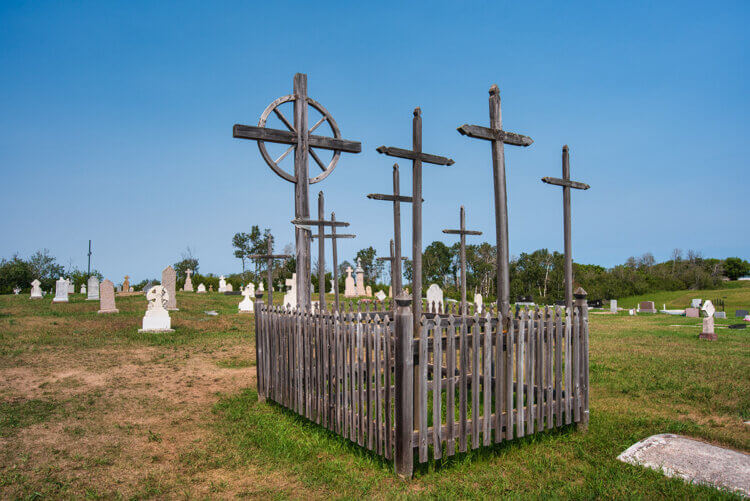
After seeing the displays and presentation in the visitor centre, you make your way towards the Church of St. Antoine de Padoue and the rectory, both restored to 1896. A prominent feature of the nearby cemetery is a mass grave commemorating defenders killed in the final assault on Batoche by militia sent by the Canadian government to quell the uprising. A large stone marks the grave of Gabriel Dumont, Riel’s military commander.
Paths lead along the riverbank and to the Caron house, portraying a typical 1870’s-style family home. Nearby are rifle pits dug by Métis forces to defend Batoche, and the outline of the militia’s zareba or enclosed encampment.
Fort Battleford National Historic Site
Just outside the present-day town of Battleford, Fort Battleford was established in 1876 as a North West Mounted Police post. Since Battleford was the first permanent capital of the North West Territories, the fort played a pivotal role in government relations, especially Treaty Six negotiations with First Nations. It was also involved in the 1885 conflict when Battleford residents took refuge in the fort, fearing increasing unrest.
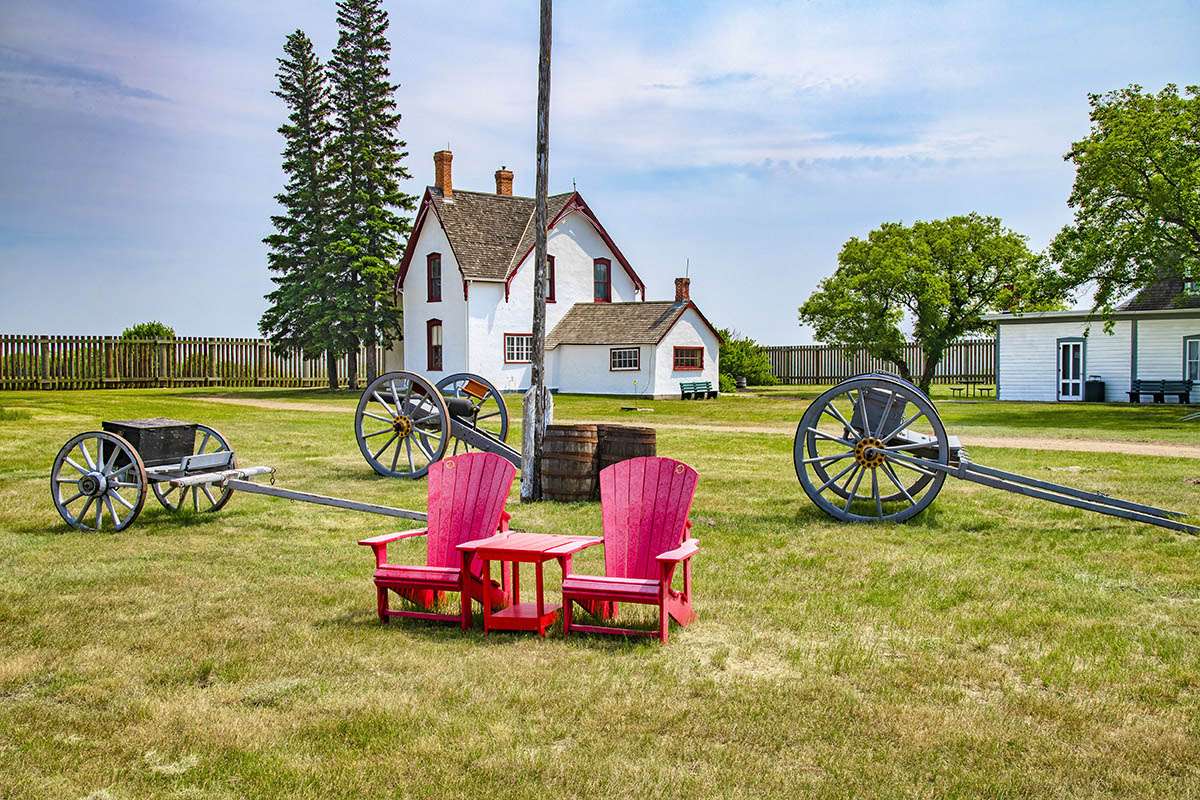
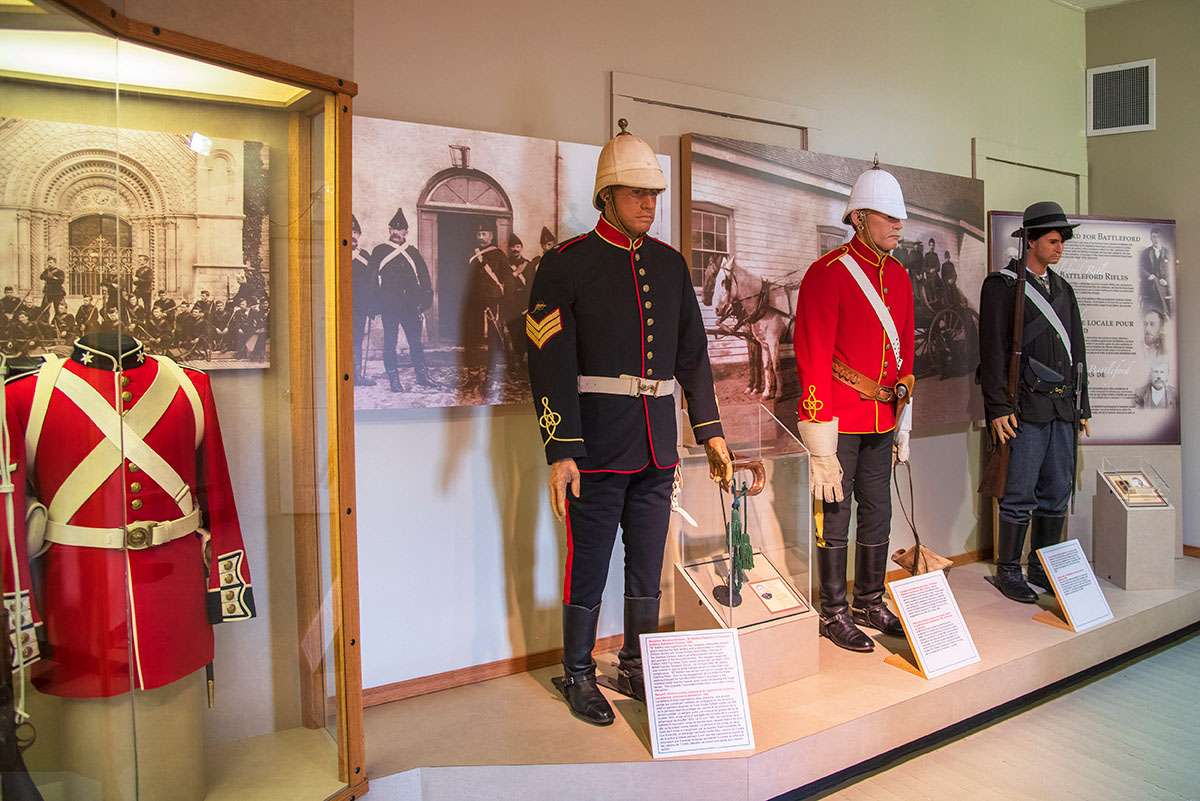
Today, the fort depicts the early days of the Mounties, along with the life and culture of First Nations, Métis, and settlers.
Exhibits in the former barracks building set the stage for the fort’s significance. Furnished historic buildings date from 1876 to 1898, including the Commanding Officer’s Residence, Officers’ Quarters, Sick Horse Stable, and the Guard House. Interpreters are often available to shed light on Mountie life at the post.
Motherwell Homestead National Historic Site
Motherwell Homestead, just south of Abernethy, takes visitors back to the early 20th century when industrious pioneers such as W. R. Motherwell and his family developed their impressive homestead. Motherwell implemented many farming innovations, and served as agriculture minister at both the federal and provincial levels.
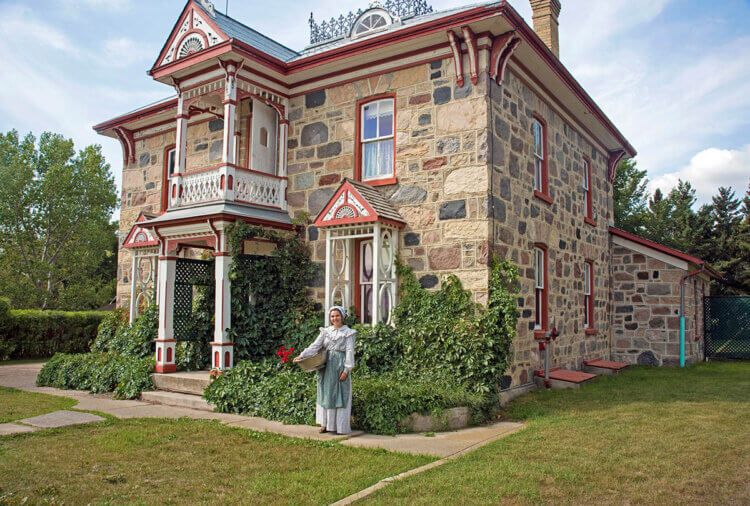
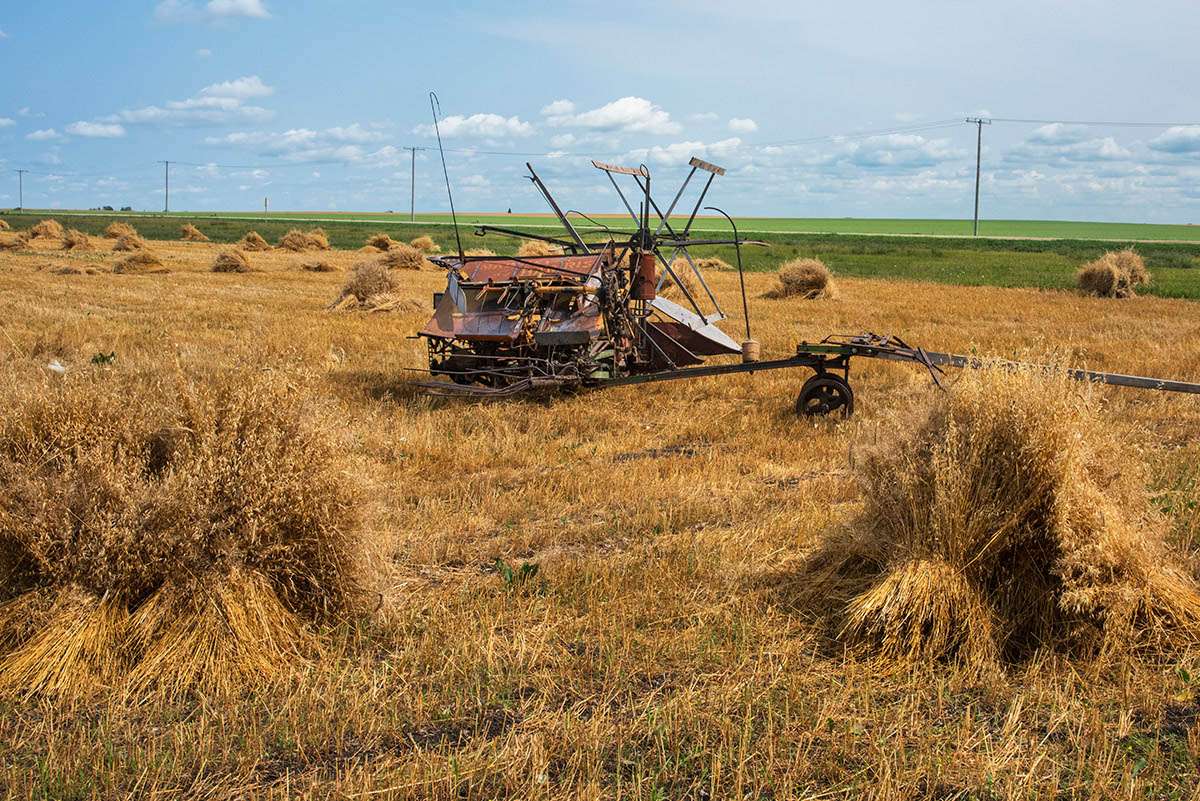
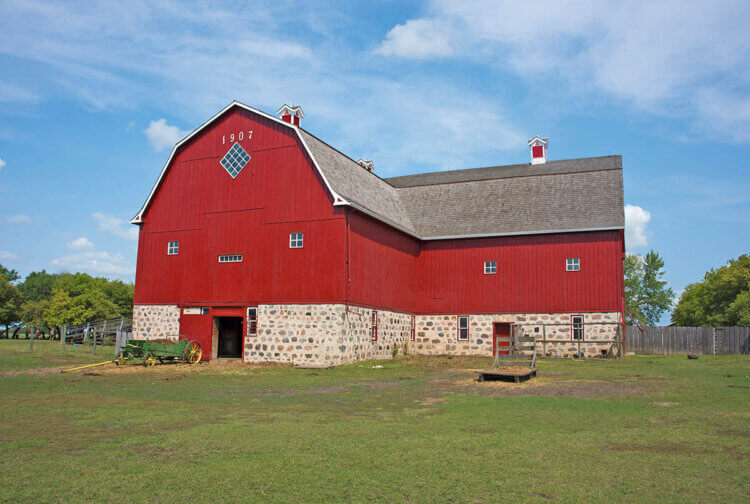
Known as Lanark Place, the two-storey house was built from stones that Motherwell collected from his land. Fully furnished, it is restored to the 1910-14 period. Complete with livestock, the L-shaped barn with its huge hay loft dates to 1907, and the implement shed has vintage farm equipment such as tractors and binders. Other features include the garden, tennis court, cottage for hired workers, and extensive shelterbelts that Motherwell planted to protect against erosion.
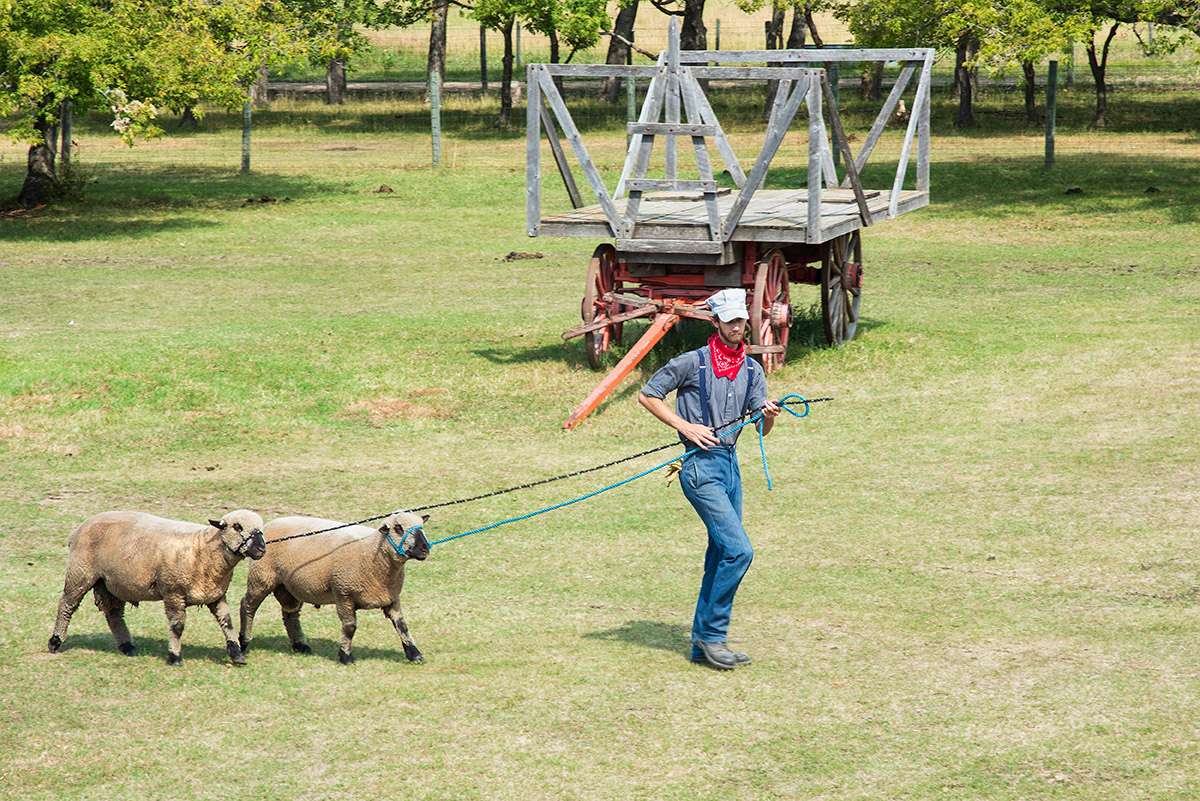
Throughout the summer, special events and programs kindle the pioneer spirit, such as harvesting fresh produce, working with farm animals, or baking bread.
Despite the name, the Canada Strong Pass isn’t a physical pass. Just show up at the participating locations for free entry.
Resources:
- Visit the Parks Canada site for more details on these and other national parks and historic sites.
- Visit Tourism Saskatchewan for ideas on other nearby attractions.
SUBSCRIBE to Photojourneys below
Feel free to PIN this article for later