
All photos © Robin and Arlene Karpan
We have been to a lot of Spanish colonial towns throughout Latin America over the years, but if we were to pick a favourite it would be Mompox, Colombia. Not only is it an exceptionally pleasant place to wander around that is brimming with history, but it feels like a real town where tourism is only a part of the scene rather than dominating it. The folks at UNESCO seem to agree, naming it a World Heritage Site.
Much of what makes Mompox special is due to its unique history, dating back to the 16th century. Situated on the banks of the Magdalena River, Colombia’s longest waterway, it was the crucial link allowing Spanish colonial expansion from the stronghold of Cartagena on the Caribbean coast into the interior. Mompox flourished as an inland shipping port with a booming economy bringing some of the country’s grandest residences, churches, and other public buildings.
Unlike most colonial towns whose roles evolved over time, Mompox changed suddenly and dramatically. Silt built up on the Magdalena River, altering its course, with its main arm bypassing Mompox. Only a minor branch remained, but it could not support shipping. With its reason for being gone, Mompox’s economy tanked, leaving it almost unchanged for many years.
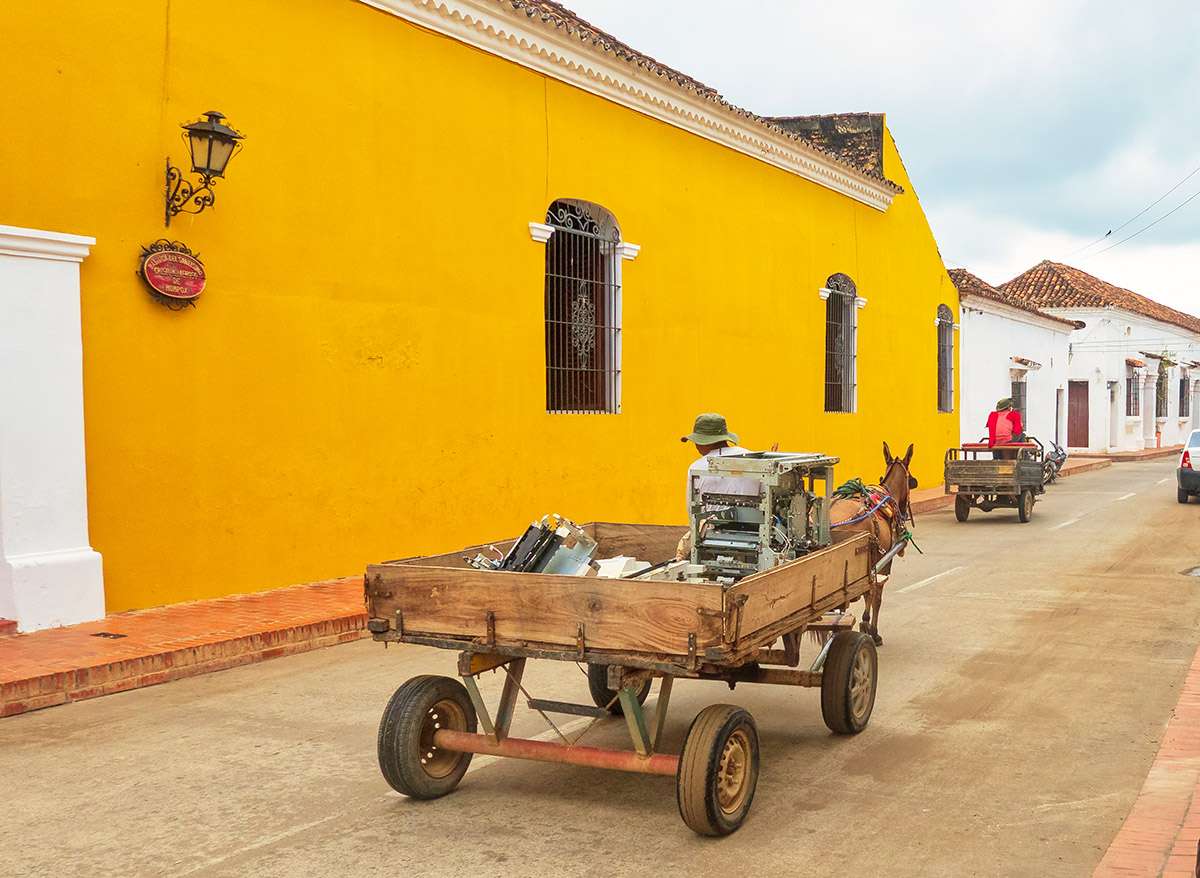
The good news in this, and what caught the eye of UNESCO, was that we’re left with a mostly intact colonial town that looks much like it did hundreds of years ago. Many of the most elaborate buildings, such as houses, are still used for their original purposes, rather than morphing into boutiques and souvenir shops.
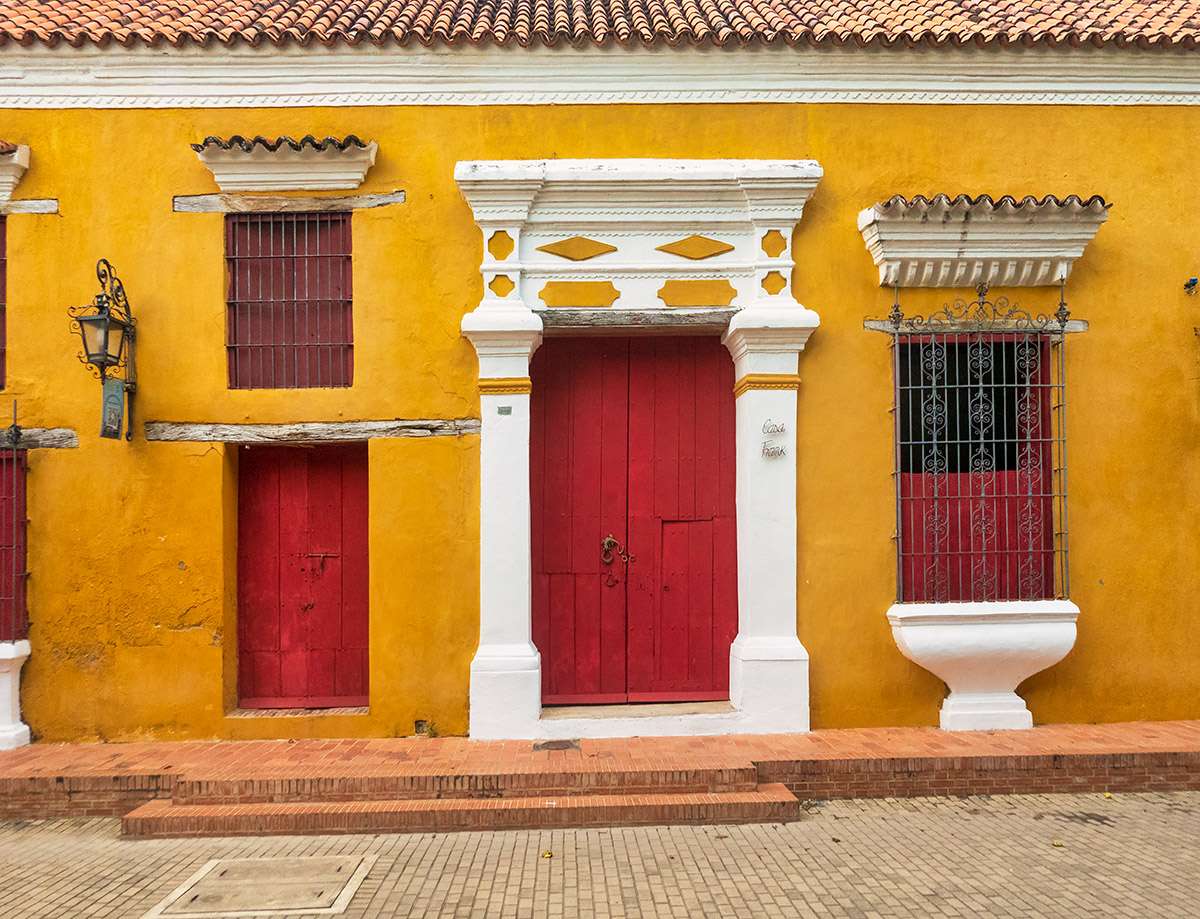
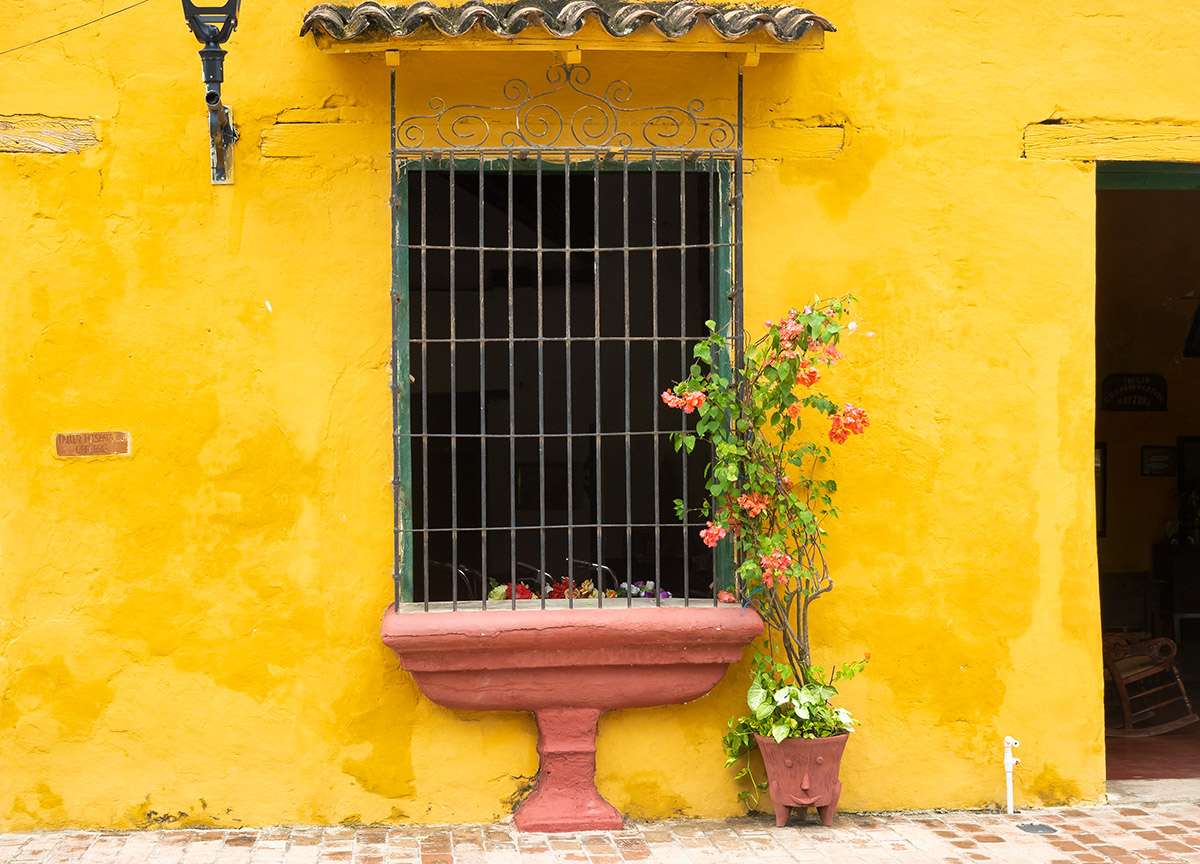
There are a lot of reasons for visiting Mompox, such as fascinating natural attractions just outside town, and its prominence as an artistic hub for intricate gold and silver filigree work. We’ll be getting to some of those in future postings, but for now we’ll concentrate on the town itself and its historic architecture with vibrant colours that make for a photographer’s dream.
Ornate churches galore
Though Mompox is not a big place, with around 46,000 residents including the surrounding municipality, it boasts six elaborate churches from the colonial era.
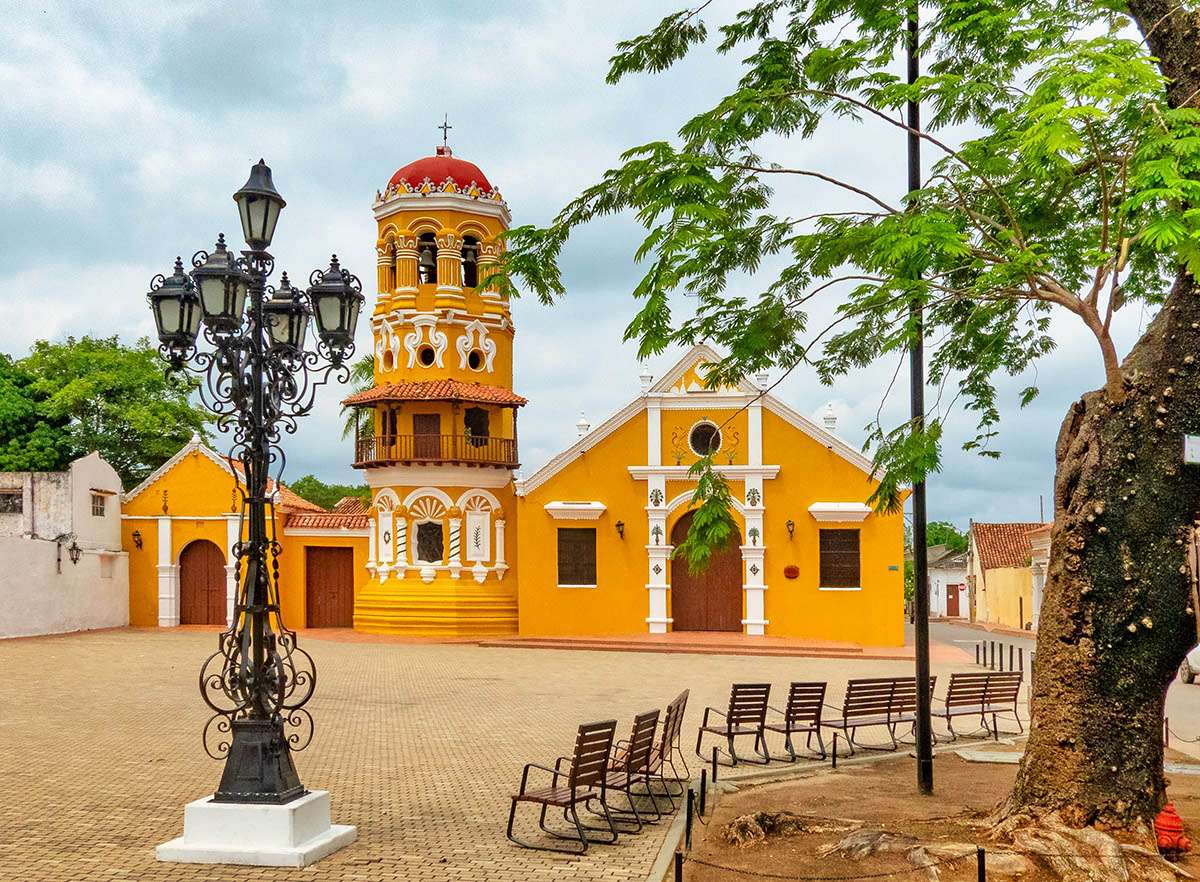
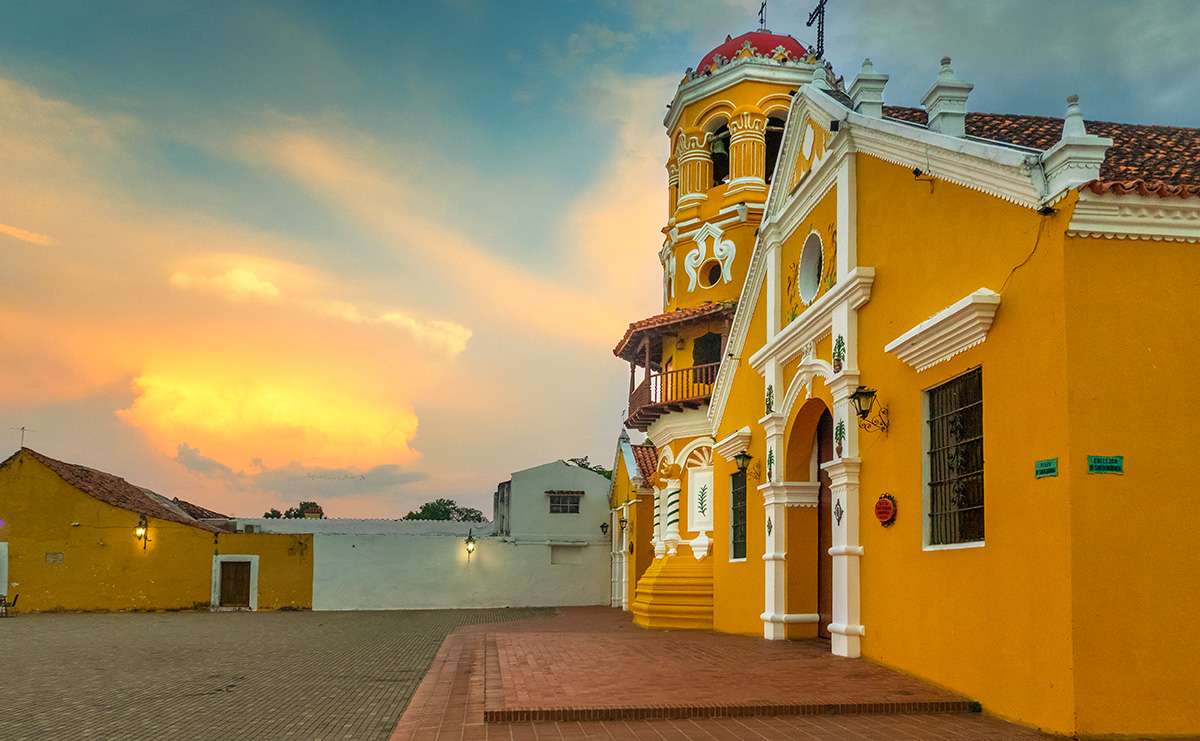
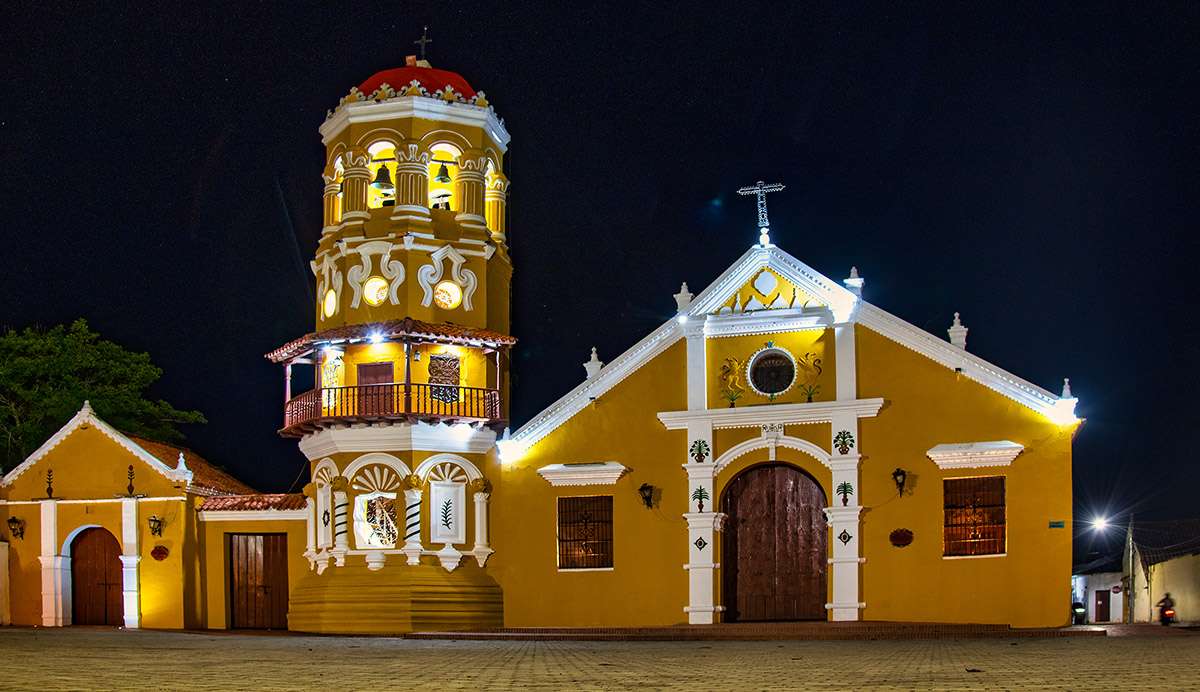
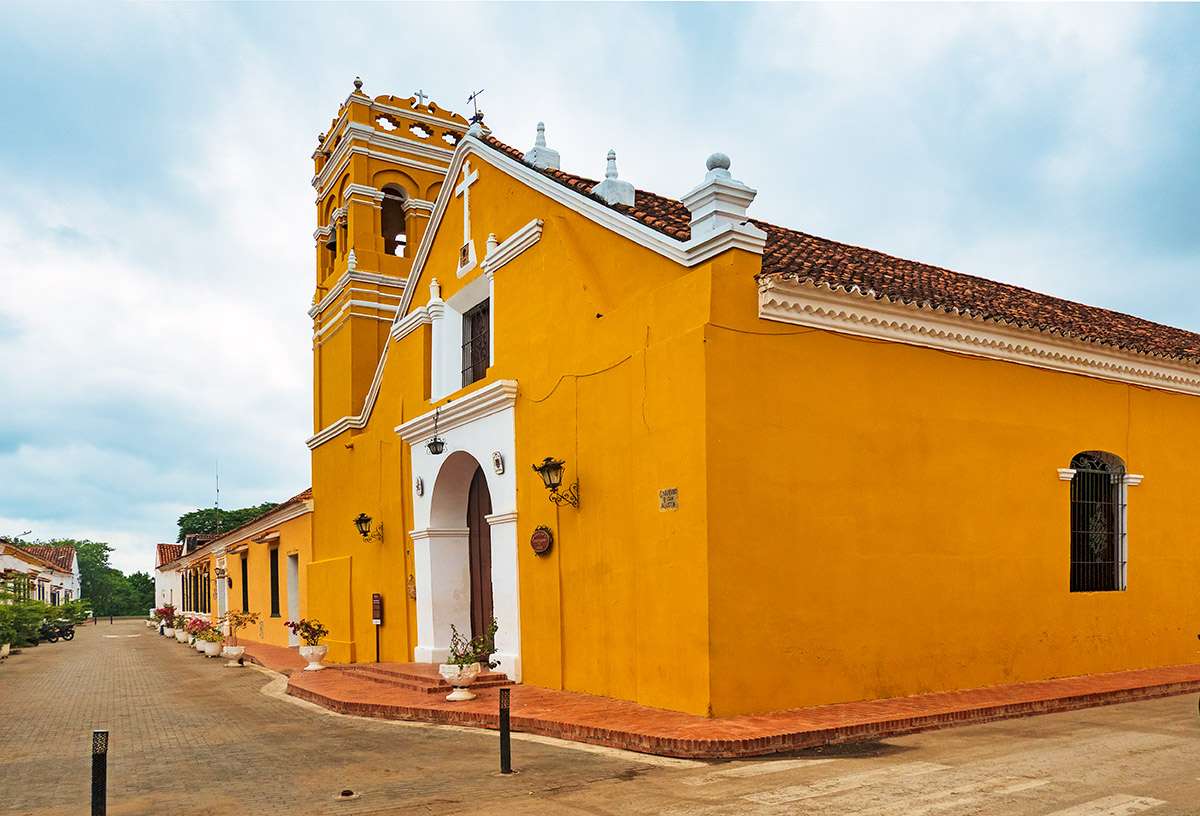
Santa Barbara Church, which dates to the early 17th century, is the most famous with its brilliant mustard colour and ornate baroque features. Its unusual octagonal bell tower with a balcony halfway up sets it apart in design. Worth visiting any time of day, the church seems to take on a special character at sunset, and also after dark when the facade is illuminated.
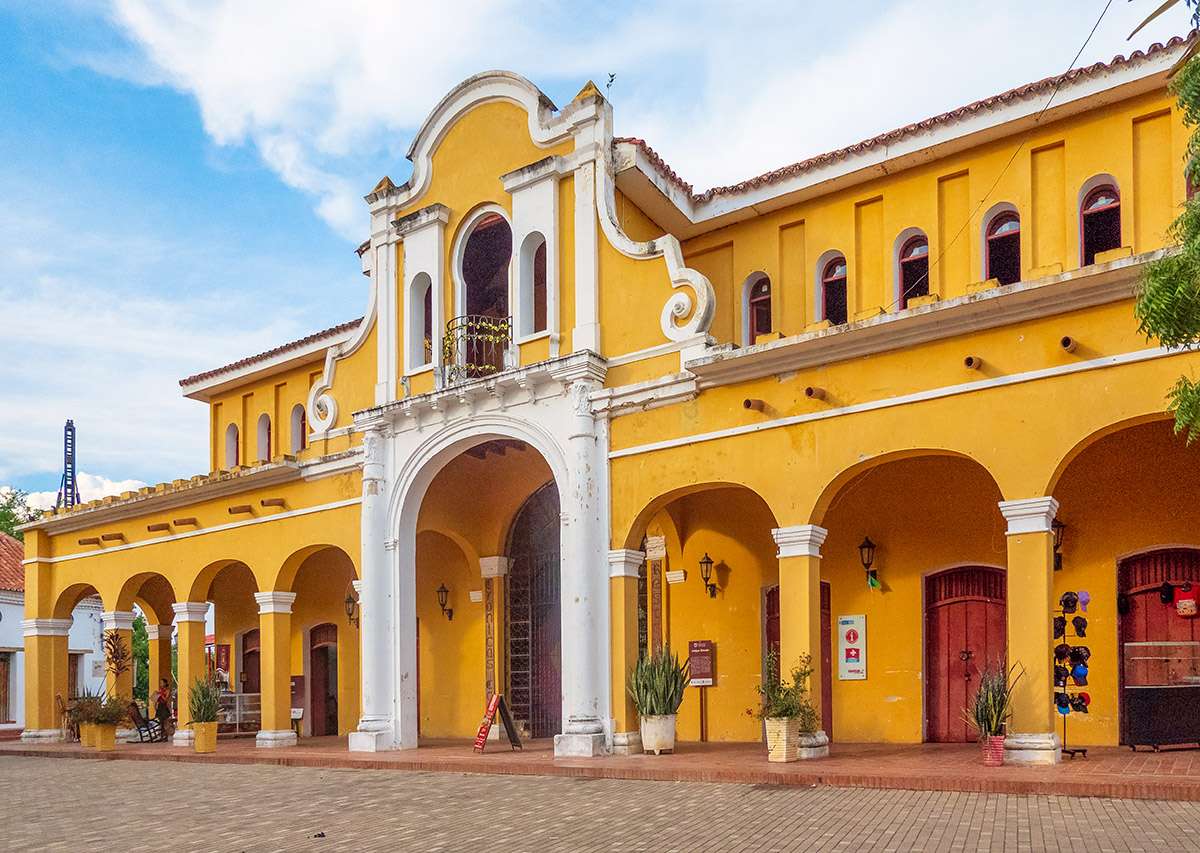
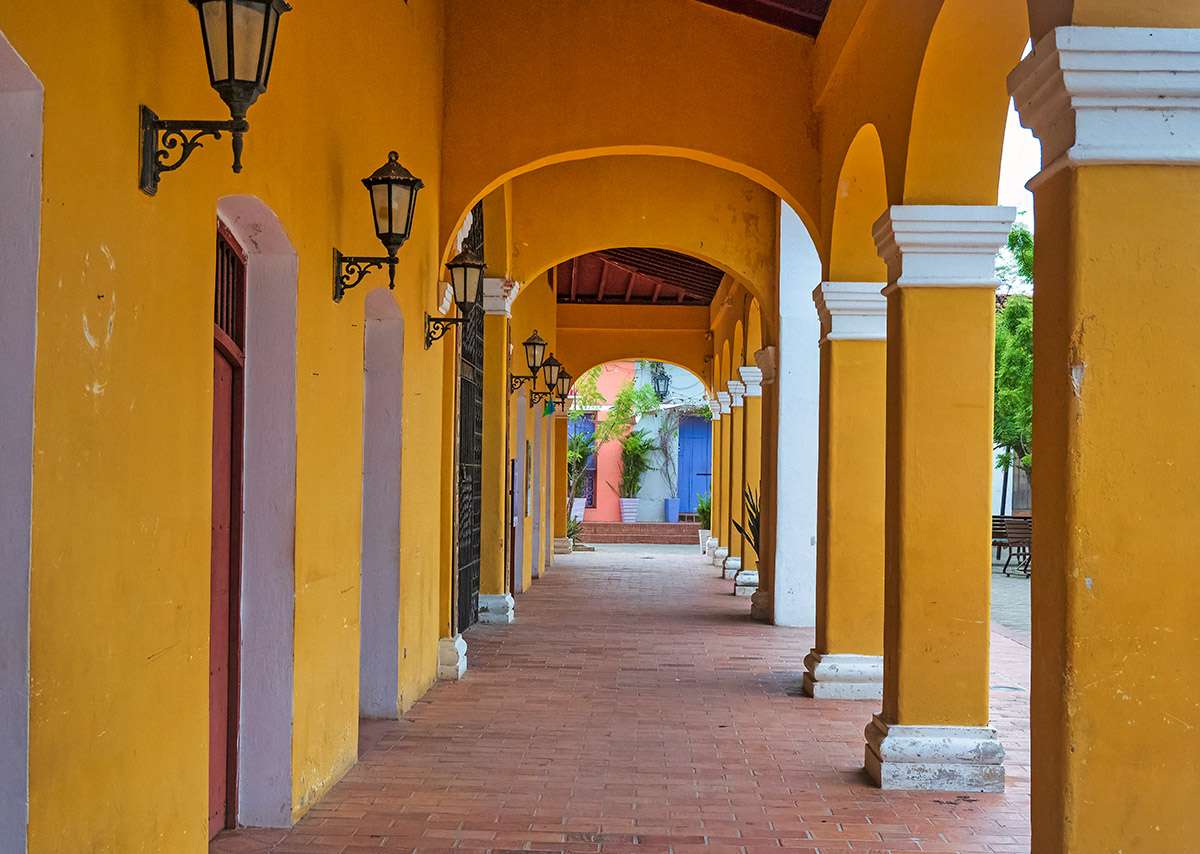
The large Church of the Immaculate Conception dominates one of the town’s main squares. It faces the Old Market building, which is mostly surrounded by arches and columns.
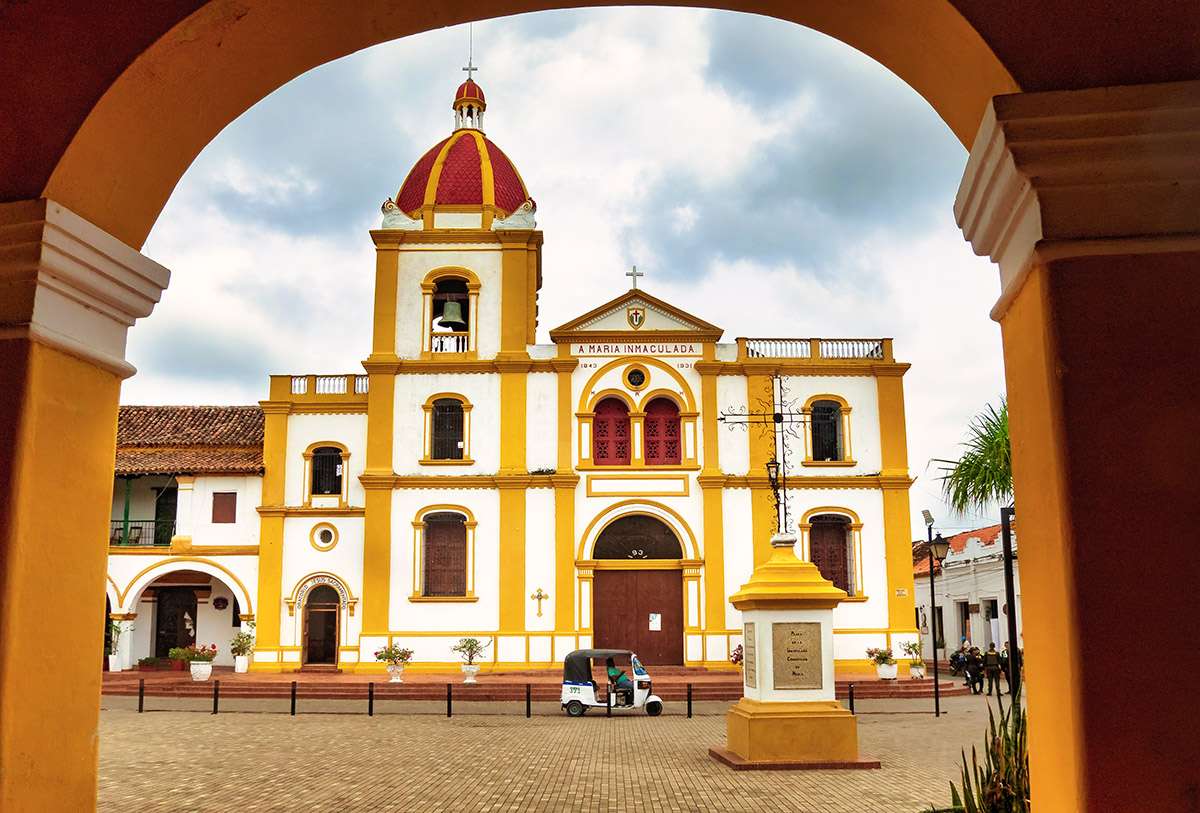
Most Spanish colonial towns have a prominent central square, leaving no doubt as to the community’s physical and cultural centre. Mompox doesn’t fit that pattern. Since it was built stretched out along the river, it has a series of smaller plazas rather than one main square.
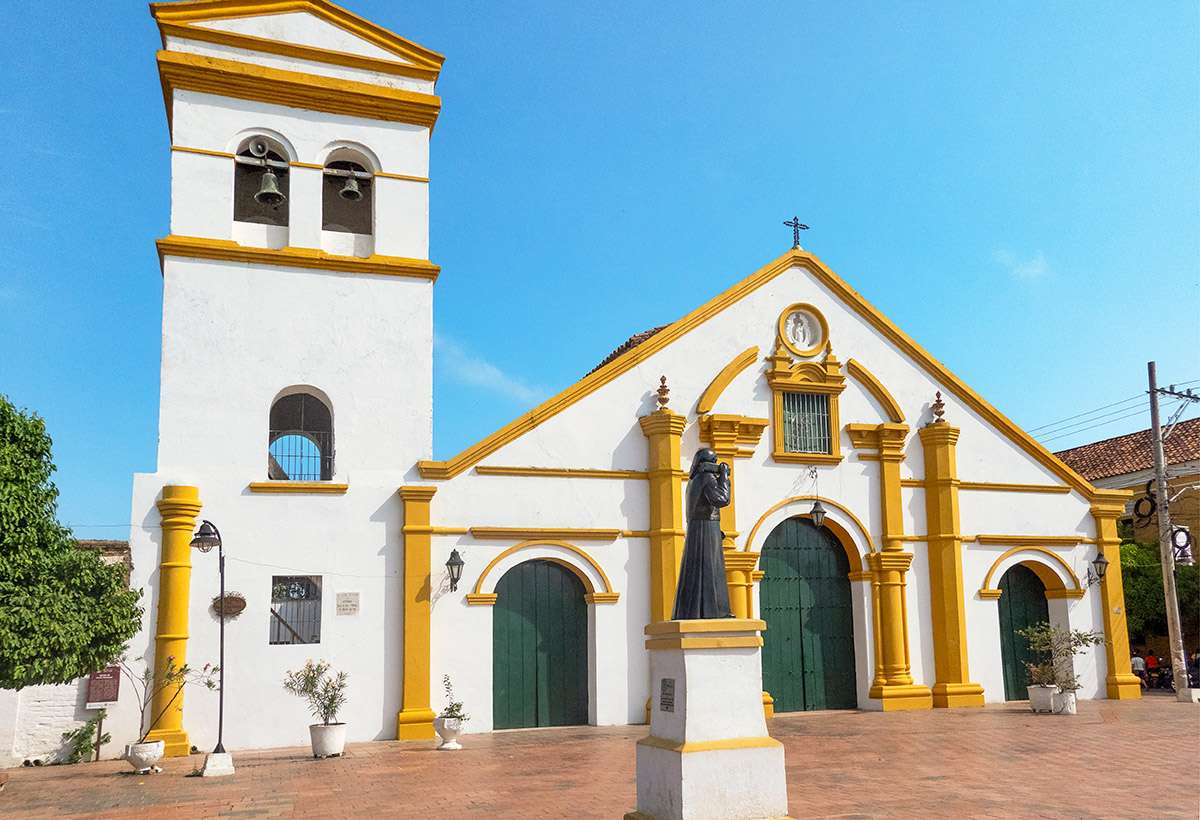
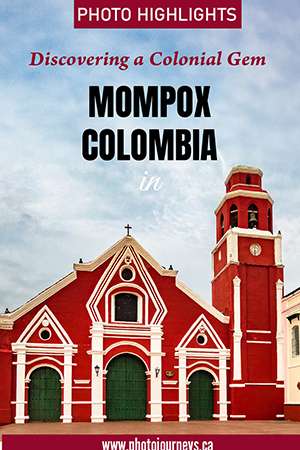
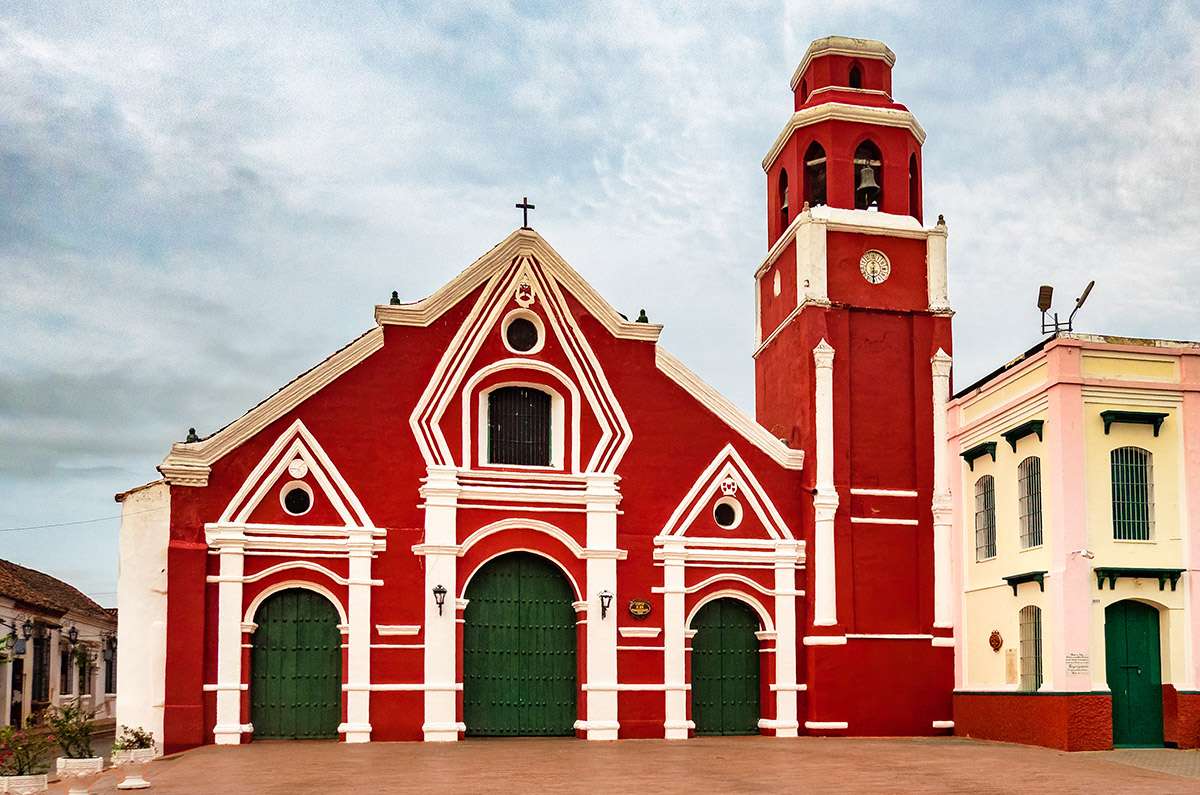
In a break from the mustard and white that dominates most other churches, the Church of San Francisco is brilliant red and highly photogenic.
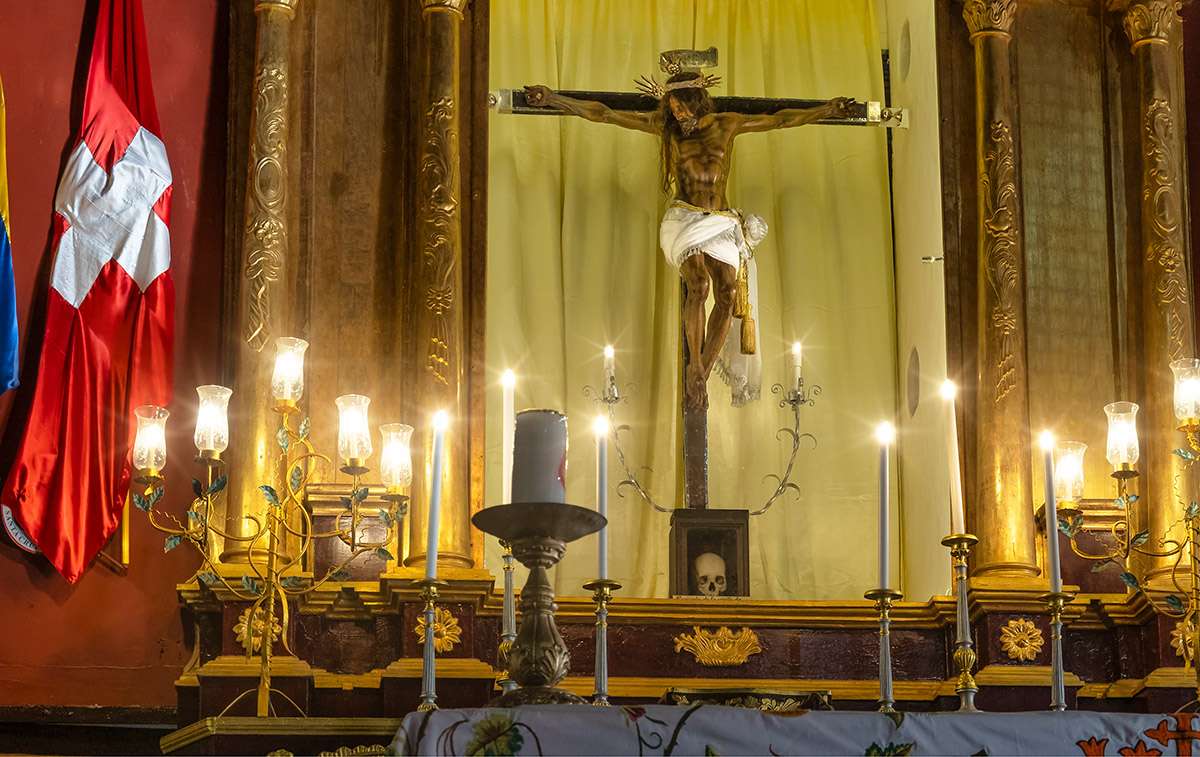
The Church of St. Augustin may not be as fancy on the outside as some of the other churches, but it is central to the religious life of the community, earning it a designation as a Minor Basilica. Founded in 1606 by the Barefoot Augustinian Hermits, its prized possession is the statue of Christ behind the main altar, believed to have miraculous powers and attracting pilgrims from across the country.
Holy Week
Holy Week, the week leading to Easter, is Mompox’s most famous celebration. It’s also considered the best and most authentic celebration in the country, with processions of saints and religious images combining solemnity and pageantry.
While we haven’t yet had the opportunity to go during Holy Week, we were fortunate to see a demonstration by one of the many artists central to the festival’s preparation. The processions don’t merely walk down the street; they walk over intricate artworks on the street surface designed specifically for the feet of the participants.
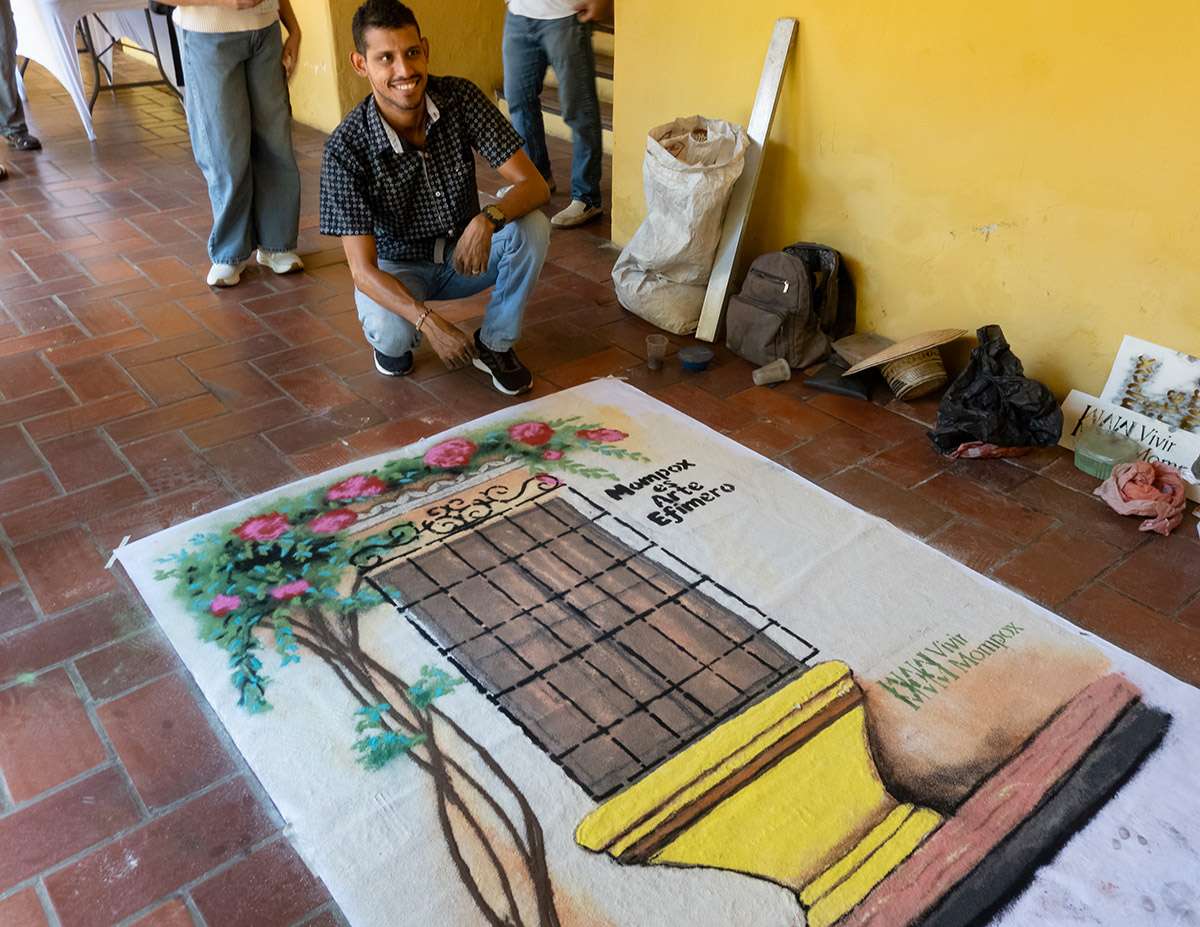
Artist Carlos Suarez showed us how it is done using only coloured sands and powders. He painstakingly created a sophisticated design and explained how this ephemeral creation is meant to be walked over and destroyed by the devotees. His creation, a couple of metres long or so, was impressive enough. We can only imagine what an entire street covered in similar art would look like.
Wandering through the town
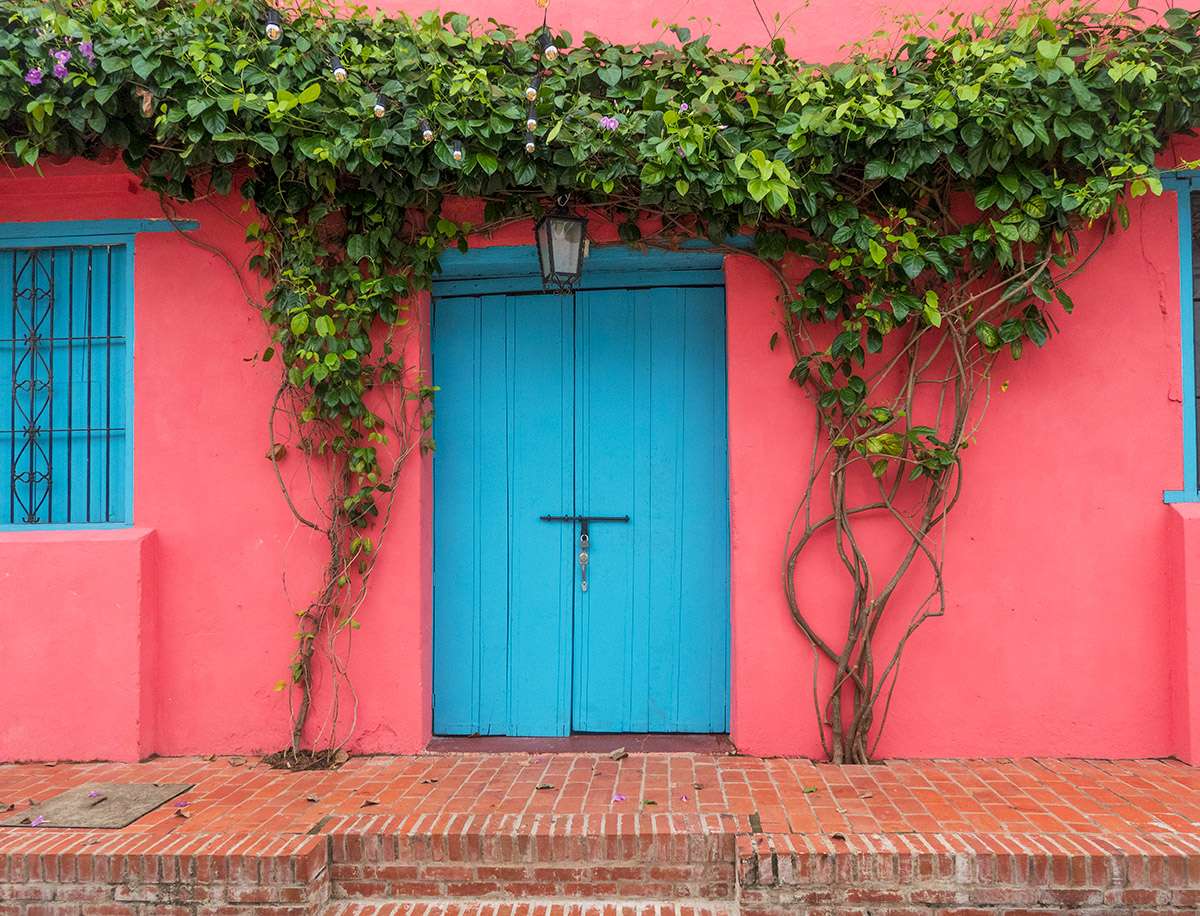
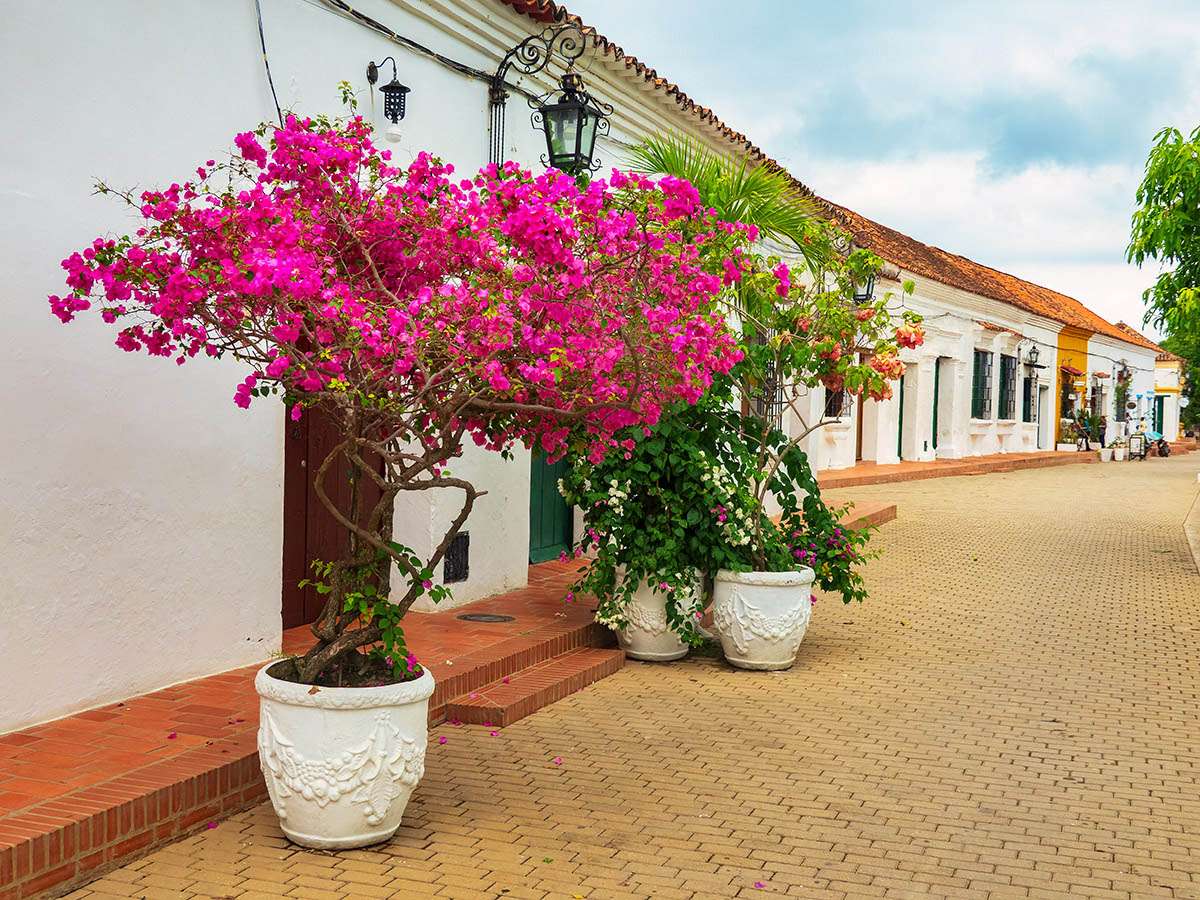
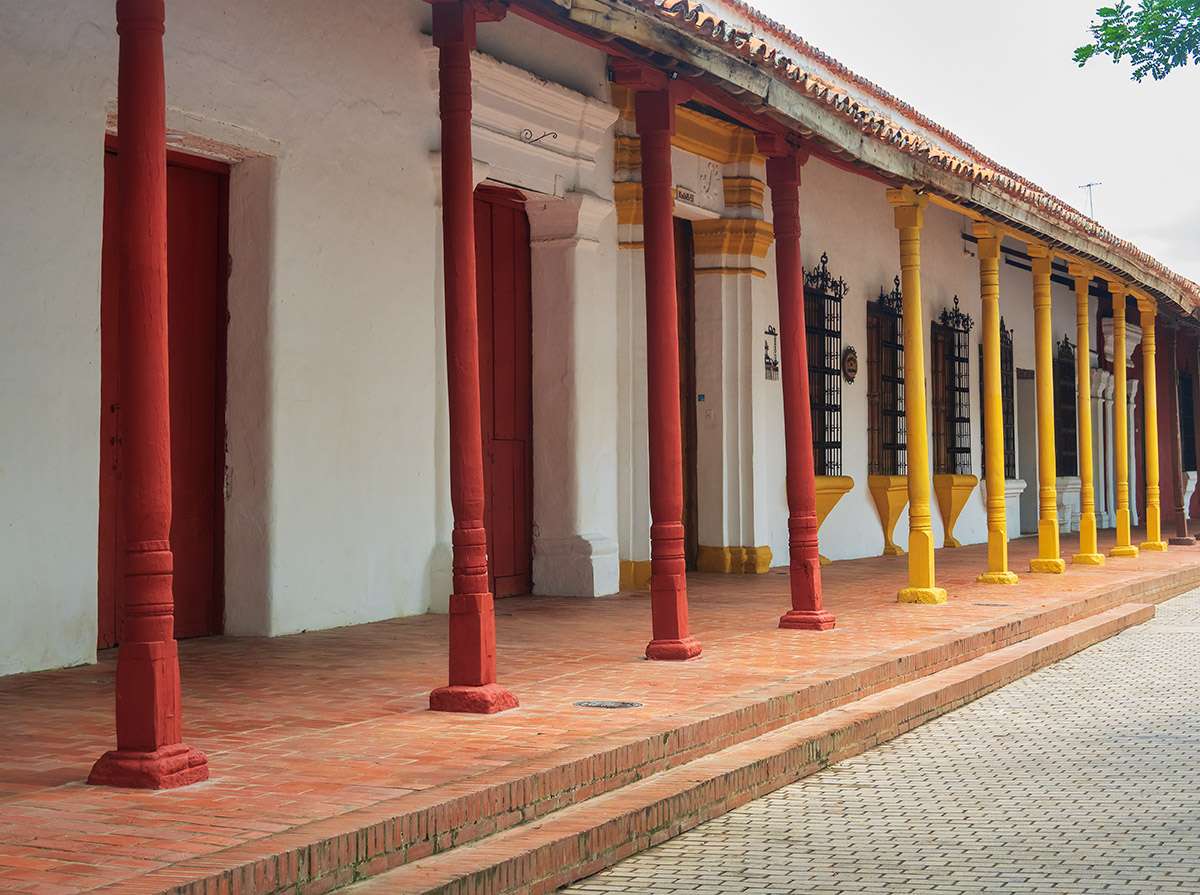
Aside from its famous landmarks, much of what makes Mompox such an enjoyable place for photography is simply wandering at random and seeing what we can find, since vibrant colours are everywhere. The historic centre is fairly compact, and the streets are safe.
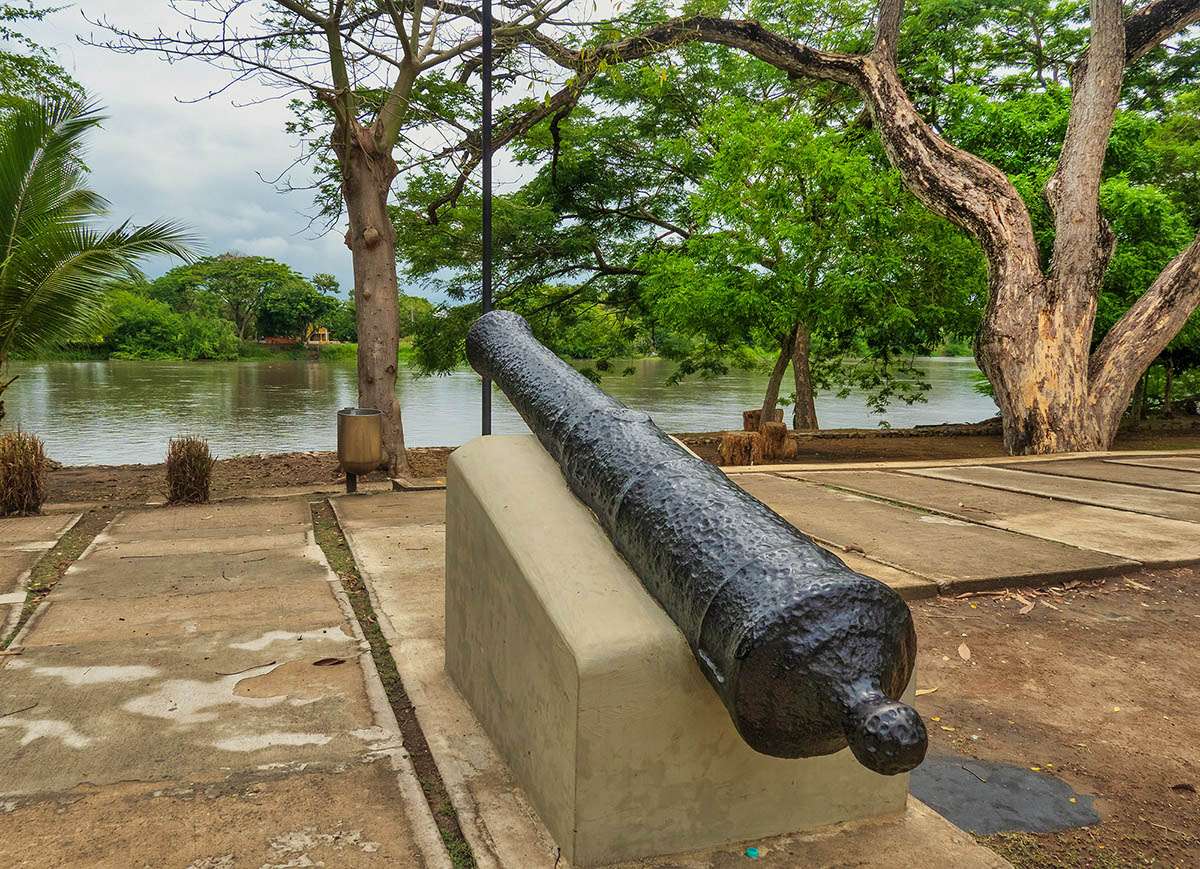
The place to start is along the river walk, a mostly pedestrian thoroughfare along the Magdalena River. Since the town developed because of river traffic, this is where we find many of the early buildings. This is also the social hub of Mompox, and where residents and visitors alike come for a stroll to enjoy the cool evenings when the usually hot temperatures moderate.
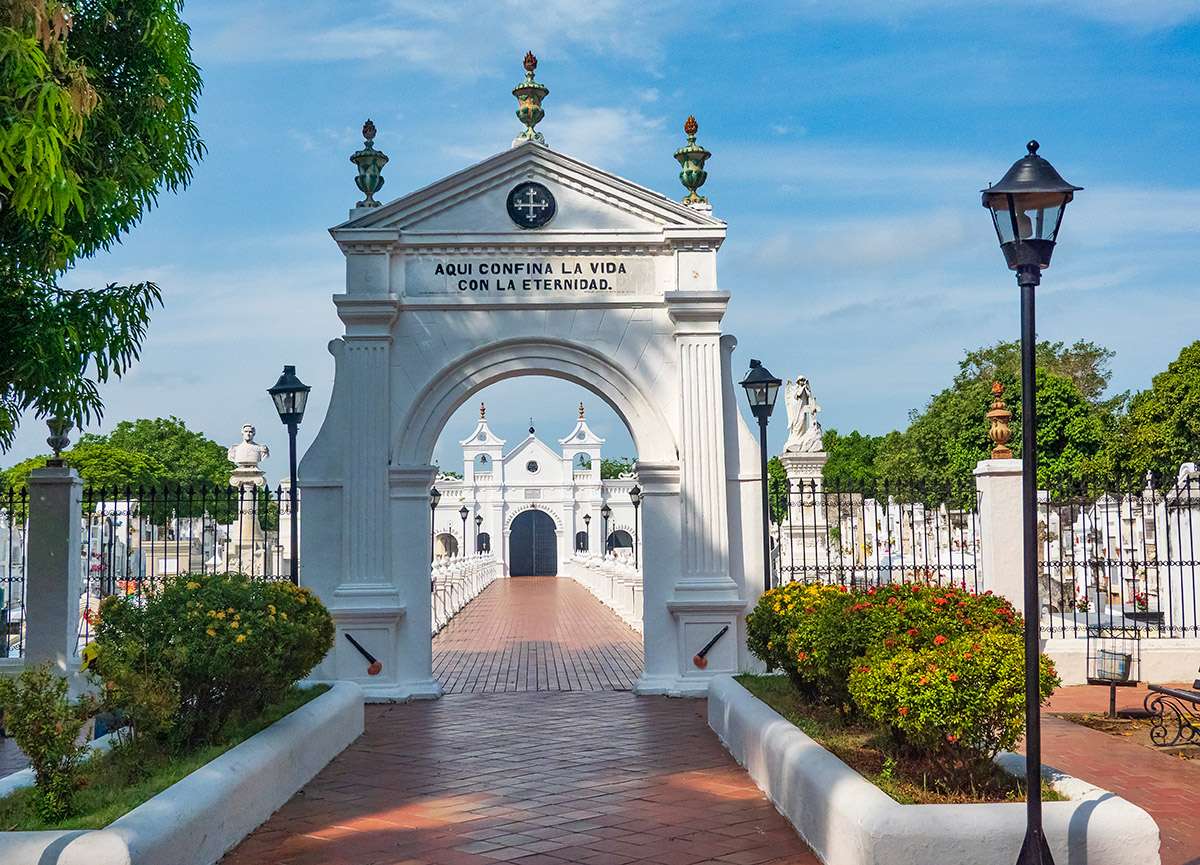
A place not to miss a bit back from the river is the historic, brilliant white cemetery, with its small chapel and stately mausoleums. An unusual feature is the many cats. When a local resident, nicknamed El Cato or The Cat, died and was buried here, cats started hanging out around his tomb. Thinking that this was more than mere coincidence, his family fed the cats. The tradition has continued with cemetery attendants laying out cat food for the waiting felines.
Sleeping in an Historic Site
Mompox doesn’t have any international hotel chains, or any large hotels for that matter. Almost all are grand old residences that have been converted into small hotels or guest houses. So chances are that where you stay will have its own interesting character and story to tell
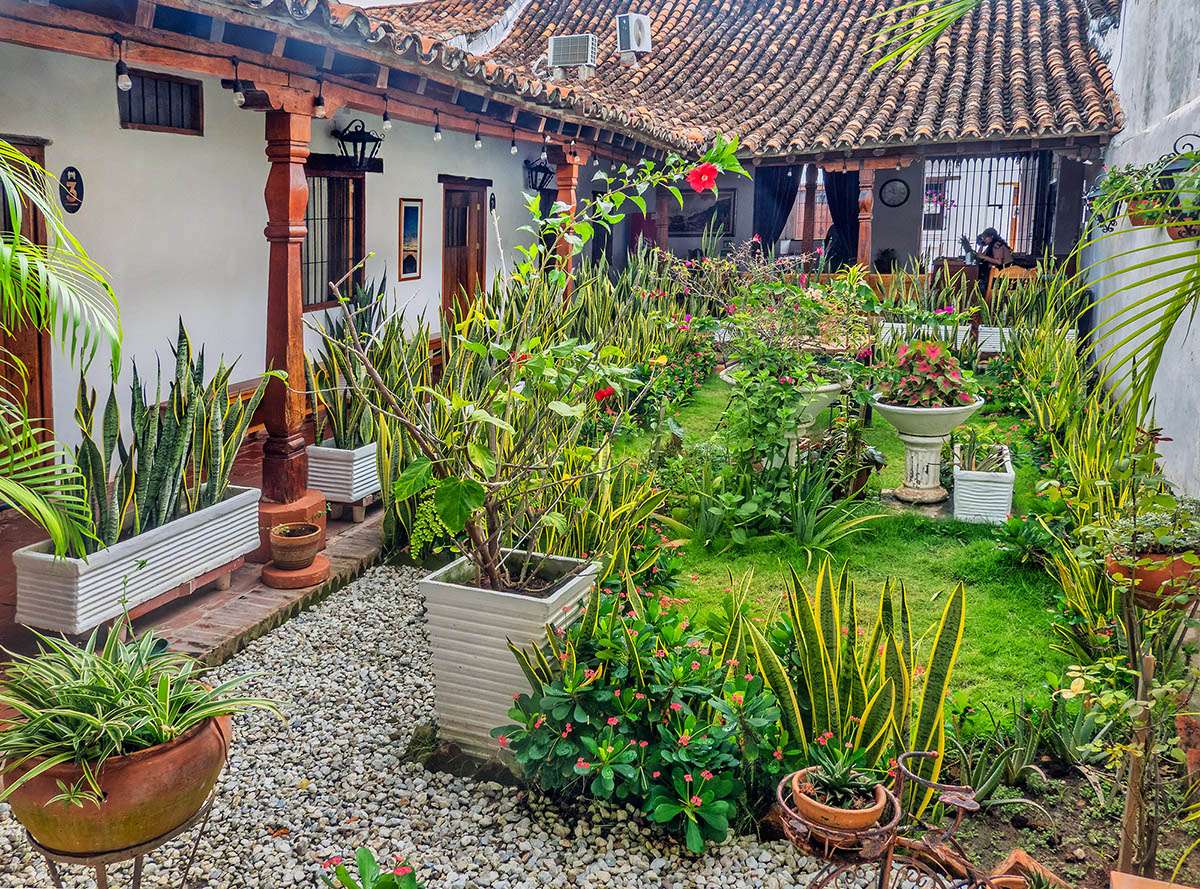
Our base for our stay in Mompox was the Hotel Archangelus Once the illustrious house of a prominent writer, the 3oo-year-old colonial home has been converted to a hotel with only five rooms. The hotel is known for its personal attention, and especially its typical Colombian breakfasts, It is said that on nights of the waxing moon, the words of the chronicles written by the former owner jump off the shelves and dance on the terracotta floors, while his spirits watch over the guests sleeping in their rooms.
Getting to Mompox
Mompox is away from the main tourist circuits in Colombia, which has so far saved it from mass tourism. It’s about 300 kilometres inland from the Caribbean coast, and takes about 6-7 hours to reach by road from Cartagena. Flying is much easier. Currently there are three flights per week on Satena Airlines from the capital Bogota, with a stop in Medellin.
Resources
The Colombian Tourism website has great information on visiting Mompox, as well as other parts of the country.
We thank ProColombia and Vivir Mompox for assisting us in our visit to Mompox.
SUBSCRIBE to Photojourneys below
Feel free to PIN this article on photographing Mompox, Colombia